
Photos from current listings. Actual item, color, and included accessories may vary.
4K Projector Screen Buying Guide
A 4K projector screen is a projection surface rated to resolve the full 3840x2160 pixel grid without visible texture, moiré, or hot spots that soften fine detail. The core trade-off is gain versus uniformity: high-gain surfaces brighten the image but narrow the viewing cone and risk sparkle, while matte white or grey surfaces preserve off-axis consistency at lower gain. The decision rule is simple: buy a screen whose native resolution rating, aspect ratio, and material weave match your projector's throw and room light—anything marketed as 4K without a specified weave or gain is a compromise.
Median $87.99
Key takeaways
- 4K-rated screens require a weave fine enough to avoid visible texture at seating distance—look for a specified surface type such as matte white PVC, grey acoustic weave, or ALR, not generic 'fabric'.
- Gain determines brightness trade-off: 1.0–1.1 gain matte white is the reference for dark rooms; 0.6–0.8 grey improves black levels in ambient light but dims highlights; ALR rejects off-axis light at the cost of a narrow cone.
- Fixed-frame tensioned screens hold flatness with a rigid aluminum frame and rear tension cords, while tripod and pop-up portable screens rely on crossbars and wrinkle-free folding—flatness is the single biggest factor in visible 4K sharpness.
At a glance
- Category
- Projectors & Screens
- Last updated
- Nov 27, 2026
Current offers
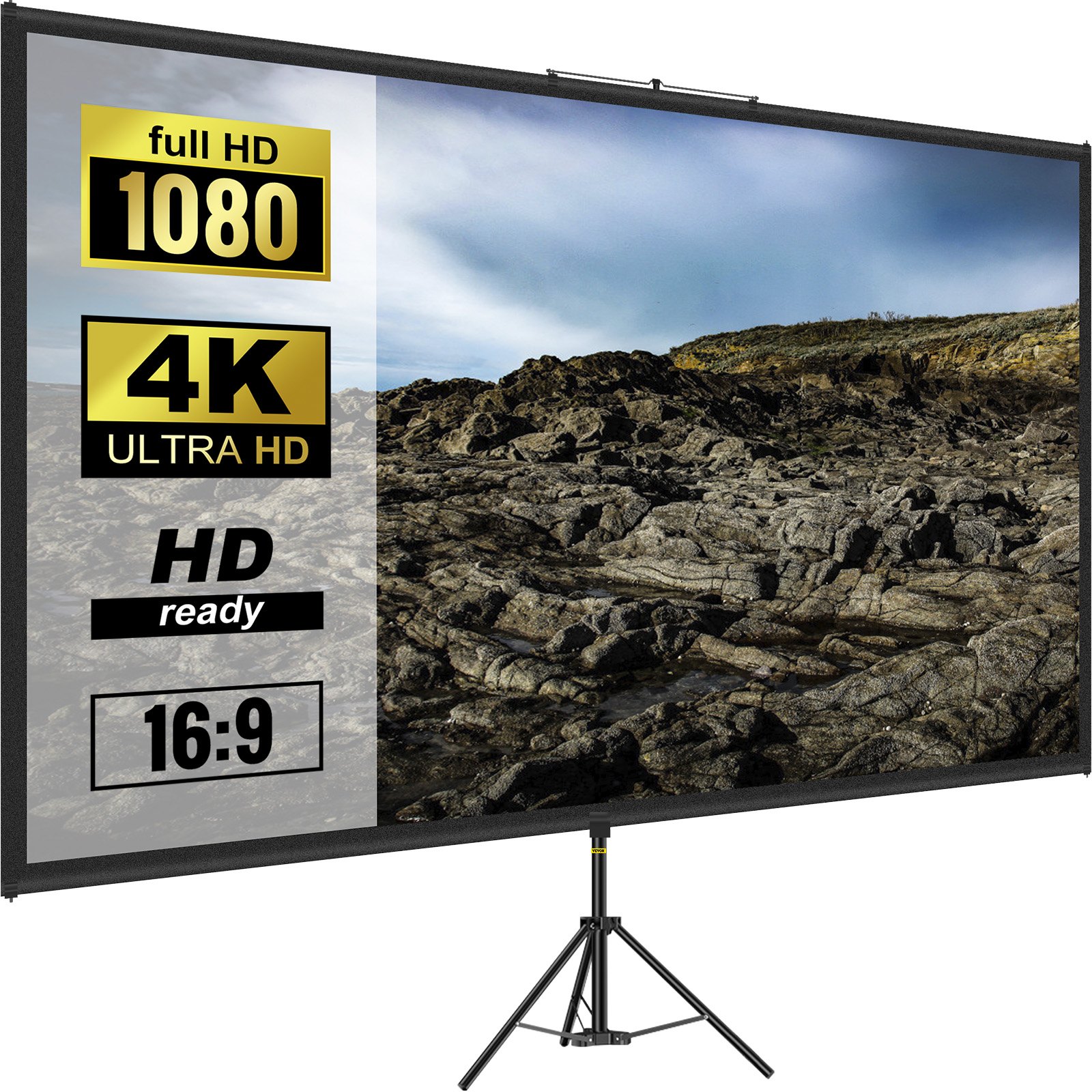 Tripod Projector Screen With Stand 60 Inch 16:9 4K HD Projection Wrinkle-Free Height Adjustable Portable For Indoor & Outdoor For Movie, Home Cinema, Gaming, Office$36.99View on Mallflare
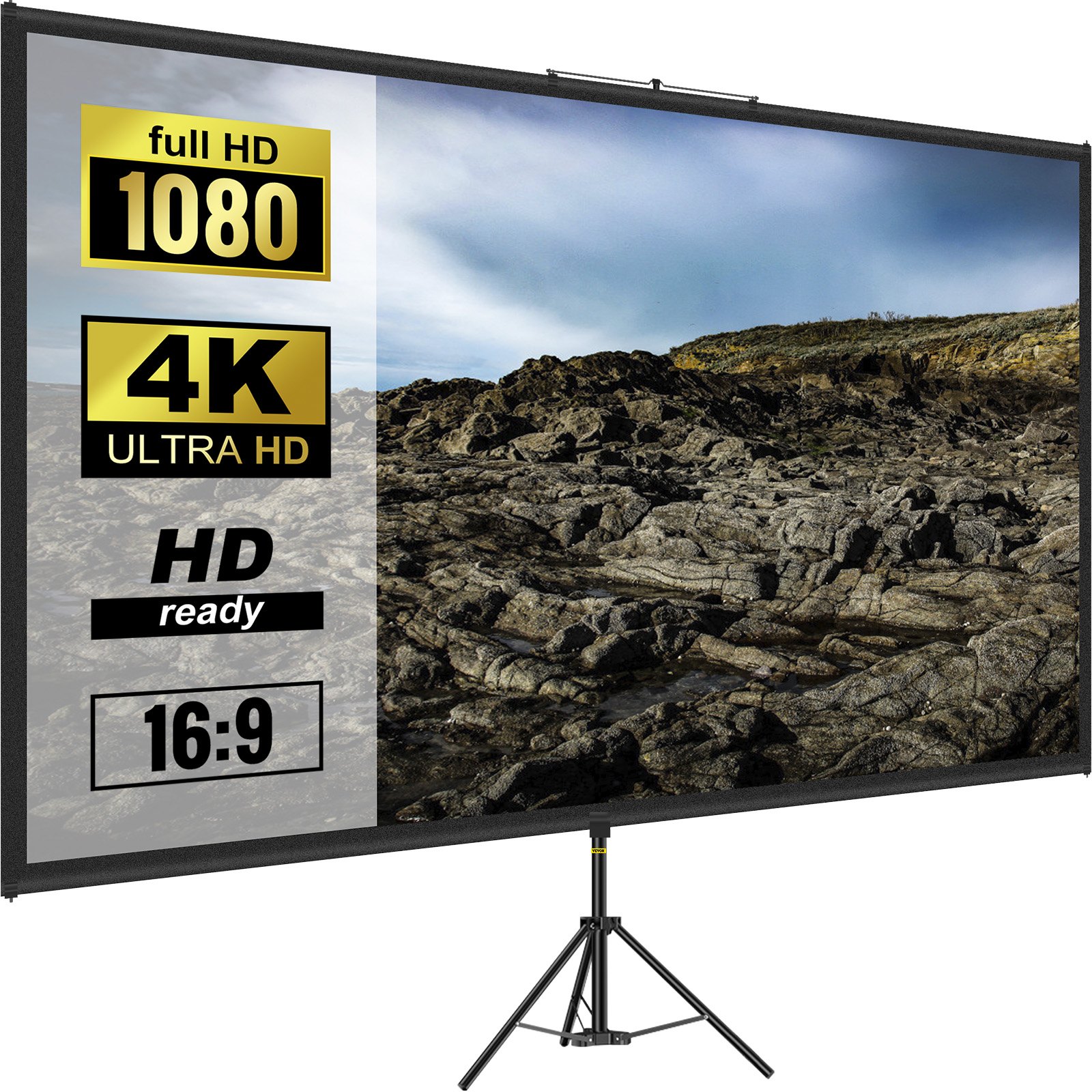 Tripod Projector Screen With Stand 110inch 16:9 4K HD Projection Wrinkle-Free Height Adjustable Portable For Indoor & Outdoor For Movie, Home Cinema, Gaming, Office$48.99View on Mallflare
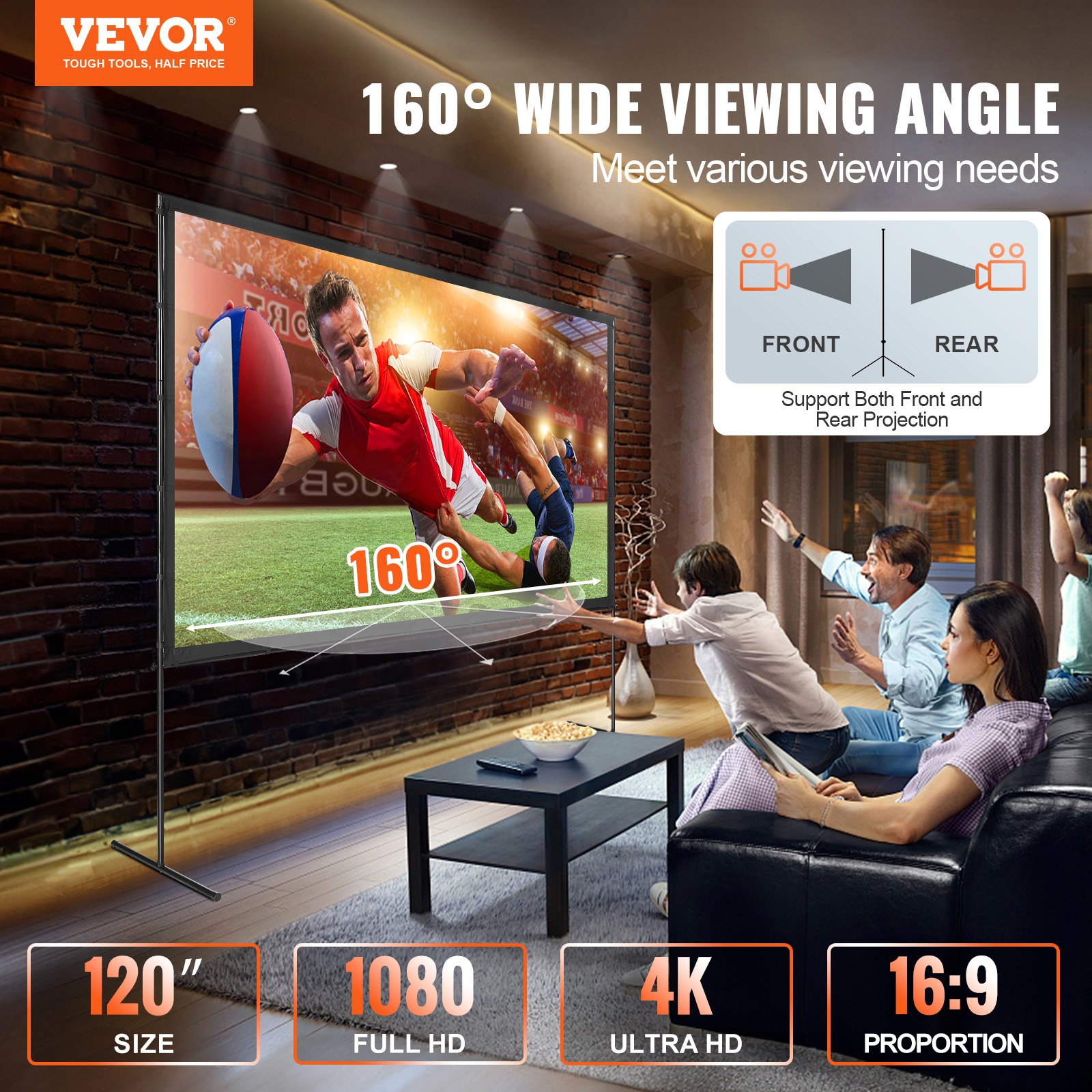 VEVOR Projector Screen With Stand, 120 Inch 4K 1080 HD Outdoor Movie Wrinkle-Free Projection Bar Feet And Carry Bag, For Home Theater Cinema Backyard Night$67.99View on Mallflare
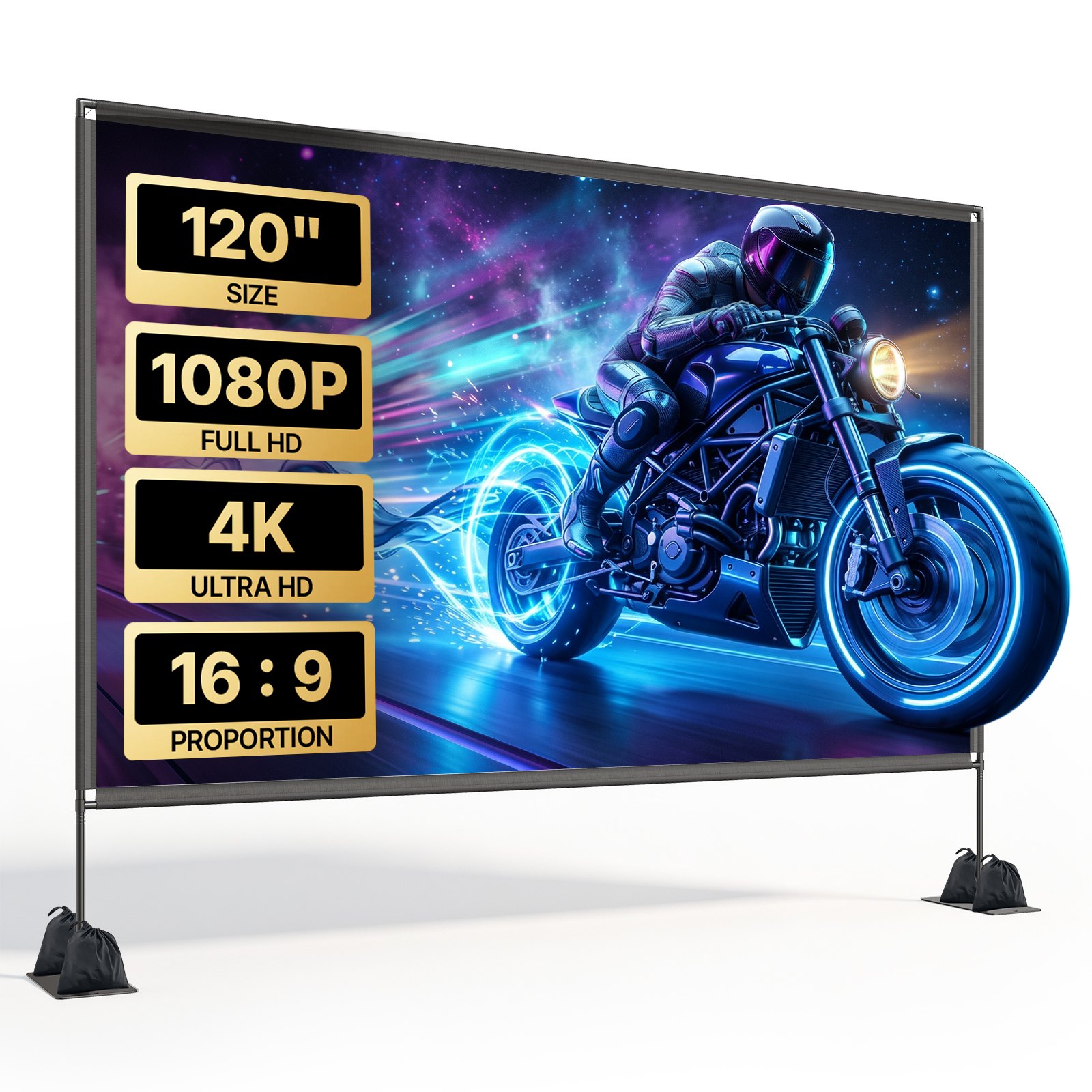 Projector Screen with Stands, 120 Inch 16:9 4K 1080P HD Movie 170° Wide Viewing, Front/Rear Projection Ground Stakes, Sandbags & Guy Ropes for Home Theater & Backyard Movies$67.99View on Mallflare
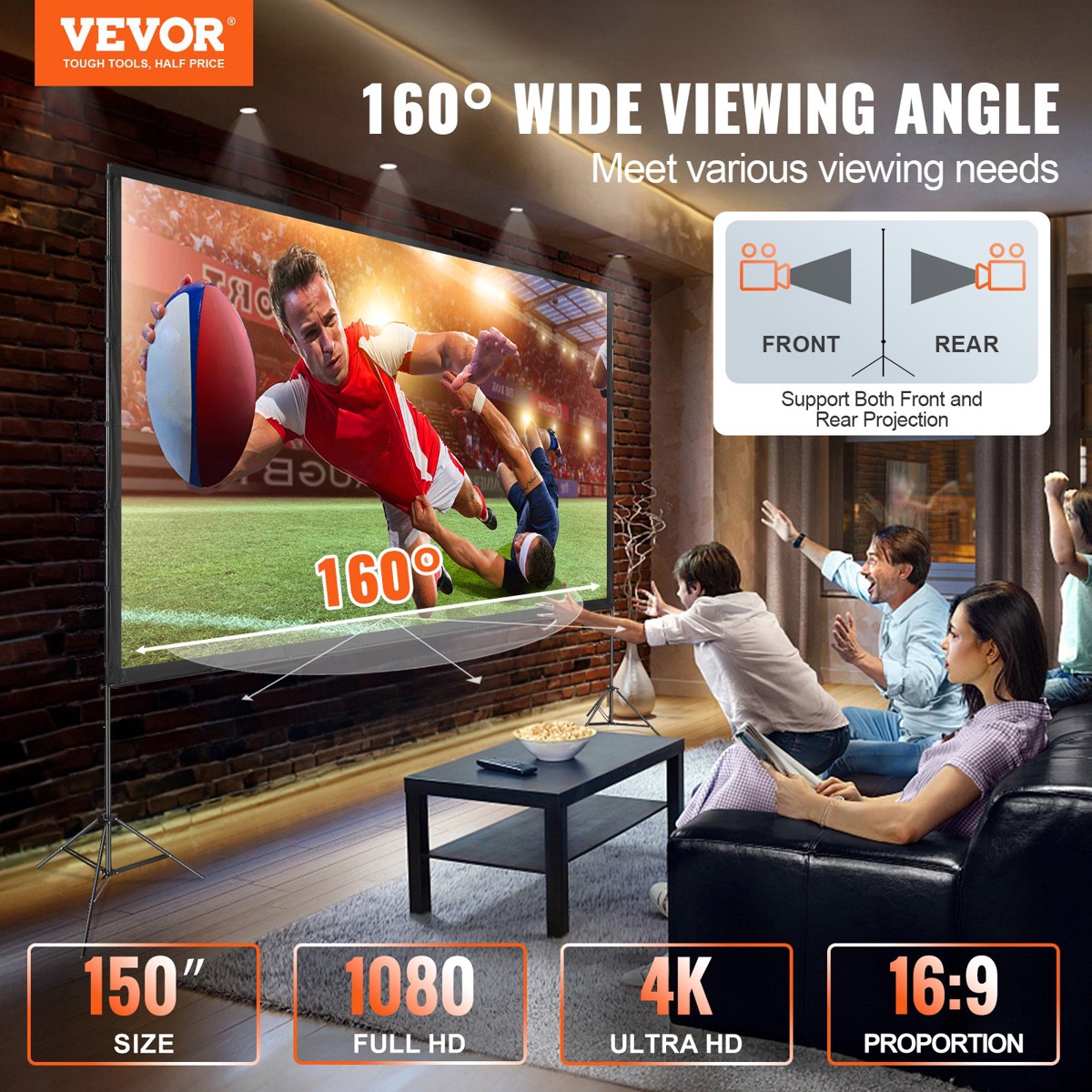 Projector Screen With Stand, 150 Inch 16 9 4K 1080 HD Outdoor Movie Wrinkle-Free Projection Tripods And Carry Bag, For Home Theater Cinema Backyard Night$70.99View on Mallflare
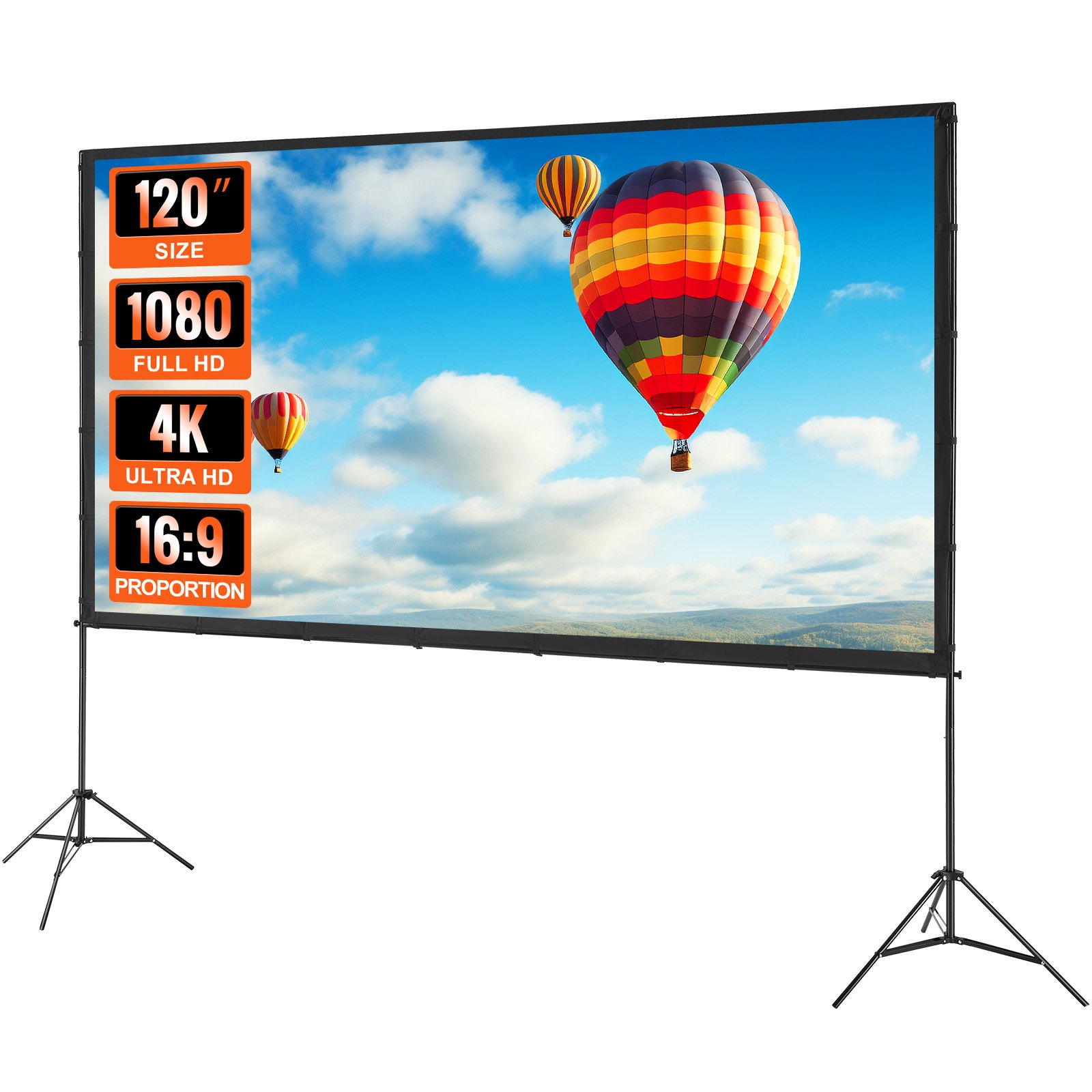 Projector Screen With Stand, 120 Inch 16:9 4K 1080 HD Outdoor Movie Wrinkle-Free Projection Tripods And Carry Bag, For Home Theater Cinema Backyard Night$74.99View on Mallflare
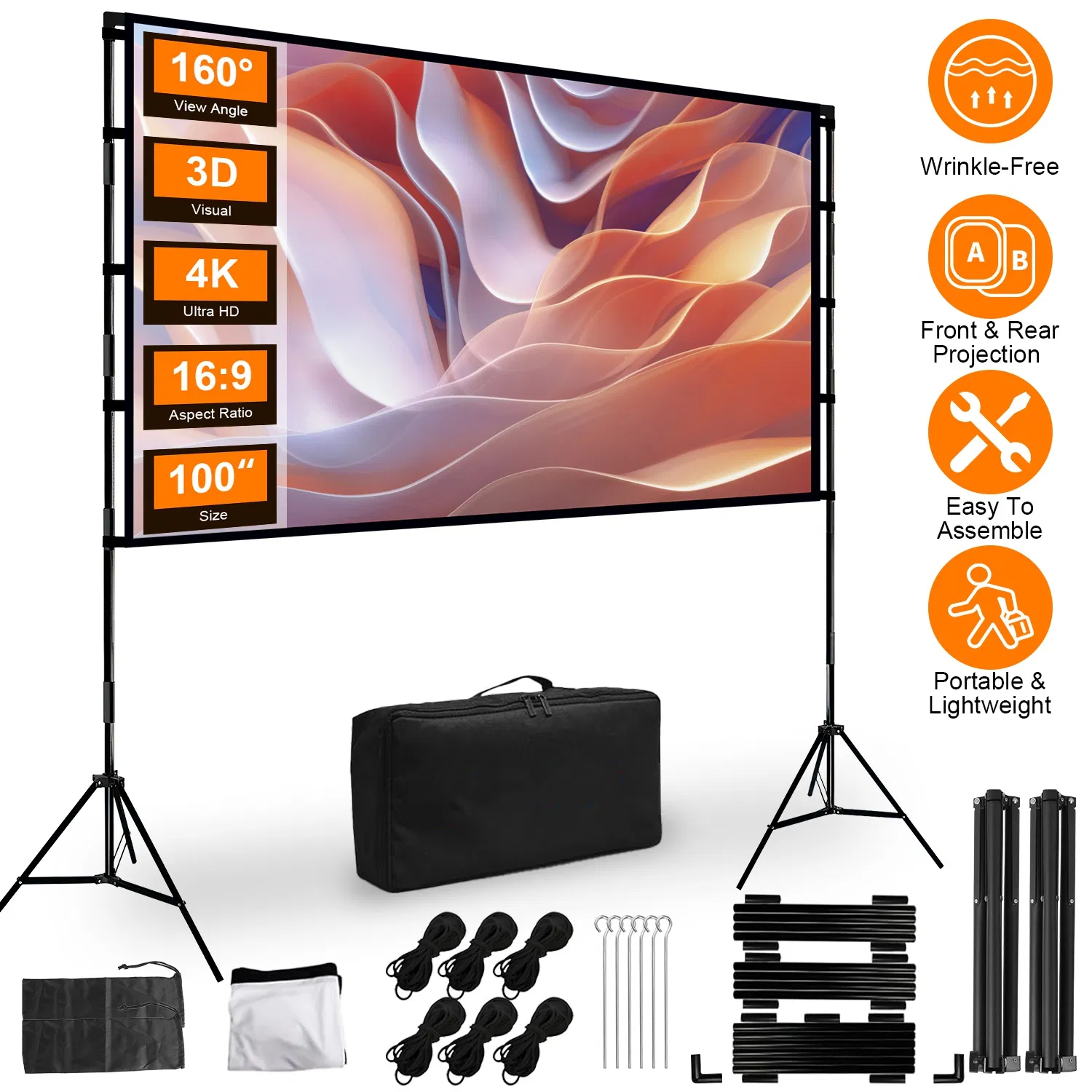 100inch 120inch Options Projector Screen With Stand 4K HD Rear Front Wrinkle-Free Portable And Foldable Movie Carry Bag For Indoor Outdoor Home Theater Backyard Cinema$87.99View on Mallflare
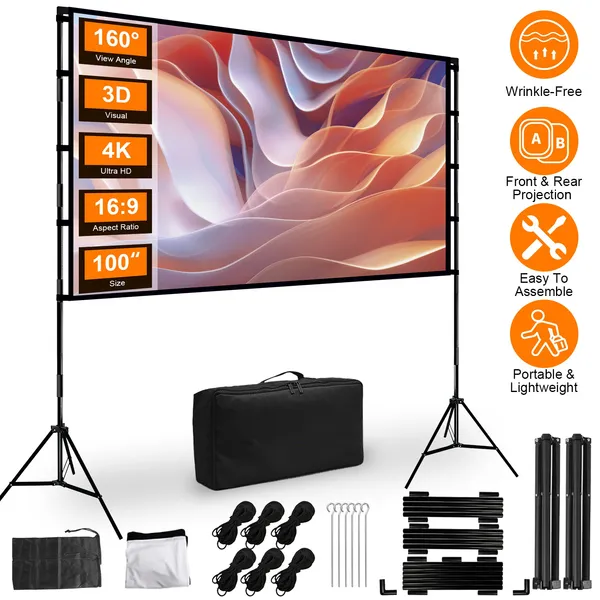 100inch/120inch Options Projector Screen With Stand 16:9 4K HD Rear Front Wrinkle-Free Portable And Foldable Movie Carry Bag For Indoor Outdoor Home Theater Backyard Cinema$87.99View on Mallflare
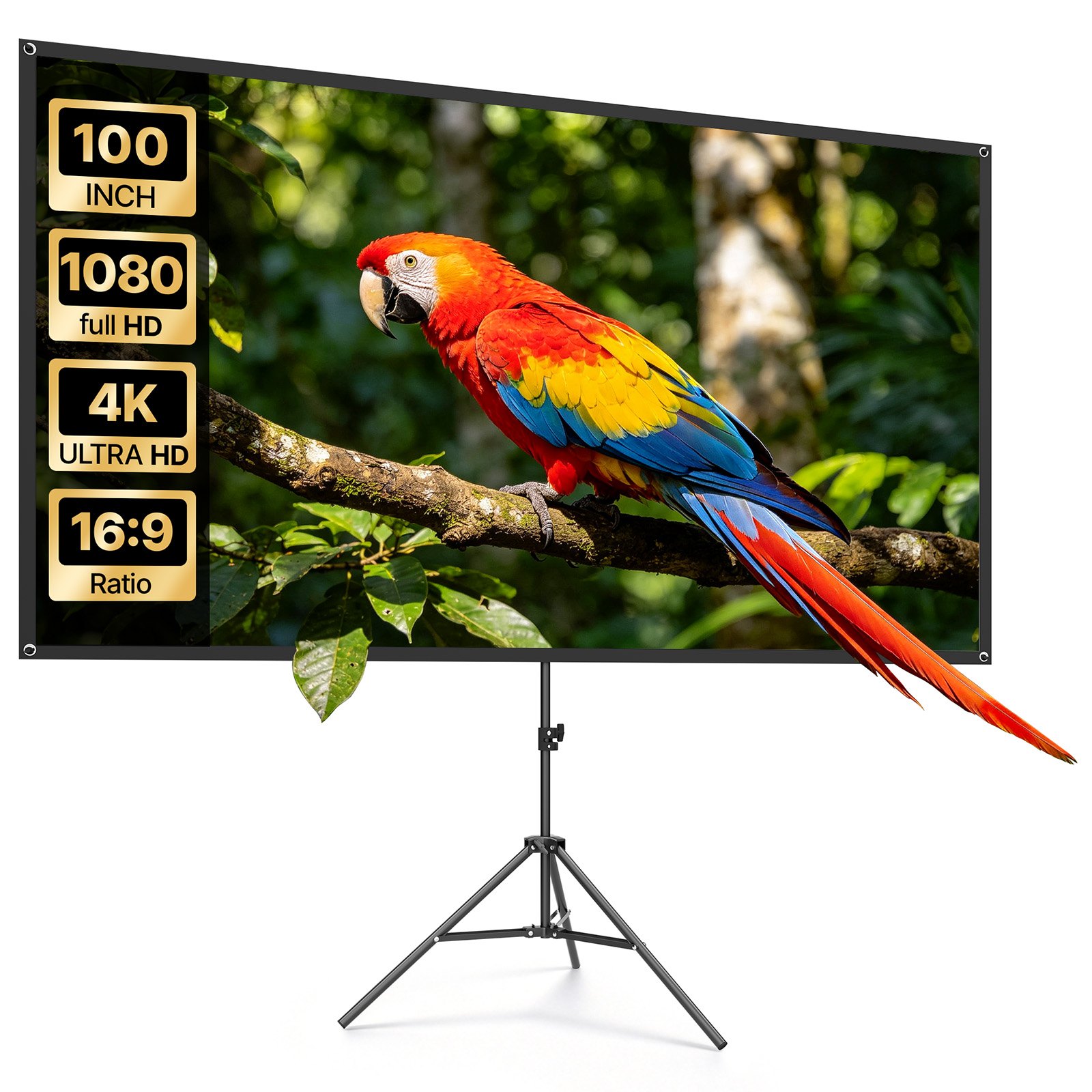 Projector Screen with Stand, 100 Inch 16:9 4K 1080P HD Movie 170° Wide Viewing, Wrinkle-Free Projection Stable Tripod & Portable Bag for Home Theater, Immersive Nights$91.99View on Mallflare
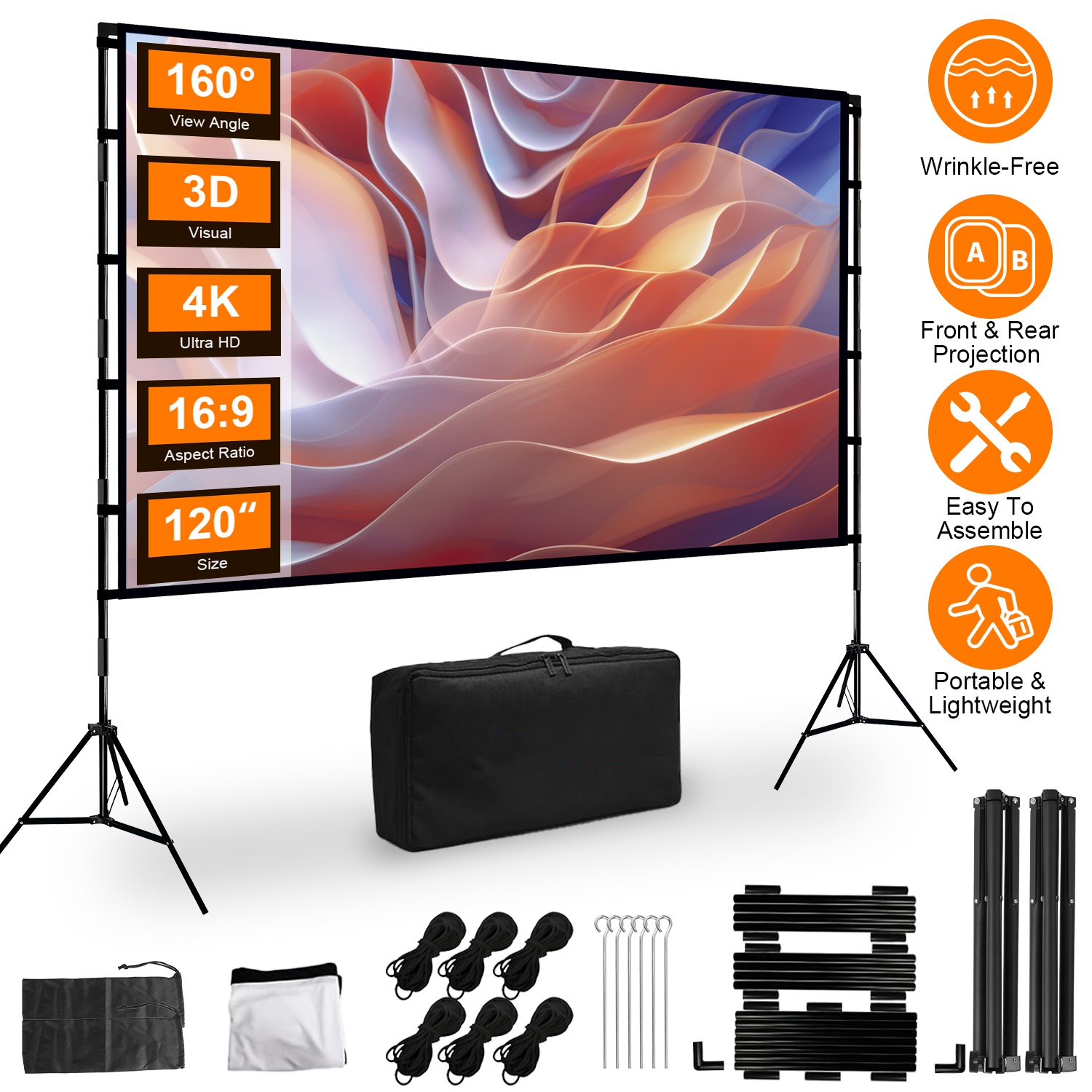 1Pc 120inch Or 100inch Projector Screen With Stand 16 9 4K HD Rear Front Wrinkle Free Portable And Foldable Movie Carry Bag For Indoor Outdoor Home Theater Backyard Cinema$97.99View on Mallflare
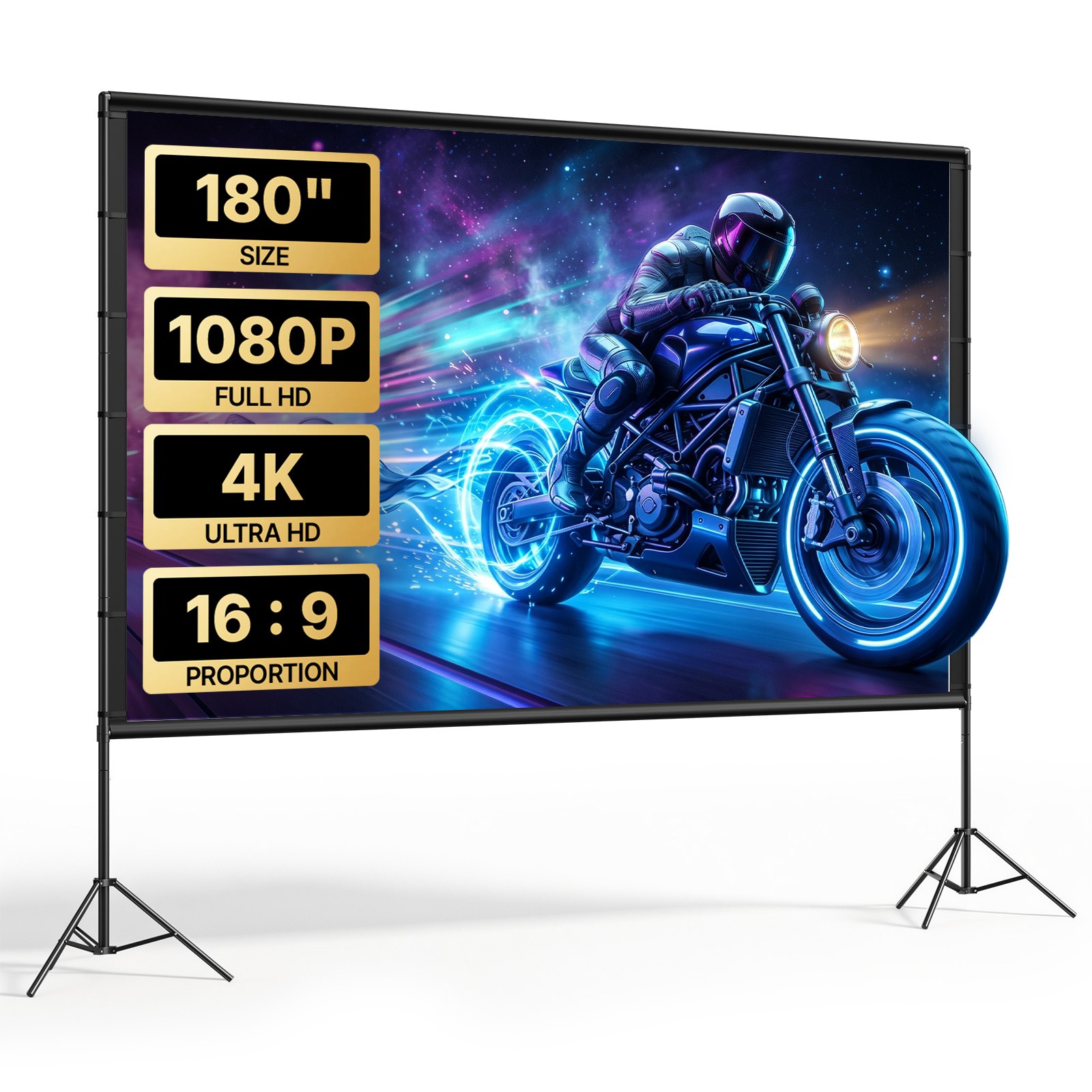 Projector Screen with Stands, 180 Inch 16:9 4K 1080P HD Movie 170° Wide Viewing, Front/Rear Projection Dual Tripod, Ground Stakes & Guy Ropes for Indoor Outdoor Nights$98.99View on Mallflare
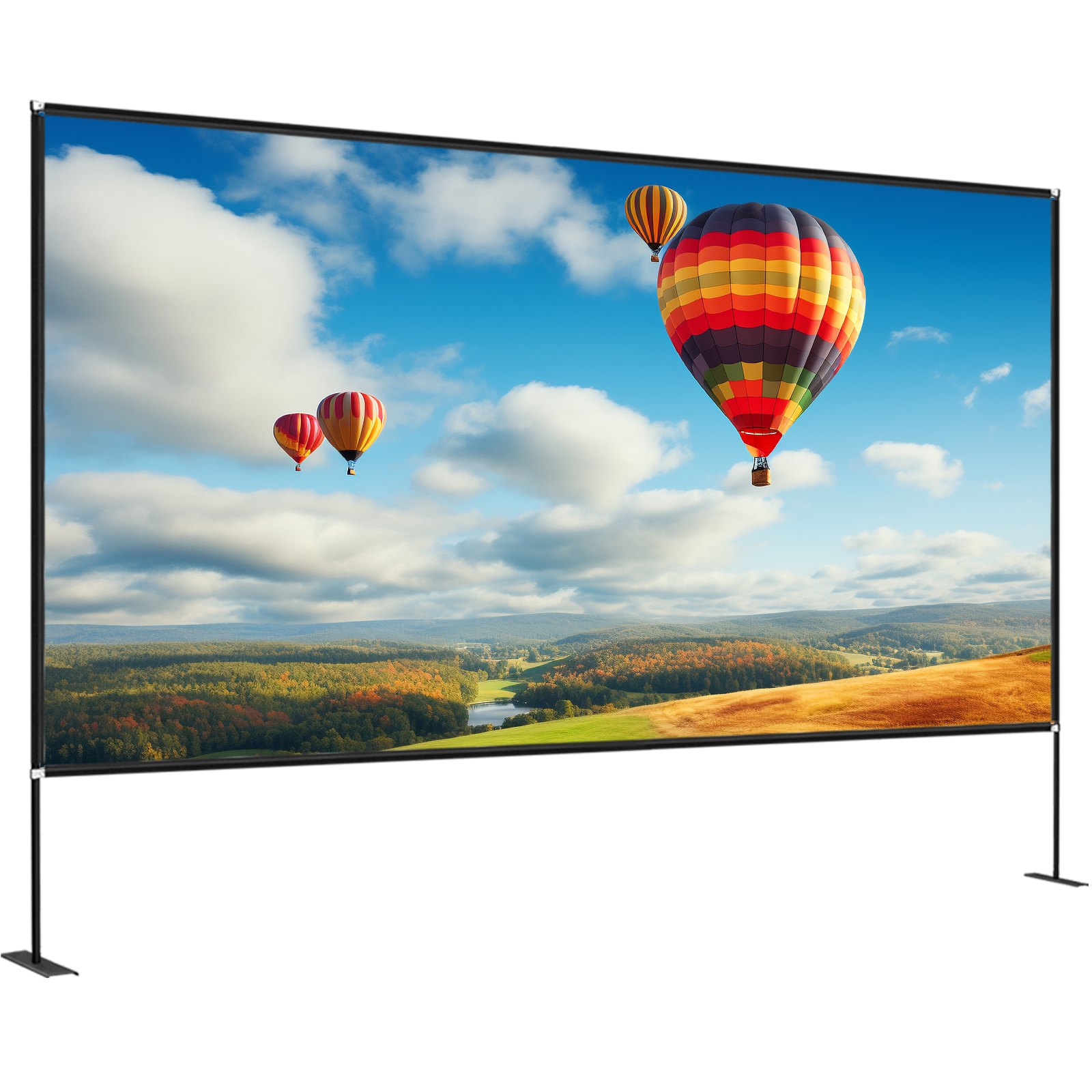 Projector Screen With Stand 150inch Portable Movie 16:9 4K HD Wide Angle Outdoor Easy Assembly Storage Bag For Home Theater Office Use$120.99View on Mallflare
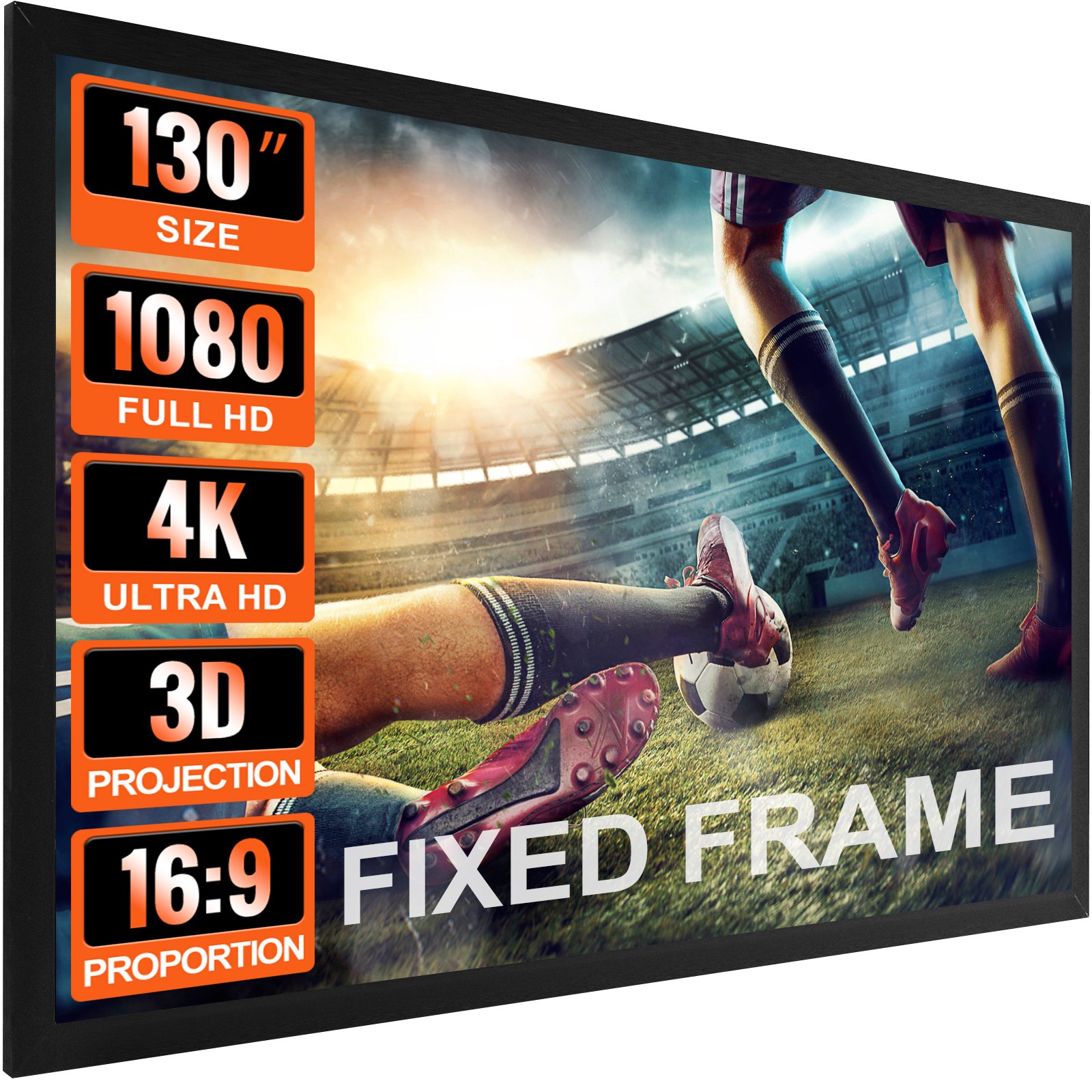 Projector Screen Fixed Frame 130inch Diagonal 16:9 Movie 4K HD With Aluminum Wall Mounted For Home Theater Office$159.99View on Mallflare
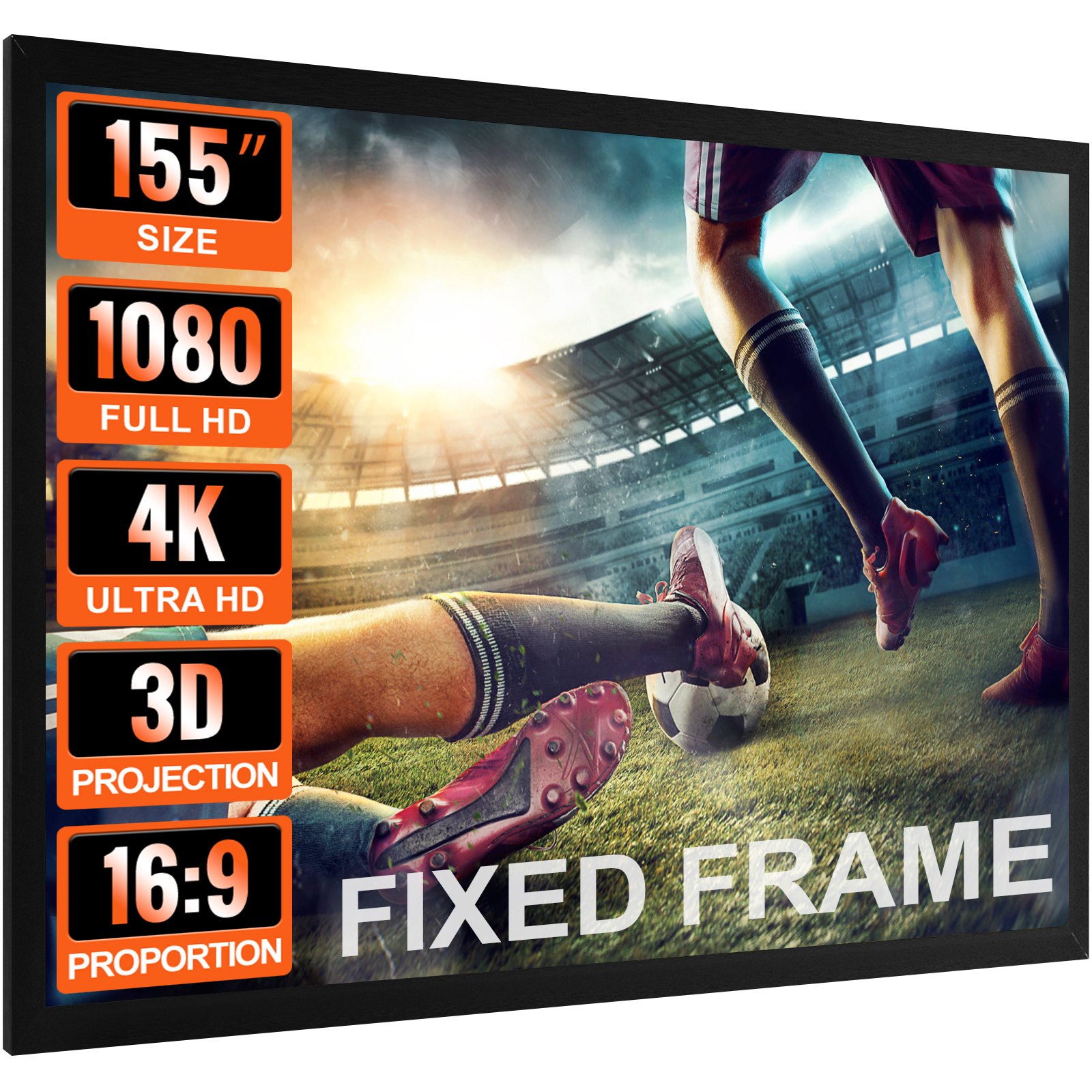 Projector Screen Fixed Frame 155inch 16:9 4K HD Movie Wall Mounted For Theater Home$240.99View on Mallflare
Highlights
- 4K-rated screens require a weave fine enough to avoid visible texture at seating distance—look for a specified surface type such as matte white PVC, grey acoustic weave, or ALR, not generic 'fabric'.
- Gain determines brightness trade-off: 1.0–1.1 gain matte white is the reference for dark rooms; 0.6–0.8 grey improves black levels in ambient light but dims highlights; ALR rejects off-axis light at the cost of a narrow cone.
- Fixed-frame tensioned screens hold flatness with a rigid aluminum frame and rear tension cords, while tripod and pop-up portable screens rely on crossbars and wrinkle-free folding—flatness is the single biggest factor in visible 4K sharpness.
- Outdoor screens need weighted base feet, ground stakes, and sandbags because wind load on a 120–150 inch surface is the failure point; portable tripod models trade rigidity for packability with a carry bag.
Best use cases
- Dedicated dark home theater: choose a fixed-frame tensioned matte white screen at 1.0–1.1 gain in 16:9—skip portable tripod units, whose seams and edge curl soften 4K detail.
- Backyard movie nights and rentals: pick a 100–120 inch tripod or pop-up screen with sandbags, stakes, and a carry bag; skip fixed frames and ALR surfaces, which cannot be relocated or used in ambient light.
- Bright living room with side windows: use a grey or ALR screen at 0.6–0.8 gain to preserve contrast; skip matte white high-gain surfaces, which wash out under ambient light.
- Business presentations and classrooms: choose a 4:3 or 16:9 pull-up or tripod screen sized to the room's throw; skip 150-inch outdoor screens, which are too large for typical conference walls.
Buying tips
- Match screen size to throw and seating: for 16:9, image width = throw distance × throw ratio; a 100-inch diagonal is about 87 inches wide, so verify your projector's throw ratio covers it.
- Confirm the aspect ratio matches your source: 16:9 for film and streaming, 4:3 for legacy presentation content—a mismatched ratio creates unused black bars or cropping.
- Check the resolution rating's basis: a true 4K screen specifies surface weave or gain; '4K HD' on a portable listing usually means the projector signal is supported, not that the surface resolves 4K.
- For outdoor use, require weighted feet or sandbags plus ground stakes and guy ropes; a 120–150 inch screen has large sail area and will tip without ballast.
Specs
| Surface Material | Matte white PVC / grey weave / ALR |
|---|---|
| Gain Range | 0.6–1.1 (matte vs grey/ALR) |
| Aspect Ratio | 16:9 (film) / 4:3 (presentation) |
| Mount Type | Fixed frame / tripod / pull-up |
Related searches
What to check before buying
- Measure the wall or yard space: a 120-inch 16:9 screen is about 105 × 59 inches, and a 150-inch is about 131 × 74 inches—add frame and stand clearance.
- Verify projector throw ratio and lumens: a dim projector cannot fill a 150-inch screen at 4K brightness; calculate foot-lamberts from lumens and screen area.
- Check floor and mounting: tripod and pop-up screens need level ground or a stable floor stand; fixed frames need wall studs or a compatible mount.
- Confirm voltage and plug standard for any motorized or powered screen, and confirm the screen ships with the stand, carry bag, and stakes you need.
FAQ
Data sources: eBay / Amazon listings and product attribute feeds. Updated Nov 27, 2026.
Some links on this page are affiliate links. If you buy after clicking one, we may earn a commission at no extra cost to you. This does not change which products appear here or their order. Affiliate disclosure.