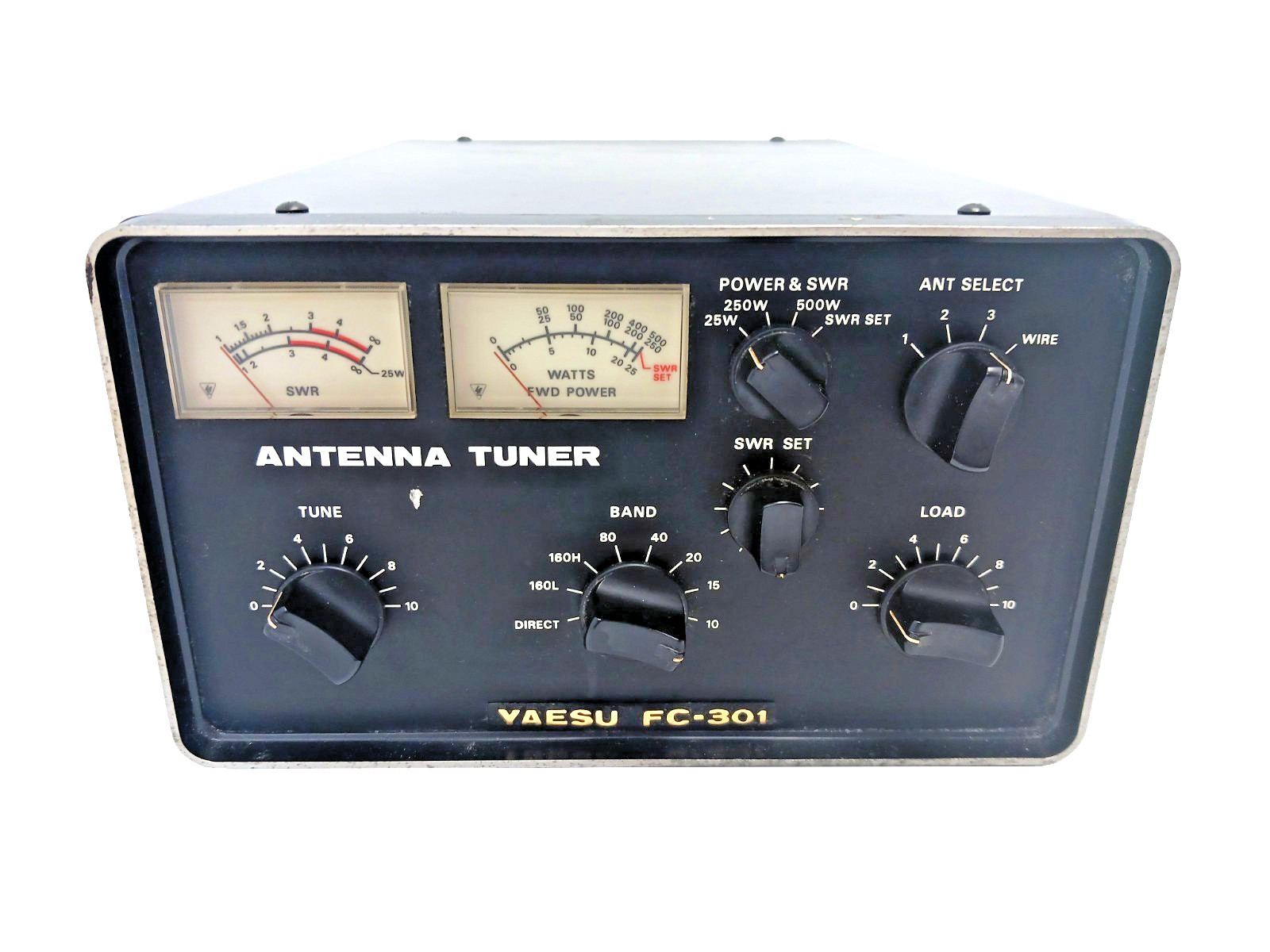

Photos from current listings. Actual item, color, and included accessories may vary.
Yaesu Antenna Tuner Buying Guide
Yaesu antenna tuners are automatic ATUs designed to pair with specific Yaesu transceivers via a dedicated control cable, matching a transmitter's 50-ohm output to a non-resonant or multi-band antenna. The core trade-off is radio-specific integration versus universal compatibility: Yaesu-native tuners (FC-series) offer one-button, band-following operation but only with supported rigs, while universal ATUs like the ATR-1000 work with any brand at reduced integration and often lower power handling. The decision rule: buy the Yaesu FC model explicitly listed for your transceiver's control protocol if you want seamless operation; choose a universal ATU only if you need cross-brand flexibility and can accept manual keying and lower continuous power margins.
Key takeaways
- Yaesu FC tuners require a model-specific control cable and radio menu setting; without the correct cable the tuner will not auto-start or band-follow.
- The FC-30 covers HF/50 MHz for the FT-857/897 family, while the FC-757AT is an older HF-only unit for legacy rigs; connector pinouts and control protocols differ by generation.
- ATR-1000-class universal tuners specify 1000 W PEP and 1.8-30 MHz, but continuous carrier ratings are typically much lower than the PEP headline.
At a glance
- Category
- Antenna Tuners & SWR Meters
- Last updated
- Nov 23, 2026
Current offers
Highlights
- Yaesu FC tuners require a model-specific control cable and radio menu setting; without the correct cable the tuner will not auto-start or band-follow.
- The FC-30 covers HF/50 MHz for the FT-857/897 family, while the FC-757AT is an older HF-only unit for legacy rigs; connector pinouts and control protocols differ by generation.
- ATR-1000-class universal tuners specify 1000 W PEP and 1.8-30 MHz, but continuous carrier ratings are typically much lower than the PEP headline.
- Automatic ATUs store tuning solutions per band segment in internal memory; the number of memory channels and relay count directly affect retune speed and wear.
Best use cases
- Best fit: FT-857/897 owners wanting 50 MHz coverage should pick the FC-30 with its dedicated cable; skip universal ATUs unless you accept manual tune initiation.
- Best fit: legacy HF rigs with a compatible Yaesu control port should use the matching FC-757AT or FC-800 for one-button band-following; wrong fit: modern SDR or non-Yaesu radios, which cannot drive these tuners.
- Best fit: multi-brand shack operators running mixed Yaesu, Icom, and Kenwood should choose the ATR-1000 universal ATU and tune manually; wrong fit: QRP-only or low-power digital operators who need fine matching at under 10 W.
- Best fit: mobile installs should select a tuner rated for the vehicle's voltage and mounting environment, such as the FC-30 in a mobile bracket; wrong fit: base-station-only units with exposed relays in damp vehicles.
Buying tips
- Match the tuner's control protocol to your exact radio model: FC-30 for FT-857/897, FC-757AT for older HF rigs; a mismatch means no automatic tuning.
- Size power handling to your radio's PEP plus headroom: a 100 W rig needs a tuner rated at least 200 W PEP for safe continuous digital-mode use.
- Check frequency coverage: HF-only tuners stop at 30 MHz; if you operate 6 m, choose an HF/50 MHz model like the FC-30.
- Prefer tuners with more internal memory channels and higher relay counts for faster retuning and longer service life across multiple bands.
Specs
| Tuning Type | Automatic relay-switched ATU |
|---|---|
| Frequency Coverage | HF 1.8-30 MHz or HF/50 MHz |
| Power Handling | 100-1000 W PEP (model dependent) |
| Radio Integration | Yaesu control cable vs universal RF-sense |
Related searches
What to check before buying
- Confirm your transceiver model has a compatible Yaesu tuner control port and that the correct interface cable is included or available separately.
- Measure your antenna's feedpoint impedance range and expected SWR; automatic tuners have matching limits, typically around 3:1 to 10:1 depending on model.
- For mobile use, verify the tuner's DC voltage requirement matches your vehicle system and that the mounting location allows relay access and ventilation.
- Check connector type on both tuner and radio (SO-239 vs BNC vs PL-259) and budget for adapters or jumpers before installation.
FAQ
Data sources: eBay / Amazon listings and product attribute feeds. Updated Nov 23, 2026.
Some links on this page are affiliate links. If you buy after clicking one, we may earn a commission at no extra cost to you. This does not change which products appear here or their order. Affiliate disclosure.