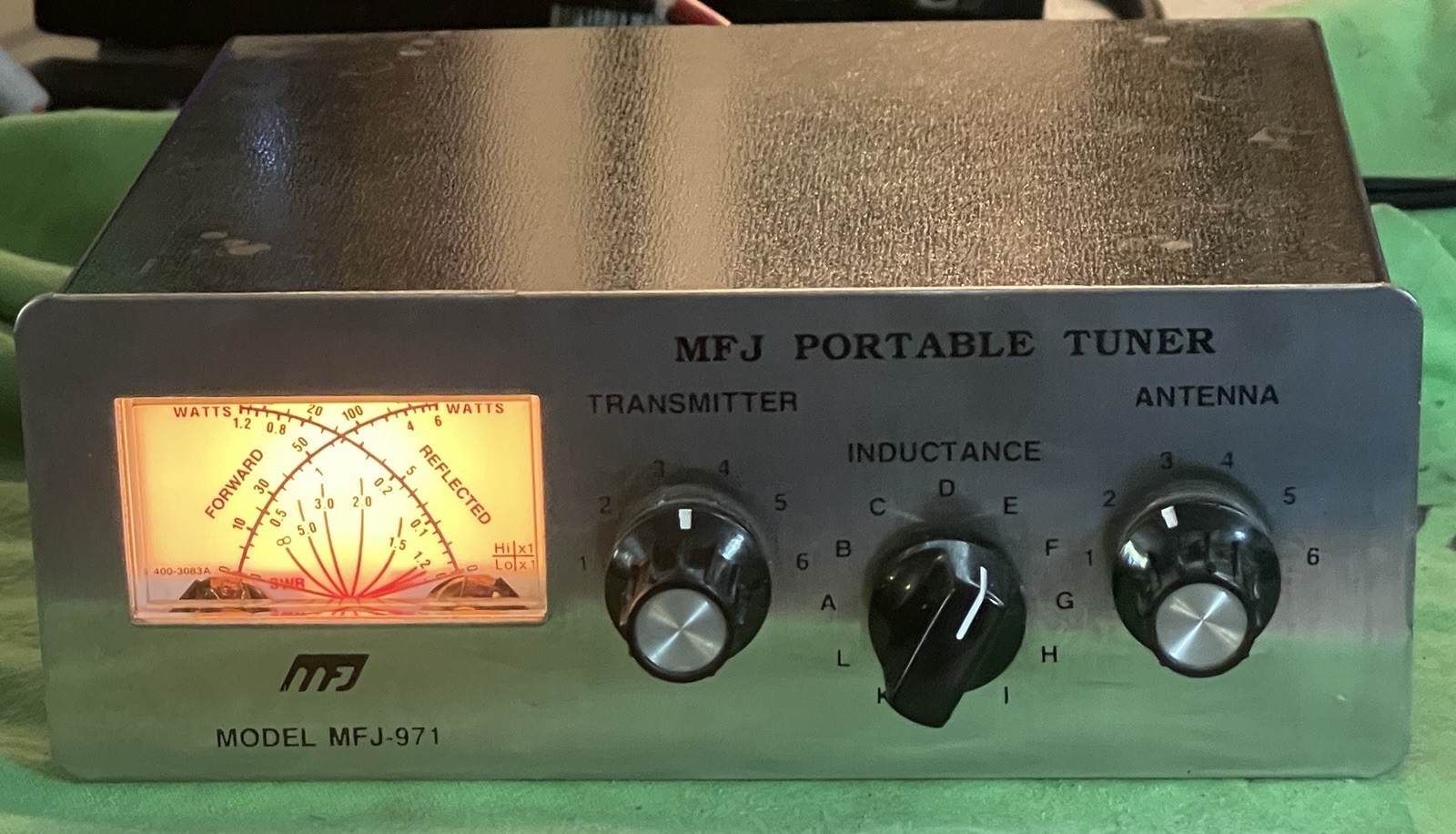

Photos from current listings. Actual item, color, and included accessories may vary.
Qrp Antenna Tuner Buying Guide
A QRP antenna tuner matches a low-power transmitter (typically 5–20 W) to a random-length wire, whip, or portable antenna so the radio sees a safe load and radiates efficiently. The core trade-off is manual vs automatic tuning: manual Z-match/L-network tuners are cheap, lightweight, and need no DC power, while automatic ATUs add MCU-controlled relay banks for push-button matching at a weight and cost premium. Buyers should choose a tuner rated at or above their rig's key-down power and covering the bands they actually operate; anything with a lower power ceiling or narrower band coverage is a compromise.
Key takeaways
- Manual QRP tuners (Z-match, L-network, T-match) use air-variable capacitors and tapped inductors — no power supply, no relays, and nothing to fail in the field.
- Automatic QRP ATUs (e.g., Elecraft T1-class) use latching relays and an MCU to store per-band memories, but require 9V DC or internal battery and add weight.
- Power handling is the hard spec: 5 W QRP tuners are for CW/FT8 QRP rigs, while 20 W ATUs such as the Elecraft T1 cover 160–6 m and tolerate typical SSB peaks.
At a glance
- Category
- Antenna Tuners & SWR Meters
- Last updated
- Nov 23, 2026
Current offers
Highlights
- Manual QRP tuners (Z-match, L-network, T-match) use air-variable capacitors and tapped inductors — no power supply, no relays, and nothing to fail in the field.
- Automatic QRP ATUs (e.g., Elecraft T1-class) use latching relays and an MCU to store per-band memories, but require 9V DC or internal battery and add weight.
- Power handling is the hard spec: 5 W QRP tuners are for CW/FT8 QRP rigs, while 20 W ATUs such as the Elecraft T1 cover 160–6 m and tolerate typical SSB peaks.
- Band coverage varies widely — Z-match designs typically span 3–28 MHz, while premium ATUs cover 160–6 m continuously; 60 m and 6 m access is the usual differentiator.
Best use cases
- Best fit: SOTA/POTA operators running a 5 W CW rig into a random wire — pick a 5 W manual Z-match for zero battery drain and sub-200 g pack weight.
- Best fit: FT8/SSB QRP at 10–20 W with multi-band antennas — choose an automatic ATU like the Elecraft T1 for fast band changes and stored memories.
- Wrong fit: Using a 5 W-rated manual tuner behind a 100 W rig — skip it; the air-variable capacitor will arc and the tuner will fail.
- Wrong fit: Expecting an automatic QRP ATU to tune a long low-band dipole at full 20 W on 160 m — plan a manual high-range tuner or accept reduced power.
Buying tips
- Match tuner power rating to key-down power: 5 W tuners for QRP CW/FT8, 20 W tuners for SSB QRP — derate by 50% for sustained digital modes.
- Check band coverage against your antenna plan: 3–28 MHz Z-match covers 80–10 m; only 160–6 m ATUs give you 60 m and 6 m access.
- For manual tuners, confirm the capacitor type — air-variable with ceramic insulation is durable; cheap film trimmers drift and arc at QRP peaks.
- For automatic tuners, verify DC power (internal 9V vs external) and whether tuning memories persist per band without re-tuning each session.
Specs
| Tuning Type | Manual Z-match/L vs Automatic relay ATU |
|---|---|
| Power Rating | 5 W CW / 20 W SSB QRP typical |
| Band Coverage | 3-28 MHz manual / 160-6 m auto |
| Power Source | None (manual) vs 9V DC/battery |
Related searches
What to check before buying
- Measure your rig's key-down output power and antenna feedpoint impedance range — tuners are specified by max power and matching range, not just band.
- Confirm the ATU's connector type (typically BNC or SO-239) matches your radio and antenna jumpers; BNC is standard on QRP rigs.
- For portable use, weigh the tuner and plan DC power for automatic units — manual tuners need none, ATUs need 9V battery or external supply.
- Verify band coverage against your license privileges and antenna design so 60 m/6 m operation isn't blocked by a 3–28 MHz tuner.
FAQ
Data sources: eBay / Amazon listings and product attribute feeds. Updated Nov 23, 2026.
Some links on this page are affiliate links. If you buy after clicking one, we may earn a commission at no extra cost to you. This does not change which products appear here or their order. Affiliate disclosure.