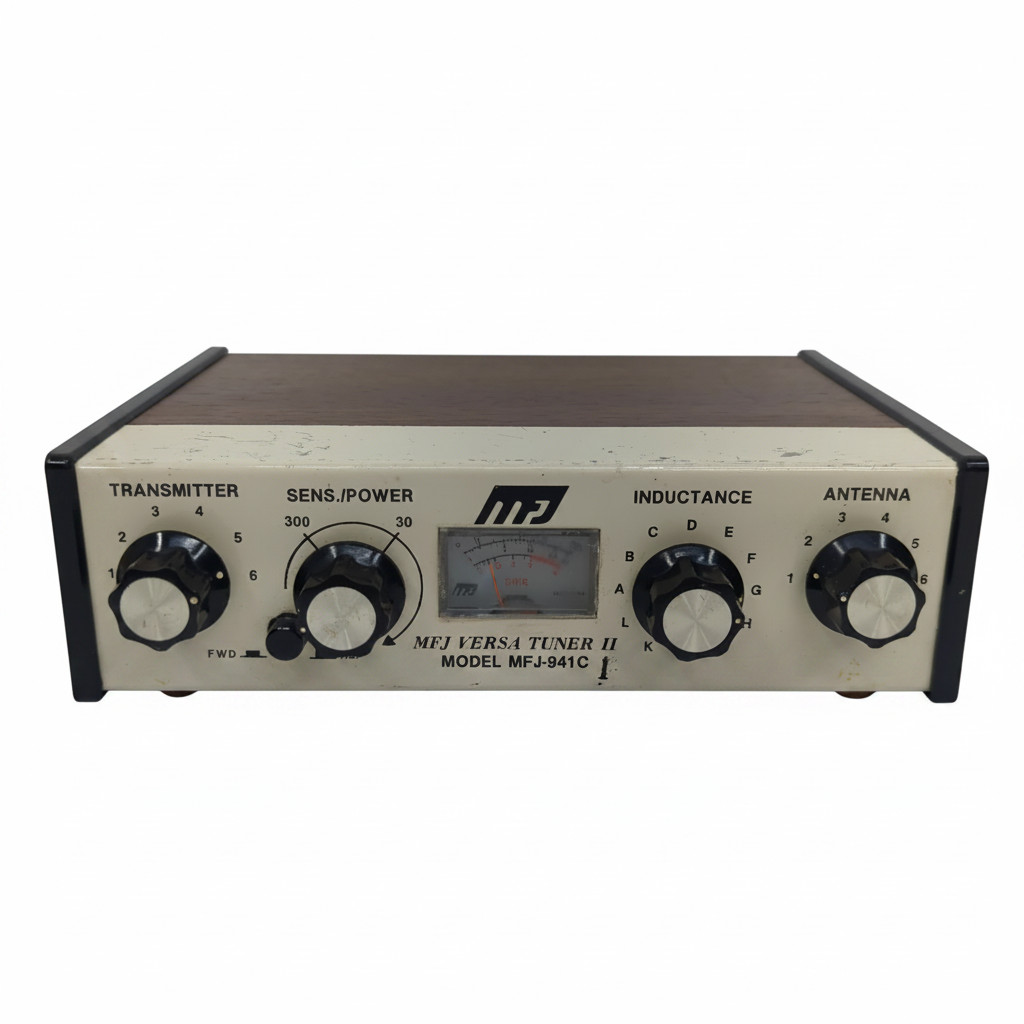

Photos from current listings. Actual item, color, and included accessories may vary.
Mfj Swr Meter Buying Guide
An MFJ SWR meter is a cross-needle or directional wattmeter used to measure forward/reflected power and standing-wave ratio on HF/VHF antenna systems. The primary trade-off is meter movement quality and true cross-needle vs single-needle switching: cross-needle meters read PEP and SWR simultaneously without range flipping, while cheaper single-needle units force range changes and read average power only. The decision rule: buy a cross-needle meter rated for your maximum PEP plus 50% headroom for durable accurate tuning; skip any meter without a PEP/CW scale or with molded plastic input jacks.
Median $85.00
Key takeaways
- Cross-needle meters (MFJ-969/989 class) display forward power, reflected power, and SWR at a glance; single-needle meters require range switching between forward and reflected readings.
- PEP vs average detection: meters with true PEP hold circuits capture SSB voice peaks, while average-reading meters under-report SSB power by 3-6 dB.
- Power range tiers are fixed per model — typical MFJ coverage is 30W/300W ranges on HF/VHF meters, with high-power tuner-integrated units rated to 3 kW PEP.
At a glance
- Category
- Antenna Tuners & SWR Meters
- Last updated
- Nov 23, 2026
Current offers
Highlights
- Cross-needle meters (MFJ-969/989 class) display forward power, reflected power, and SWR at a glance; single-needle meters require range switching between forward and reflected readings.
- PEP vs average detection: meters with true PEP hold circuits capture SSB voice peaks, while average-reading meters under-report SSB power by 3-6 dB.
- Power range tiers are fixed per model — typical MFJ coverage is 30W/300W ranges on HF/VHF meters, with high-power tuner-integrated units rated to 3 kW PEP.
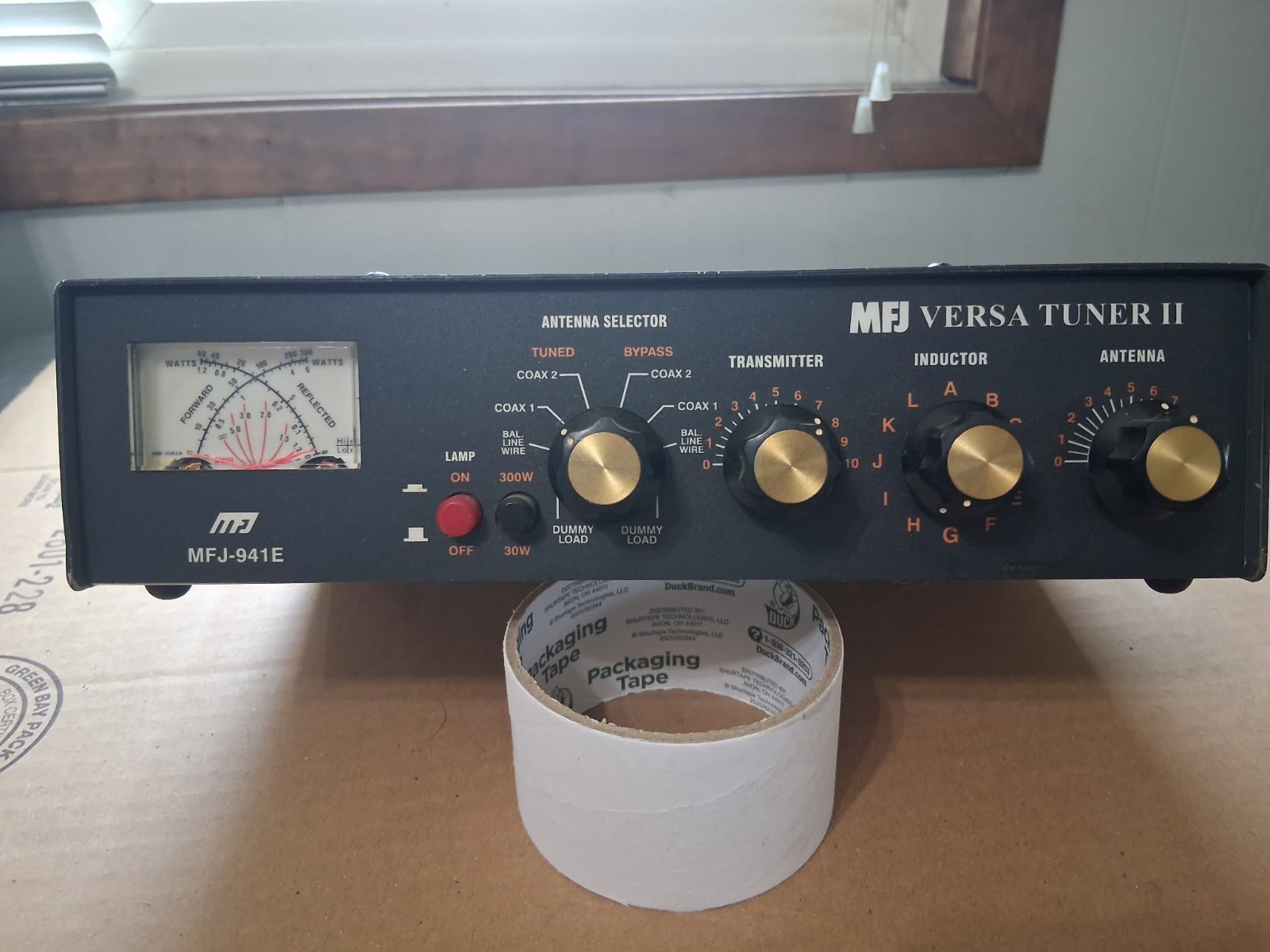
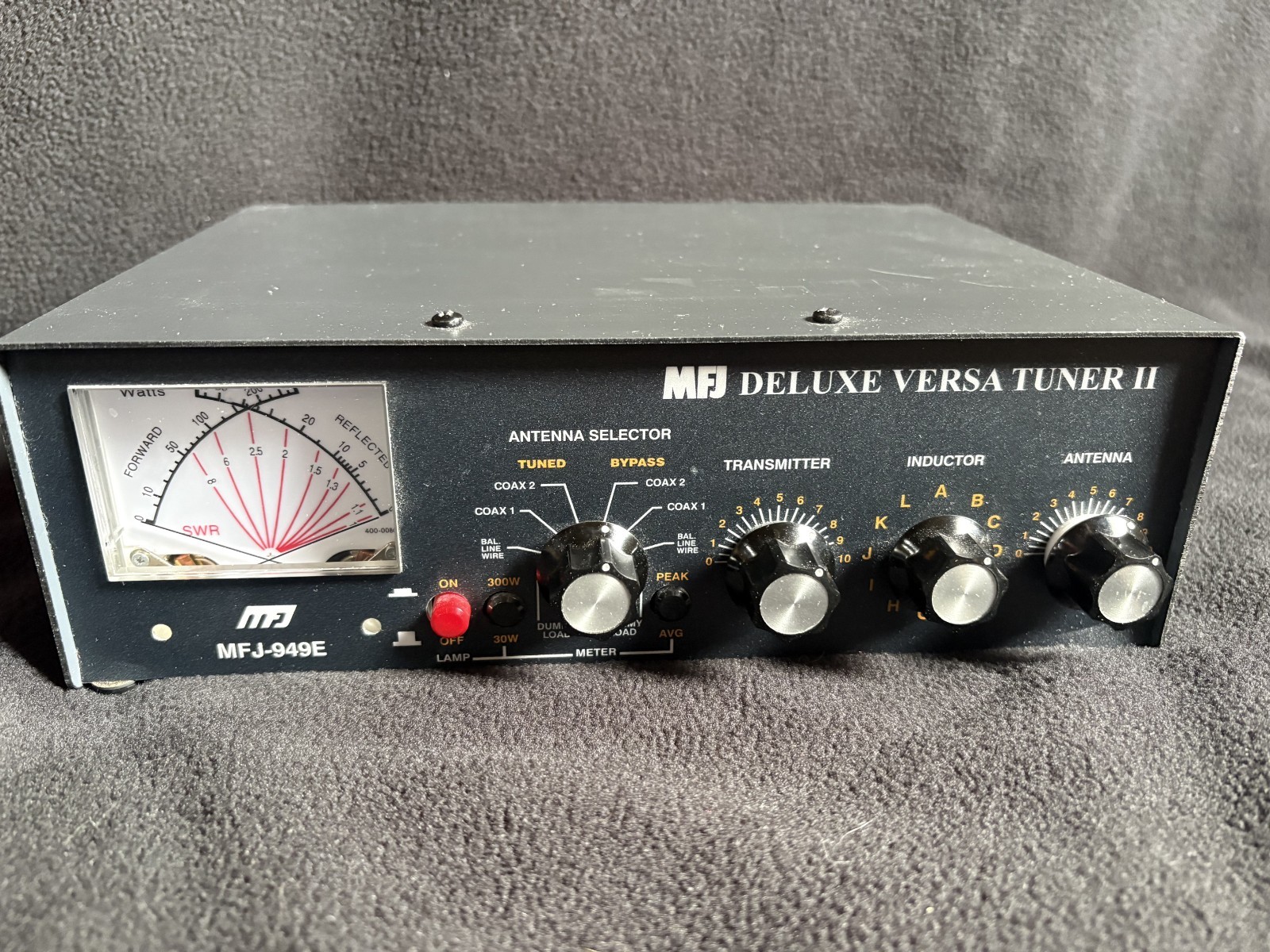
- Roller inductor tuners like the MFJ-989C integrate a 3 kW PEP tuner, cross-needle SWR/wattmeter, and 6-position antenna switch in one chassis, eliminating separate meter-to-tuner cabling.
Best use cases
- HF station with an amplifier: choose a 3 kW PEP integrated tuner/meter (MFJ-989C class) so the meter survives amplifier PEP peaks and the roller inductor handles 160-10m.
- QRP or 100W barefoot HF/VHF operation: choose a standalone cross-needle 30W/300W meter with SO-239 jacks; skip 3 kW tuner-integrated units as overkill and insertion-loss-heavy.
- Portable field operation: choose a compact single-needle or cross-needle meter with a metal case and binding-post ground; skip roller-inductor tuner combos, which weigh several pounds and demand bench space.
- VHF/UHF FM only: choose a dedicated VHF/UHF wattmeter with 144/440 MHz calibration; skip HF-only meters whose VHF scale is uncalibrated and reads 20-30% low.
Buying tips
- Size power range so your maximum PEP sits at 60-70% of the top scale: a 100W SSB rig fits a 300W meter range, while a 1.5 kW amplifier needs the 3 kW PEP tier.
- Insist on SO-239 (UHF) connectors for HF gear and N-type for VHF/UHF runs; molded plastic jacks crack and introduce ground-loop leakage — metal chassis jacks are the durability marker.
- Cross-needle movement beats single-needle for tuning: SWR is read directly at the needle crossing, eliminating the forward/reflected arithmetic and range-switch errors.
- Roller inductor tuners (MFJ-989C class) cover 160-10m continuously and handle 3 kW PEP; switched-L or tapped-coil tuners are lighter but give coarser matching on 160m and WARC bands.
Specs
| Meter Movement | Cross-needle vs single-needle |
|---|---|
| Power Range | 30W / 300W / 3kW PEP tiers |
| Connector Type | SO-239 (HF) / N-type (VHF) |
| Band Coverage | 1.8-30 MHz HF; 144/440 MHz VHF |
Related searches
What to check before buying
- Measure your amplifier or transceiver PEP output first — meter top scale must be at least 1.5× that figure to avoid pegging and movement damage.
- Confirm connector gender and type on both rig and antenna feedline: SO-239 male PL-259 vs N-type vs BNC; mismatches need adapters that add loss.
- Check bench depth and weight for tuner-integrated units (roller inductor tuners are large, heavy chassis) vs a standalone meter's smaller footprint.
- Verify the meter covers your bands: HF meters calibrate 1.8-30 MHz; VHF/UHF operation requires a model with 144/440 MHz scales, not an HF meter's uncalibrated VHF row.
FAQ
Data sources: eBay / Amazon listings and product attribute feeds. Updated Nov 23, 2026.
Some links on this page are affiliate links. If you buy after clicking one, we may earn a commission at no extra cost to you. This does not change which products appear here or their order. Affiliate disclosure.