
Photos from current listings. Actual item, color, and included accessories may vary.
Ham Radio Tuner Buying Guide
A ham radio tuner matches your transmitter's 50-ohm output to an antenna's actual feedpoint impedance, protecting the radio and radiating maximum power. The core trade-off is manual vs. automatic tuning and power handling (QRP to legal limit) versus cost and complexity. Choose an auto-tuner for fast band-hopping and a manual tuner for QRP, portable, or high-power budget setups; skip any tuner rated below your rig's PEP output.
Median $144.50
Key takeaways
- Automatic tuners (ATU-100, mAT-180H, FC-757AT) use relay-switched L/C networks and tune in 1-3 seconds; manual tuners (MFJ-941, MFJ-900) use a variable inductor and capacitor you adjust by ear/SWR meter.
- Power rating is PEP and mode-dependent: QRP tuners handle 10-30W, mid-range 100-300W, and legal-limit tuners 1.5kW; SSB PEP is roughly 2-3x CW/FT8 continuous rating, so derate for digital modes.
- Tuning range is defined by the impedance transformation ratio (e.g., 10:1 or 3:1) and frequency coverage (typically 1.8-30MHz HF, some to 54MHz); a 3:1 tuner cannot match an end-fed half-wave on all bands.
At a glance
- Category
- Antenna Tuners & SWR Meters
- Last updated
- Nov 23, 2026
Current offers
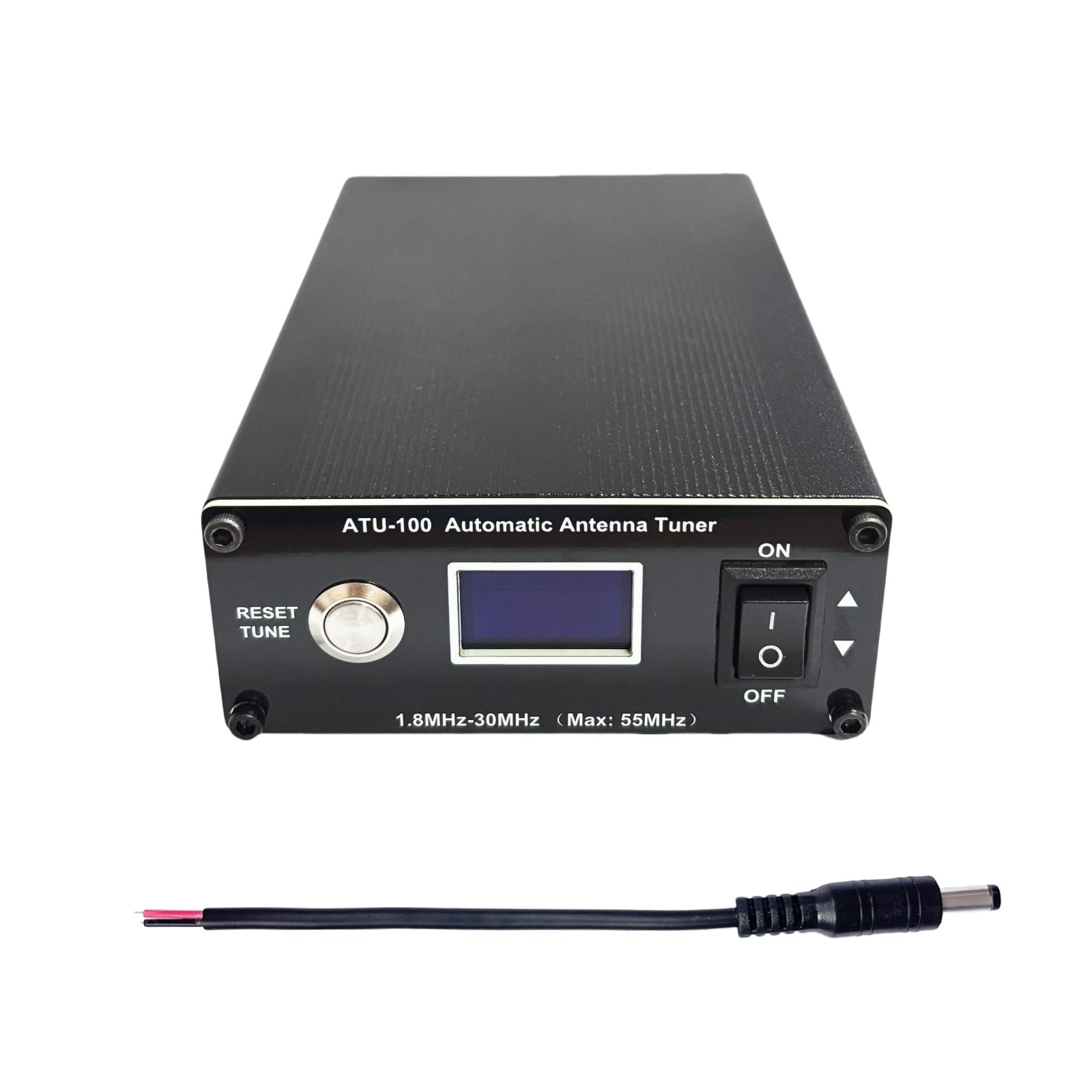 ATU-100 EXT Automatic Antenna Tuner, 1.8-55MHz Ham Radio Tuner$138.79View on eBay
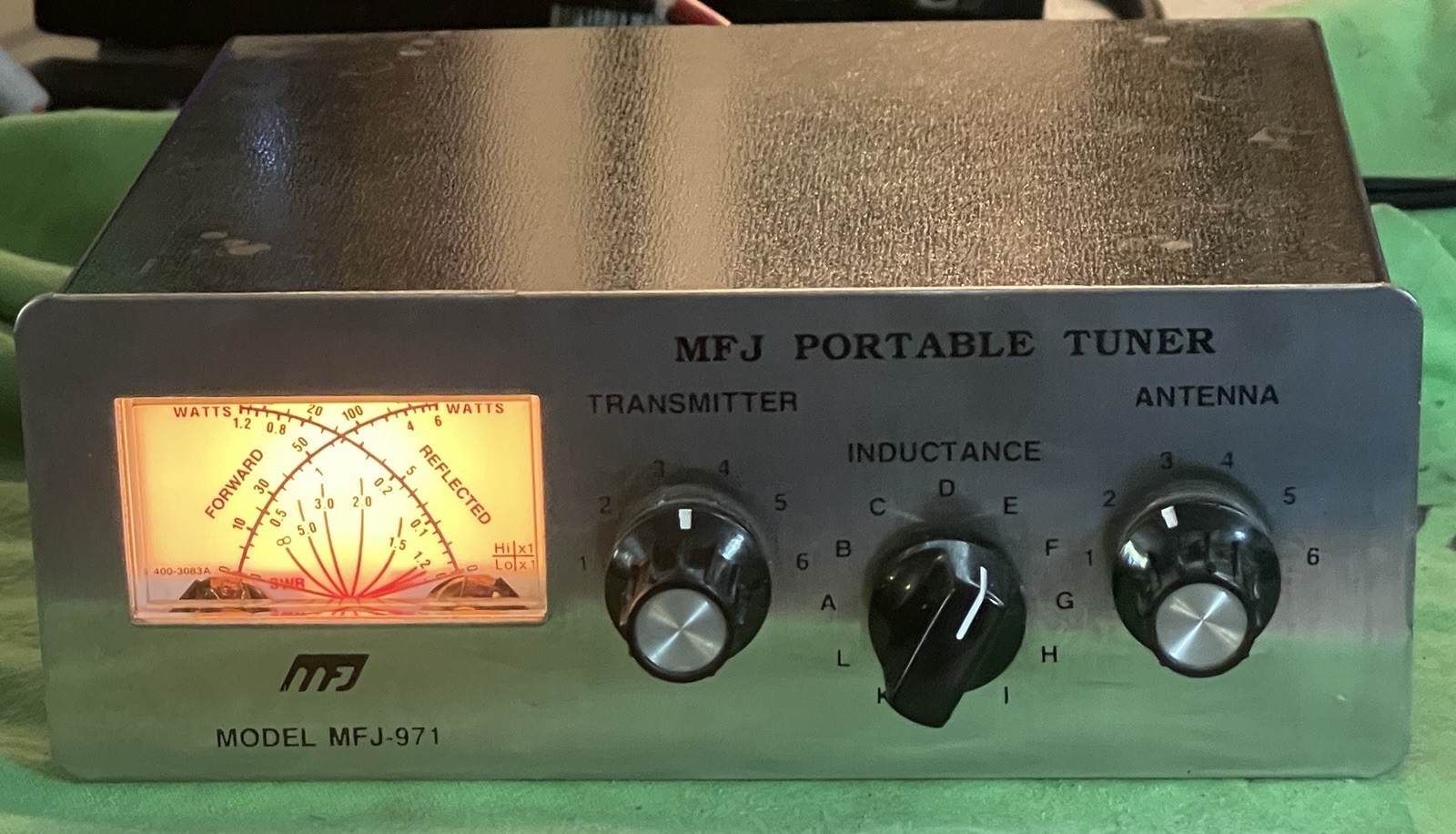 MFJ-971 Ham Radio QRP Portable Antenna Tuner (Excellent condition)$139.00View on eBay
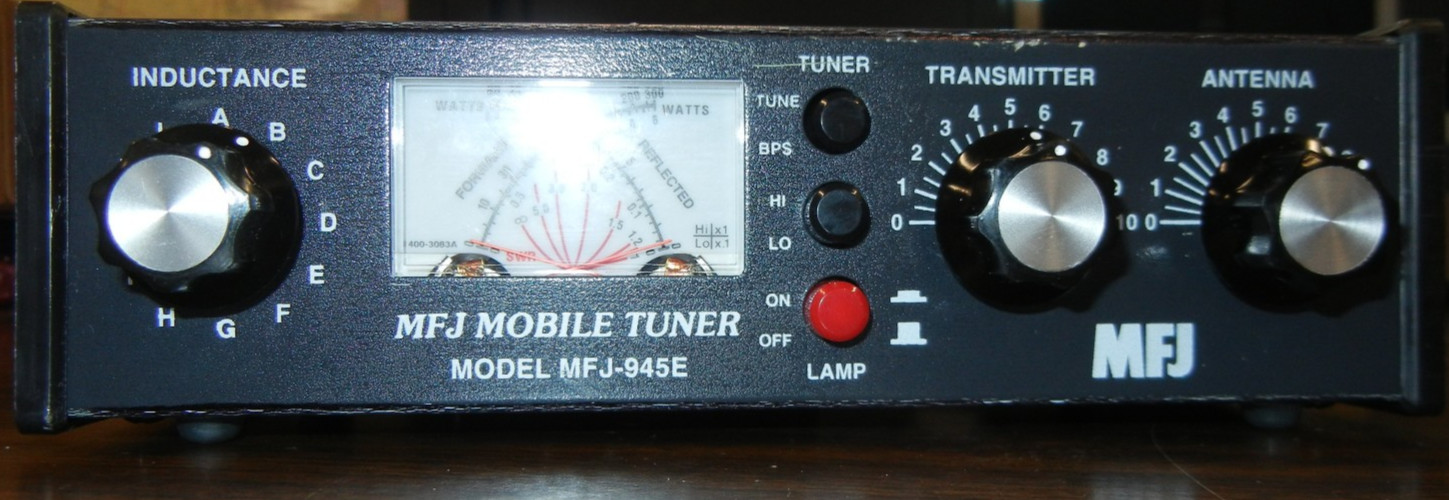 Nice MFJ-945E MOBILE TUNER for Ham Radio Antennas - HF VHF CB SW WARC MFJ945E$149.99View on eBay
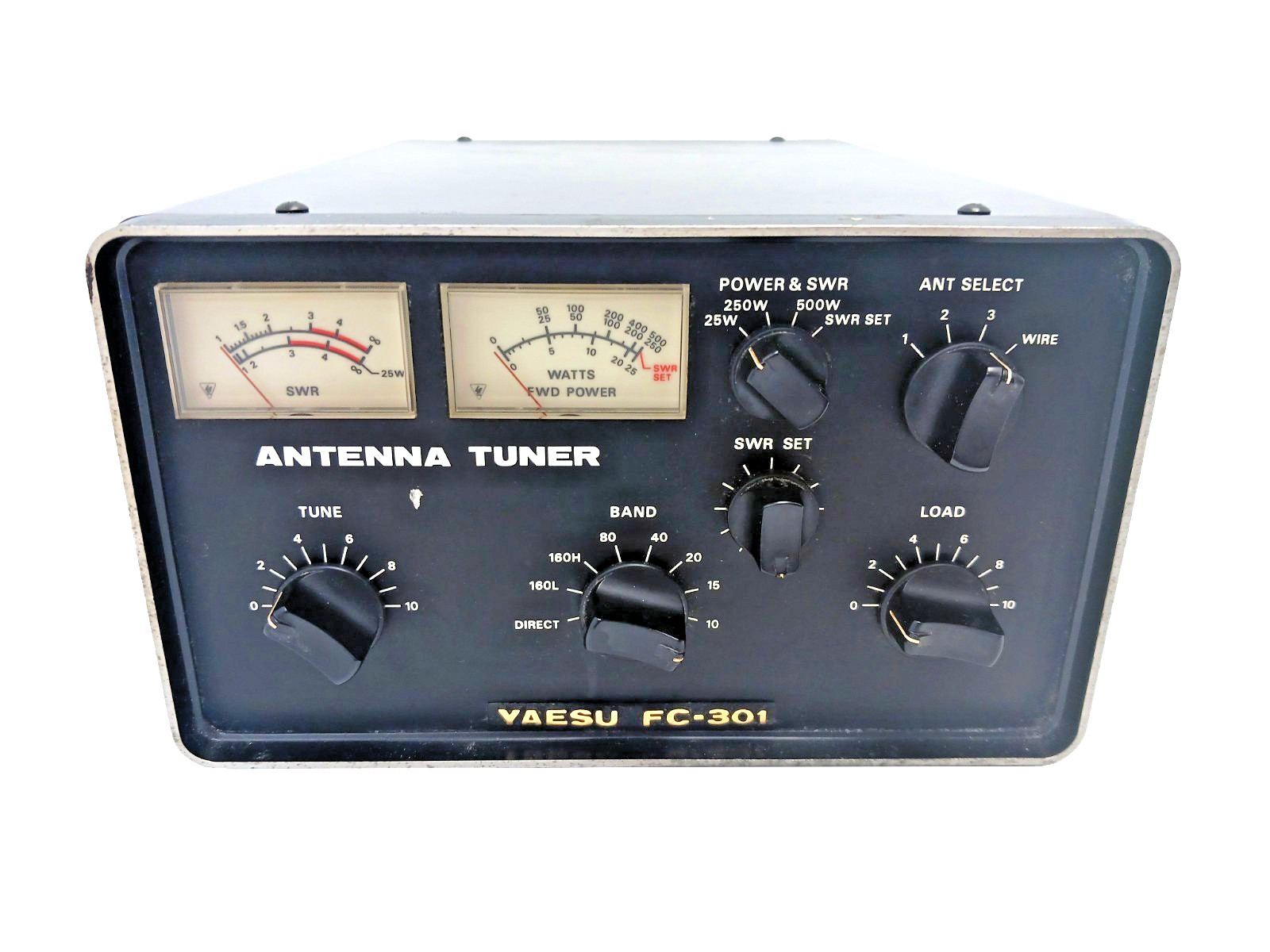 Yaesu FC-301 Ham Radio Antenna Tuner - TESTED & WORKS$199.99View on eBay
Highlights
- Automatic tuners (ATU-100, mAT-180H, FC-757AT) use relay-switched L/C networks and tune in 1-3 seconds; manual tuners (MFJ-941, MFJ-900) use a variable inductor and capacitor you adjust by ear/SWR meter.
- Power rating is PEP and mode-dependent: QRP tuners handle 10-30W, mid-range 100-300W, and legal-limit tuners 1.5kW; SSB PEP is roughly 2-3x CW/FT8 continuous rating, so derate for digital modes.
- Tuning range is defined by the impedance transformation ratio (e.g., 10:1 or 3:1) and frequency coverage (typically 1.8-30MHz HF, some to 54MHz); a 3:1 tuner cannot match an end-fed half-wave on all bands.
- Built-in SWR/wattmeter (cross-needle on MFJ-941C/971) saves a separate meter; auto-tuners need a control cable or RF-sensing to interface with the rig, and some (mAT-180H) are brand-specific for ICOM.
Best use cases
- Base HF station with a multi-band doublet or vertical: pick a 300W automatic tuner (mAT-180H class) for fast band changes; skip QRP-only tuners that limit you to 10-30W.
- QRP portable/SOTA operation: choose a compact manual QRP tuner (MFJ-971 class, 150W SSB) or ATU-100 for lightweight auto-tuning; avoid 1.5kW boat-anchor tuners.
- Vintage or tube rig restoration: a manual tuner with a roller inductor (MFJ-941D) handles high SWR and gives visual feedback; skip microcontroller auto-tuners that need a modern transceiver interface.
Buying tips
- Match tuner PEP rating to your rig's maximum output plus 20% headroom; for FT8/digital reduce to 50% of the SSB PEP rating (a 300W PEP tuner is ~150W continuous).
- Confirm impedance range: a 3:1 balun/unun tuner covers only mild mismatches; for end-fed wires or short verticals choose a 10:1 range tuner or add a 9:1 unun.
- Check interface compatibility: mAT-180H and FC-757AT are brand-specific (ICOM/Yaesu) control cables; ATU-100 and MFJ manual tuners are radio-agnostic and work with any 50-ohm rig.
- For balanced feedline (ladder line), use a tuner with a built-in 4:1 balun (MFJ-941E/971) or add an external balun; coax-only tuners lack a balanced output.
Specs
| Tuning Type | Automatic relay vs Manual L/C |
|---|---|
| Power Rating | QRP <30W / 100-300W / 1.5kW PEP |
| Frequency Range | 1.8-30MHz HF (some to 54MHz) |
| Impedance Match | 3:1 to 10:1 ratio; balun 4:1/9:1 |
Related searches
What to check before buying
- Measure your antenna's feedpoint impedance or SWR curve across the bands you operate; if SWR exceeds 3:1 on any band, confirm the tuner's matching range covers it.
- Verify your transceiver's output power in SSB PEP and digital modes, and select a tuner rated at least 1.2x that figure.
- Check the tuner's control interface: does it need a CI-V/band-data cable (brand-specific) or does it RF-sense automatically?
- Confirm bench space and weight: manual tuners with roller inductors are larger and heavier than relay auto-tuners; plan for ventilation if running high power.
FAQ
Data sources: eBay / Amazon listings and product attribute feeds. Updated Nov 23, 2026.
Some links on this page are affiliate links. If you buy after clicking one, we may earn a commission at no extra cost to you. This does not change which products appear here or their order. Affiliate disclosure.