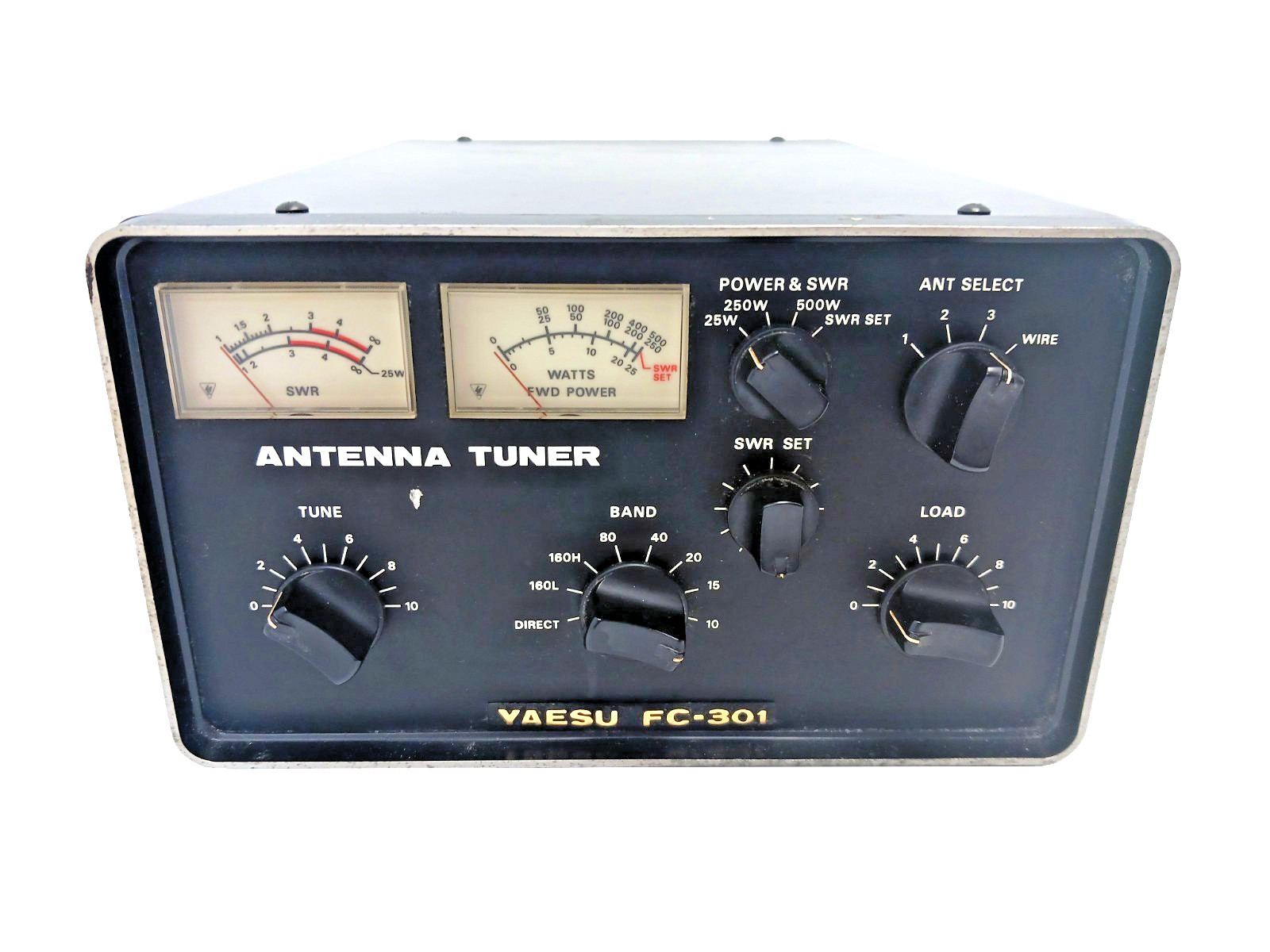

Photos from current listings. Actual item, color, and included accessories may vary.
Fc 40 Tuner Buying Guide
The FC 40 tuner is a classic Yaesu mobile/portable antenna tuner designed to match HF and 6-meter antennas to transceivers, typically paired with the FT-857/897 series. The primary trade-off is whether you need an automatic wide-range tuner with memory and a built-in SWR bridge versus a simpler manual tuner, and whether it must be rig-controlled via the radio's TUNE button. The decision rule: buy the FC 40 only if you own a compatible Yaesu FT-857/897 (or similar) and need semi-automatic matching for mobile or field use; otherwise choose a standalone auto-tuner or manual roller inductor tuner with greater range.
Key takeaways
- The FC 40 is a semi-automatic tuner controlled by the connected Yaesu transceiver: the radio sends a tune command, and the tuner adjusts LC matching while showing status on the radio display.
- Tuning range covers 1.8-54 MHz (160-6 m) with a matching capability of roughly 16.7 to 150 ohms (about 3:1 SWR) — adequate for mobile whips and random wires, but not for extreme mismatches.
- It uses switched L and C banks with latching relays and stores tuning settings in memory for fast band changes, unlike manual tuners that must be re-tuned every time.
At a glance
- Category
- Antenna Tuners & SWR Meters
- Last updated
- Nov 23, 2026
Current offers
Highlights
- The FC 40 is a semi-automatic tuner controlled by the connected Yaesu transceiver: the radio sends a tune command, and the tuner adjusts LC matching while showing status on the radio display.
- Tuning range covers 1.8-54 MHz (160-6 m) with a matching capability of roughly 16.7 to 150 ohms (about 3:1 SWR) — adequate for mobile whips and random wires, but not for extreme mismatches.
- It uses switched L and C banks with latching relays and stores tuning settings in memory for fast band changes, unlike manual tuners that must be re-tuned every time.
- The FC 40 requires a specific interface cable and DC power from the radio or a separate supply; it is not a standalone auto-tuner and will not work with non-Yaesu radios without a compatible control protocol.
Best use cases
- Best fit: Mobile HF operation with an FT-857/897 and a short whip or screwdriver antenna — the FC 40 mounts remotely and tunes from the radio's front panel, saving cockpit space.
- Best fit: Portable field operation where you want quick band changes with a random wire or dipole and don't want to manually adjust a tuner; pair it with a 9:1 balun for wire antennas.
- Wrong fit: Base-station use with a non-Yaesu radio or an amplifier — the FC 40 is not designed for high power (typically 100 W SSB) and lacks the control interface; choose a standalone auto-tuner like an LDG or MFJ instead.
- Wrong fit: Extreme mismatches (long random wires without a balun, or antennas with SWR above 3:1) — the FC 40's limited range will not find a match; use a wide-range tuner with a roller inductor or a dedicated 9:1 unun.
Buying tips
- Confirm your radio is a Yaesu FT-857, FT-897, FT-100, or similar model that supports the FC 40 control protocol via the rear-panel CAT/ACC jack; other brands are incompatible.
- Check the included interface cable: the FC 40 needs a specific mini-DIN or control cable that often is not included with used units — budget for a replacement if missing.
- Power handling is about 100 W PEP SSB; do not use with amplifiers or continuous-carrier modes above 50 W, as the internal relays and components are not rated for high duty cycle.
- For antennas with SWR above 3:1, add a 4:1 or 9:1 balun/unun to bring the impedance within the FC 40's matching range; without it, the tuner may fail to find a match.
Specs
| Frequency Range | 1.8-54 MHz (160-6 m) |
|---|---|
| Matching Range | ~16.7-150 ohms (3:1 SWR) |
| Power Rating | 100 W PEP SSB |
| Control Interface | Yaesu CAT/ACC cable (radio-specific) |
Related searches
What to check before buying
- Verify your transceiver model and rear-panel ACC/CAT connector type — the FC 40 requires a compatible control cable and will not function without it.
- Measure your antenna's SWR across the bands you plan to use; if any band exceeds 3:1, plan for a balun or a different antenna design.
- Confirm mounting location and cable length: the FC 40 is designed for remote mounting near the antenna feedpoint, so you need a control cable long enough to reach the radio.
- Check DC power requirements: the FC 40 draws power from the radio or a 13.8 V DC supply; ensure your power source can supply the additional current (typically under 1 A during tuning).
FAQ
Data sources: eBay / Amazon listings and product attribute feeds. Updated Nov 23, 2026.
Some links on this page are affiliate links. If you buy after clicking one, we may earn a commission at no extra cost to you. This does not change which products appear here or their order. Affiliate disclosure.