
Photos from current listings. Actual item, color, and included accessories may vary.
Automatic Antenna Tuner Ham Radio Buying Guide
An automatic antenna tuner matches your transmitter's output impedance to your antenna system across the HF bands, protecting the radio and maximizing radiated power without manual knob-twiddling. The core trade-off is between relay-based L-network designs (fast, wide-range, but with finite relay life) and motor-driven or varactor-tuned designs (quieter, but slower and often narrower range). Buy a tuner rated for at least 1.5x your rig's PEP output and matched to your radio's band-voltage control interface; skip any unit that lacks a defined tuning range or relay rating.
Median $144.99
Key takeaways
- Relay-switched L-network tuners like the ATU-100 cover 1.8-55 MHz with 0.1-5W tuning and 100W PEP carry, using latching relays for low hold current.
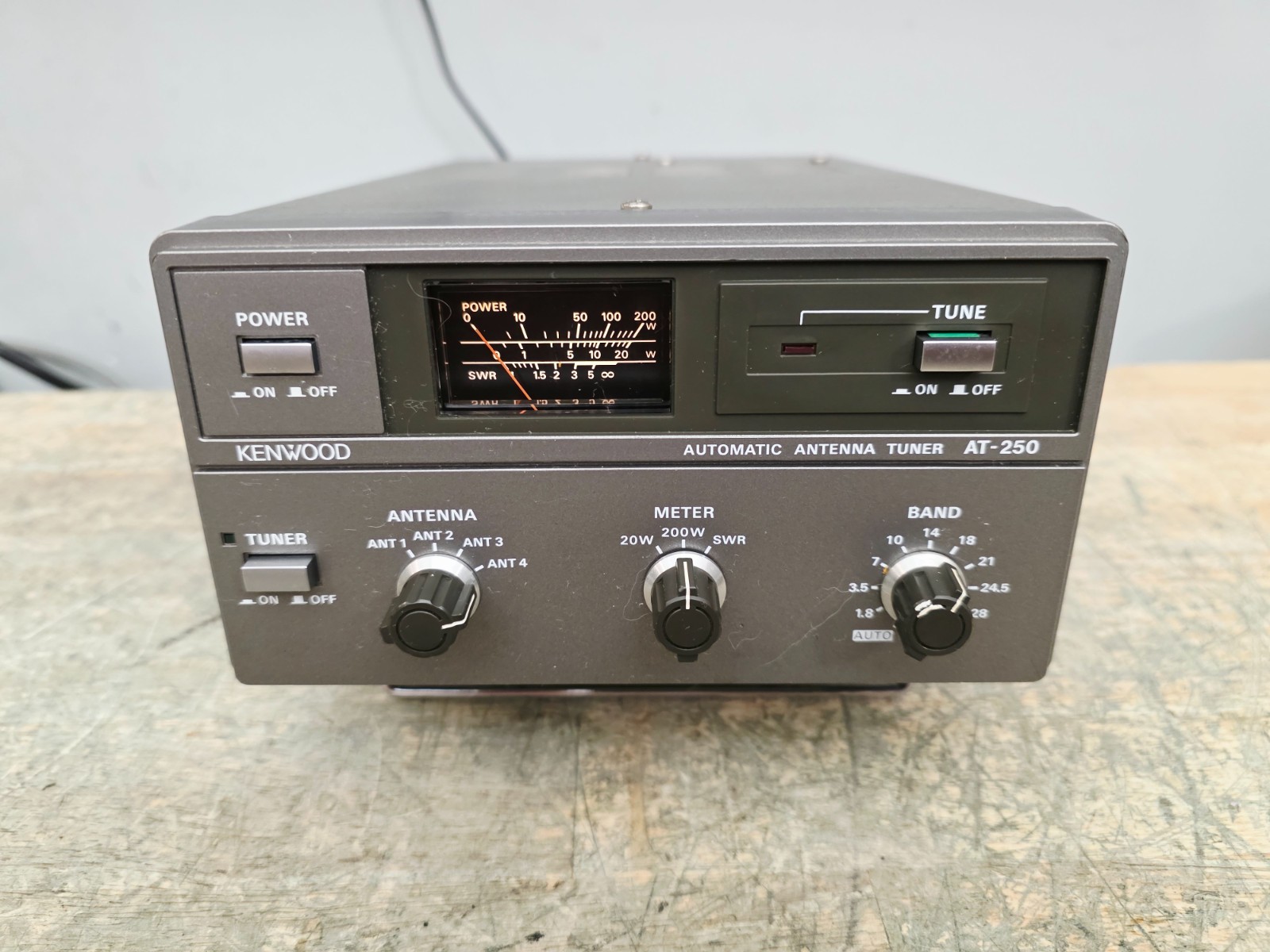
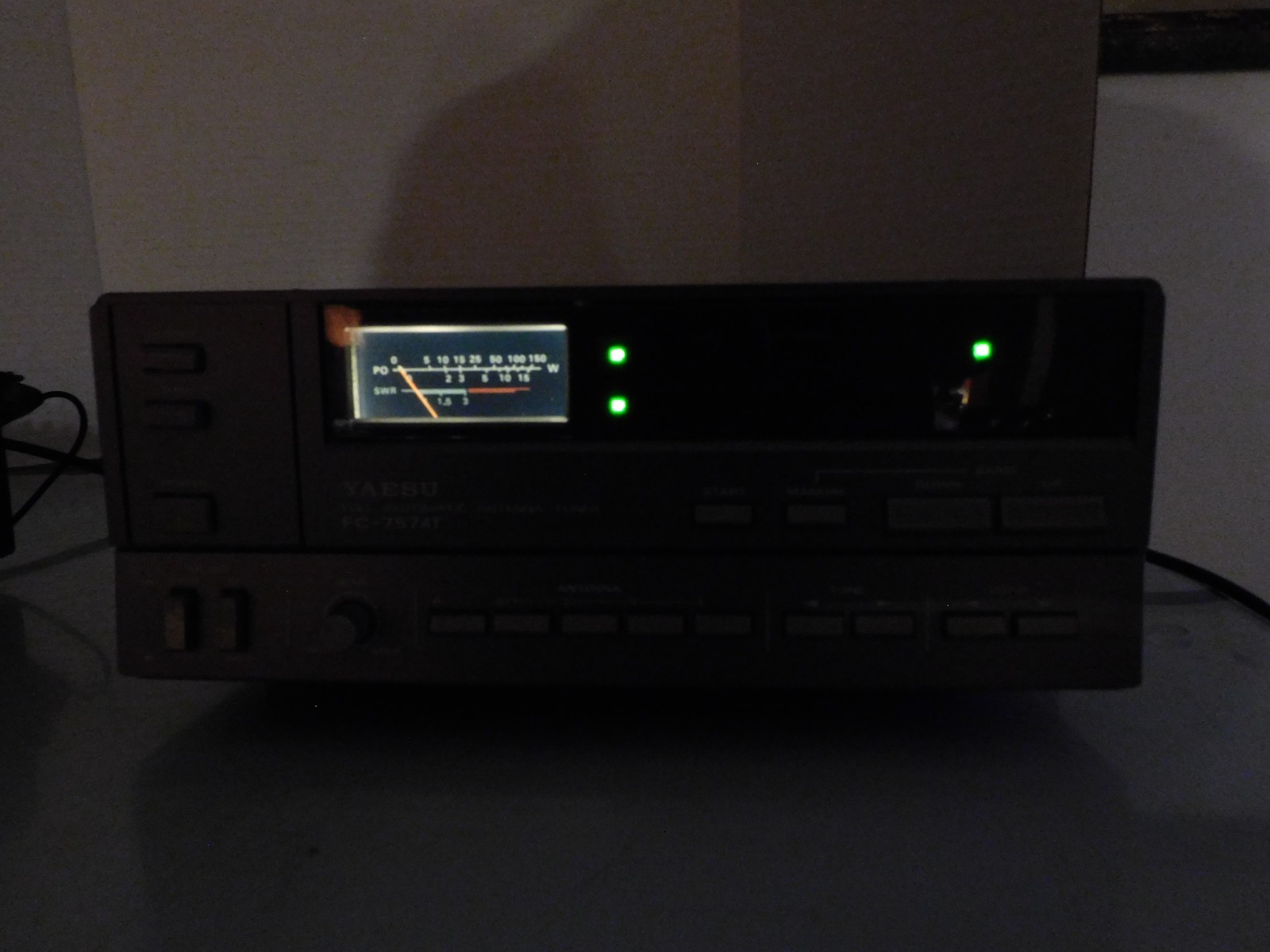
- Kenwood AT-250 and Yaesu FC-757AT are radio-specific units: they tune via the transceiver's band-data line and need the matching rig or a compatible interface to auto-tune.
- LDG AT-200PRO uses a 200W PEP rating with 0.1-200W tuning range and 1.8-54 MHz coverage, and requires a 12V DC supply (adapter often not included).
At a glance
- Category
- Antenna Tuners & SWR Meters
- Last updated
- Nov 23, 2026
Current offers
Highlights
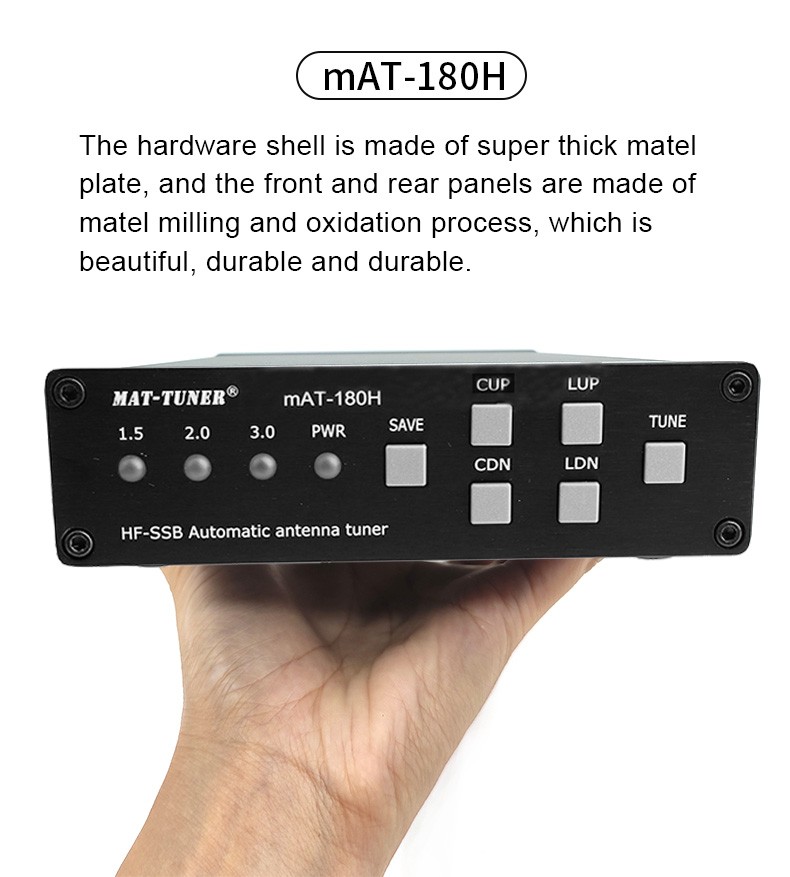
- Relay-switched L-network tuners like the ATU-100 cover 1.8-55 MHz with 0.1-5W tuning and 100W PEP carry, using latching relays for low hold current.
- Kenwood AT-250 and Yaesu FC-757AT are radio-specific units: they tune via the transceiver's band-data line and need the matching rig or a compatible interface to auto-tune.
- LDG AT-200PRO uses a 200W PEP rating with 0.1-200W tuning range and 1.8-54 MHz coverage, and requires a 12V DC supply (adapter often not included).
- ICOM IC-AT500 is a 500W-class HF tuner that works with other radios only when driven by an external tune command or manual start, not via ICOM's AH-series control.
Best use cases
- Best fit: QRP or 100W rig with a random wire or shortened dipole — pick a 100-200W relay tuner (ATU-100 class or LDG AT-200PRO) for 1.8-54 MHz coverage and 0.1W tuning sensitivity.
- Best fit: 500W-class station with a multiband vertical or beam — choose a 500W tuner (IC-AT500 class) that handles PEP headroom and has a manual tune button for non-ICOM rigs.
- Wrong fit: you want one tuner that auto-tunes any brand via the radio's control cable — radio-specific units (AT-250, FC-757AT) only auto-start on their native transceiver.
- Wrong fit: you run only 6m or 2m — most HF autotuners stop at 54-55 MHz; use a dedicated VHF/UHF tuner or a rig with built-in ATU instead.
Buying tips
- Size the tuner at 1.5x your rig's PEP: a 100W radio needs a 150W+ tuner, a 200W radio needs 300W+; relay tuners rated exactly at your PEP will arc on high-SWR loads.
- Check tuning range and sensitivity: a 0.1W minimum tune power lets you auto-tune with a QRP rig; tuners with a 5W minimum will not start on low-power settings.
- Match the control interface: Yaesu/Kenwood/ICOM-specific tuners need the band-data or tune line from the matching radio; generic tuners need a manual tune button or RF-sensed start.
- Prefer latching relays over non-latching for battery or portable use — latching relays hold state with zero coil current, while non-latching draw continuous power on the selected band.
Specs
| Tuner Type | Relay L-network vs motor/varactor |
|---|---|
| Frequency Range | 1.8-55 MHz (HF + 6m) |
| Power Rating | 100W / 200W / 500W PEP classes |
| Control Interface | RF-sensed vs radio band-data |
Related searches
What to check before buying
- Measure your antenna's worst-case SWR per band: tuners typically match up to 10:1 or 3:1 depending on model; a 10:1-capable unit covers random wires, a 3:1 unit only handles near-resonant antennas.
- Confirm your radio's tune-control voltage and connector: Yaesu uses a 4-pin tune jack, ICOM uses a 4-pin AH-series jack, Kenwood uses a 6-pin ACC; mismatched cables prevent auto-start.
- Verify power supply: most desktop autotuners need 12-13.8V DC at 0.5-1A; check whether a wall adapter is included (LDG AT-200PRO ships without one).
- Check physical clearance and cable routing: tuners with SO-239 connectors need short, thick coax jumpers to the rig; place the tuner at the antenna feedpoint for the best match on long wire runs.
FAQ
Data sources: eBay / Amazon listings and product attribute feeds. Updated Nov 23, 2026.
Some links on this page are affiliate links. If you buy after clicking one, we may earn a commission at no extra cost to you. This does not change which products appear here or their order. Affiliate disclosure.