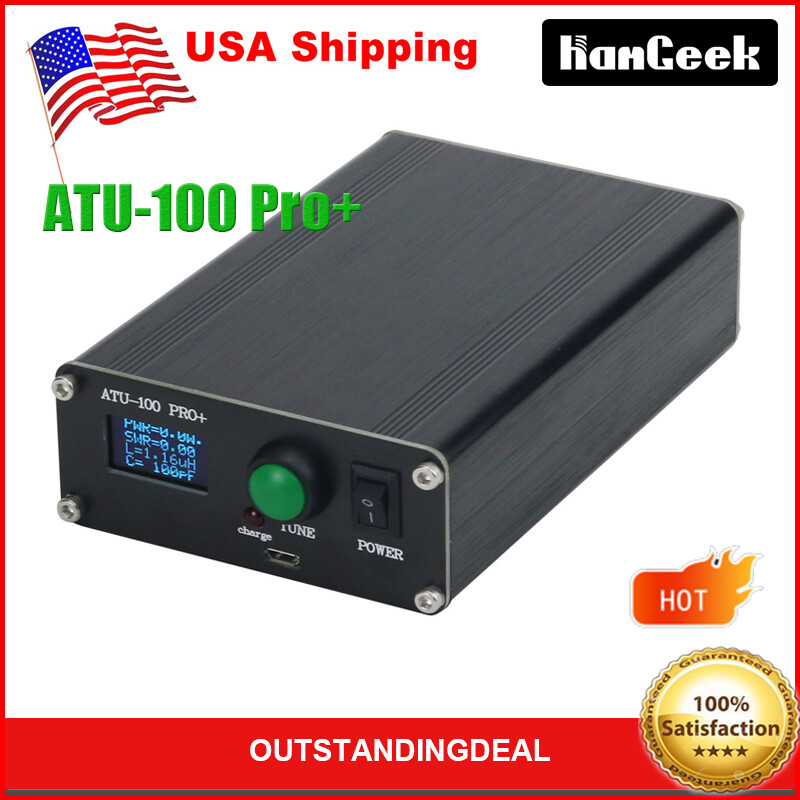

Photos from current listings. Actual item, color, and included accessories may vary.
Automatic Antenna Tuner Buying Guide
A automatic antenna tuner is an impedance-matching network that lets a transceiver feed a non-resonant or mismatched antenna without high SWR. The core trade-off is power handling versus tuning range and integration: bare-board ATU-100 clones handle 100 W but need external control and enclosure, while brand-specific units (Yaesu FC-30, Kenwood AT-250) add radio integration at the cost of compatibility. Buy the unit whose power rating exceeds your rig's output by at least 50%, and match connector type and control protocol to your radio.
Median $101.70
Key takeaways
- Power tier is the primary durability metric: ATU-100-class boards are rated 100 W PEP, ATU-130C-class units 250 W, and high-power models 500 W or more; exceeding rating burns relay contacts and toroids.
- Tuning range is defined by frequency coverage (1.8-50/54 MHz for HF/6 m) and minimum tunable impedance (typically 5-10 ohms to 500-1000 ohms); wide-range units use more relay-switched L/C steps.
- Relay quality determines lifetime: latching relays draw no current after tuning, while non-latching relays stay energized and heat up; gold-plated contacts resist oxidation in humid climates.
At a glance
- Category
- Antenna Tuners & SWR Meters
- Last updated
- Nov 23, 2026
Current offers
Highlights
- Power tier is the primary durability metric: ATU-100-class boards are rated 100 W PEP, ATU-130C-class units 250 W, and high-power models 500 W or more; exceeding rating burns relay contacts and toroids.
- Tuning range is defined by frequency coverage (1.8-50/54 MHz for HF/6 m) and minimum tunable impedance (typically 5-10 ohms to 500-1000 ohms); wide-range units use more relay-switched L/C steps.
- Relay quality determines lifetime: latching relays draw no current after tuning, while non-latching relays stay energized and heat up; gold-plated contacts resist oxidation in humid climates.
- Radio-specific tuners (Yaesu FC-30 for FT-857/897, Kenwood AT-250 for TS-430) use proprietary control cables and will not tune other brands without a separate interface.
Best use cases
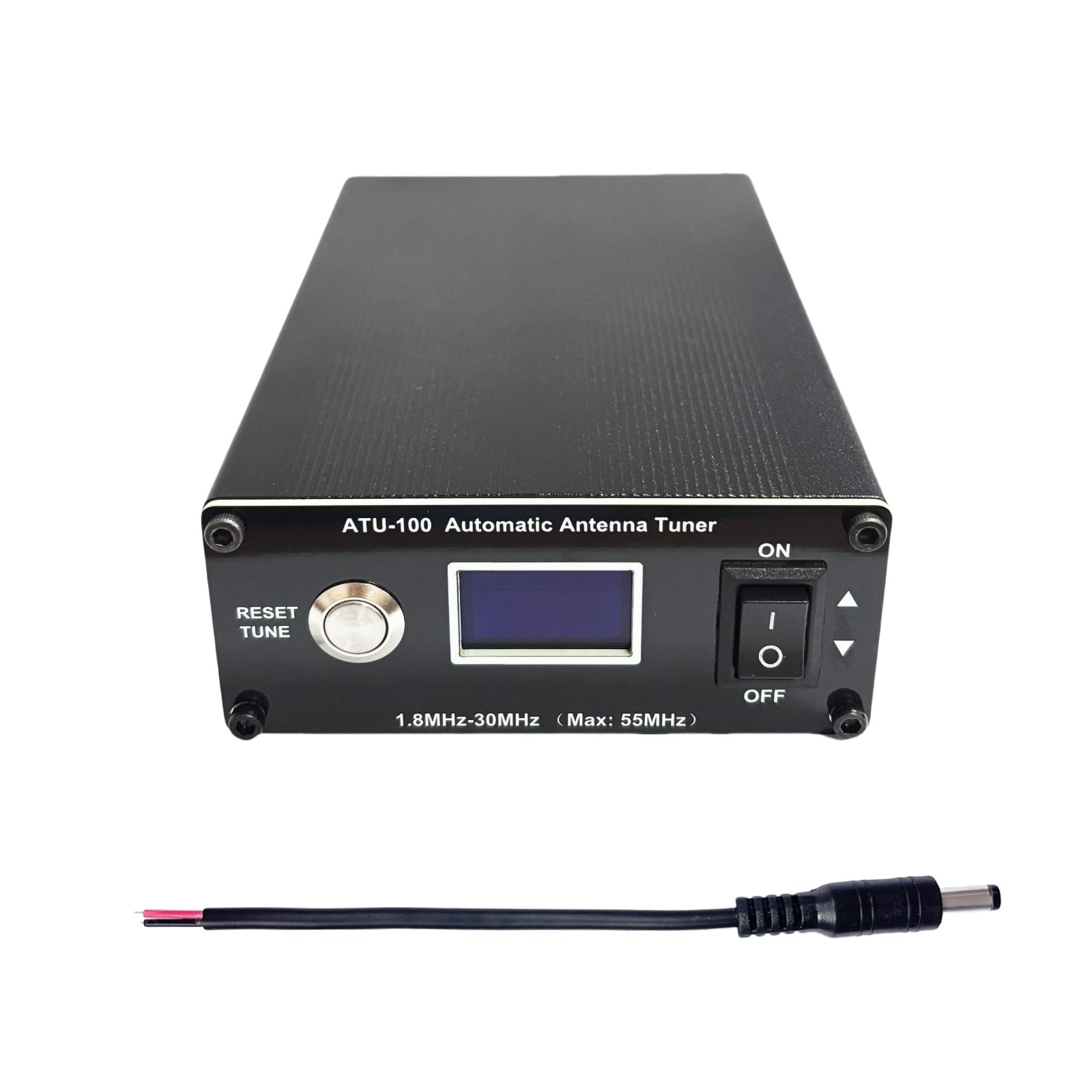
- Best fit: portable QRP or 100 W HF operation with a random wire or EFHW antenna — pick an ATU-100-class board (1.8-55 MHz, 100 W) with BNC and banana jacks for light weight.
- Wrong fit: running 200 W or more through a 100 W ATU-100 — step up to a 250 W ATU-130C-class or higher unit with proper heatsinking and SO-239 connectors.
- Best fit: base-station operation with a Yaesu FT-857/897 or Kenwood TS-430 — choose the matching radio-specific tuner (FC-30, AT-250) for one-cable auto-tuning.
- Wrong fit: buying a radio-specific tuner for a different brand — it will not auto-tune without a compatible control interface; choose a universal ATU with CAT or manual tune input instead.
Buying tips
- Size power headroom at 1.5x: a 100 W radio needs a tuner rated at least 150 W PEP, since SSB peaks and high-SWR loads stress relay contacts beyond average power.
- Match connector type to your feedline: SO-239 (UHF) for base stations, BNC for portable radios like the IC-705; adapters add loss and mechanical strain.
- For remote or CAT control, confirm the tuner accepts your radio's tune protocol (Yaesu FC, Kenwood AT, Icom AH) or has a manual tune button and latching relays to hold settings without power.
- Prefer units with OLED SWR/power display and latching relays: they draw near-zero current after tuning, critical for battery-powered portable operation.
Specs
| Power Rating | 100 W / 250 W / 500 W PEP tiers |
|---|---|
| Frequency Coverage | 1.8-30 MHz HF or 1.8-54 MHz HF/6 m |
| Impedance Range | 5-1000 ohms typical; 20-500 narrow |
| Control Interface | CAT / proprietary cable / manual |
Related searches
What to check before buying
- Measure your antenna's feedpoint impedance at the lowest band you plan to use; confirm the tuner's range covers it (most cover 5-1000 ohms, some only 20-500 ohms).
- Confirm your radio's output power in PEP and duty cycle; add 50% headroom to the tuner's continuous and PEP ratings.
- Verify connector type (SO-239, BNC, banana) and cable length for the tuner's control interface (CAT, tune jack) match your transceiver.
- For bare-board units, plan a 12 V DC supply of at least 1 A and an enclosure with ventilation, since relays and toroids dissipate heat during retuning.
FAQ
Data sources: eBay / Amazon listings and product attribute feeds. Updated Nov 23, 2026.
Some links on this page are affiliate links. If you buy after clicking one, we may earn a commission at no extra cost to you. This does not change which products appear here or their order. Affiliate disclosure.