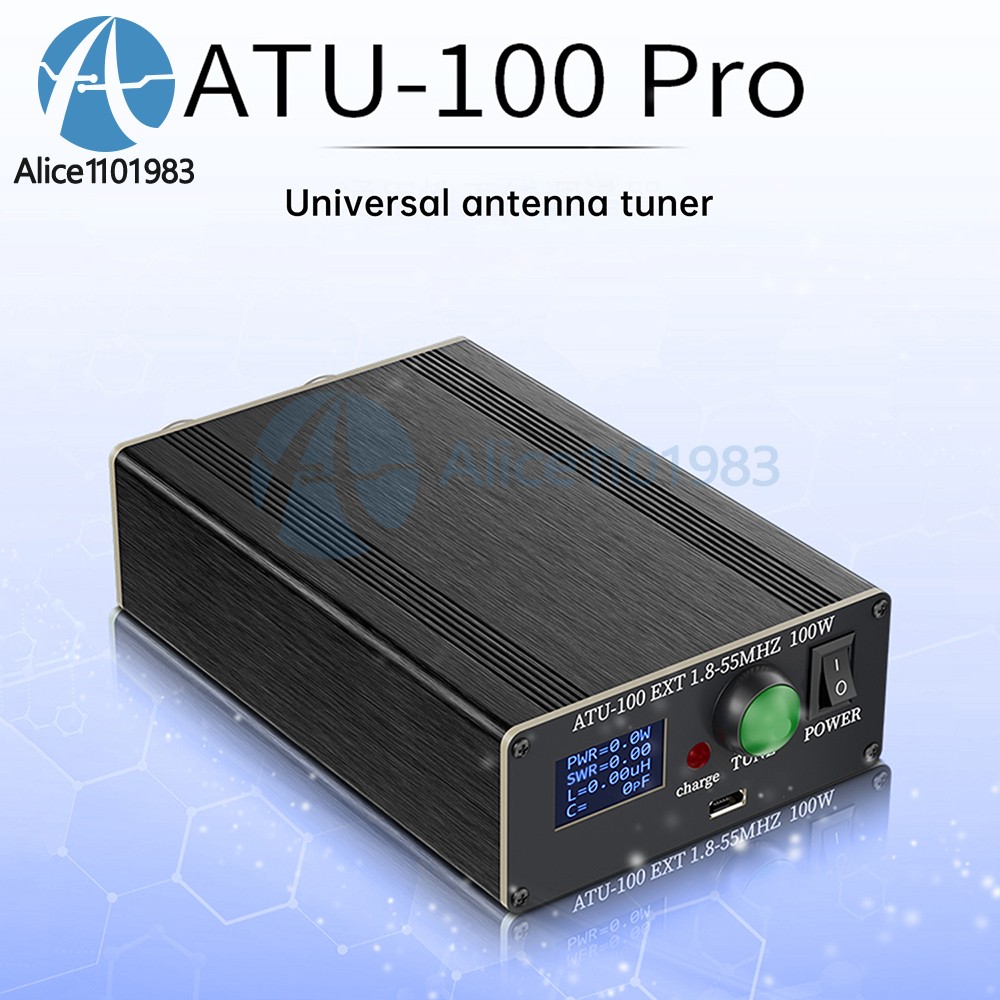

Photos from current listings. Actual item, color, and included accessories may vary.
Atu 100 Tuner Buying Guide
The ATU-100 is an open-source automatic antenna tuner design built around a relay-switched L-network, commonly sold as a compact 100W-class kit or assembled unit for HF and low-VHF ham radio. Its core trade-off is cost versus RF headroom: the standard 100W rating assumes SSB/CW duty with proper antenna impedance, while FT8, digital modes, or high-SWR loads demand the 'EXT' or 'Pro+' variants with heavier relays and wider-range compensation. Choose the standard ATU-100 for resonant or near-resonant wire and vertical antennas at 100W PEP; step up to an EXT or Pro+ board if you run digital modes, long random wires, or need reliable tuning below 3.5 MHz or above 30 MHz.
Median $64.60
Key takeaways
- Core architecture: relay-switched L-network with 7 inductor and 7 capacitor binary steps, giving roughly 0.5–1000 ohm matching range depending on band and firmware calibration.
- Frequency coverage: 1.8–55 MHz on the EXT board versus 1.8–30 MHz on many base kits; the wider tuning range requires updated relay and firmware revisions.
- Power handling: 100W PEP rating is for SSB/CW; continuous digital modes like FT8 should be run at 50W or less unless the unit is an EXT/Pro+ build with upgraded relays.
At a glance
- Category
- Antenna Tuners & SWR Meters
- Last updated
- Nov 23, 2026
Current offers
Highlights
- Core architecture: relay-switched L-network with 7 inductor and 7 capacitor binary steps, giving roughly 0.5–1000 ohm matching range depending on band and firmware calibration.
- Frequency coverage: 1.8–55 MHz on the EXT board versus 1.8–30 MHz on many base kits; the wider tuning range requires updated relay and firmware revisions.
- Power handling: 100W PEP rating is for SSB/CW; continuous digital modes like FT8 should be run at 50W or less unless the unit is an EXT/Pro+ build with upgraded relays.
- Tuning core: STM32-based controller with OLED display, automatic SWR scanning, and optional CAT/serial control; firmware version determines tuning speed and memory presets.
Best use cases
- Best fit: pair the standard ATU-100 with a 100W HF transceiver and a resonant or near-resonant dipole, EFHW, or vertical where SWR is already under 3:1 — skip it if your antenna is far from resonance on multiple bands.
- Best fit: choose the EXT variant for 6m operation, low-band 160m work, or long random wires that present impedances outside the standard L-network range — the standard board will fail to find a match.
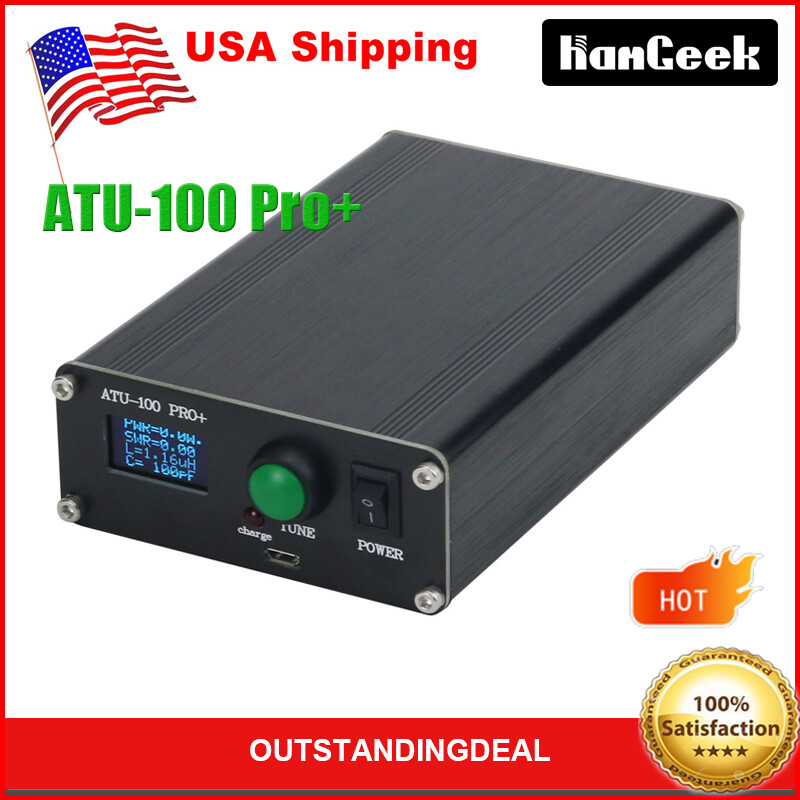
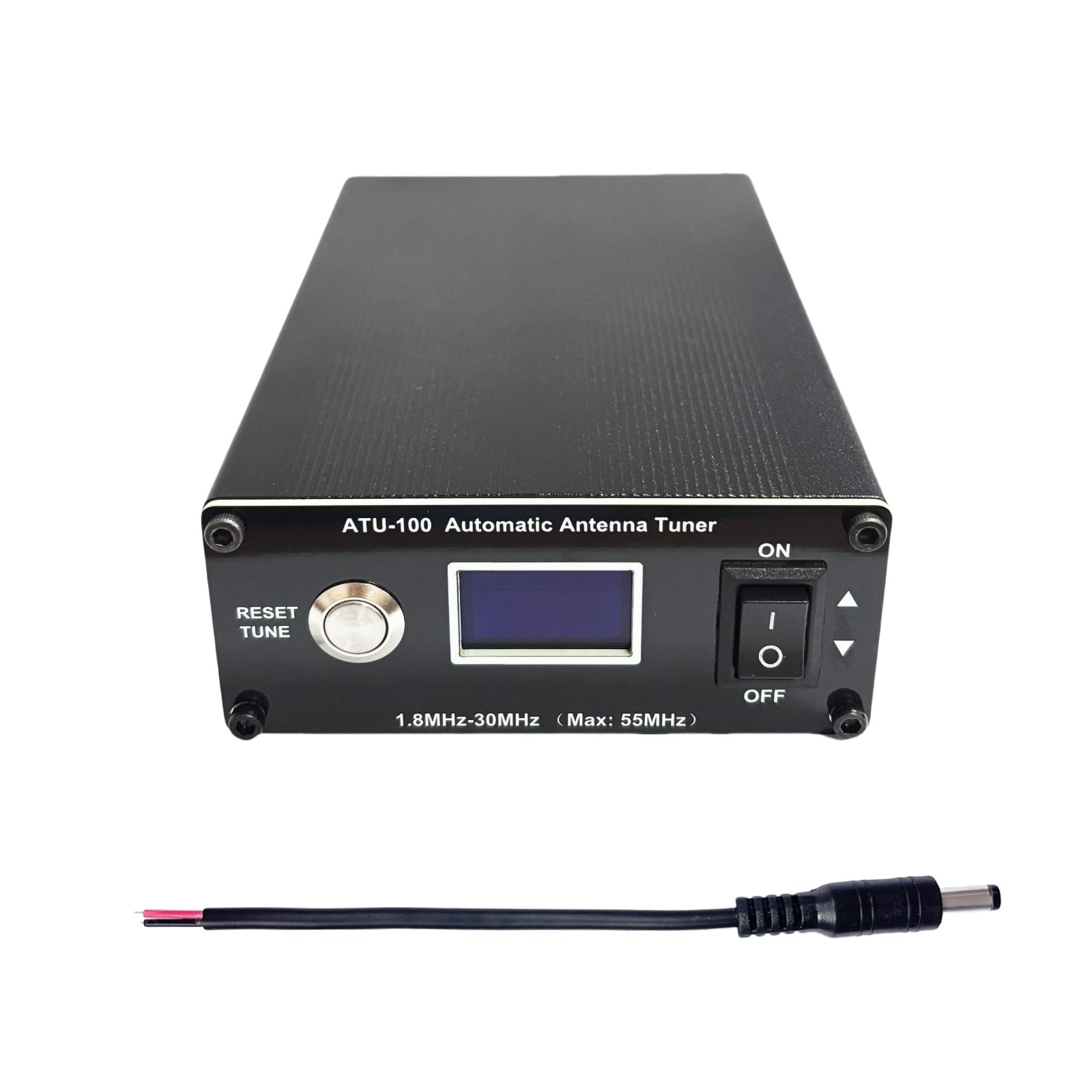
- Best fit: use the Pro+ assembled version if you want plug-and-play with an enclosure, binding posts, and tested calibration; skip bare kits unless you can solder surface-mount relays and flash firmware.
- Wrong fit: skip all ATU-100 variants for amplifier duty above 100W or for balanced ladder-line feeds — they are unbalanced 50-ohm tuners and will not replace a proper balanced tuner or high-power ATU.
Buying tips
- Match the tuner's power tier to your mode: 100W PEP for SSB/CW, derate to 50W for FT8 and other 100% duty-cycle digital modes unless the listing specifies upgraded relays.
- Confirm frequency range before buying: 1.8–30 MHz covers HF ham bands; only the EXT or Pro+ variants reach 50–55 MHz for 6m, and standard boards often stop at 30 MHz.
- Check whether the unit is assembled and calibrated or a bare PCB kit; kits require SMD soldering of relays and microcontroller plus firmware flashing via ST-Link or USB.
- Verify connector type and enclosure: most units use UHF (SO-239) or BNC, and many bare boards ship without an enclosure, binding posts, or a power cable — budget for these separately.
Specs
| Frequency Range | 1.8–30 MHz std; 1.8–55 MHz EXT |
|---|---|
| Power Rating | 100W PEP SSB/CW; 50W digital |
| Tuning Network | Relay-switched L-network, 7x7 steps |
| Controller | STM32 + OLED, auto SWR scan |
Related searches
What to check before buying
- Measure your antenna's worst-case SWR per band: if any band exceeds 10:1, confirm the tuner variant's matching range covers that impedance or step up to the EXT board.
- Confirm your transceiver's output power and duty cycle: a 100W radio on FT8 needs a tuner rated for continuous 100W, not just PEP.
- Check the power supply: ATU-100 boards typically require 12–15V DC at 300–500mA via a 2.1mm barrel or screw terminals — confirm your shack supply matches.
- Verify physical clearance and mounting: bare boards measure roughly 100x100mm and need standoffs or an enclosure; assembled units need space near the antenna feedpoint or radio.
FAQ
Data sources: eBay / Amazon listings and product attribute feeds. Updated Nov 23, 2026.
Some links on this page are affiliate links. If you buy after clicking one, we may earn a commission at no extra cost to you. This does not change which products appear here or their order. Affiliate disclosure.