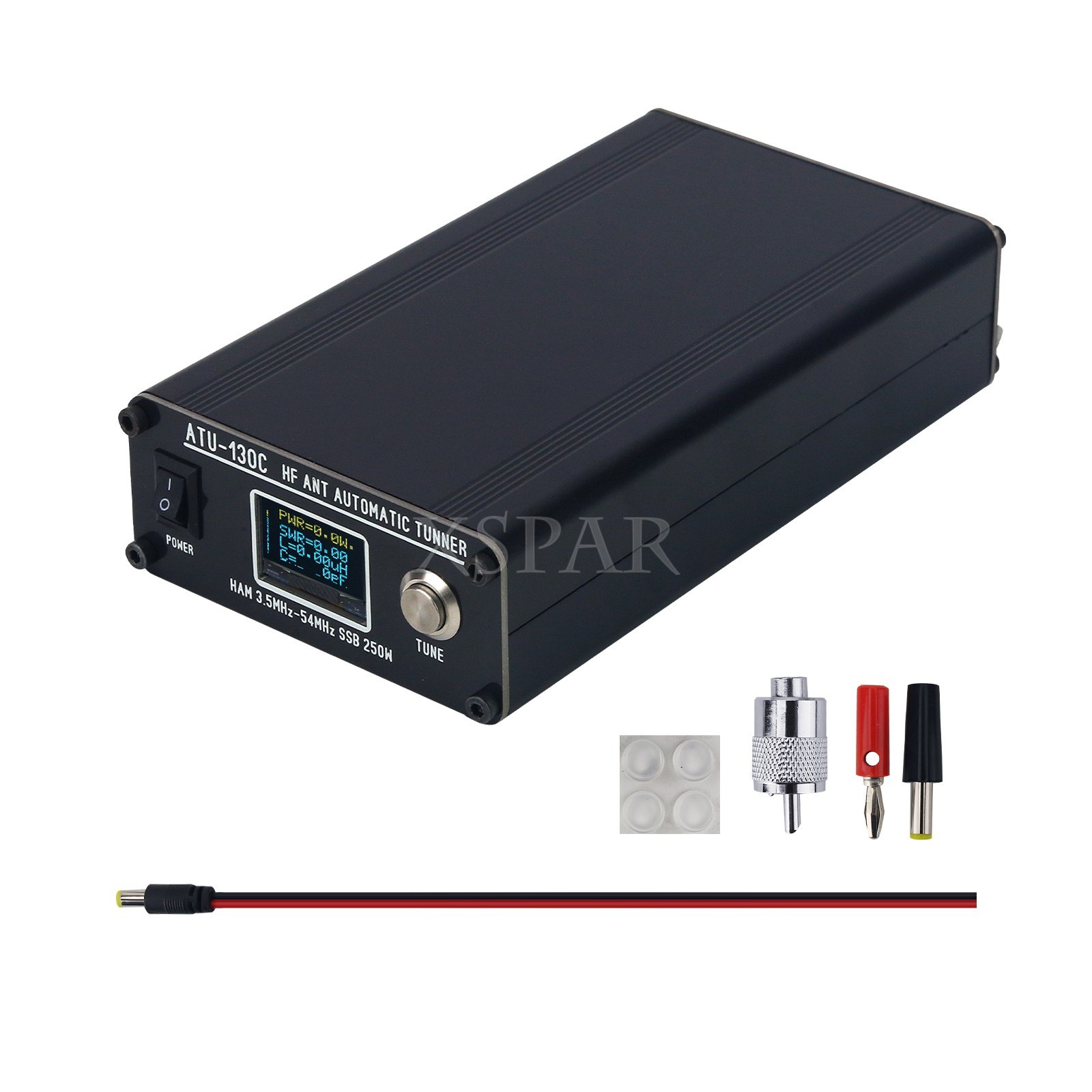

Photos from current listings. Actual item, color, and included accessories may vary.
Am FM Antenna Buying Guide
AM/FM antennas are passive or amplified reception devices that capture medium-wave and VHF broadcast signals for stereo receivers and radios. The core trade-off is between a compact amplified antenna that boosts weak signals but can overload strong ones and a larger passive dipole or loop that rejects interference but requires careful placement. Choose an amplified model only if you live far from transmitters and can control gain; otherwise a well-placed passive or low-gain amplified antenna delivers cleaner stereo separation and lower noise.
Key takeaways
- FM broadcast band spans 87.5–108 MHz; AM medium wave spans 530–1710 kHz, so antennas need separate elements or a switchable AM loop plus FM dipole.
- Amplified models typically use a low-noise MOSFET or MMIC gain stage of 10–30 dB; too much gain near strong towers causes overload and intermodulation distortion.
- Passive folded dipole or half-wave designs provide 0–2 dB gain with no power requirement and are immune to AC hum and overload.
At a glance
- Category
- Antenna Tuners & SWR Meters
- Last updated
- Nov 23, 2026
Current offers
Highlights
- FM broadcast band spans 87.5–108 MHz; AM medium wave spans 530–1710 kHz, so antennas need separate elements or a switchable AM loop plus FM dipole.
- Amplified models typically use a low-noise MOSFET or MMIC gain stage of 10–30 dB; too much gain near strong towers causes overload and intermodulation distortion.
- Passive folded dipole or half-wave designs provide 0–2 dB gain with no power requirement and are immune to AC hum and overload.
- Antenna impedance is 75 ohms unbalanced for coax or 300 ohms balanced for twin-lead; matching transformer or balun must match the receiver's input.
Best use cases
- Best fit: city or suburban home within 15–25 miles of FM transmitters — pick a passive indoor dipole or simple rabbit-ear with 75-ohm coax; skip high-gain amplified models that overload.
- Best fit: rural or basement location with weak FM and acceptable AM — choose an amplified indoor antenna with adjustable gain (0–20 dB) and separate AM loop; mount high and away from metal.
- Best fit: vintage stereo receiver with 300-ohm screw terminals — use a 300-ohm twin-lead folded dipole or a 75-to-300-ohm balun; skip 75-ohm-only amplified models without a matching transformer.
- Wrong fit: attic or outdoor installation of an indoor amplified antenna — indoor models lack UV-rated housing and weather sealing; use a dedicated outdoor FM yagi or omnidirectional instead.
Buying tips
- Measure distance to your favorite FM tower: under 10 miles use passive 0–3 dB gain; 10–30 miles use 6–12 dB adjustable amplification; beyond 30 miles choose a directional outdoor yagi.
- Match impedance exactly: 75-ohm coax (RG-6) for modern receivers with F-connector; 300-ohm twin-lead only for vintage screw terminals, keeping leads under 6 feet to limit loss.
- For AM reception, a tuned ferrite loop or dedicated AM loop antenna outperforms any FM whip; amplified FM antennas rarely improve AM and often add noise.
- Prefer antennas with a gain control or attenuator switch; fixed 20–30 dB amplifiers are only suitable for very weak-signal fringe areas and risk front-end overload in cities.
Specs
| Antenna Type | Dipole / Loop / Whip / Yagi |
|---|---|
| Frequency Bands | AM 530–1710 kHz / FM 87.5–108 MHz |
| Impedance | 75-ohm coax / 300-ohm twin-lead |
| Gain | Passive 0–3 dB / Amplified 10–30 dB |
Related searches
What to check before buying
- Measure the receiver's antenna input: 75-ohm F-connector, 300-ohm twin-lead screws, or bare wire terminals; buy the matching cable or balun before installation.
- Place the antenna near a window facing the transmitter and at least 3 feet from metal surfaces, appliances, and LED lamps to reduce interference.
- For amplified models, confirm a nearby AC outlet or USB power source and check that the gain is adjustable or switchable.
- Verify physical dimensions: indoor dipoles typically span 30–60 inches tip-to-tip for FM half-wave; ensure shelf or wall space accommodates the element.
FAQ
Data sources: eBay / Amazon listings and product attribute feeds. Updated Nov 23, 2026.
Some links on this page are affiliate links. If you buy after clicking one, we may earn a commission at no extra cost to you. This does not change which products appear here or their order. Affiliate disclosure.