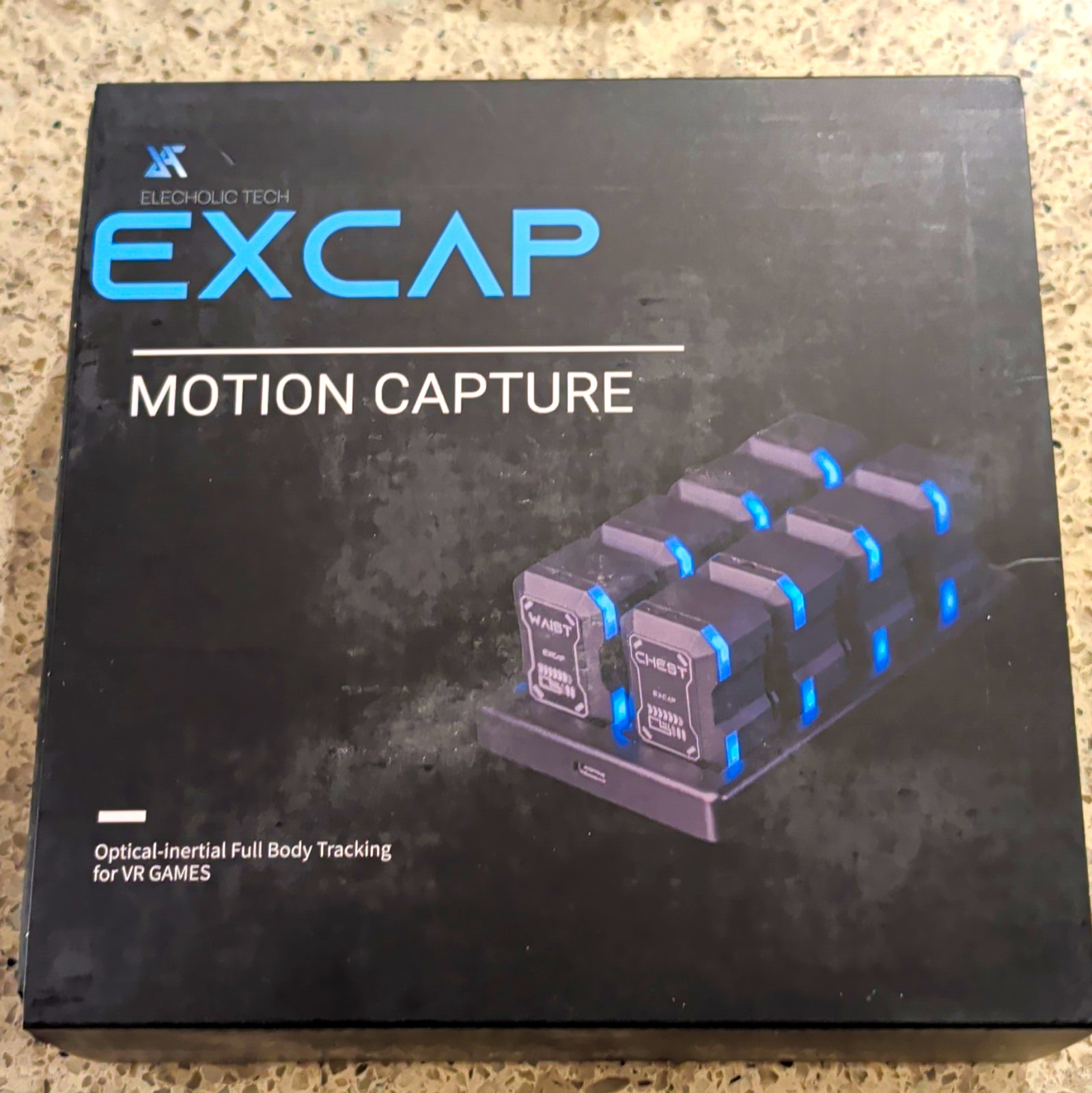

Photos from current listings. Actual item, color, and included accessories may vary.
VR Tracker Buying Guide
VR trackers are add-on sensors that translate real-world body, limb, and object movement into 6DoF input for VR games and motion capture, and the core trade-off is between standalone optical-inertial units that need line-of-sight and base-station-anchored trackers that demand a fixed play space. The decision rule is simple: choose optical-inertial trackers for portability and full-body gaming without lighthouses; choose base-station trackers only if you already own or plan to buy a SteamVR-compatible headset with lighthouse coverage.
Key takeaways
- Optical-inertial trackers fuse camera-based position with IMU orientation, so they drift less during occlusion but still need visible reference markers or a headset camera view.
- Base-station trackers rely on external lighthouse sweeps for sub-millimeter accuracy and low latency, but each tracker must stay inside the base stations' 120-degree FOV cone.
- Standalone tracker pucks typically run 4-8 hours per charge and connect over 2.4 GHz proprietary dongles or Bluetooth, adding 5-15 ms latency versus wired IMU solutions.
At a glance
- Category
- VR Gaming Hardware & Accessories
- Last updated
- Nov 28, 2026
Current offers
Highlights
- Optical-inertial trackers fuse camera-based position with IMU orientation, so they drift less during occlusion but still need visible reference markers or a headset camera view.
- Base-station trackers rely on external lighthouse sweeps for sub-millimeter accuracy and low latency, but each tracker must stay inside the base stations' 120-degree FOV cone.
- Standalone tracker pucks typically run 4-8 hours per charge and connect over 2.4 GHz proprietary dongles or Bluetooth, adding 5-15 ms latency versus wired IMU solutions.
- Full-body setups need 5-6 trackers (waist, two feet, two knees, optional chest) for reliable hip and leg solving; 3-tracker kits cover waist-and-feet only with reduced knee accuracy.
Best use cases
- Best fit: pick a 5-tracker optical-inertial kit for VRChat full-body tracking in a living room without lighthouses; skip 3-tracker kits because knees collapse during crouch and dance animations.
- Best fit: choose lighthouse-compatible trackers only if you own a Valve Index or Vive with 2.0 base stations covering the play area; skip them for Quest-only setups without a PCVR bridge.
- Best fit: for motion capture or VTuber work, select trackers with a documented SDK or OpenVR driver and 60 Hz+ sample rate; skip closed-appliance pucks that only pair with one game.
- Wrong fit: buying trackers for seated cockpit sims adds no value — a headset and wheel/hotas already provide the needed 6DoF; redirect budget to a better headset strap.
Buying tips
- Count trackers by use case: 3 pucks for waist-and-feet casual play, 5 pucks for knees plus feet, and 6-7 for chest and elbows in professional mocap.
- Verify the tracker's anchor system: lighthouse-based units require 1.0 or 2.0 base stations within 5-7 m; optical-inertial units require a compatible headset camera or bundled IR beacon.
- Check battery and charge method: 6+ hours via USB-C and swappable batteries beat 3-hour micro-USB pucks for long VRChat sessions.
- Match the wireless protocol: 2.4 GHz dongles offer lower latency than Bluetooth LE, and 2.4 GHz receivers should include a USB extension to avoid 3.0 port interference.
Specs
| Tracking Method | Optical-inertial vs Lighthouse |
|---|---|
| Tracker Count | 3 / 5 / 6-7 pucks |
| Battery Life | 4-8 hr, USB-C charging |
| Wireless Link | 2.4 GHz dongle vs Bluetooth LE |
Related searches
What to check before buying
- Measure play-space diagonal: lighthouse trackers need base stations no more than 5-7 m apart with clear line of sight to every puck.
- Confirm headset compatibility: PCVR via SteamVR for lighthouse trackers; standalone optical-inertial kits must list your Quest, Pico, or Index model explicitly.
- Check floor material and lighting: optical-inertial trackers struggle on reflective floors and in dim rooms; add IR illuminators or a mat if needed.
- Verify companion parts: count included straps, mounting clips, dongles, and charging cables — missing mounts often cost more than the tracker savings.
FAQ
Data sources: eBay / Amazon listings and product attribute feeds. Updated Nov 28, 2026.
Some links on this page are affiliate links. If you buy after clicking one, we may earn a commission at no extra cost to you. This does not change which products appear here or their order. Affiliate disclosure.