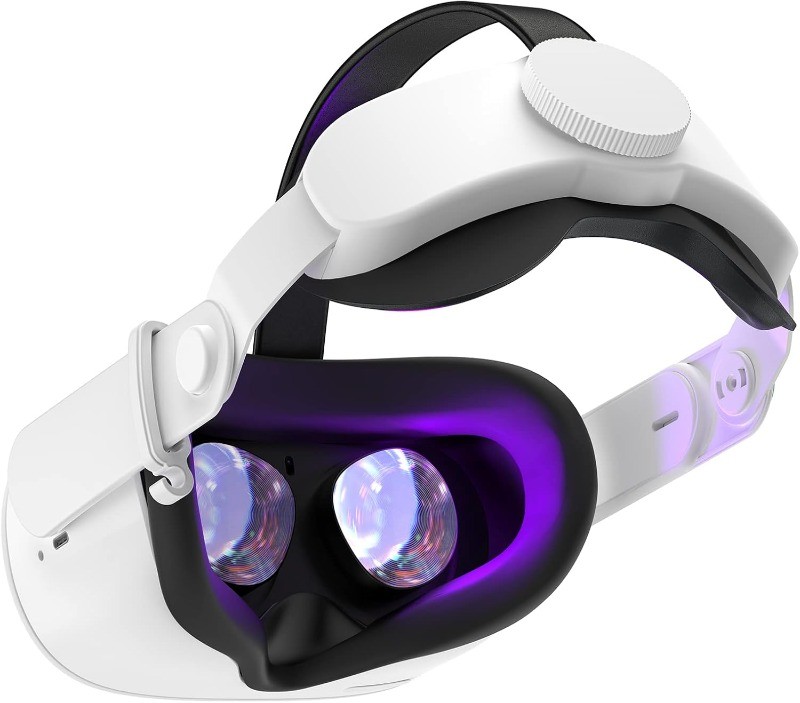

Photos from current listings. Actual item, color, and included accessories may vary.
VR Head Strap Buying Guide
A VR head strap is the load-bearing interface that replaces the stock soft strap on standalone headsets like Meta Quest 2, Quest 3, and Quest 3S. The defining trade-off is weight distribution versus added mass: rigid halo-and-counterweight designs offload face pressure, while battery-integrated straps add runtime but shift total grams upward. Buy a strap with a rigid rear cradle and tool-free length adjustment; skip elastic-only or single-point velcro designs that cannot balance front-heavy optics.
Median $18.00
Key takeaways
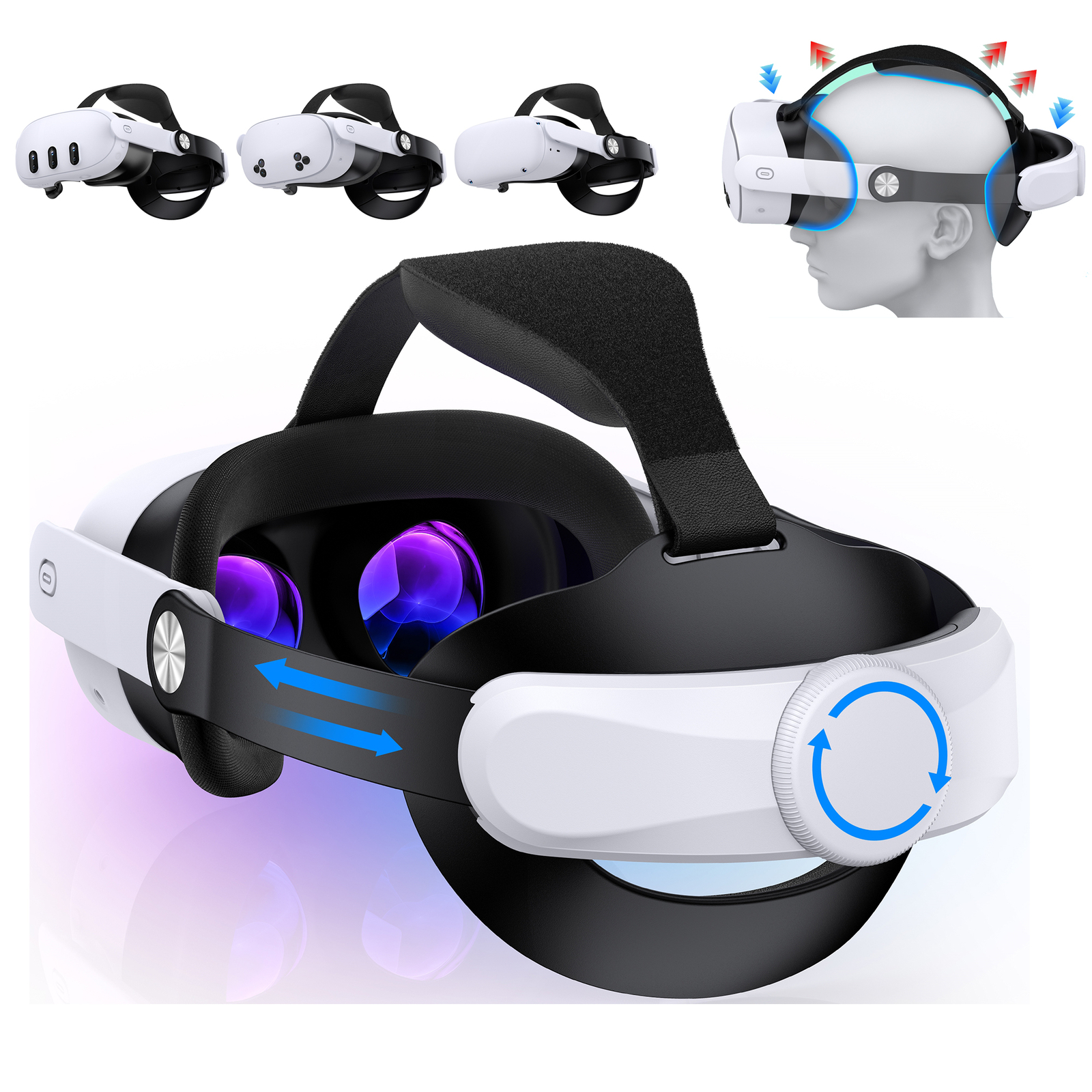
- Halo-style rigid straps transfer clamp force to the forehead and rear skull, cutting cheek pressure versus the stock elastic band.
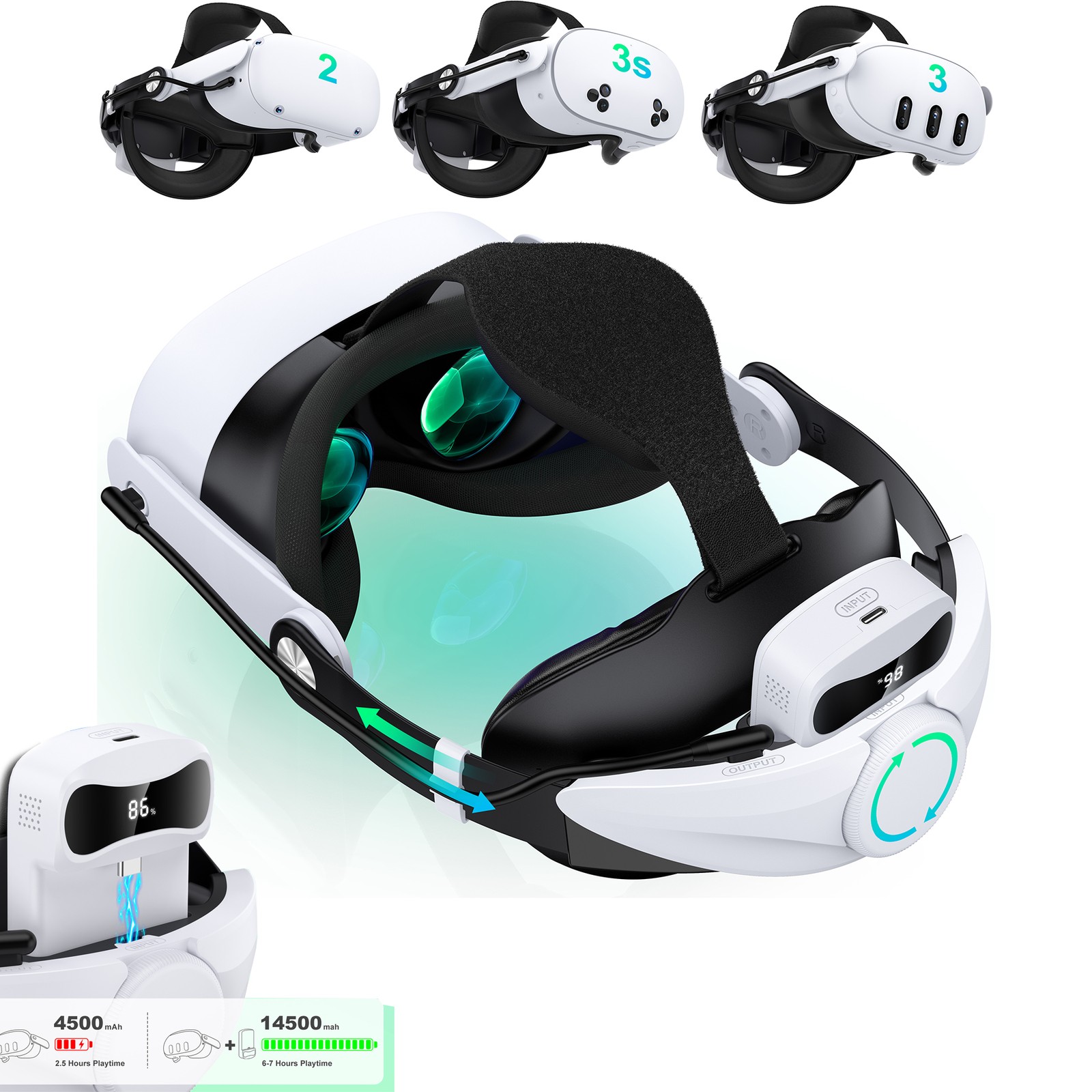
- Battery straps commonly use 5000–10000mAh cells; Quest 3/3S charge via USB-C PD, so match output to headset input wattage.
- Quest 2 uses a distinct side-rail clip geometry from Quest 3/3S; cross-generation straps need swappable adapters, not force-fit.
At a glance
- Category
- VR Gaming Hardware & Accessories
- Last updated
- Nov 27, 2026
Current offers
Highlights
- Halo-style rigid straps transfer clamp force to the forehead and rear skull, cutting cheek pressure versus the stock elastic band.
- Battery straps commonly use 5000–10000mAh cells; Quest 3/3S charge via USB-C PD, so match output to headset input wattage.
- Quest 2 uses a distinct side-rail clip geometry from Quest 3/3S; cross-generation straps need swappable adapters, not force-fit.
- Counterweight rear pads reduce frontal torque, but every 100g added behind the head raises neck load during long sessions.
Best use cases
- Pick a rigid halo strap with rear counterweight for 60–120 minute active sessions; it prevents face-mark pressure and slipping during movement.
- Choose a 5000–10000mAh USB-C battery strap for marathon media or social VR; skip it for fitness use where extra rear mass amplifies neck fatigue.
- Buy a Quest 3/3S-specific or adapter-inclusive strap for current-gen headsets; skip Quest 2-only listings whose rail clips will not seat.
- For glasses wearers and shared-family use, pick a strap with a large tool-free dial and wide rear cradle; skip fixed-length or single-velcro designs.
Buying tips
- Match the strap to the headset generation: Quest 2 side rails differ from Quest 3/3S, so confirm adapter clips are included before buying.
- For battery straps, verify USB-C output of at least 18W and a pass-through charge port; low-watt cells extend runtime slowly or not at all.
- Weigh total added grams: rigid halo frames run roughly 150–250g, battery versions 300–450g; keep total headset mass under about 700g for comfort.
- Prefer tool-free dial or ratchet adjustment with at least 20mm of travel; velcro-only straps lose tension and require re-fitting each session.
Specs
| Strap Architecture | Halo rigid / Elite rear cradle / Elastic |
|---|---|
| Battery Capacity | 0 / 5000mAh / 10000mAh USB-C |
| Headset Compatibility | Quest 2 / Quest 3 / Quest 3S adapters |
| Adjustment Type | Tool-free dial / Ratchet / Velcro |
Related searches
What to check before buying
- Measure head circumference and confirm the strap's adjustment range covers it with margin, especially for users under 55cm or over 60cm.
- Identify the exact headset model (Quest 2 vs Quest 3 vs Quest 3S) and confirm the listing includes matching rail clips or adapters.
- For battery straps, confirm USB-C PD input/output compatibility and that the headset's charging port remains accessible.
- Check the rear cradle depth against your seated or standing play space; deep counterweights can collide with high-backed chairs or pillows.
FAQ
Data sources: eBay / Amazon listings and product attribute feeds. Updated Nov 27, 2026.
Some links on this page are affiliate links. If you buy after clicking one, we may earn a commission at no extra cost to you. This does not change which products appear here or their order. Affiliate disclosure.