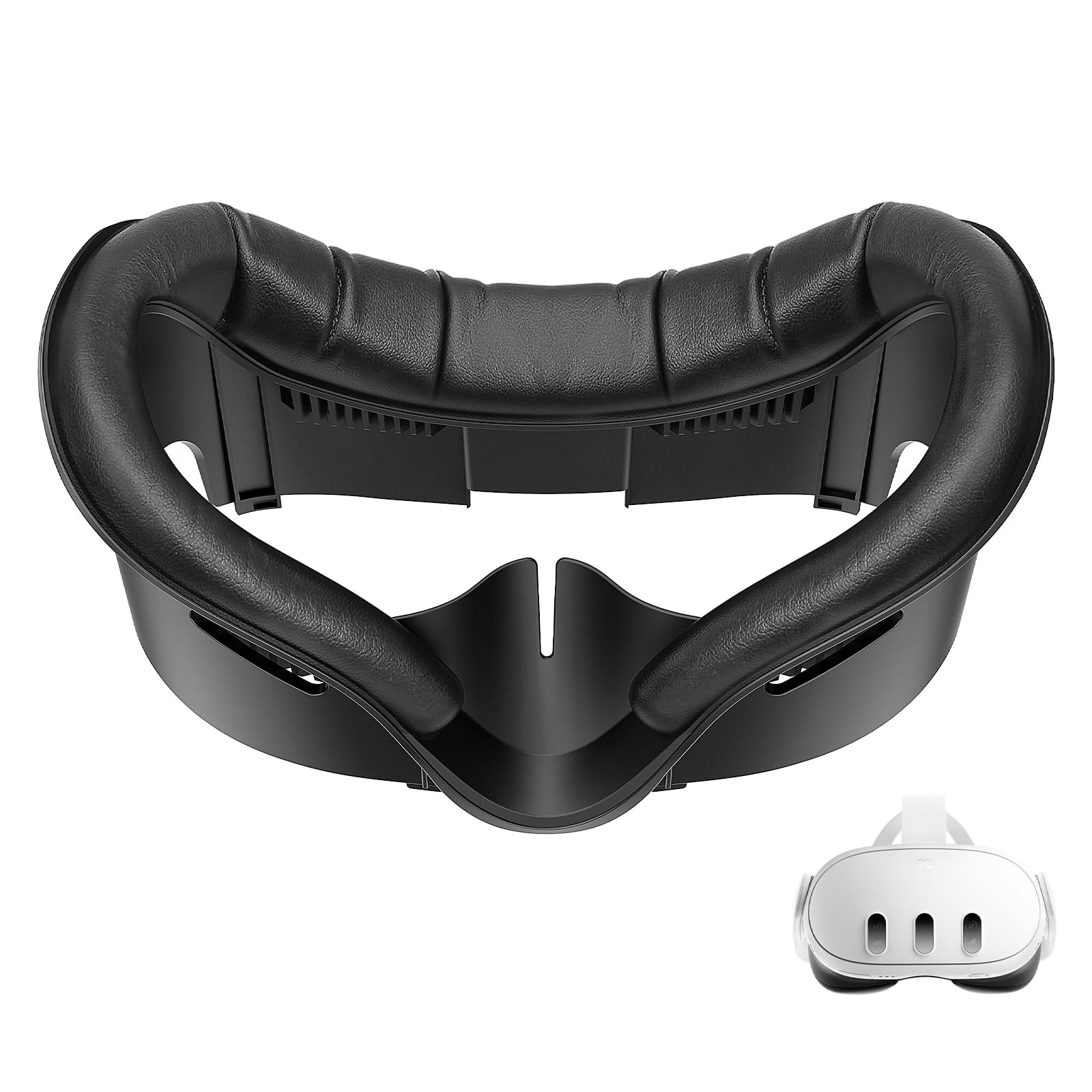

Photos from current listings. Actual item, color, and included accessories may vary.
Oculus Replacement Face Pad Buying Guide
A replacement face pad is the foam-and-fabric interface that seals a VR headset against your face, and its material and thickness dictate comfort, sweat management, and light leakage far more than the headset itself. The core trade-off is breathable PU leather or silicone (easy to wipe clean, less absorbent) versus plush foam fabric (softer, but a sweat sponge). Buy a model-specific, clip-compatible pad with documented millimeter thickness; skip universal one-size sheets and unbranded foam that compresses within weeks.
Median $30.60
Key takeaways
- PU leather and silicone pads wipe clean and resist sweat absorption; open-cell foam fabric pads breathe better but retain odor and moisture over time.
- Thickness changes optics: a thicker pad increases eye relief and can reduce glare and lens fogging but narrows the field of view; thinner pads widen FOV and bring lenses closer to the eyes.
- Attachment architecture is headset-specific: Quest 2 uses a snap-in plastic frame with alignment tabs, while Quest 3 and Quest 3S use a magnetic interface, so pads are not cross-compatible.
At a glance
- Category
- VR Gaming Hardware & Accessories
- Last updated
- Nov 28, 2026
Current offers
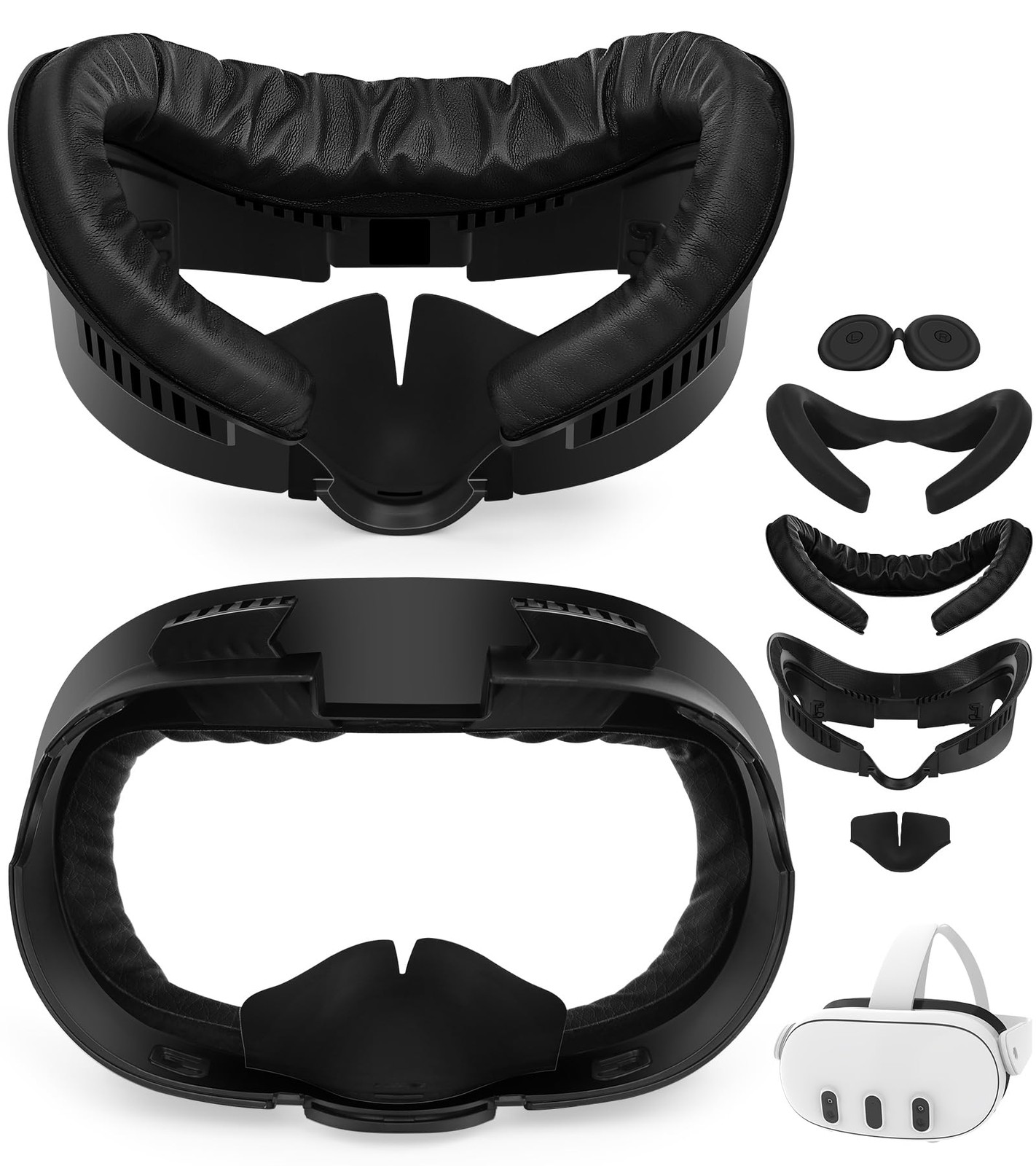
Highlights
- PU leather and silicone pads wipe clean and resist sweat absorption; open-cell foam fabric pads breathe better but retain odor and moisture over time.
- Thickness changes optics: a thicker pad increases eye relief and can reduce glare and lens fogging but narrows the field of view; thinner pads widen FOV and bring lenses closer to the eyes.
- Attachment architecture is headset-specific: Quest 2 uses a snap-in plastic frame with alignment tabs, while Quest 3 and Quest 3S use a magnetic interface, so pads are not cross-compatible.
- Prescription-insert users need a thinner pad or a pad designed to clear lens inserts; stock-thickness pads can press inserts into the brow and cause discomfort.
Best use cases
- Pick a wipe-clean PU leather or silicone pad if you share the headset or do sweat-heavy fitness sessions; skip plush fabric foam that absorbs perspiration and develops odor.
- Pick a thicker (wider eye-relief) pad if you wear glasses or lens inserts or experience lens fogging; skip thin pads that push the lenses too close for comfort.
- Pick a thin pad for maximum field of view in sim racing and flight sims where peripheral awareness matters; skip it for shared-family use where hygiene and cushioning dominate.
- Pick a model-specific Quest 2 snap-frame or Quest 3/3S magnetic pad for your exact headset generation; skip universal adhesive foam sheets that shift and leave residue.
Buying tips
- Measure your current pad thickness in millimeters and stay within about 2–3 mm of it unless you deliberately want to change eye relief and field of view.
- Match the attachment type exactly: snap-in frame for Quest 2, magnetic mount for Quest 3 and Quest 3S; a pad for the wrong generation will not seat or stay aligned.
- Choose closed-cell PU leather or silicone for hygiene and sweat resistance; choose open-cell foam only if breathability outweighs cleaning convenience.
- Confirm the pad includes or reuses the plastic interface frame; a foam-only replacement without the mounting frame is not a complete, installable part.
Specs
| Pad Material | PU leather / silicone / foam fabric |
|---|---|
| Mount Type | Snap-in (Quest 2) / magnetic (Quest 3) |
| Pad Thickness | Slim / standard / wide eye-relief |
| Hygiene | Wipe-clean vs absorbent foam |
Related searches
What to check before buying
- Identify your exact headset model and generation (Quest 2 vs Quest 3 vs Quest 3S) before ordering, because the mounting interface differs.
- Measure the thickness of your existing face pad and note whether you want more eye relief or a wider field of view.
- Check whether you use glasses or prescription lens inserts, which require extra clearance and often a thinner pad.
- Verify the pad ships with a compatible plastic frame or reuses the stock interface, and that the fabric is cleanable for shared use.
FAQ
Data sources: eBay / Amazon listings and product attribute feeds. Updated Nov 28, 2026.
Some links on this page are affiliate links. If you buy after clicking one, we may earn a commission at no extra cost to you. This does not change which products appear here or their order. Affiliate disclosure.