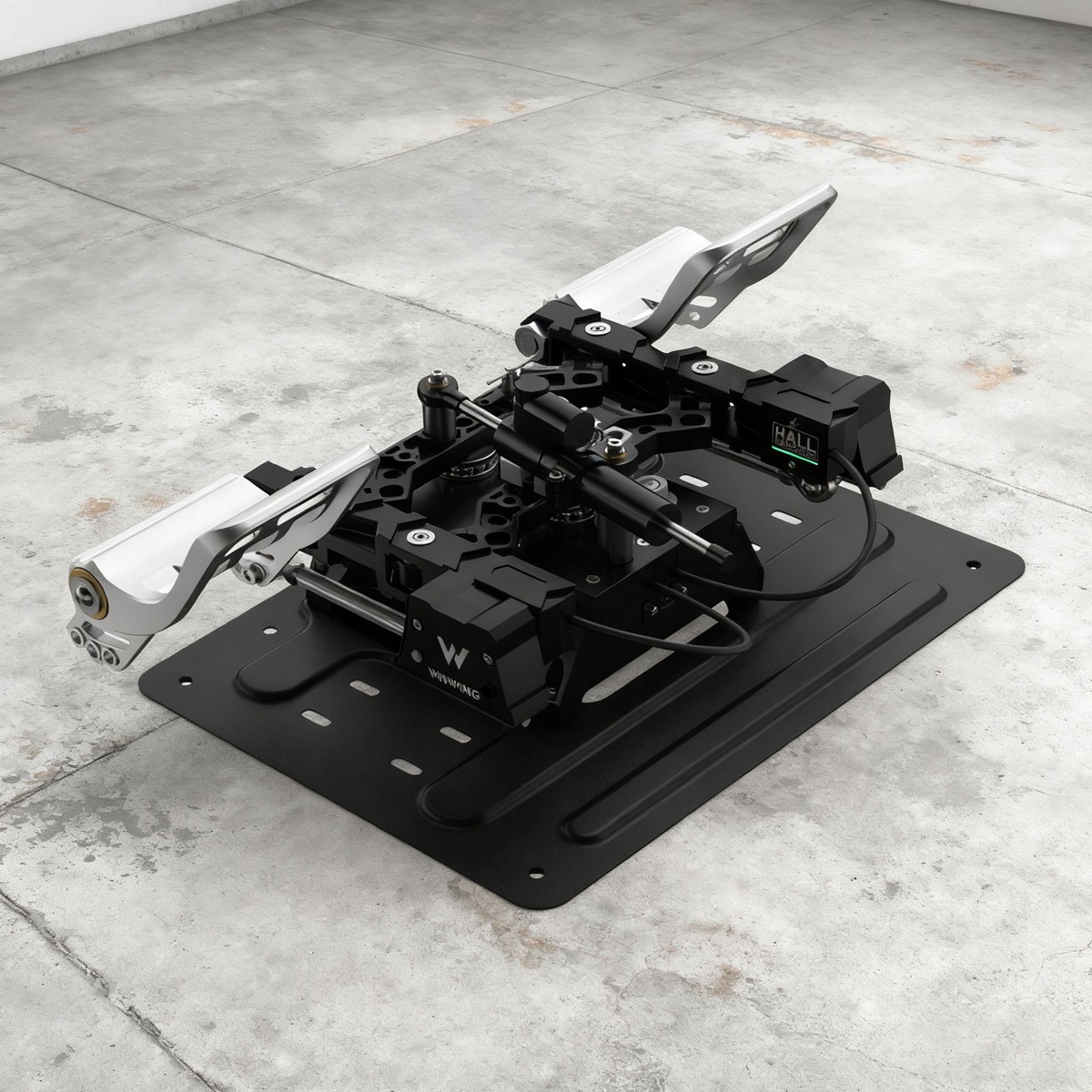

Photos from current listings. Actual item, color, and included accessories may vary.
Pedal Flight Simulator Buying Guide
Flight sim rudder pedals are the yaw-and-brake control axis that separates serious sim flying from gamepad steering, and the core trade-off is sensor/build quality versus price: potentiometer pedals are cheap but wear and spike, while Hall-effect or load-cell designs hold calibration for years. The decision rule is simple—buy pedals with contactless sensors, metal pivot hardware, and independent left/right toe brakes, and skip plastic-potentiometer units unless you are a casual desktop flyer replacing pedals every couple of years.
Key takeaways
- Sensor type is the durability gate: potentiometer pedals degrade and spike with dust/wear, while Hall-effect magnetic sensors are contactless and hold calibration long-term.
- Toe brakes matter: independent left/right toe-brake axes enable differential braking and tight ground steering; single-axis or no-brake pedals force keyboard workarounds.
- Pivot and frame material decide lifespan: metal or reinforced-aluminum arms and steel shafts resist flex and wobble; all-plastic hinges develop play and creak under load.
At a glance
- Category
- Flight Sim Rudder Pedals
- Last updated
- Nov 23, 2026
Current offers
Highlights
- Sensor type is the durability gate: potentiometer pedals degrade and spike with dust/wear, while Hall-effect magnetic sensors are contactless and hold calibration long-term.
- Toe brakes matter: independent left/right toe-brake axes enable differential braking and tight ground steering; single-axis or no-brake pedals force keyboard workarounds.
- Pivot and frame material decide lifespan: metal or reinforced-aluminum arms and steel shafts resist flex and wobble; all-plastic hinges develop play and creak under load.
- Platform and game compatibility varies by model: PC is universal via USB, while PS4/PS5 and Xbox support depends on the specific pedal firmware, so tier choice follows your platform.
Best use cases
- Best fit for airliner and GA simmers who need precise yaw and differential braking: pick a toe-brake-equipped pedal tier with contactless sensors and adjustable tension.
- Good fit for helicopter and warbird pilots who hold rudder input constantly: prioritize a wide, stable base and stiff metal pivot over compact plastic designs.
- Wrong fit: buying the cheapest plastic potentiometer pedals for competitive or long-session use—they spike and drift within months and cost more to replace.
- Skip powered force-feedback or high-tension load-cell pedals if your desk or rig lacks a rigid mounting plate or floor anchor; they will slide and flex under heavy input.
Buying tips
- Match platform first: PC works with any USB pedal, but PS4/PS5 and Xbox need model-specific compatibility—verify the pedal's firmware tier, not just the brand.
- Demand independent left/right toe brakes for differential braking; single-axis or brake-less pedals cap your ground handling realism regardless of sensor quality.
- Check pedal width and spacing against your stance: narrow tracks suit heel-on-floor desk flying, while wide tracks suit heel-on-pedal rudder work in a rig.
- Prefer contactless Hall-effect or load-cell sensing over potentiometers; if buying potentiometer pedals, confirm replaceable pots and calibration software exist.
Specs
| Sensor Type | Hall-effect vs potentiometer |
|---|---|
| Toe Brakes | Independent L/R vs single vs none |
| Platform Support | PC USB / PS4-PS5 / Xbox |
| Frame Material | Metal pivot vs all-plastic |
Related searches
What to check before buying
- Measure your foot position and rig: confirm pedal track width and heel rest height fit your seated stance and chair height before choosing a tier.
- Check floor surface and mounting: slick hard floors need non-slip pads or a bolted plate; carpeted rigs should have a stable base or anchor points.
- Confirm platform and sim compatibility: match pedal USB output and firmware support to PC, PS4/PS5, or Xbox and to your sim's axis mapping.
- Plan cable routing and USB port: pedals add one USB device plus cable length to your rig, so verify reach from floor to PC or hub.
FAQ
Data sources: eBay / Amazon listings and product attribute feeds. Updated Nov 23, 2026.
Some links on this page are affiliate links. If you buy after clicking one, we may earn a commission at no extra cost to you. This does not change which products appear here or their order. Affiliate disclosure.