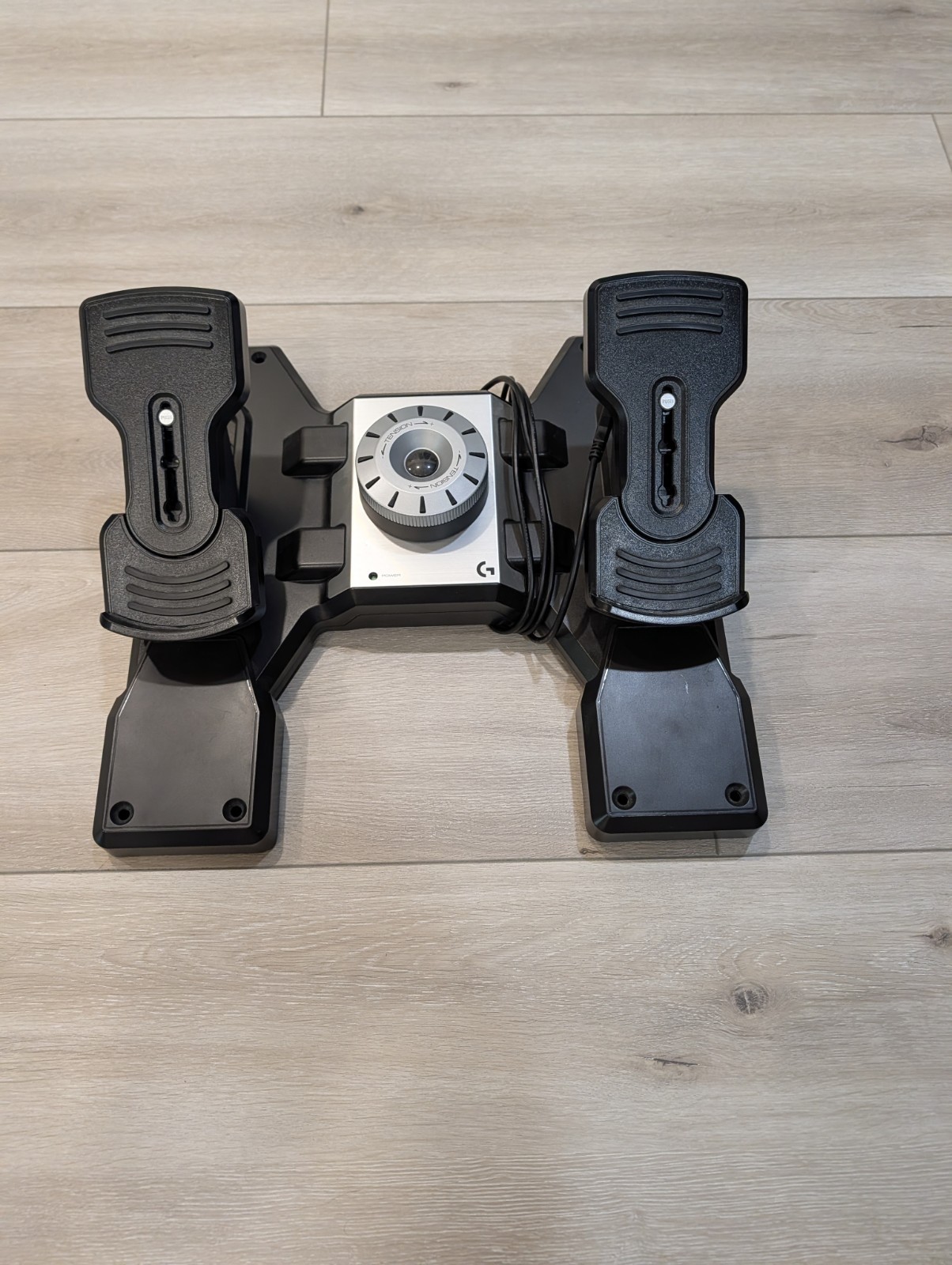

Photos from current listings. Actual item, color, and included accessories may vary.
Logitech Pro Pedal Buying Guide
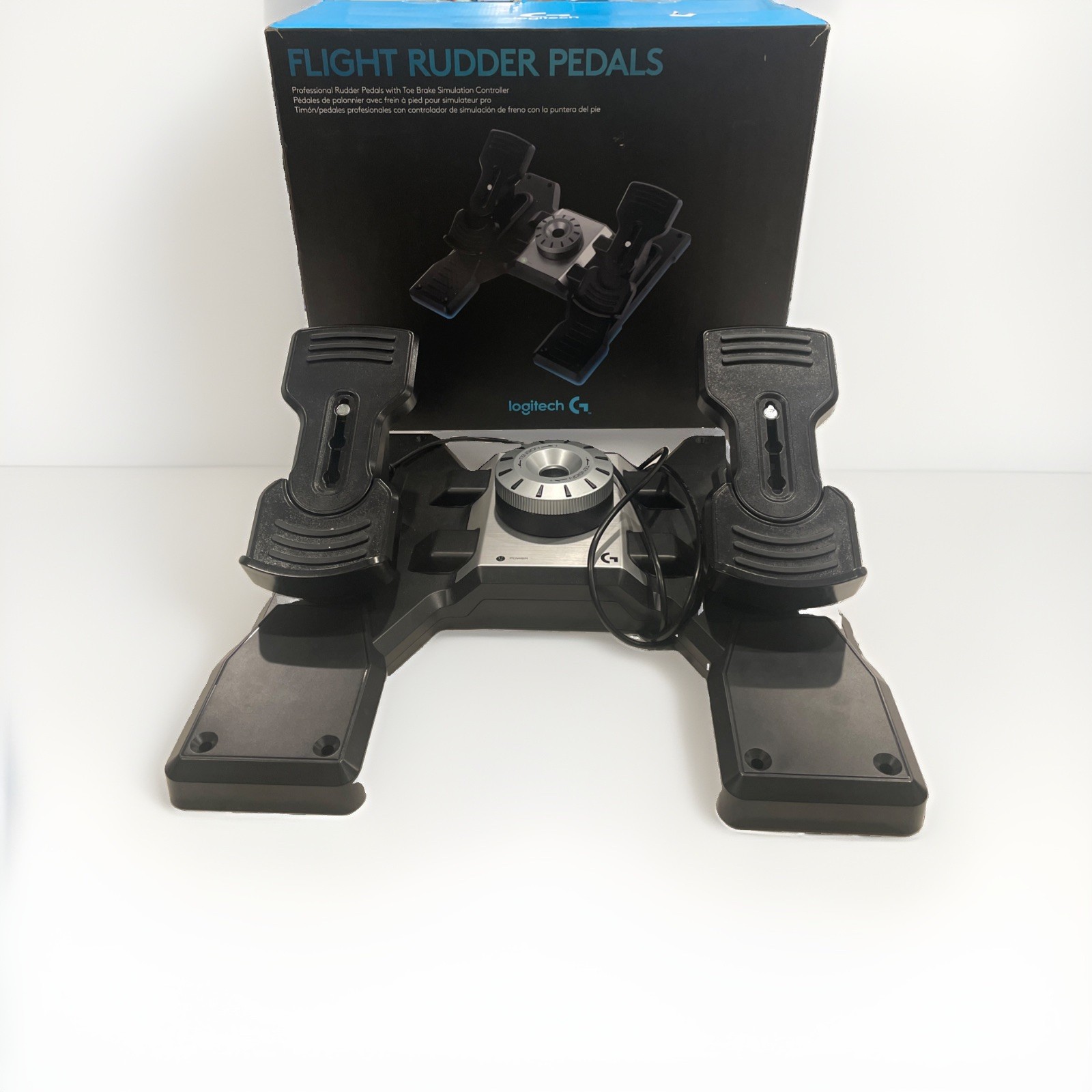
Logitech Pro Pedals are a mainstream, plastic-bodied rudder pedal set with toe brakes, designed for flight simulators. The core trade-off is between a light, affordable plastic chassis with potentiometer sensors and a heavier metal or load-cell design with contactless sensing. Buy these if you need a functional three-axis pedal set on a budget; skip them if you require Hall-effect precision, high force, or long-term durability under heavy use.
Median $110.00
Key takeaways
- Three-axis control: sliding rudder plus independent left/right toe brakes, essential for realistic taxiing and differential braking.
- Potentiometer-based sensing on rudder and brakes; this is the wear-prone component versus Hall-effect or load-cell sensors on premium pedals.
- Plastic chassis and pedal arms keep weight and cost down but flex under strong input; metal pedals resist flex and hold calibration longer.
At a glance
- Category
- Flight Sim Rudder Pedals
- Last updated
- Nov 23, 2026
Current offers
Highlights
- Three-axis control: sliding rudder plus independent left/right toe brakes, essential for realistic taxiing and differential braking.
- Potentiometer-based sensing on rudder and brakes; this is the wear-prone component versus Hall-effect or load-cell sensors on premium pedals.
- Plastic chassis and pedal arms keep weight and cost down but flex under strong input; metal pedals resist flex and hold calibration longer.
- Wide fixed foot spacing and a non-adjustable geometry suit average adult leg widths; narrow or adjustable spacing matters for smaller users.
Best use cases
- Best fit: entry-level flight simmers flying airliners or GA aircraft who need toe brakes and a rudder axis without a premium budget.
- Best fit: desk or chair setups where a light plastic pedal set can be braced against a wall or held by a rubber floor mat.
- Wrong fit: competitive or long-session users wanting Hall-effect sensors, adjustable pedal width, and high-force metal construction — choose a premium metal pedal set instead.
- Wrong fit: users on thick carpet or slick hard floors without a way to secure the base; the light plastic frame will slide under strong rudder input.
Buying tips
- Confirm the set includes a USB connection and works as a standalone game controller; some Logitech pedal sets are designed to daisy-chain through a yoke or throttle quadrant.
- Check that toe brakes are analog and independently reported, not a single combined axis, or differential braking in sims will be unusable.
- Measure your footwell: the pedals need roughly 12–14 inches of width and a flat, stable surface; plastic bases rely on friction and bracing.
- Prefer sets with a calibration utility or documented deadzone adjustment; potentiometer pedals benefit from periodic recalibration as they wear.
Specs
| Sensor Type | Potentiometer vs Hall-effect |
|---|---|
| Chassis Material | Plastic vs steel/aluminum |
| Toe Brakes | Analog independent L/R or none |
| Pedal Adjustability | Fixed spacing vs adjustable width |
Related searches
What to check before buying
- Verify your sim or game supports separate rudder and toe-brake axes and allows axis assignment.
- Confirm you have a flat floor or a way to brace the pedal base; carpet grips better than smooth tile or wood.
- Check USB port availability and that the pedals do not require a specific companion Logitech yoke or throttle to function.
- Measure available width and depth under your desk or rig to ensure the fixed pedal spacing fits your stance.
FAQ
Data sources: eBay / Amazon listings and product attribute feeds. Updated Nov 23, 2026.
Some links on this page are affiliate links. If you buy after clicking one, we may earn a commission at no extra cost to you. This does not change which products appear here or their order. Affiliate disclosure.