
Photos from current listings. Actual item, color, and included accessories may vary.
Flight Sim Pedal Buying Guide
Flight sim rudder pedals fall into two clear tiers: plastic entry-level units with potentiometer or Hall-effect sensors and modest resolution, and metal mid-to-high-end pedals with contactless magnetic sensors and adjustable mechanics. The primary trade-off is sensor resolution and construction rigidity versus cost and desk footprint. Buy plastic pedals only if you fly casually and need yaw plus basic toe brakes; spend on metal, contactless-sensor pedals if you fly helicopters, warbirds, or IFR approaches where fine rudder input and centering consistency matter.
Median $89.99
Key takeaways
- Thrustmaster TFRP uses a plastic chassis, Hall-effect sensors on all three axes, and a full-foot sliding rail with toe brakes; it is the reference entry-level pedal for PC and PS4.
- Logitech G Pro Flight Rudder Pedals use a plastic body with adjustable pedal spacing and a tension dial, plus toe brakes, targeting desk and sim-pit mounting.
- VKB T-Rudders Mk.V are all-metal, use contactless magnetic sensors, have no toe brakes, and are designed for helicopter and taildragger flying where precise yaw control is prioritized.
At a glance
- Category
- Flight Sim Rudder Pedals
- Last updated
- Nov 23, 2026
Current offers
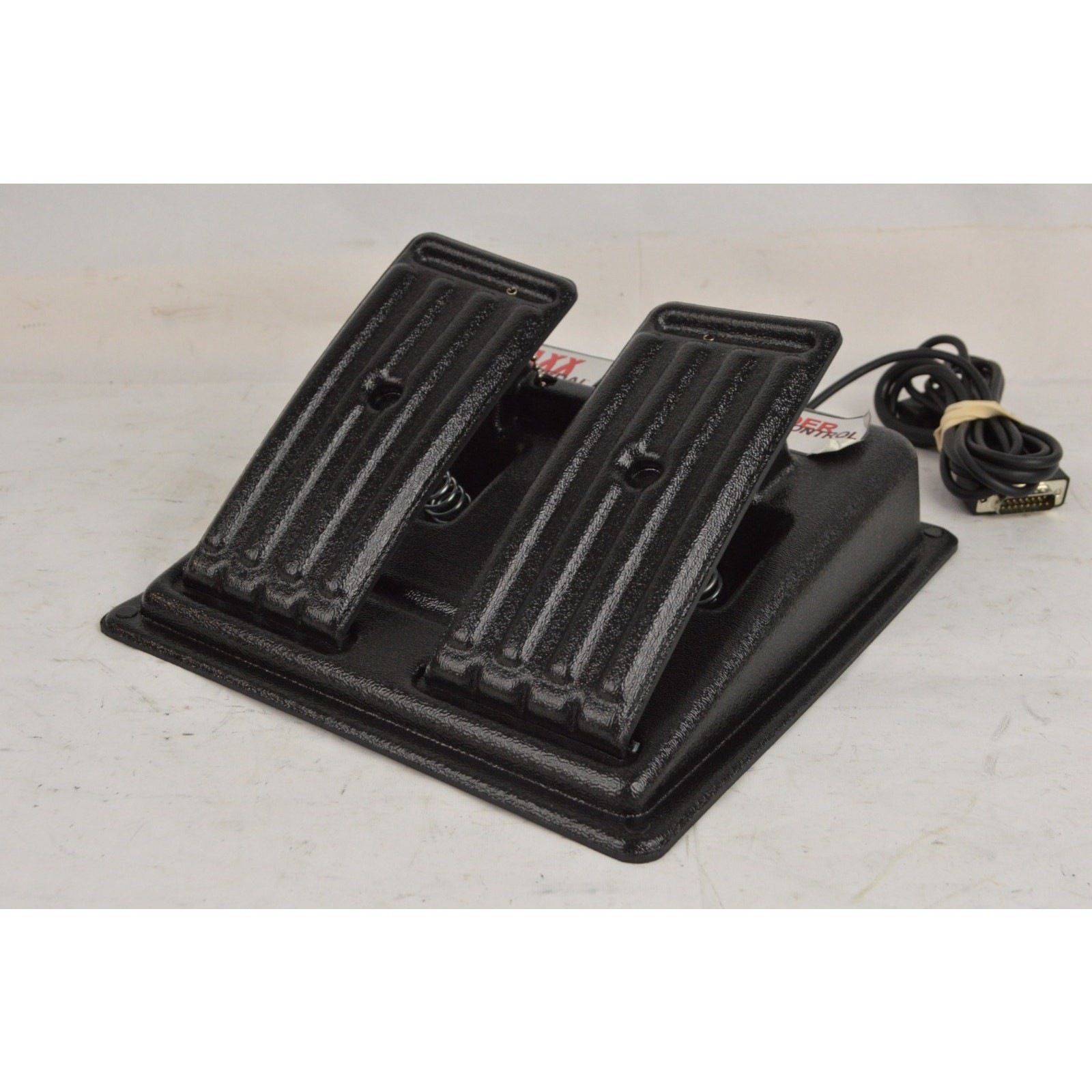 MAXX MP-1095 Rudder Simulator Foot Pedals Controller PC Flight Sim Game SEMPRO$49.00View on eBay
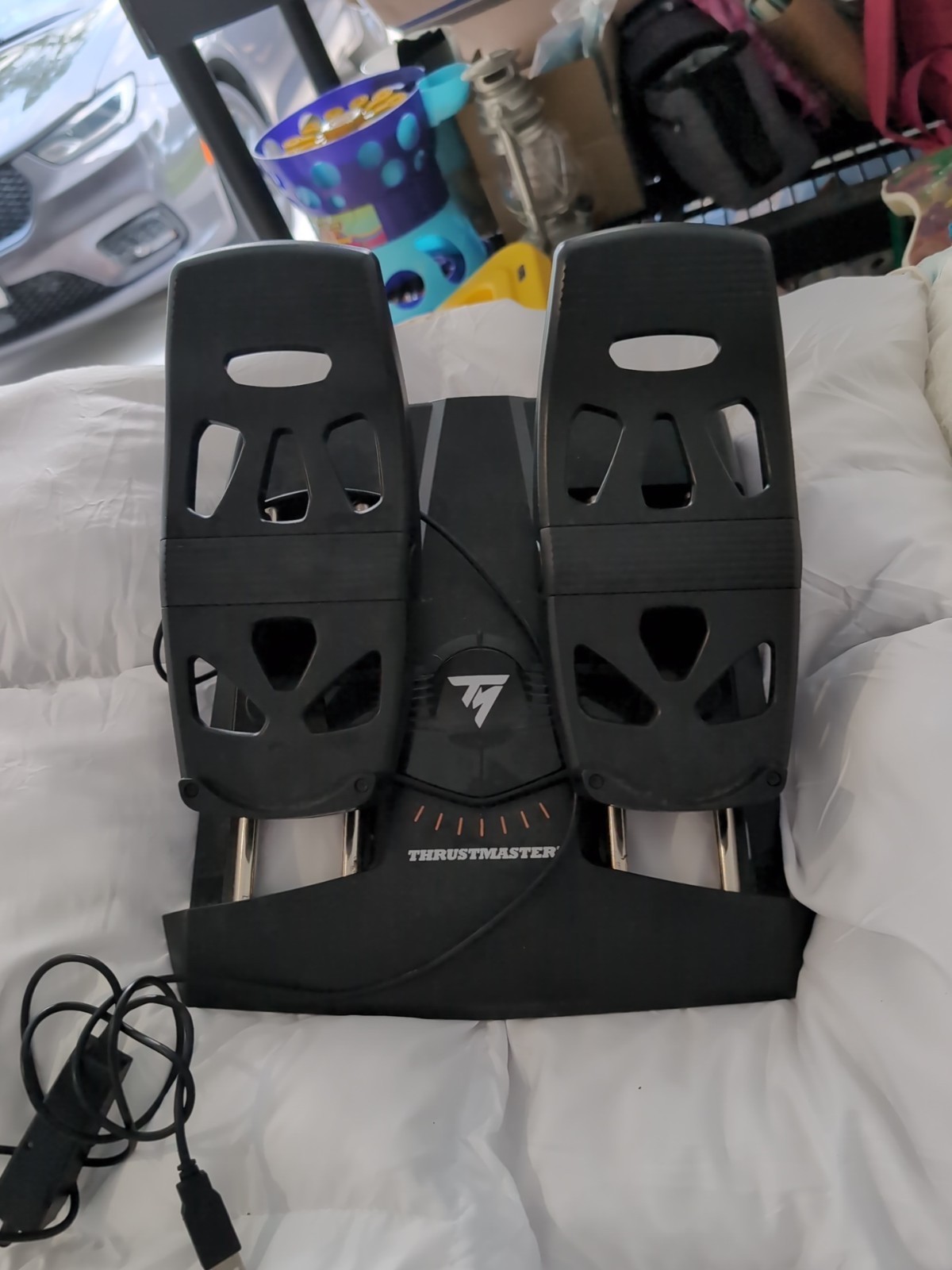 Thrustmaster TFRP Precision Flight Sim Rudder Pedals - Black$76.99View on eBay
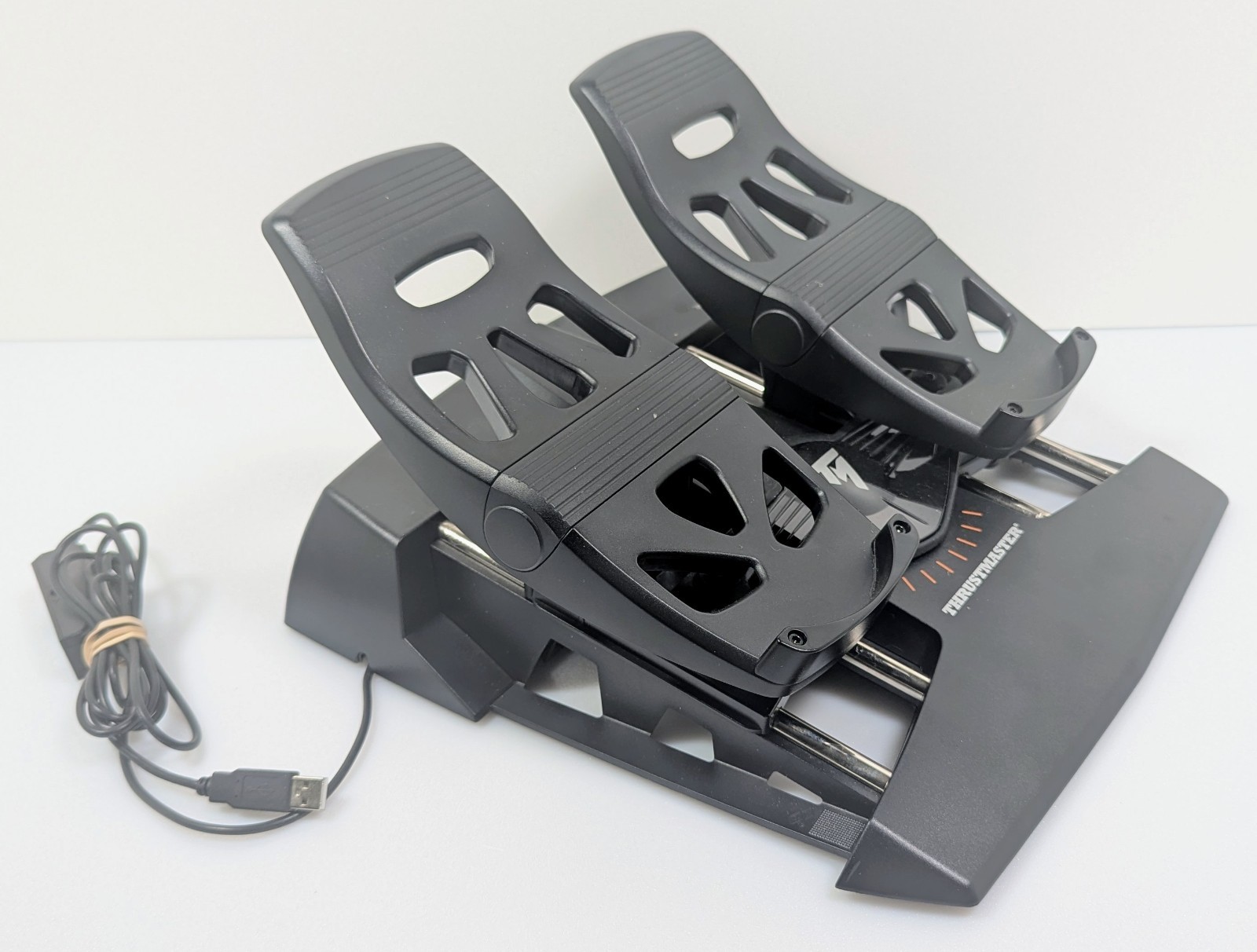 Thrustmaster TFRP T.Flight Rudder Pedals Flight Sim PC PS4 Black W/ USB Adapter!$89.99View on eBay
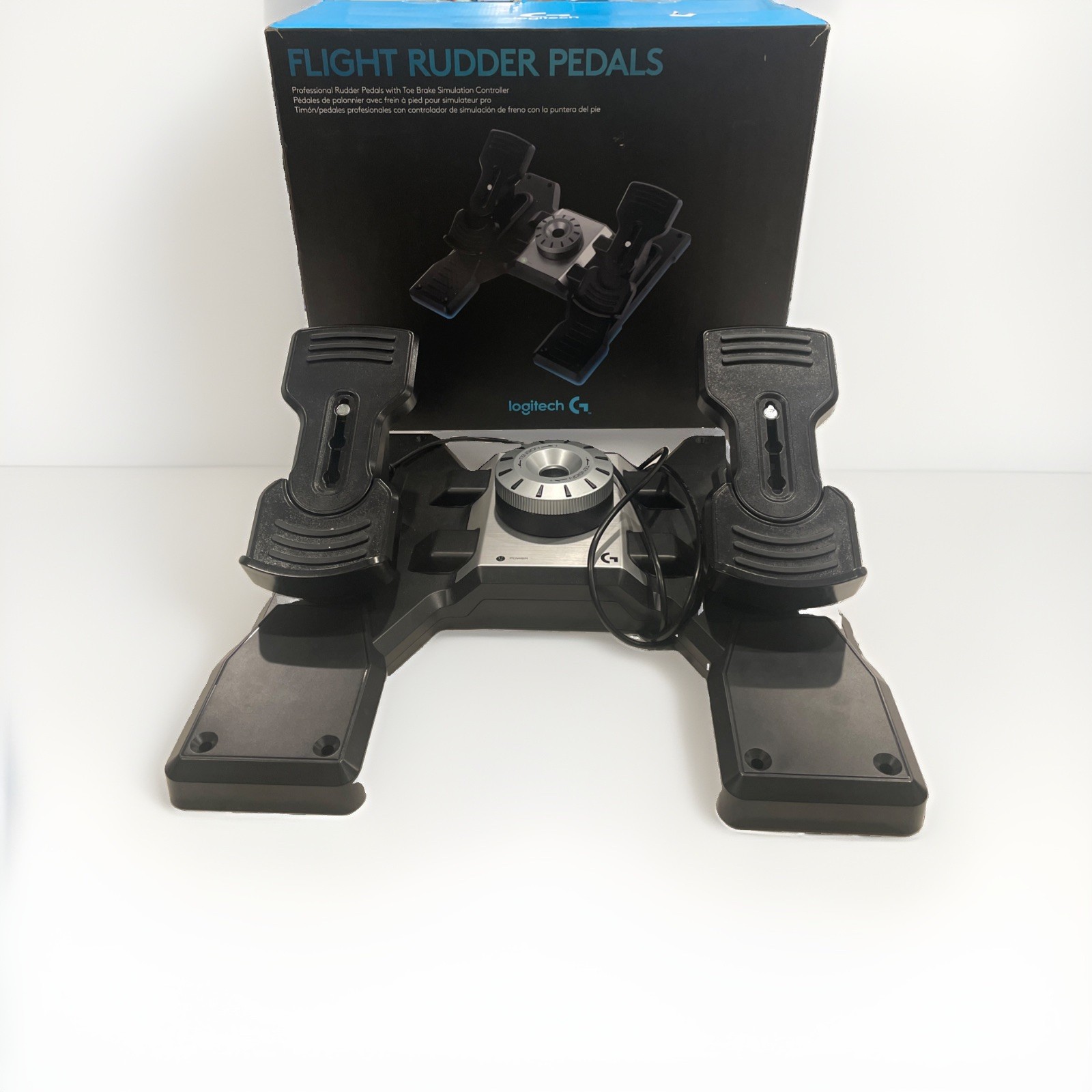 Logitech G-Pro Flight Simulator Sim Rudder Pedals With Toe Brake Microsoft$125.00View on eBay
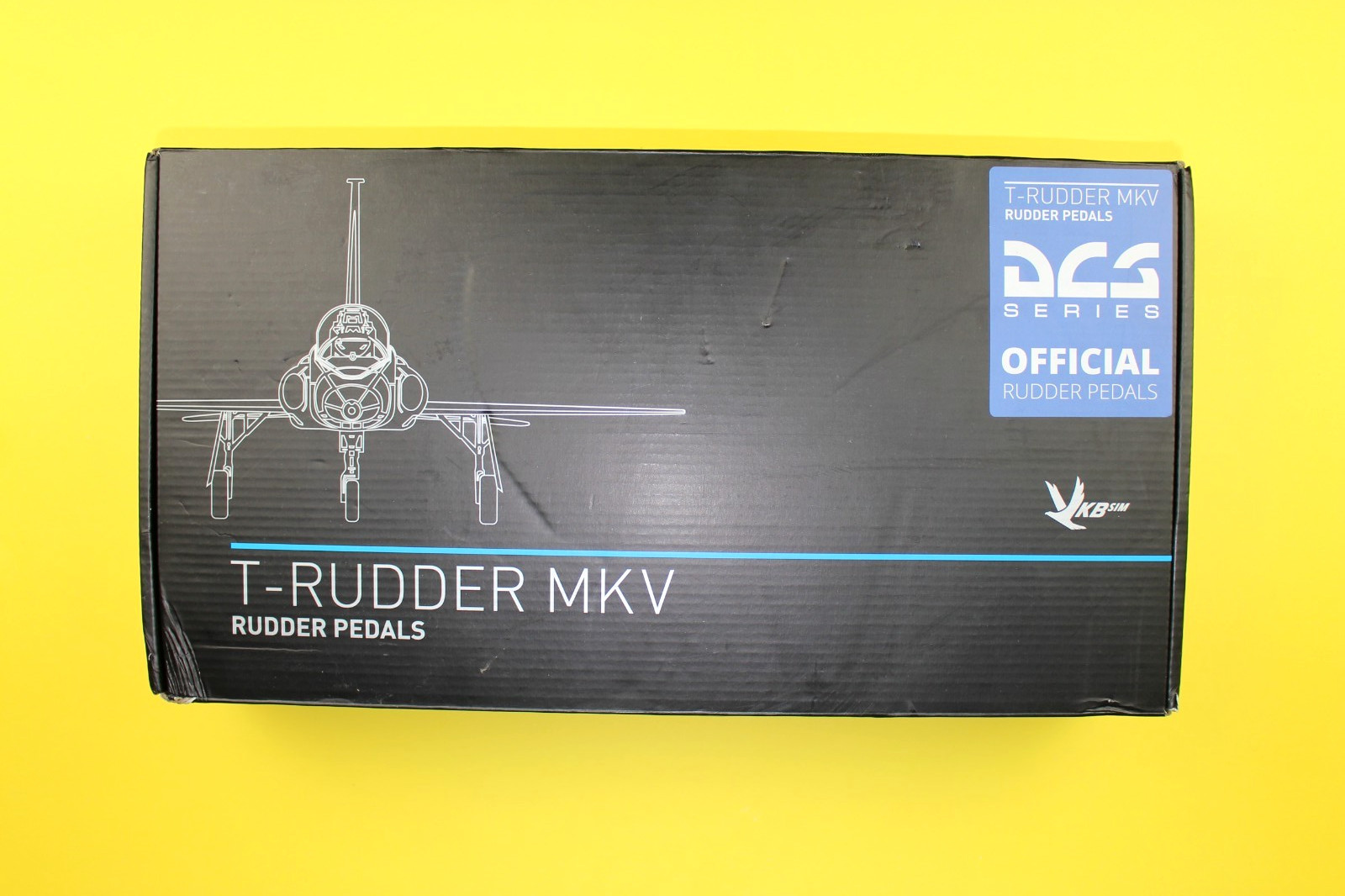 VKB T-Rudders Mk.V Rudder Pedals — All-Metal Flight Sim Rudder Pedals$180.00View on eBay
Highlights
- Thrustmaster TFRP uses a plastic chassis, Hall-effect sensors on all three axes, and a full-foot sliding rail with toe brakes; it is the reference entry-level pedal for PC and PS4.
- Logitech G Pro Flight Rudder Pedals use a plastic body with adjustable pedal spacing and a tension dial, plus toe brakes, targeting desk and sim-pit mounting.
- VKB T-Rudders Mk.V are all-metal, use contactless magnetic sensors, have no toe brakes, and are designed for helicopter and taildragger flying where precise yaw control is prioritized.
- Pedal designs split into sliding-rail (TFRP, Logitech) and hanging-pendulum (VKB, higher-end metal) mechanics; pendulum pedals are more compact and suit under-desk or rig mounting.
Best use cases
- Buy the Thrustmaster TFRP if you are entering flight sims on PC or PS4, want toe brakes and a wide foot platform, and fly airliners or general aviation casually.
- Buy the Logitech G Pro Flight Rudder Pedals if you need adjustable pedal spacing and tension for a shared desk setup and prefer a wide, stable plastic base.
- Buy the VKB T-Rudders Mk.V if you fly helicopters or taildraggers and need all-metal durability and contactless precision; skip it if you require toe brakes for differential braking.
- Skip plastic pedals entirely if you plan competitive or long-session flying with high-fidelity modules; step to metal, contactless-sensor pedals for centering consistency.
Buying tips
- Check sensor type: potentiometers wear and spike over time, Hall-effect or magnetic contactless sensors hold calibration far longer under heavy use.
- Match pedal mechanics to your rig: sliding-rail pedals need deeper floor space, while pendulum or hanging pedals fit tighter under-desk and cockpit setups.
- Confirm toe brakes if you fly aircraft with differential braking (most GA and airliners); helicopter and glider simmers can skip toe brakes and prioritize yaw resolution.
- Verify platform support: PC is universal via USB, but PS4 and Xbox require specific licensed models or adapters, so match the pedal to your console generation.
Specs
| Sensor Type | Hall-effect / contactless magnetic vs potentiometer |
|---|---|
| Chassis Material | Plastic entry-level / all-metal mid-high end |
| Toe Brakes | Included on most fixed-wing pedals / absent on heli-focused |
| Pedal Mechanics | Sliding-rail vs hanging-pendulum design |
Related searches
What to check before buying
- Measure floor or rig space: sliding-rail pedals like the TFRP extend roughly 40-50 cm front-to-back, while pendulum pedals need less depth but more height clearance.
- Check mounting: most plastic pedals slide on carpet or hard floor unless bolted; metal pedals often include hard-mount points for sim rigs and cockpits.
- Confirm connection: all modern pedals use USB, but console use requires the matching licensed model or a compatible adapter for PS4 or Xbox.
- Account for companion gear: rudder pedals pair with a HOTAS or yoke and throttle; ensure your sim rig or desk has room for all three without pedal obstruction.
FAQ
Data sources: eBay / Amazon listings and product attribute feeds. Updated Nov 23, 2026.
Some links on this page are affiliate links. If you buy after clicking one, we may earn a commission at no extra cost to you. This does not change which products appear here or their order. Affiliate disclosure.