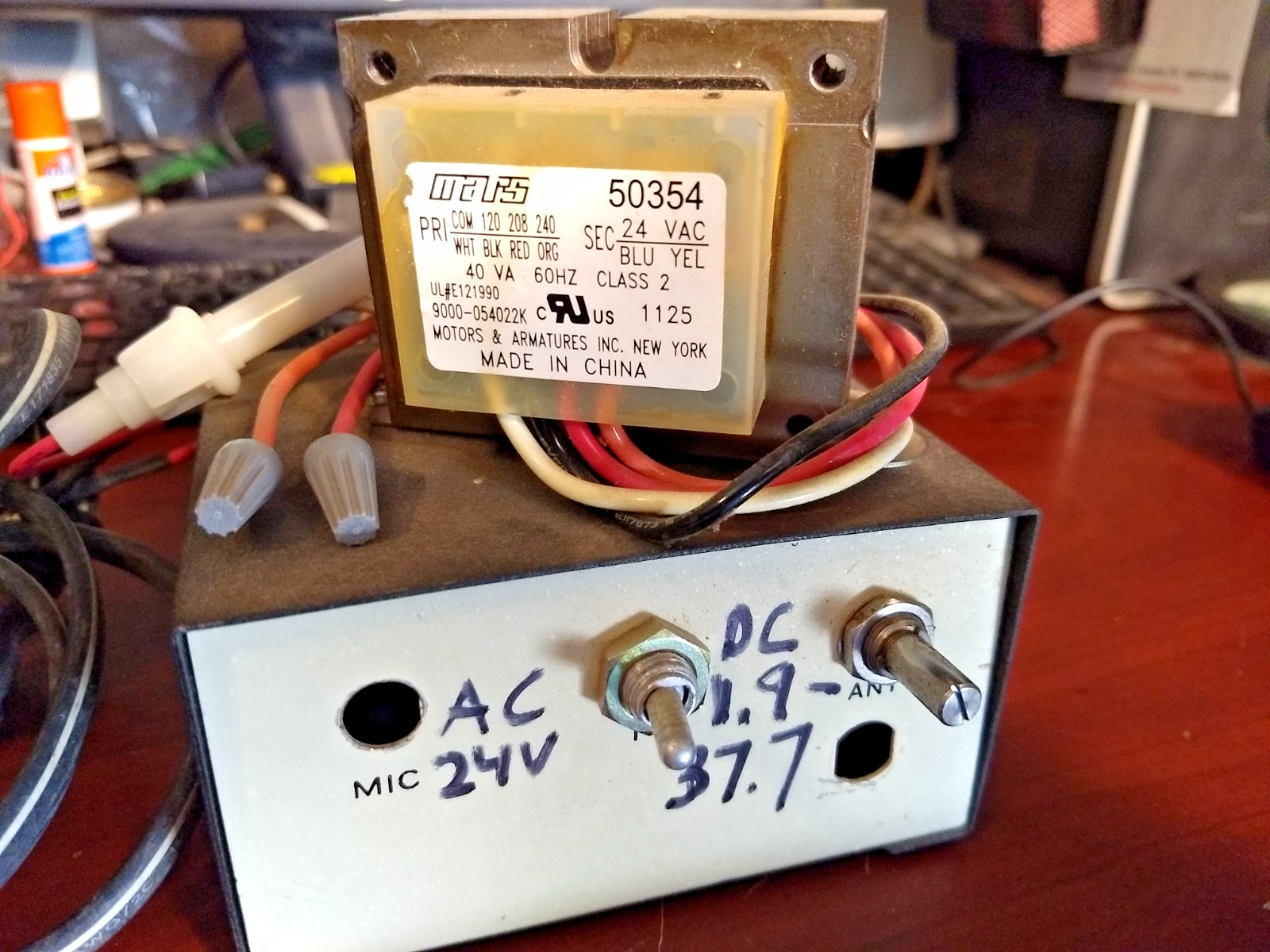

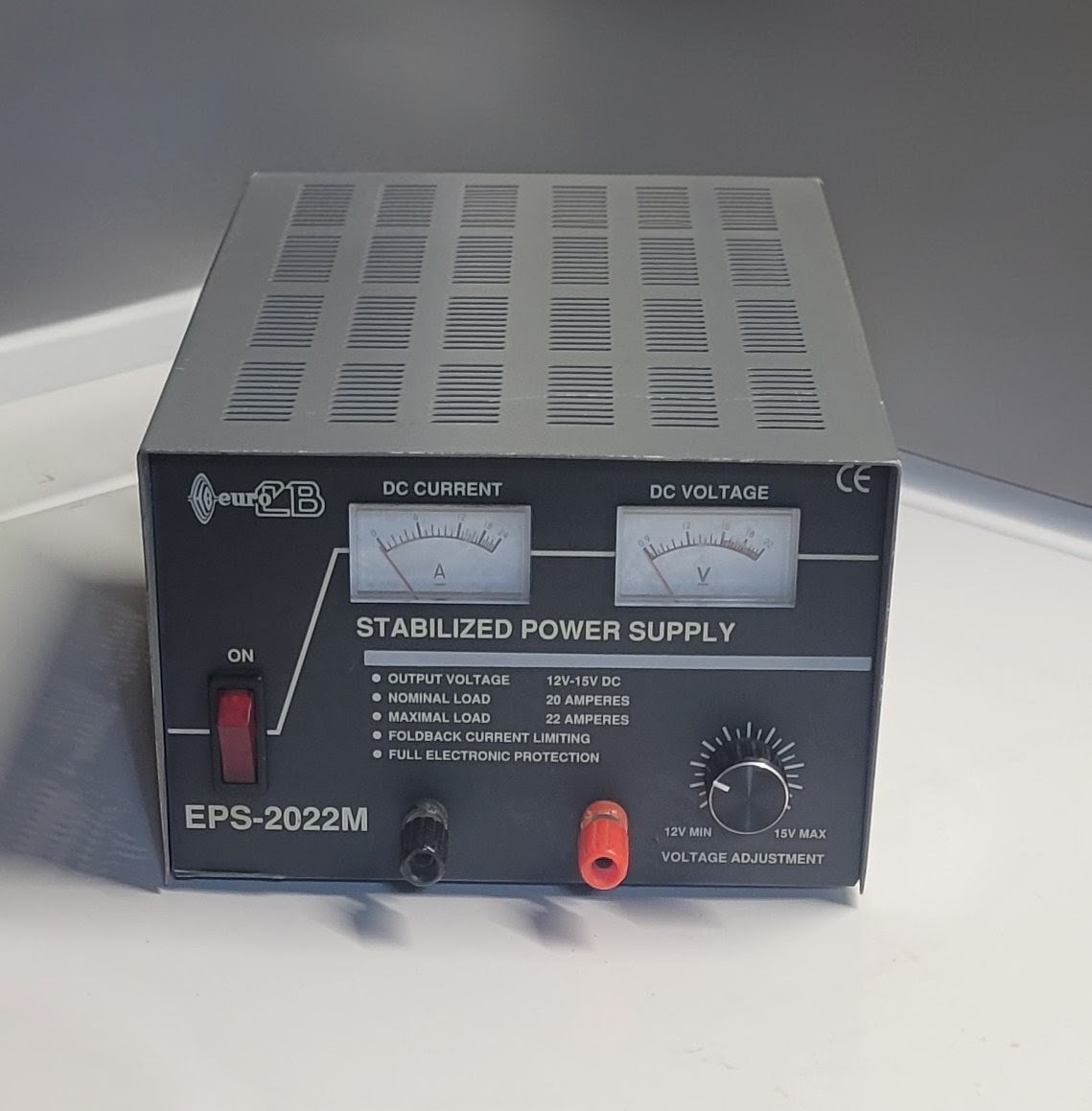
Photos from current listings. Actual item, color, and included accessories may vary.
Power Supply Buying Guide
A ham radio power supply converts AC mains to a stable, low-noise DC rail that your transceiver actually needs, and the primary trade-off is linear (heavy, quiet, repairable) versus switching (light, efficient, noisier). Buy a linear supply when low HF noise and long service life matter; choose a switching supply only with proven EMI filtering and a return path for hash.
Median $58.97
Key takeaways
- Linear supplies use a heavy laminated transformer and pass transistor; switching supplies use high-frequency MOSFETs, cutting weight by roughly 60-70% at equal amperage.
- Continuous-duty rating matters more than peak: a 20 A continuous supply handles a 100 W HF transceiver at full carrier, while a 20 A peak unit sags under sustained draw.
- Regulation tier separates clean DC from drift: adjustable tracking supplies hold output within millivolts, while unstabilized transformer units rise and fall with load and mains voltage.
At a glance
- Category
- Ham Radio Power & Batteries
- Last updated
- Nov 28, 2026
Current offers
Highlights
- Linear supplies use a heavy laminated transformer and pass transistor; switching supplies use high-frequency MOSFETs, cutting weight by roughly 60-70% at equal amperage.
- Continuous-duty rating matters more than peak: a 20 A continuous supply handles a 100 W HF transceiver at full carrier, while a 20 A peak unit sags under sustained draw.
- Regulation tier separates clean DC from drift: adjustable tracking supplies hold output within millivolts, while unstabilized transformer units rise and fall with load and mains voltage.
- Metering and protection define usability: front-panel volt/amp meters plus over-voltage and fold-back current limiting prevent radio damage from accidental voltage knobs.
Best use cases
- Pick a 20-35 A linear supply with meters for a 100 W HF base station; skip lightweight switch-mode units unless they carry known ham-grade EMI filtering.
- Choose a 3-10 A adjustable bench supply for QRP rigs, mobile radios on the bench, and charging gel-cell batteries; a 20 A supply is oversized and its coarse knob risks over-voltage on low-draw gear.
- For portable or field day use, skip traditional transformer supplies entirely and use a battery plus charger; a linear unit defeats the weight advantage even if it is cheaper.
- Avoid vintage unstabilized or dual-tracking supplies for modern radios unless you add external over-voltage protection; their unloaded voltage can exceed the radio's 15 V ceiling.
Buying tips
- Size amperage at 1.5x the radio's transmit current draw: a 100 W HF rig drawing 20 A peaks needs a 30 A continuous supply, not a 20 A peak-rated unit.
- Match voltage to the radio's spec: most HF/VHF transceivers require 13.8 V ±15%, so a 13.8 V fixed supply is correct; 12 V nominal supplies deliver only about 13.8 V unloaded and sag under load.
- Prefer transformer-linear supplies with a laminated steel core and aluminum heatsink for HF; switching supplies must state conducted EMI compliance or they inject hash into weak-signal reception.
- Check protection features before purchase: fold-back current limiting, over-voltage crowbar, and thermal shutdown are the three that actually save a radio from a supply fault.
Specs
| Regulation Type | Linear transformer vs switch-mode |
|---|---|
| Continuous Output | 3-10 A bench / 20-35 A base |
| Output Voltage | 13.8 V fixed or 1-15 V adjustable |
| Protection Features | Fold-back, OVP, thermal shutdown |
Related searches
What to check before buying
- Measure your radio's maximum transmit current from its manual and multiply by 1.5 to get the minimum continuous supply rating.
- Confirm your shack outlet voltage (120 V or 230 V) matches the supply's input tap; many linear supplies are fixed at one mains voltage.
- Verify the DC output connector type: binding posts accept bare wire or banana plugs, while some supplies use proprietary connectors requiring an adapter cable.
- Allow 6-8 inches of clearance around the supply for convection cooling; linear supplies run warm and need free air, and switching supplies need fan clearance.
FAQ
Data sources: eBay / Amazon listings and product attribute feeds. Updated Nov 28, 2026.
Some links on this page are affiliate links. If you buy after clicking one, we may earn a commission at no extra cost to you. This does not change which products appear here or their order. Affiliate disclosure.