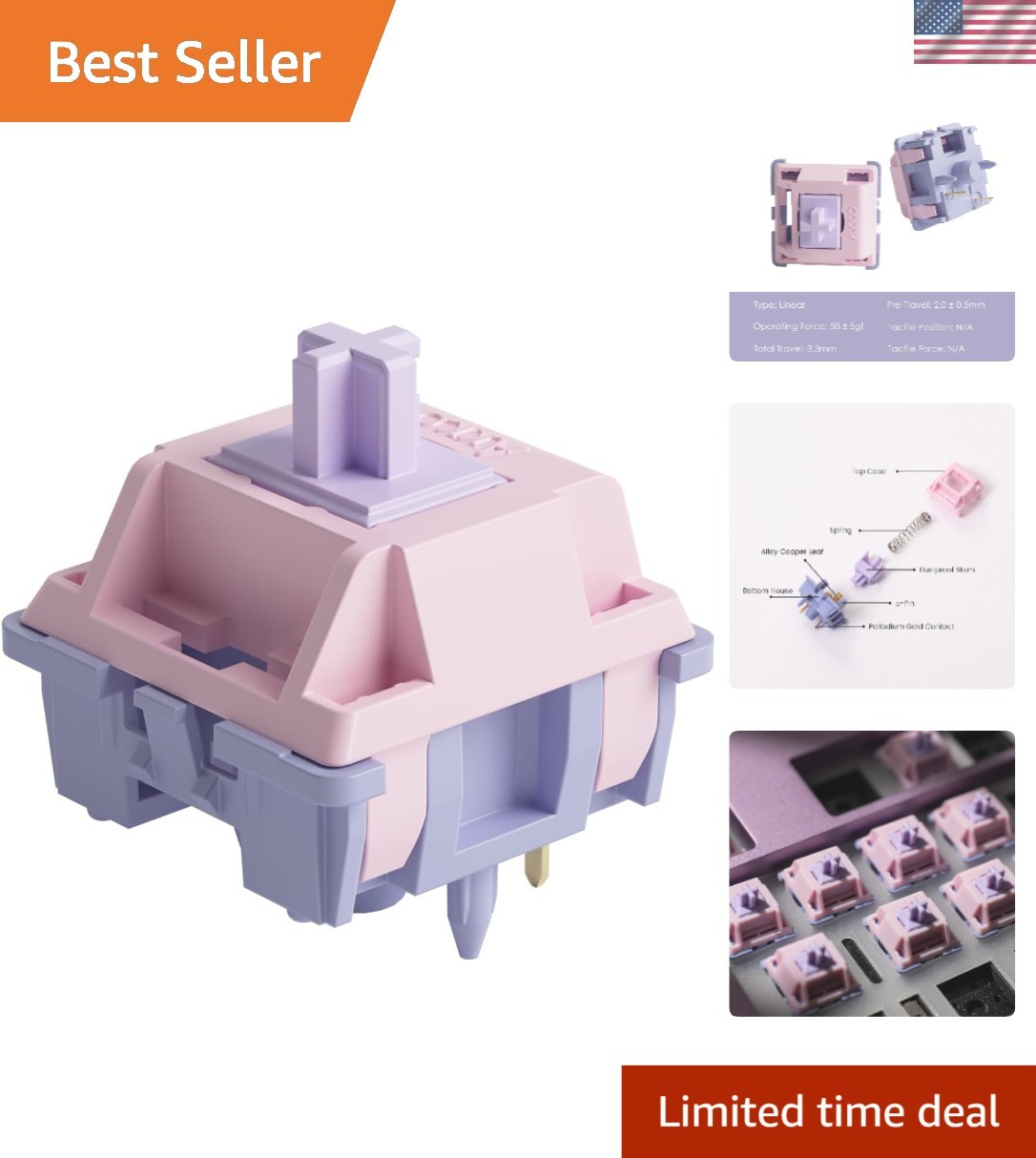

Photos from current listings. Actual item, color, and included accessories may vary.
Silent Switch Buying Guide
Silent switches are mechanical keyboard switches with internal dampening (usually silicone or rubber pads on the stem) that reduce bottom-out and top-out noise by 10–20 dBA versus standard linear/tactile switches. The core trade-off is acoustic dampening versus tactile feel: heavier dampening silences the board but can create a mushy, shortened key travel, while lighter dampening preserves crispness but lets more high-frequency clack through. Buy silent switches only if you need sub-45 dBA office or shared-room operation—if you prioritize typing feel above all, standard lubed linears are the better choice.
Median $29.42
Key takeaways
- Silent switches use dual dampening pads (stem top and bottom) to cut impact noise; single-pad designs only silence bottom-out and still clack on release.
- Cherry MX Silent Red uses a 45gf actuation linear stem with factory-applied dampening; clone 'silent' linears often run 50gf and vary widely in pad hardness and consistency.
- Factory pre-lubed silent switches reduce friction and spring ping but excess lube can migrate onto dampening pads, deadening feel—buy from batches with light, even lubrication.
At a glance
- Category
- Keyboard Switches
- Last updated
- Nov 23, 2026
Current offers
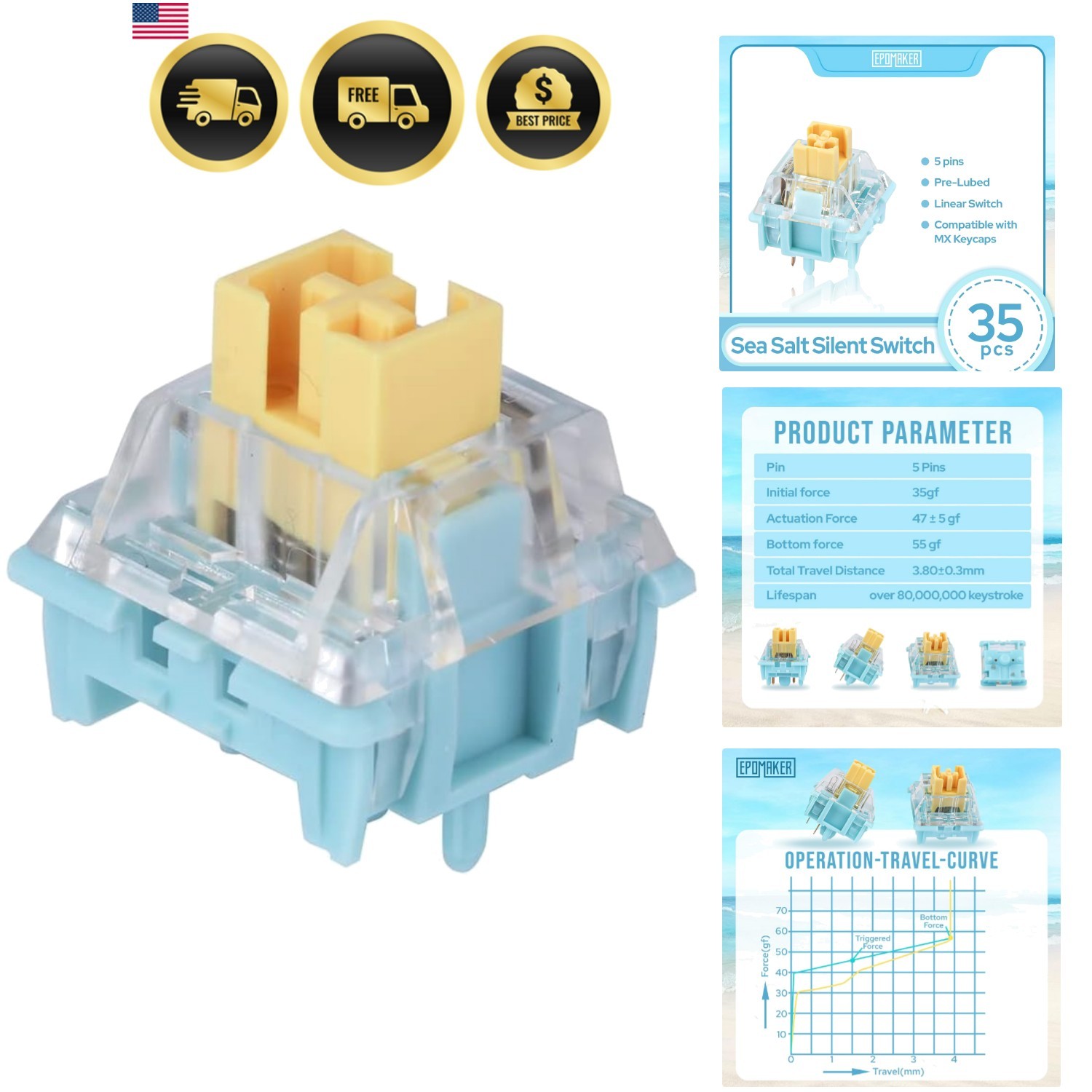
Highlights
- Silent switches use dual dampening pads (stem top and bottom) to cut impact noise; single-pad designs only silence bottom-out and still clack on release.
- Cherry MX Silent Red uses a 45gf actuation linear stem with factory-applied dampening; clone 'silent' linears often run 50gf and vary widely in pad hardness and consistency.
- Factory pre-lubed silent switches reduce friction and spring ping but excess lube can migrate onto dampening pads, deadening feel—buy from batches with light, even lubrication.
- 5-pin (PCB-mount) silent switches fit both plate-mount and PCB-mount boards; 3-pin versions require a plate and are less stable in hot-swap sockets without plate support.
Best use cases
- Best fit: open-plan office or shared bedroom—choose 5-pin factory-lubed silent linears around 45–50gf for the quietest, most consistent result.
- Best fit: hot-swap board with a plate—3-pin or 5-pin silent switches both work, but 5-pin adds stability and reduces wobble; pick 5-pin if your PCB supports the extra legs.
- Wrong fit: tactile or clicky fans—silent switches are overwhelmingly linear; if you need a bump, expect a muted, mushy tactile feel rather than crisp feedback.
- Skip if: you type on a hollow, tray-mount case with thin ABS keycaps—switch dampening alone won't fix case ping and keycap clack; address the whole acoustic chain first.
Buying tips
- Match spring weight to your typing force: 45gf silent linears suit most typists; 50gf+ reduces accidental presses but increases bottom-out force and perceived heaviness.
- Count your board's switch sockets before ordering: a 60% board needs ~61–68 switches, a TKL ~87, a full-size ~104—order 5–10 spares for damaged pins or future replacements.
- Prefer 5-pin PCB-mount silent switches for hot-swap boards with plate support; they center better and wobble less than 3-pin in shallow hot-swap sockets.
- Factory lube is a convenience, not a guarantee—lightly lubed silent switches stay consistent longer than heavily greased ones where lube cakes the dampening pads.
Specs
| Dampening Type | Dual stem pads (top + bottom) |
|---|---|
| Actuation Force | 45–50gf linear silent |
| Mount Type | 3-pin plate / 5-pin PCB |
| Lube State | Factory pre-lubed vs dry |
Related searches
What to check before buying
- Confirm your keyboard is hot-swap or that you can desolder—silent switches are only useful if your board accepts 3-pin or 5-pin MX-style stems.
- Measure plate and PCB mounting: 5-pin switches need two extra PCB holes; 3-pin switches rely on the plate for stability, so a loose plate causes wobble.
- Check keycap compatibility: MX-style stems fit the vast majority of keycaps, but some low-profile or optical boards use proprietary mounts that reject standard silent switches.
- Verify your board's acoustic weak points—stabilizers, case foam, and keycap material contribute as much noise as the switch itself; silent switches won't fix rattly stabs.
FAQ
Data sources: eBay / Amazon listings and product attribute feeds. Updated Nov 23, 2026.
Some links on this page are affiliate links. If you buy after clicking one, we may earn a commission at no extra cost to you. This does not change which products appear here or their order. Affiliate disclosure.