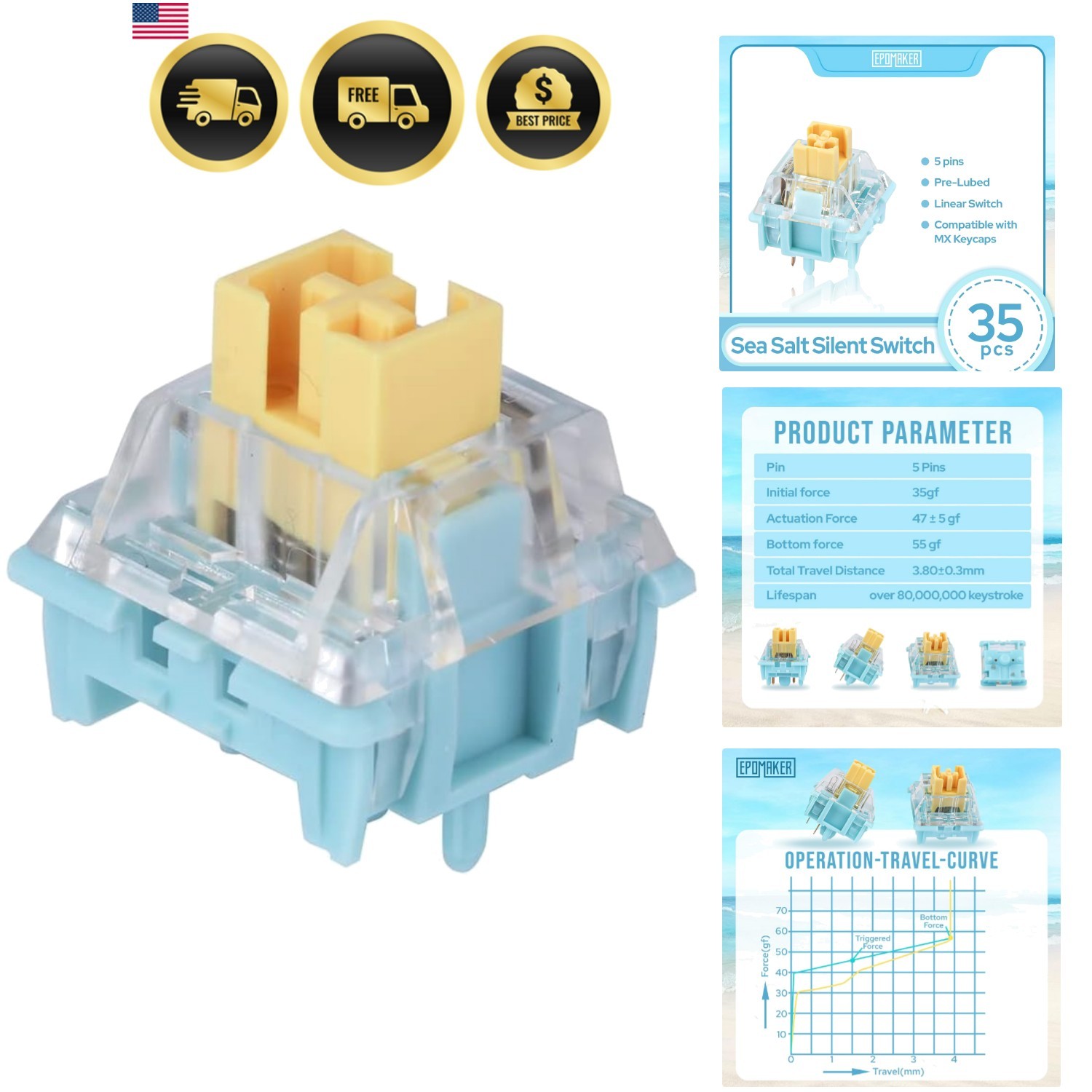

Photos from current listings. Actual item, color, and included accessories may vary.
Silent Mechanical Switch Buying Guide
Silent mechanical switches use internal dampening (rubber pads, silicone gaskets, or specialized stems) to reduce bottom-out and top-out noise while preserving mechanical feel. The core trade-off is acoustic damping versus tactile/audible feedback and actuation consistency: heavier factory lube and thick pads quiet the switch but can mute tactility and slow return. Buy silent switches only if the listing states the dampening mechanism (pad or gasket), pin count, and factory-lube status; skip unbranded lots that omit these.
Key takeaways
- Dampening architecture: silicone pads under the stem or gasket mounts absorb impact; pad-based designs cut high-frequency clack but add slight mushiness versus stock linear switches.
- Pin count matters: 5-pin switches include two extra PCB-mount plastic legs for stability on plate-mount boards; 3-pin switches fit both plate- and PCB-mount but wobble more without a plate.
- Factory lube is not optional for silence: pre-lubed silent linears reduce spring ping and scratch; dry silent switches still transmit housing resonance unless hand-lubed.
At a glance
- Category
- Keyboard Switches
- Last updated
- Nov 23, 2026
Current offers
Highlights
- Dampening architecture: silicone pads under the stem or gasket mounts absorb impact; pad-based designs cut high-frequency clack but add slight mushiness versus stock linear switches.
- Pin count matters: 5-pin switches include two extra PCB-mount plastic legs for stability on plate-mount boards; 3-pin switches fit both plate- and PCB-mount but wobble more without a plate.
- Factory lube is not optional for silence: pre-lubed silent linears reduce spring ping and scratch; dry silent switches still transmit housing resonance unless hand-lubed.
- Actuation force tiers: silent linears typically run 35–45 gf (light, fatigue-free typing) or 50–62 gf (heavier, fewer accidental presses); silent tactiles add a bump but dampening can soften the tactile event.
Best use cases
- Best fit: shared bedrooms, open offices, or late-night typing—pick 5-pin factory-lubed silent linears at 35–45 gf for the quietest consistent experience; skip heavy 60 gf+ tactiles if noise reduction is the priority.
- Best fit: hot-swap boards with plate-mount only—choose 3-pin silent switches, since 5-pin PCB legs will not seat without PCB-mount holes; skip 5-pin lots unless the PCB supports them.
- Wrong fit: buyers wanting crisp clicky feedback or pronounced tactile bumps—silent switches trade away audible click and sharp tactility; choose standard clicky or heavy tactile switches instead.
- Wrong fit: buyers expecting absolute silence without case mods—switch dampening only addresses stem impact; plate resonance, stabilizers, and keycap material still transmit noise, so pair with foam and lubed stabs.
Buying tips
- Match pin count to PCB: 5-pin switches need PCB-mount holes (most custom boards); 3-pin switches fit both plate-mount and PCB-mount, so buy 3-pin when unsure.
- Buy in multiples that cover the board: a 65% board needs ~68 switches, TKL ~87, full-size ~104; 10-count bags mean buying 7–11 bags for a full build, so compare lot sizes.
- Check factory-lube status explicitly: pre-lubed silent switches are usable out of the box; unlubed silent switches require hand-lubing with dielectric grease or Krytox 205g0 to quiet spring ping.
- Prefer known silent stem designs (Cherry MX Silent Red, Gateron Silent, Kailh Silent Box) over anonymous "silent" lots; branded stems have documented force curves and dampening pads you can verify.
Specs
| Dampening Type | Stem pads vs gasket mount |
|---|---|
| Pin Count | 3-pin plate / 5-pin PCB |
| Actuation Force | 35-45 gf light / 50-62 gf heavy |
| Factory Lube | Pre-lubed vs dry |
Related searches
What to check before buying
- Board compatibility: confirm hot-swap socket type (3-pin vs 5-pin) and plate thickness; 5-pin switches may not fit low-profile or plate-only boards without clipping the legs.
- Switch count math: count keys plus spares (add 5–10%) before ordering; a 35-piece lot covers only a 30% board, so larger boards need multiple lots.
- Acoustic environment: silent switches still need case foam, lubed stabilizers, and PBT keycaps to reach quiet; budget for these companion parts before blaming the switches.
- Voltage/electrical: mechanical switches are passive—no voltage standard applies—but confirm PCB hot-swap socket orientation (north- vs south-facing) for keycap and RGB clearance.
FAQ
Data sources: eBay / Amazon listings and product attribute feeds. Updated Nov 23, 2026.
Some links on this page are affiliate links. If you buy after clicking one, we may earn a commission at no extra cost to you. This does not change which products appear here or their order. Affiliate disclosure.