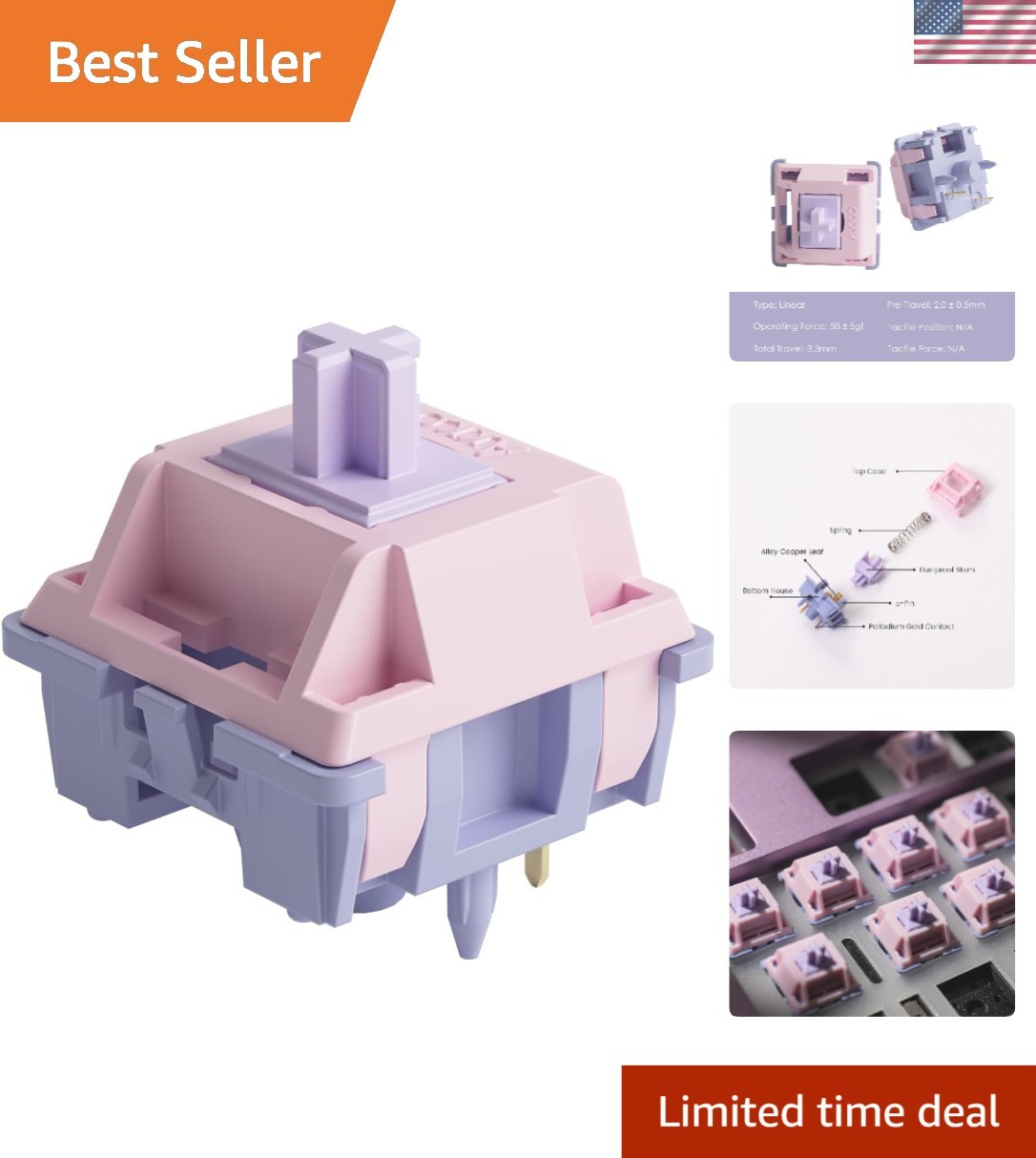

Photos from current listings. Actual item, color, and included accessories may vary.
Quiet Keyboard Switch Buying Guide
Quiet keyboard switches are mechanical or electro-capacitive switches engineered to reduce bottom-out and top-out noise through dampening materials, housing tolerances, and spring design. The primary trade-off is between maximum noise reduction and tactile/audible feedback: fully silent linear switches use internal silicone or rubber dampeners on the stem and housing, while 'quiet' tactile or clicky variants still produce perceptible sound. The clear decision rule is to buy switches with explicit stem-mounted or housing-mounted dampeners rated for office or shared-space use, and skip any switch marketed only as 'quiet' without specifying dampening architecture.
Key takeaways
- Silent switches use dual dampening: stem-mounted silicone pads absorb bottom-out impact and top-out return noise, reducing sound by roughly 10–15 dB versus standard linear switches.
- Spring weight determines fatigue and accidental actuation: 45–50 gf springs suit sustained typing, while 55–67 gf springs reduce bottom-out force but increase finger strain over long sessions.
- Housing material and tolerance matter more than lubricant alone: polycarbonate top housings with tight stem-to-housing clearance cut rattle, while pre-lubed switches from the factory vary widely in consistency.
At a glance
- Category
- Keyboard Switches
- Last updated
- Nov 23, 2026
Current offers
Highlights
- Silent switches use dual dampening: stem-mounted silicone pads absorb bottom-out impact and top-out return noise, reducing sound by roughly 10–15 dB versus standard linear switches.
- Spring weight determines fatigue and accidental actuation: 45–50 gf springs suit sustained typing, while 55–67 gf springs reduce bottom-out force but increase finger strain over long sessions.
- Housing material and tolerance matter more than lubricant alone: polycarbonate top housings with tight stem-to-housing clearance cut rattle, while pre-lubed switches from the factory vary widely in consistency.
- Plate mount versus PCB mount affects fit and stability: 5-pin PCB-mount switches work in hot-swap and solder boards without a plate, while 3-pin plate-mount switches require a compatible plate and are less stable in loose-tolerance boards.
Best use cases
- Best fit: shared offices, open-plan studios, and late-night households — choose fully silent linear switches with 45–50 gf springs and confirmed stem dampeners on both bottom-out and top-out.
- Best fit: hot-swap keyboard owners who want to experiment — pick 5-pin PCB-mount silent switches with factory lubing so you can swap without soldering and without re-lubing every stem.
- Wrong fit: buyers wanting audible clicky feedback or sharp tactile bumps — silent switches deliberately mute those sounds, so choose standard tactile or clicky switches instead and accept the noise.
- Wrong fit: ultra-low-profile or optical keyboard builds — most silent mechanical switches are full-height MX-style, so verify your board's switch footprint and pin count before ordering.
Buying tips
- Match spring weight to typing style: 45–50 gf for fast touch typists who bottom out lightly, 55–62 gf for heavy-handed typists who want a firmer bottom-out without extra noise.
- Confirm pin count and mount type: 5-pin switches fit both plate and PCB-mount boards, while 3-pin switches need a plate and are the safer choice only when your board specifies plate mount.
- Check dampening location: stem-mounted pads on both the top and bottom of the slider are the minimum for true silence; housing-only dampening leaves top-out noise audible.
- Buy 10–15% more switches than your board needs (e.g., 45 pcs for a 40-key layout) to cover defects and to allow for lubing inconsistency in factory-prepped batches.
Specs
| Dampening Type | Stem pads (top & bottom) vs housing-only |
|---|---|
| Spring Weight | 45–67 gf (45–50 gf office standard) |
| Mount & Pins | 5-pin PCB vs 3-pin plate mount |
| Switch Feel | Silent linear vs silent tactile |
Related searches
What to check before buying
- Count your keyboard's switch positions exactly — 45 pcs covers a 40% board, but a TKL needs 87 and a full-size needs 104, so order the correct pack count.
- Measure your plate thickness and switch opening: standard 1.5 mm plates fit MX-style switches, while 1.2 mm or 1.6 mm plates can cause loose or tight fits.
- Verify your board is hot-swap or solder-ready: hot-swap sockets accept 5-pin switches directly, but soldered boards require desoldering and a compatible PCB footprint.
- Check your keyboard's case material and dampening: plastic cases amplify switch noise, so pair silent switches with foam or silicone case dampening for the quietest result.
FAQ
Data sources: eBay / Amazon listings and product attribute feeds. Updated Nov 23, 2026.
Some links on this page are affiliate links. If you buy after clicking one, we may earn a commission at no extra cost to you. This does not change which products appear here or their order. Affiliate disclosure.