
Photos from current listings. Actual item, color, and included accessories may vary.
Mechanical Keyboard Blue Switch Buying Guide
Blue mechanical switches are clicky, tactile switches defined by a sharp bump and an audible click generated by a separate click jacket or click bar mechanism. The core trade-off is between the crisp, loud, high-feedback feel of legacy-style blues and the smoother, quieter, or faster actuation of modern clones and optical designs. Choose a genuine click-jacket blue only if you want maximum tactile confirmation and do not share the room; otherwise pick a tactile or linear switch or a hot-swap board that lets you change later.
Median $26.49
Key takeaways
- Clicky blues use a two-piece slider with a click jacket (e.g., Cherry MX Blue, Outemu Blue) or a click-bar leaf (Kailh Box Jade/Navy) — the click bar is louder and more consistent than the jacket.
- Actuation force typically lands at 50–60 gf with 3.5–4.0 mm total travel; lighter 45 gf blues feel mushy, heavier 65 gf+ blues reduce accidental double-taps but fatigue fingers.
- 3-pin plate-mount switches fit most hot-swap and solder PCBs; 5-pin PCB-mount adds two plastic legs for stability but requires PCB holes or leg clipping.
At a glance
- Category
- Keyboard Switches
- Last updated
- Nov 23, 2026
Current offers
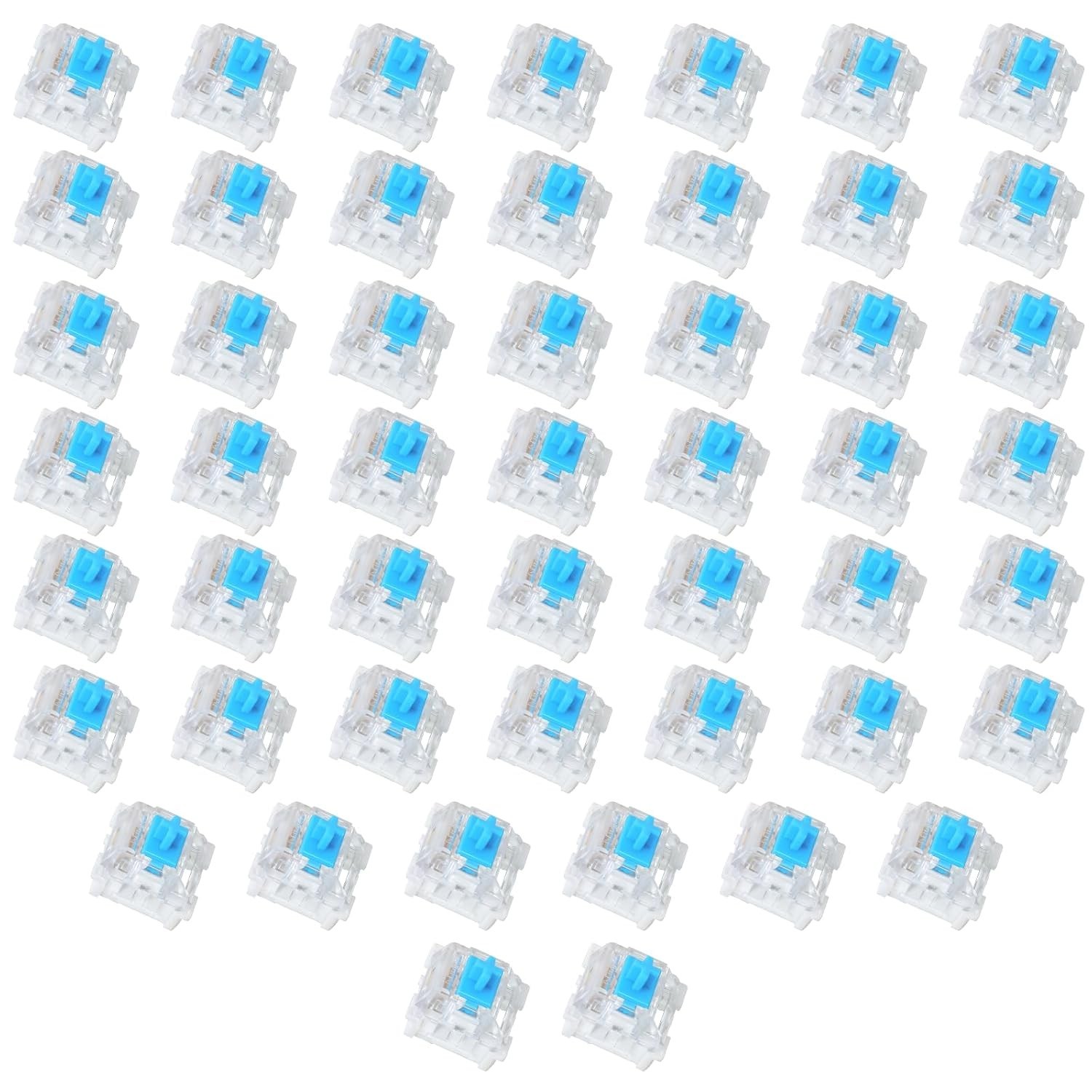 50 Pieces Blue Mechanical Keyboard Switches, 3 Pin PreLubricated Clicky Key S...$16.99View on eBay
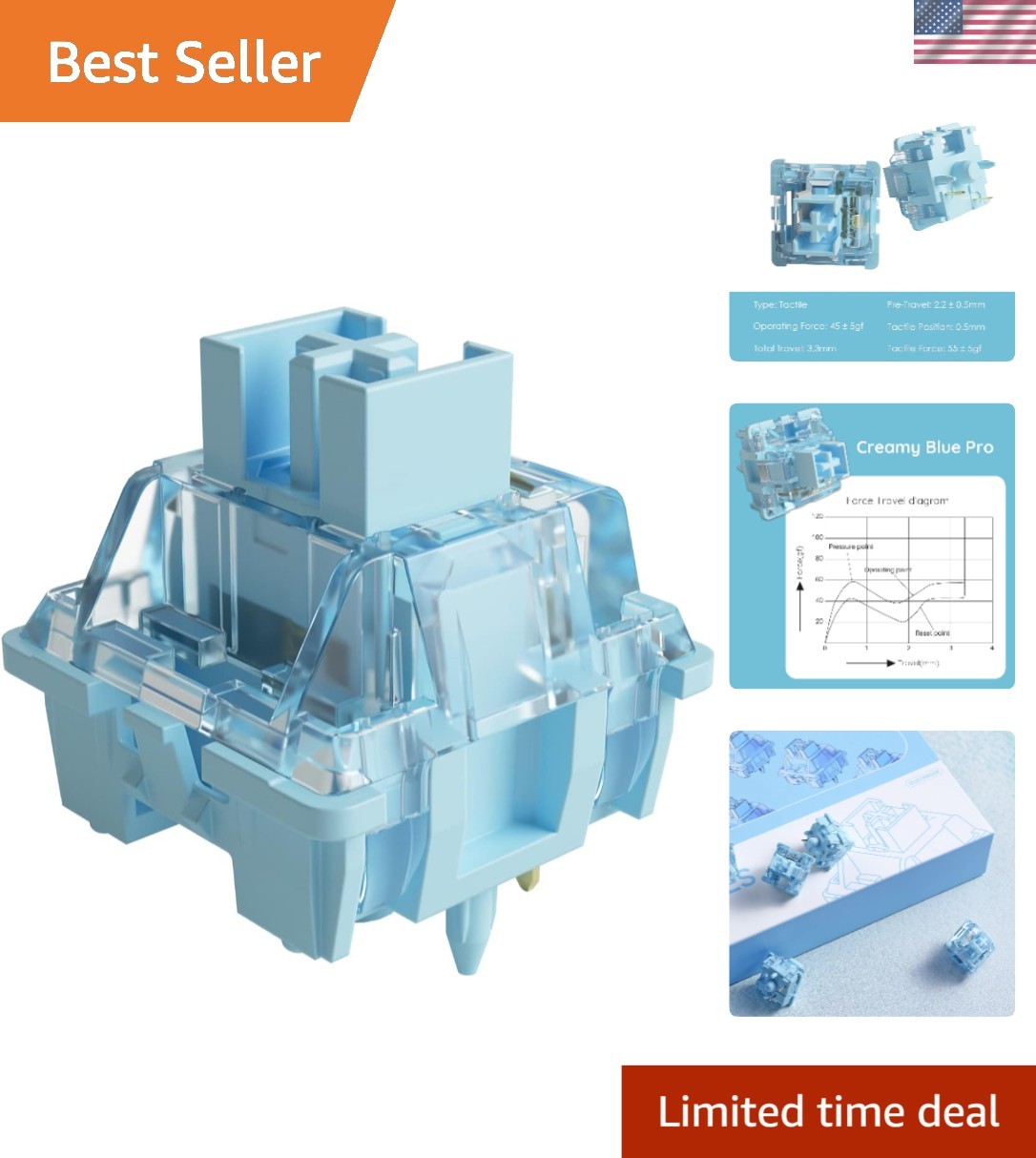 V3 Pro Mechanical Keyboard Switches - 45pcs Creamy Blue, Satisfying Tactile Feel$23.99View on eBay
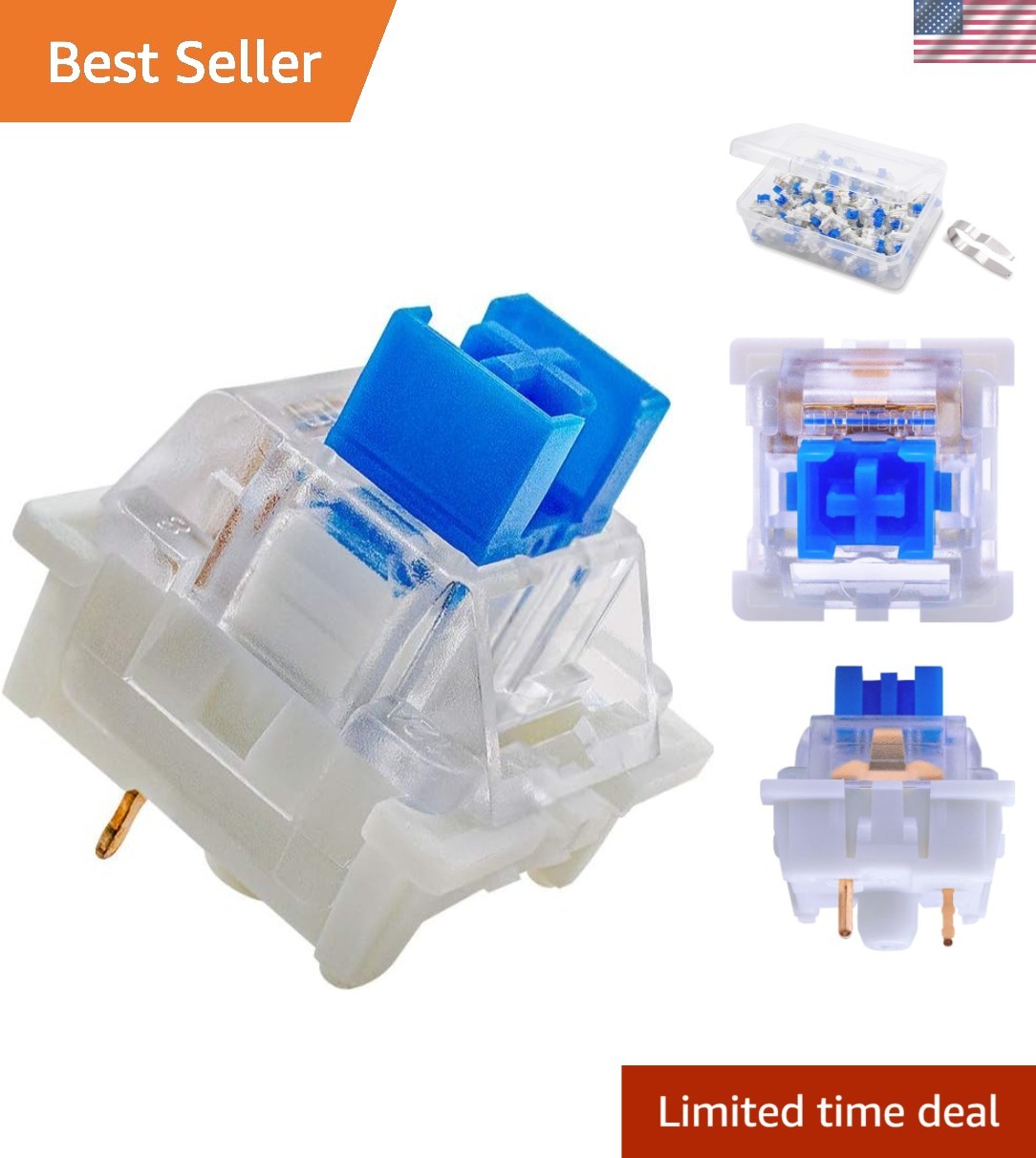 65-Pack Blue Clicky & Tactile Mechanical Keyboard Switches - RGB Ready$28.99View on eBay
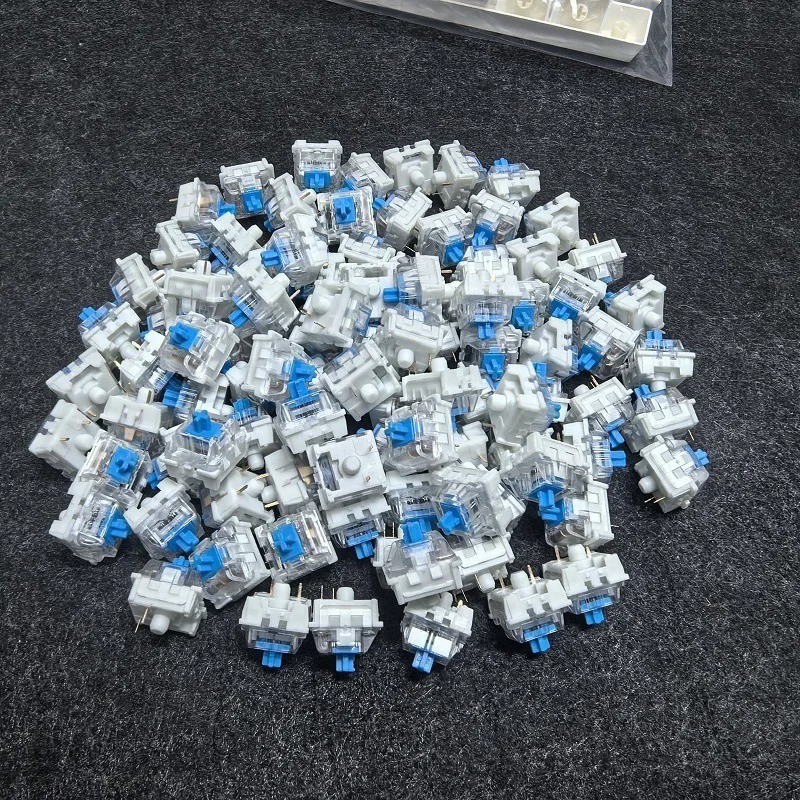 Keyboard Switches, 100 Pcs 3 PIN Blue Keyboard Clicker Dustproof Mechanical Ke$29.99View on eBay
Highlights
- Clicky blues use a two-piece slider with a click jacket (e.g., Cherry MX Blue, Outemu Blue) or a click-bar leaf (Kailh Box Jade/Navy) — the click bar is louder and more consistent than the jacket.
- Actuation force typically lands at 50–60 gf with 3.5–4.0 mm total travel; lighter 45 gf blues feel mushy, heavier 65 gf+ blues reduce accidental double-taps but fatigue fingers.
- 3-pin plate-mount switches fit most hot-swap and solder PCBs; 5-pin PCB-mount adds two plastic legs for stability but requires PCB holes or leg clipping.
- Pin material and plating matter: gold-plated contacts resist oxidation over millions of cycles, while unlubricated or factory-lubed sliders change sound from sharp rattle to deeper thock.
Best use cases
- Best fit: typists who crave loud tactile confirmation and work alone in a room — pick a genuine click-jacket blue (Cherry MX Blue or Outemu Blue) in a 3-pin or 5-pin variant matching your PCB.
- Wrong fit: shared offices, open-plan homes, dorm rooms, or streamers with open mics — skip blues entirely and choose a tactile brown or silent linear switch instead.
- Best fit: hot-swap board owners experimenting with sound — buy a 45–65 piece pack of pre-lubed blue clones to test feel before committing to a full 100+ set.
- Wrong fit: low-profile or optical-only keyboards — standard MX-footprint blues will not fit; verify your board accepts MX-style 3-pin/5-pin switches before ordering.
Buying tips
- Count keys first: a 60% board needs ~61 switches, 65% ~68, TKL ~87, full-size ~104 — buy a pack that covers your layout plus 5–10 spares for damage or lubing mistakes.
- Match pin count to your PCB: 3-pin for plate-mount hot-swap sockets, 5-pin for PCB-mount; 5-pin switches can be clipped to 3-pin but not the reverse.
- Check actuation force against your typing style: 50–55 gf suits most typists, 60 gf+ for heavy-handed gamers, 45 gf only if you prefer a light, clacky feel.
- Prefer gold-plated contacts and factory lubrication for longevity and consistent sound; unlubed blues are cheaper but rattle and wear faster under heavy use.
Specs
| Switch Type | Clicky tactile (click jacket/bar) |
|---|---|
| Actuation Force | 50–60 gf typical |
| Mount / Pins | 3-pin plate / 5-pin PCB |
| Footprint | MX-style cross stem |
Related searches
What to check before buying
- Confirm your keyboard is hot-swap with MX-style sockets — soldered boards require desoldering and are not beginner-friendly for switch swaps.
- Verify plate and PCB support 3-pin or 5-pin MX footprint; low-profile, optical, and Topre boards are incompatible with standard blues.
- Check your layout key count (60%, 65%, TKL, full-size) so the pack size covers every socket plus spares.
- Assess your noise environment: blues are among the loudest switches and are unsuitable for shared bedrooms, offices, or microphone-adjacent setups.
FAQ
Data sources: eBay / Amazon listings and product attribute feeds. Updated Nov 23, 2026.
Some links on this page are affiliate links. If you buy after clicking one, we may earn a commission at no extra cost to you. This does not change which products appear here or their order. Affiliate disclosure.