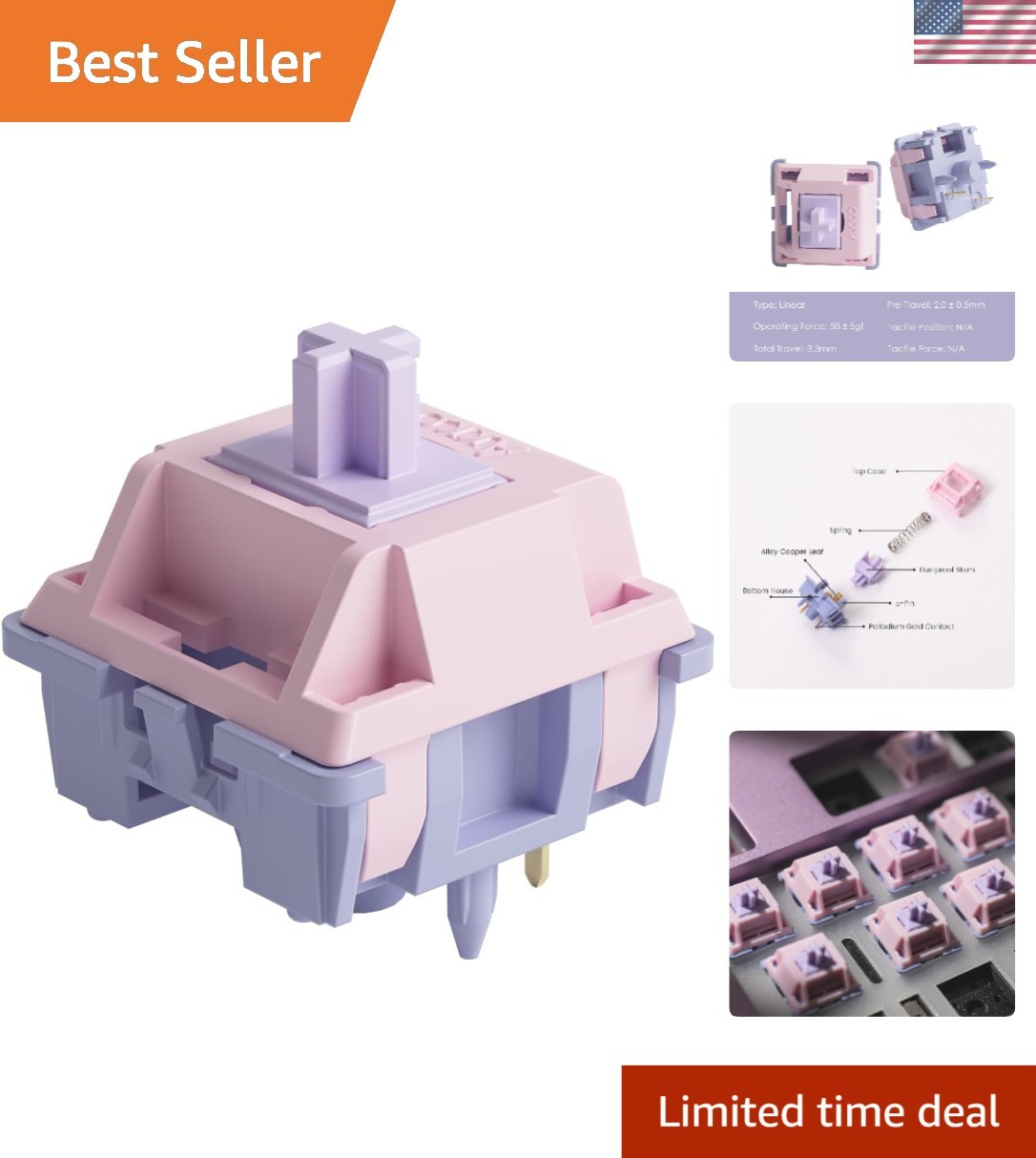

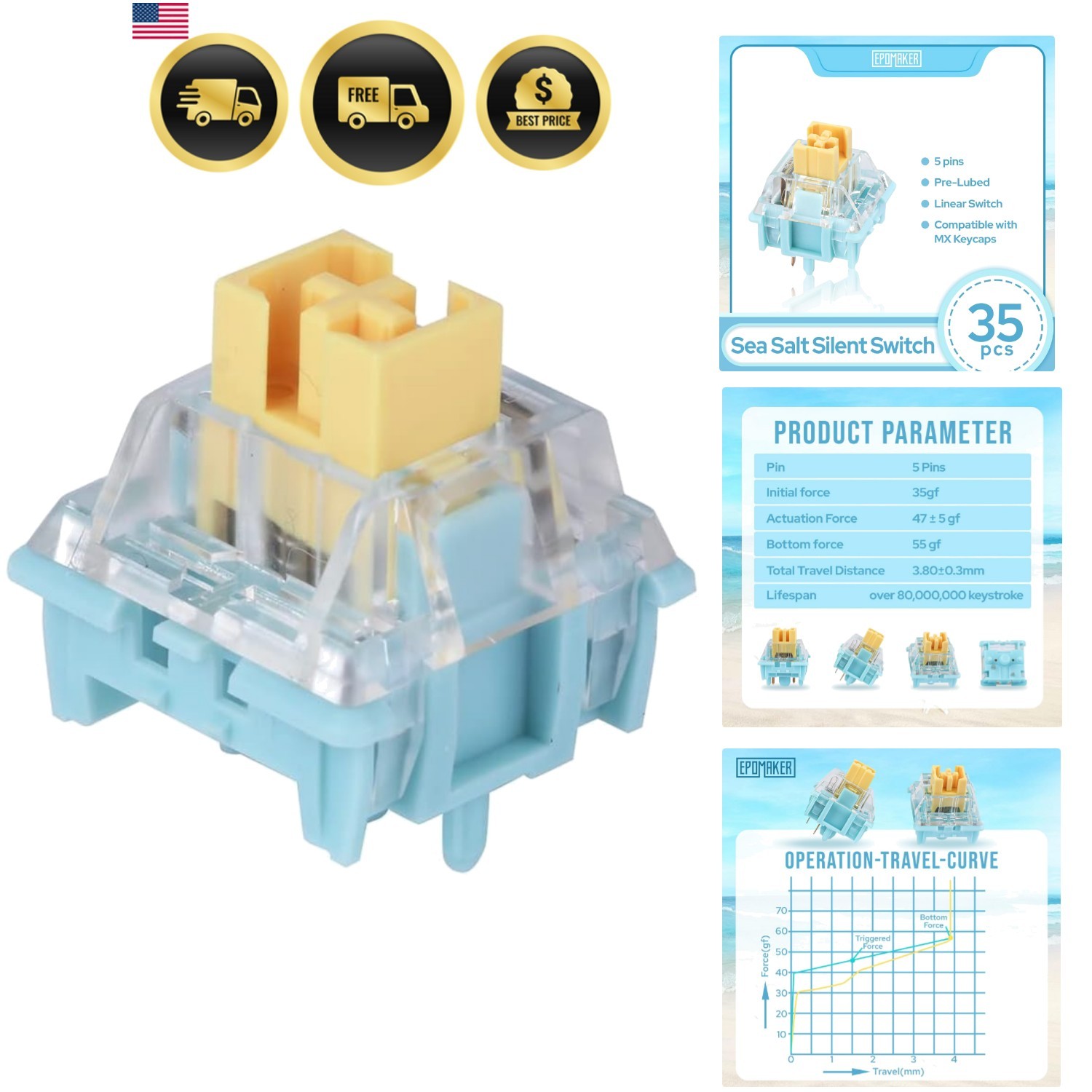
Photos from current listings. Actual item, color, and included accessories may vary.
Keyboard Silent Switch Buying Guide
Silent keyboard switches are mechanical key modules engineered to dampen bottom-out and top-out impact, reducing typing noise without sacrificing tactile feel. The core trade-off is between noise reduction and keyfeel: silicone dampeners and internal padding cut sound but can mute tactility and add mushy travel. Choose switches with factory lubing, 5-pin PCB-mount stability, and honest actuation-force ratings (50gf linear vs. 45gf silent tactile) to separate genuinely quiet, durable options from gimmicky low-cost clones.
Median $29.42
Key takeaways
- Silent switches use silicone or rubber dampeners on the stem to soften bottom-out and top-out impact, typically cutting noise by 10–20 dB versus standard linear switches.
- Factory pre-lubed switches reduce friction and spring ping, delivering smoother, quieter keystrokes than dry switches; 5-pin PCB-mount versions add stability over 3-pin plate-mount designs.
- Actuation force matters: 50gf linear silent switches feel balanced for typing, while 45gf or lower may cause accidental presses; silent tactiles usually land around 55–62gf.
At a glance
- Category
- Keyboard Switches
- Last updated
- Nov 23, 2026
Current offers
Highlights
- Silent switches use silicone or rubber dampeners on the stem to soften bottom-out and top-out impact, typically cutting noise by 10–20 dB versus standard linear switches.
- Factory pre-lubed switches reduce friction and spring ping, delivering smoother, quieter keystrokes than dry switches; 5-pin PCB-mount versions add stability over 3-pin plate-mount designs.
- Actuation force matters: 50gf linear silent switches feel balanced for typing, while 45gf or lower may cause accidental presses; silent tactiles usually land around 55–62gf.
- Cherry MX Silent Red (RGB) uses integrated dampening and a 1.9mm actuation point; clone 'silent linear' switches often mimic the feel but vary in spring weight and housing tolerances.
Best use cases
- Best-fit: open-plan offices, shared bedrooms, or late-night typists — pick 5-pin factory-lubed silent linear switches around 50gf for quiet, stable daily typing.
- Best-fit: hot-swap keyboard owners who want to experiment — buy a smaller 35–45 piece set first to test feel and noise before committing to a full 90-piece build.
- Wrong-fit: gamers needing ultra-fast actuation or crisp auditory feedback — skip silent switches for standard speed or clicky switches; dampening adds slight mushiness.
- Wrong-fit: buyers with 3-pin-only hot-swap sockets — avoid 5-pin switches unless you clip the extra legs; confirm your PCB supports 5-pin before ordering full sets.
Buying tips
- Count your keyboard layout: a full-size 104-key board needs about 110–120 switches, TKL needs 87–90, and 65% needs 65–70 — buy 10–15% extra for spares and damaged pins.
- Match actuation force to use: 45–50gf for light typing and quiet offices, 55–62gf for heavy typists or tactile silent preference; avoid sub-45gf silent linears if you rest fingers on keys.
- Prefer 5-pin PCB-mount switches for custom builds — the two extra plastic legs reduce wobble and improve sound consistency; 3-pin plate-mount works only with plate-mounted hot-swap boards.
- Look for factory-lubed stems and springs; unlubed silent switches often exhibit scratchiness and spring ping that undermines the noise benefit.
Specs
| Switch Type | Silent linear / silent tactile |
|---|---|
| Actuation Force | 45–62gf (50gf typical linear) |
| Mount Type | 5-pin PCB / 3-pin plate |
| Pre-Lubed | Factory lubed vs dry |
Related searches
What to check before buying
- Confirm your keyboard or PCB socket type: 5-pin (PCB-mount) vs 3-pin (plate-mount) — 5-pin switches fit 5-pin hot-swap sockets directly but need leg clipping for 3-pin-only boards.
- Check your plate and keycap compatibility: standard MX-style stems fit most keycaps; ensure your board uses MX-compatible hot-swap sockets or solder pads.
- Verify layout count before ordering: full-size ~110–120, TKL ~87–90, 75% ~80–84, 65% ~65–70, 60% ~61 — buy a few extra switches.
- Assess your noise environment: silent switches reduce but do not eliminate sound — pair with a dampened case, foam, and PBT keycaps for maximum quiet.
FAQ
Data sources: eBay / Amazon listings and product attribute feeds. Updated Nov 23, 2026.
Some links on this page are affiliate links. If you buy after clicking one, we may earn a commission at no extra cost to you. This does not change which products appear here or their order. Affiliate disclosure.