
Photos from current listings. Actual item, color, and included accessories may vary.
Mini PC With GPU Buying Guide
A mini PC with GPU means a compact desktop that includes either integrated graphics capable of basic acceleration or a dedicated GPU for gaming, content creation, or AI workloads. The core trade-off is size and power versus GPU performance: most ultra-small units use integrated Intel/AMD graphics, while true dedicated-GPU mini PCs are larger, louder, and need more power. The decision rule: if you need 3D gaming or CUDA acceleration, buy a model with a discrete GPU (e.g., RTX 3050/4060 or RX 6600M); if you only need 4K video, light editing, or office work, an integrated GPU (Intel UHD/Iris Xe, AMD Radeon) is sufficient and far cheaper.
Median $127.00
Key takeaways
- Dedicated GPU mini PCs use mobile-grade chips (NVIDIA RTX 3050/4060, AMD RX 6600M) because full-size cards exceed small chassis power and thermal limits.
- Integrated GPU performance varies by generation: Intel UHD (N100/N5030) handles 4K video only; Iris Xe (11th-gen+) doubles graphics throughput; AMD Radeon 680M/780M rivals entry discrete GPUs.
- Fanless mini PCs (e.g., Qotom, Seneca) use low-power Atom/Celeron CPUs and cannot support dedicated GPUs; they are for kiosks, POS, and serial-port industrial use.
At a glance
- Category
- Servers & Mini PCs
- Last updated
- Nov 28, 2026
Current offers
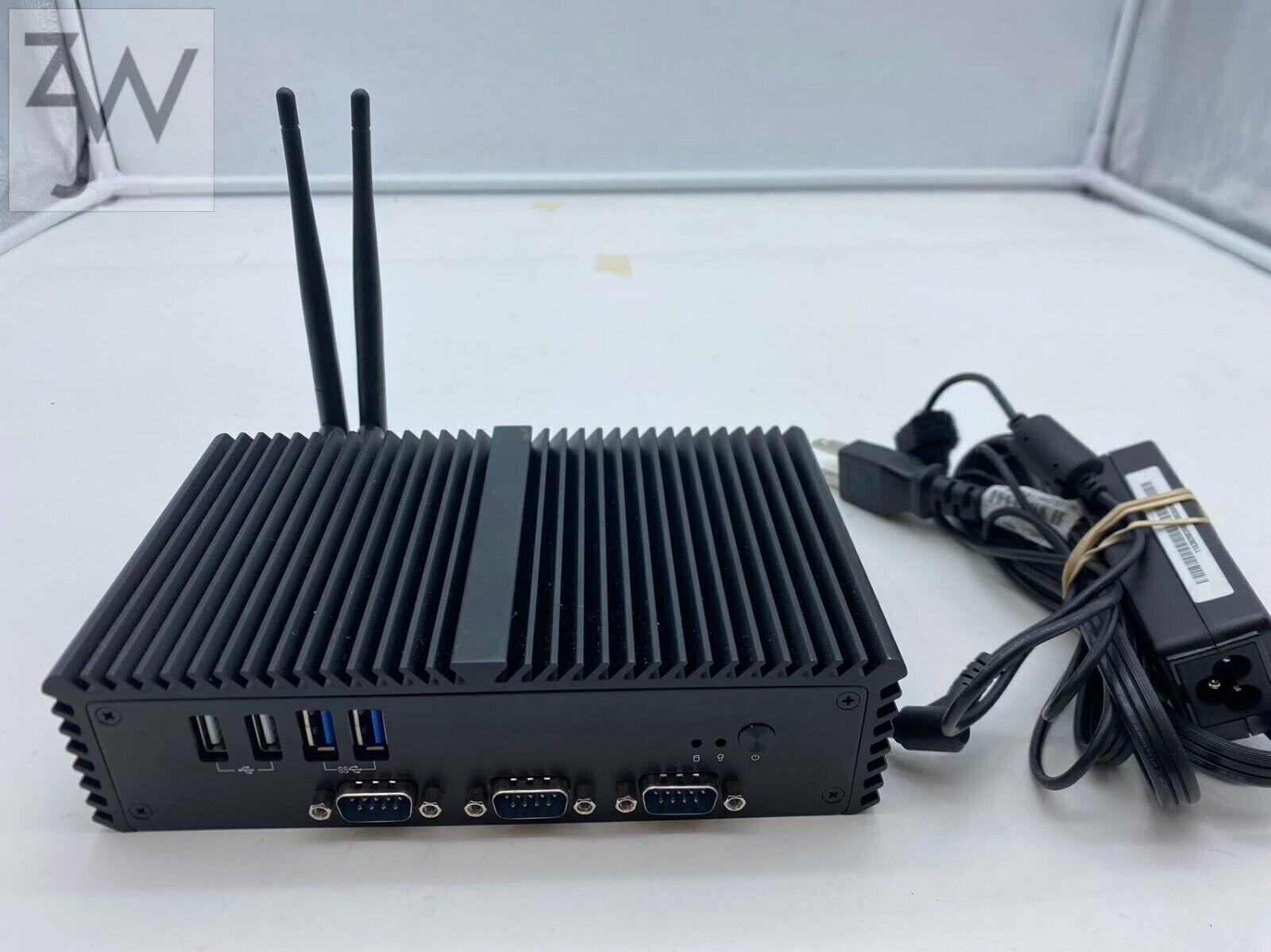 Qotom Q310p 3205u 4GB 32GB SSD Mini PC COM Serial Port IPC POS Computer RS-232$59.88Last checked Nov 27, 2026View on eBay
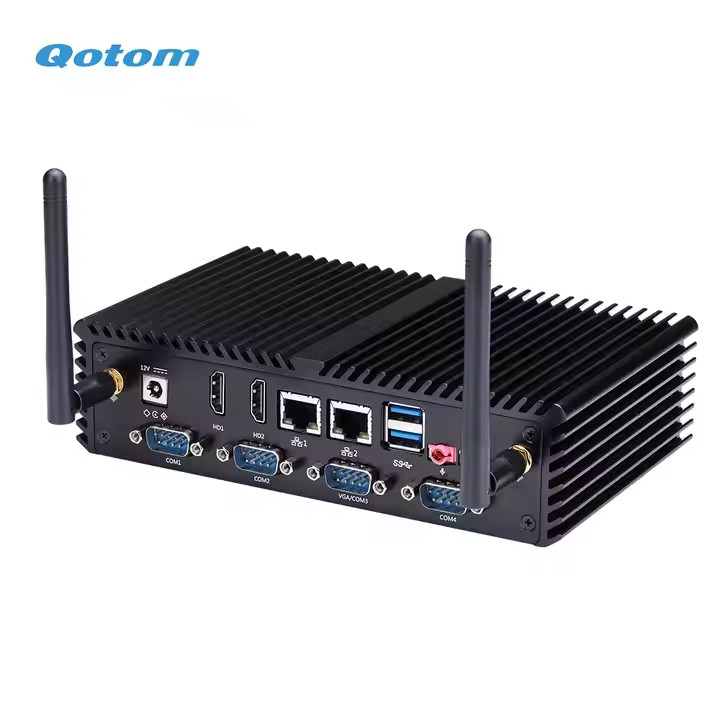 Portable Desktop Mini PC Core Onboard Fanless Mini PC Qotom POS 4GB RAM 32GB SSD$59.99Last checked Nov 27, 2026View on eBay
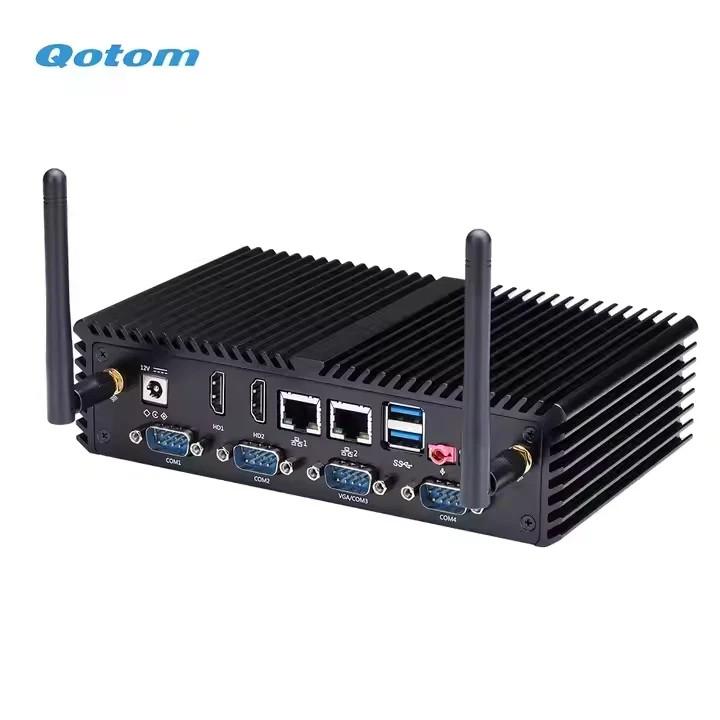 Qotom Q305P Mini Desktop PC 3205u 4GB 32GB COM Fanless Office/Home/Bank/Hotel$64.99View on eBay
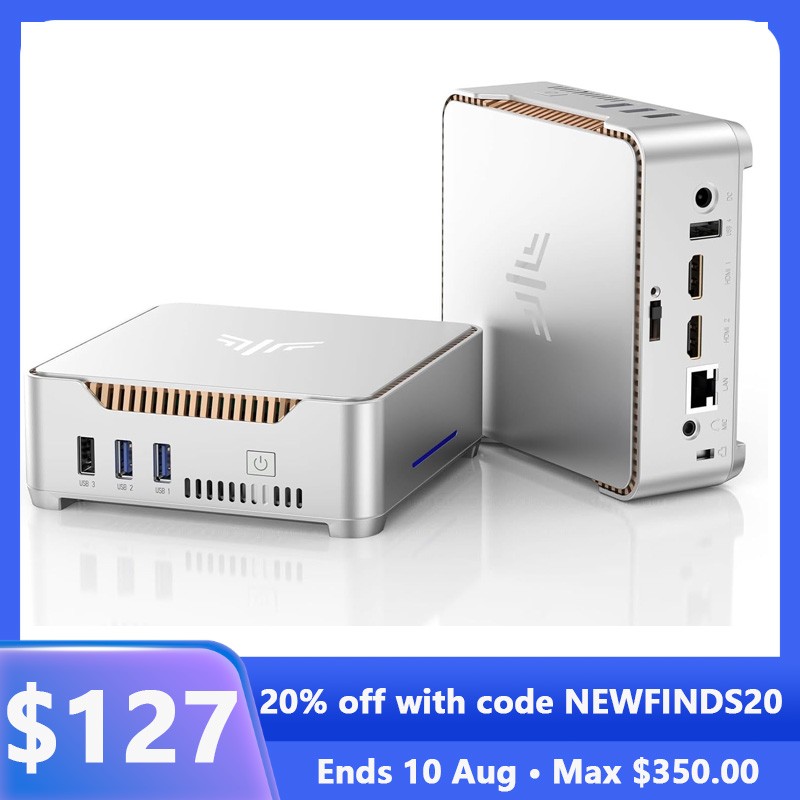 KAMRUI 4K Mini PC GK3Plus, Intel N5030 12GB LPDDR4 256GB M.2 SSD Win11 Pro WiFi5$189.00Last checked Nov 27, 2026View on eBay
 Dell Windows 11 Mini Desktop up to PC i7 8th, 32GB RAM, 1TB SSD, Built-In WiFi$282.00Last checked Nov 17, 2026View on eBay
- KAMRUI GK3Plus Mini PC, Intel N5030 12GB LPDDR4 256GB SSD 4K UHD Windows 11 Pro$679.00Last checked Nov 27, 2026View on eBay
Highlights
- Dedicated GPU mini PCs use mobile-grade chips (NVIDIA RTX 3050/4060, AMD RX 6600M) because full-size cards exceed small chassis power and thermal limits.
- Integrated GPU performance varies by generation: Intel UHD (N100/N5030) handles 4K video only; Iris Xe (11th-gen+) doubles graphics throughput; AMD Radeon 680M/780M rivals entry discrete GPUs.
- Fanless mini PCs (e.g., Qotom, Seneca) use low-power Atom/Celeron CPUs and cannot support dedicated GPUs; they are for kiosks, POS, and serial-port industrial use.
- Discrete-GPU mini PCs require a 120W–330W external power brick and typically measure 1.5–3 liters; integrated-GPU units run on 36–65W adapters and fit in 0.5–1 liter.
Best use cases
- Best fit: 1080p gaming or CUDA-accelerated AI — pick a mini PC with RTX 3050/4060 or RX 6600M and at least 16GB RAM; skip integrated-only models like the Beelink ME Pro N95.
- Best fit: 4K media center or office multitasking — an Intel N100/N5030 or Iris Xe mini PC with 8–16GB RAM is sufficient and silent; skip dedicated-GPU units that add fan noise and cost.
- Best fit: Fanless industrial/POS deployment with serial ports — choose Qotom or Seneca Atom-based units; skip consumer mini PCs that lack RS-232 and fanless reliability.
- Wrong fit: AAA gaming at high settings or 3D rendering — no mini PC with mobile GPU matches a full desktop tower; choose a small-form-factor desktop with a standard PCIe slot instead.
Buying tips
- Match GPU to resolution: for 1080p gaming, an RTX 3050 or RX 6600M is the minimum; for 1440p, step up to RTX 4060 or higher — integrated GPUs cap out at 720p/low in modern titles.
- Check CPU-GPU pairing: an N100 or N5030 with integrated graphics cannot be upgraded; dedicated-GPU mini PCs pair mobile CPUs (e.g., Intel Core i7-12650H) with discrete chips, so verify both model numbers.
- Verify RAM and storage slots: many mini PCs use soldered LPDDR4/LPDDR5; choose models with SO-DIMM slots and M.2 2280 support if you plan to upgrade to 32GB or 2TB later.
- For AI/CUDA workloads, confirm the GPU is NVIDIA RTX (not GTX or AMD) and has at least 6GB VRAM; 4GB VRAM limits model size and batch processing.
Specs
| GPU Type | Integrated vs Dedicated (mobile) |
|---|---|
| Discrete GPU Tier | RTX 3050/4060, RX 6600M |
| Chassis Volume | 0.5–1 L integrated / 1.5–3 L discrete |
| Power Adapter | 36–65W integrated / 120–330W discrete |
Related searches
What to check before buying
- Measure your desk or VESA mount space: dedicated-GPU mini PCs are 1.5–3 liters and weigh 1–2 kg; integrated units are 0.5–1 liter and can hide behind a monitor.
- Confirm display outputs match your monitors: most mini PCs offer HDMI 2.0 + DisplayPort 1.4; for dual 4K60, verify both ports support DSC or DP 1.4.
- Check power adapter voltage and plug type for your region (100–240V input is standard; UK/EU/AU plug adapters are often included but confirm).
- For industrial or POS use, verify the unit has the required serial (RS-232/RS-485) or GPIO ports — consumer mini PCs rarely include them.
FAQ
Data sources: eBay / Amazon listings and product attribute feeds. Updated Nov 28, 2026.
Some links on this page are affiliate links. If you buy after clicking one, we may earn a commission at no extra cost to you. This does not change which products appear here or their order. Affiliate disclosure.