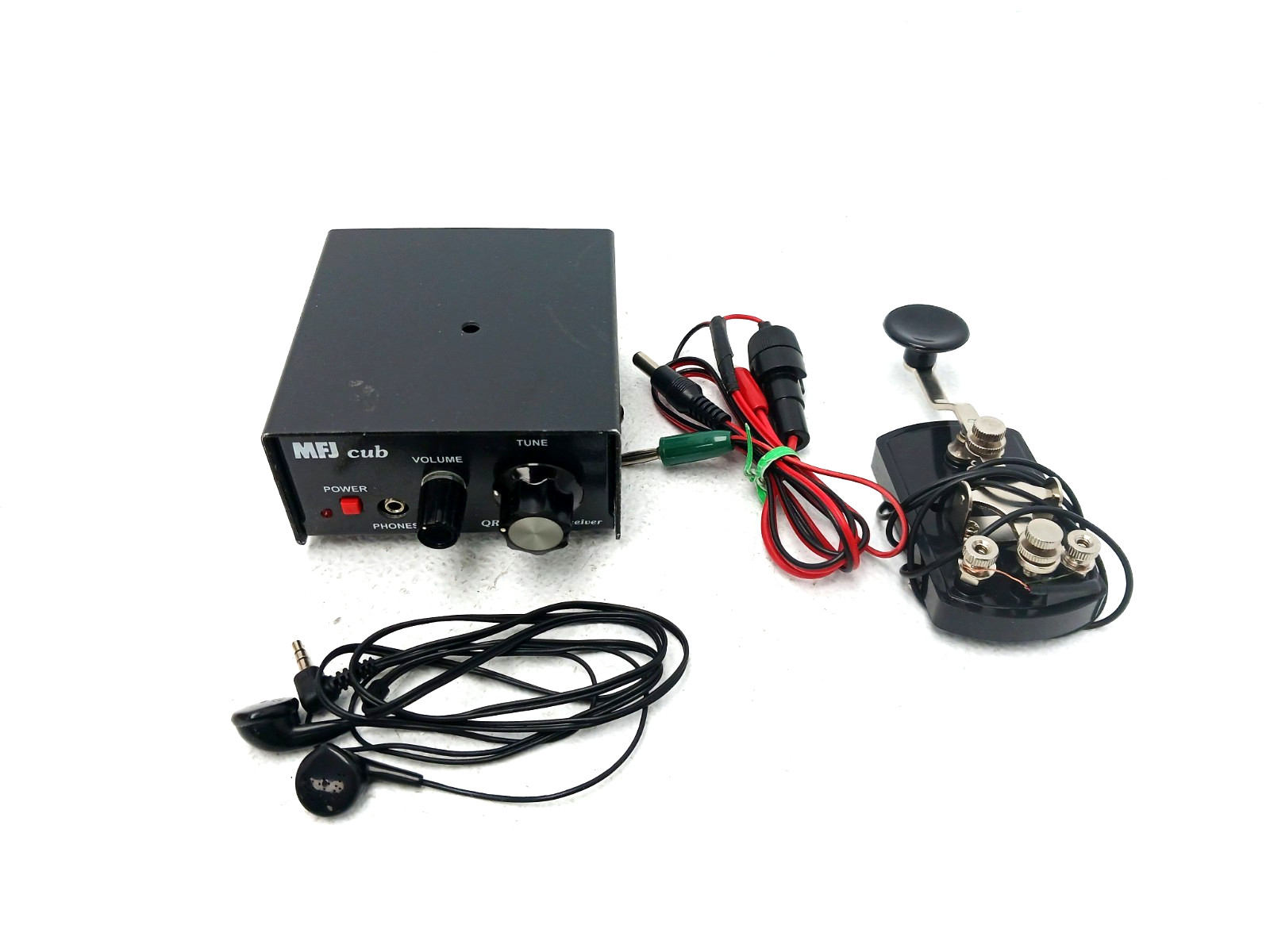

Photos from current listings. Actual item, color, and included accessories may vary.
Qrp Transceiver Buying Guide
QRP transceivers are low-power amateur radio rigs, typically 5–20W output, where receiver dynamic range and power efficiency matter more than raw wattage. The core trade-off is between ultra-portable single-band CW kits and full-featured multi-mode SDR rigs with internal ATUs. Buy a kit only if you will build and align it; buy an SDR transceiver if you need plug-and-play SSB/CW/FT8 across multiple bands.
Key takeaways
- QRP power class is 5W CW or 10W SSB peak; rigs like the Xiegu G90 run 20W PEP, which is 3–6 dB stronger than true 5W QRP for marginal contacts.
- SDR architecture (direct-sampling or 16-bit ADC) delivers 90–100 dB blocking dynamic range; analog single-conversion kits typically manage 70–80 dB and drift more.
- Built-in automatic antenna tuners (ATU) match 3:1–10:1 SWR ranges; the G90's internal ATU covers 1.8–30 MHz, while bare kits need an external tuner.
At a glance
- Category
- Ham Radio Transceivers
- Last updated
- Nov 28, 2026
Current offers
Highlights
- QRP power class is 5W CW or 10W SSB peak; rigs like the Xiegu G90 run 20W PEP, which is 3–6 dB stronger than true 5W QRP for marginal contacts.
- SDR architecture (direct-sampling or 16-bit ADC) delivers 90–100 dB blocking dynamic range; analog single-conversion kits typically manage 70–80 dB and drift more.
- Built-in automatic antenna tuners (ATU) match 3:1–10:1 SWR ranges; the G90's internal ATU covers 1.8–30 MHz, while bare kits need an external tuner.
- Single-band CW kits (e.g., MFJ 9320 20m) use a fixed crystal/LC filter and 2–5W output; they lack SSB, general-coverage receive, and digital-mode interfacing.
Best use cases
- Best fit: base or field operator wanting SSB, CW, FM, and FT8 on 0.5–30 MHz with an internal ATU — pick a 20W SDR transceiver like the Xiegu G90.
- Best fit: builder who enjoys soldering, alignment, and low-cost 20m CW operation — pick a single-band kit such as the MFJ 9320, not an SDR rig.
- Wrong fit: buying a 5W single-band kit for routine SSB voice or digital modes — it lacks the modes and band coverage; step up to a multi-mode SDR.
- Wrong fit: buying a 20W SDR transceiver as a first soldering project — it is factory-assembled surface-mount; start with a kit if building is the goal.
Buying tips
- Match output to mode: 5W CW is workable with good antennas; SSB needs 10–20W PEP for comparable readability, so choose a 20W-class rig for voice.
- Confirm band coverage: a 20m single-band kit covers 14.0–14.35 MHz only; general-coverage SDR rigs cover 0.5–30 MHz for all HF ham bands.
- Check ATU range: internal ATUs typically match up to 3:1–10:1 SWR; if your antenna is worse than 3:1 on a band, add an external tuner.
- Verify interface: digital modes need a USB sound card or built-in USB audio; legacy kits require added interfaces for FT8/JS8Call.
Specs
| Output Power | 5W CW / 10–20W PEP SSB |
|---|---|
| Architecture | SDR direct-sampling vs analog kit |
| Band Coverage | Single-band vs 0.5–30 MHz general |
| Internal ATU | None vs 1.8–30 MHz, 3:1–10:1 SWR |
Related searches
What to check before buying
- Measure your operating position: SDR rigs need 12V DC at 3–5A (or internal battery), while kits need a stable 12–13.8V supply and a key/paddle.
- Confirm antenna feedpoint SWR: know your worst-case SWR per band to decide whether an internal ATU (3:1–10:1) is sufficient.
- Check your license privileges: QRP operation still requires a valid amateur license and band/mode authorization in your country.
- Plan for companion parts: kits need an enclosure, key, dummy load, and power meter; SDR rigs need a microphone, key, and 12V supply.
FAQ
Data sources: eBay / Amazon listings and product attribute feeds. Updated Nov 28, 2026.
Some links on this page are affiliate links. If you buy after clicking one, we may earn a commission at no extra cost to you. This does not change which products appear here or their order. Affiliate disclosure.