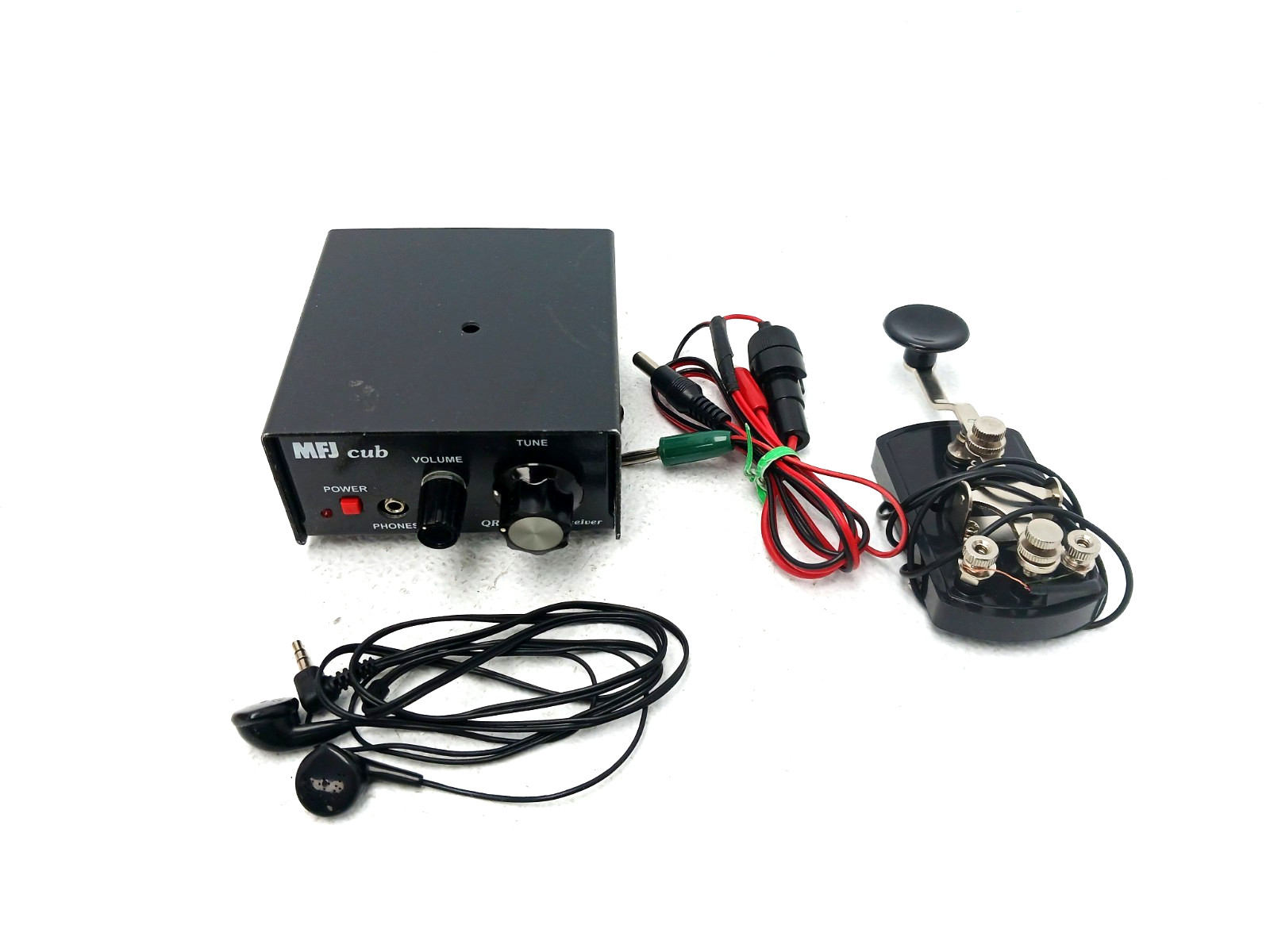

Photos from current listings. Actual item, color, and included accessories may vary.
Qrp Radio Buying Guide
QRP radios are low-power ham transceivers, typically 5-10W CW or 5W SSB, where efficiency and receiver performance matter more than raw output. The core trade-off is kit vs. assembled and single-band vs. wideband SDR: kits cost less but demand soldering skill, while assembled SDRs like the Xiegu G90 deliver 20W and 0.5-30MHz coverage at higher cost and complexity. Buy a kit only if you can solder and align; buy assembled if you want on-air time immediately.
Key takeaways
- QRP power tiers: CW QRP is 5W output; SSB QRP is 10W PEP; the Xiegu G90 exceeds this at 20W, blurring the QRP/portable line.
- Kit vs. assembled: QRP Labs QMX and MFJ 9320 ship as unbuilt kits requiring soldering and alignment; the G90 is factory-assembled and ready to transmit.
- Band architecture: QMX covers 5 bands (80/60/40/30/20m), MFJ 9320 is single-band 20m, and the G90 tunes 0.5-30MHz continuous with internal ATU.
At a glance
- Category
- Ham Radio Transceivers
- Last updated
- Nov 28, 2026
Current offers
Highlights
- QRP power tiers: CW QRP is 5W output; SSB QRP is 10W PEP; the Xiegu G90 exceeds this at 20W, blurring the QRP/portable line.
- Kit vs. assembled: QRP Labs QMX and MFJ 9320 ship as unbuilt kits requiring soldering and alignment; the G90 is factory-assembled and ready to transmit.
- Band architecture: QMX covers 5 bands (80/60/40/30/20m), MFJ 9320 is single-band 20m, and the G90 tunes 0.5-30MHz continuous with internal ATU.
- SDR vs. analog: the G90 uses a 24-bit SDR architecture with spectrum display; kit radios use conventional analog or simple SDR front ends with no waterfall.
Best use cases
- Best for portable SOTA/POTA: QRP Labs QMX 5-band kit—light, multiband, and 5W CW is enough with a resonant wire antenna; skip if you cannot solder SMD parts.
- Best for beginners wanting on-air now: Xiegu G90—20W, internal ATU, and 0.5-30MHz receive make it forgiving of poor antennas; skip if strict 5W QRP purity matters.
- Best for a first soldering project: MFJ 9320 20m CW kit—single-band, through-hole, and cheap; skip if you need SSB or more than one band.
- Wrong fit: buying a kit as your only radio without a wattmeter, dummy load, or antenna analyzer—alignment without test gear is guesswork.
Buying tips
- Match power to mode: 5W CW is workable QRP; 5W SSB is marginal—choose the G90's 20W or add an amplifier if you operate SSB portable.
- For kits, confirm through-hole vs. SMD: QMX uses SMD components requiring fine soldering; MFJ 9320 is through-hole and beginner-friendly.
- Check band coverage against your antenna: single-band 20m kits need a 20m resonator; multiband QMX needs a linked dipole or tuner.
- Budget for accessories: every QRP radio needs a resonant antenna, 12V supply or battery, key or mic, and SWR meter—costs rival the radio.
Specs
| Power Output | 5W CW / 10W SSB / 20W (G90) |
|---|---|
| Band Coverage | Single-band to 0.5-30MHz continuous |
| Assembly | Kit (solder) vs. factory-assembled |
| Architecture | Analog kit vs. SDR w/ spectrum |
Related searches
What to check before buying
- Measure your operating location: portable QRP needs a battery (12V, 3-7Ah LiFePO4) and a wire antenna span of at least 33 ft for 40m.
- Confirm your license privileges allow the bands and modes the radio covers—Technician HF CW privileges are limited to 80/40/15/10m segments.
- Check connector standards: kits often use BNC or SO-239; ensure your coax and antenna match without adapters.
- Verify soldering tools: temperature-controlled iron, fine tip, flux, and magnification for SMD kits; through-hole kits need only basic tools.
FAQ
Data sources: eBay / Amazon listings and product attribute feeds. Updated Nov 28, 2026.
Some links on this page are affiliate links. If you buy after clicking one, we may earn a commission at no extra cost to you. This does not change which products appear here or their order. Affiliate disclosure.