
Photos from current listings. Actual item, color, and included accessories may vary.
Mobile Ham Transceiver Buying Guide
Mobile ham transceivers are vehicle-mounted or base-station radios that typically run on 12V DC and deliver 25-75W of output—far more than a handheld—so antenna mounting and power wiring matter as much as the radio itself. The core trade-off is band coverage versus simplicity: single-band VHF/UHF FM radios are affordable and rugged, while multi-band or all-mode rigs add SSB/CW and HF capability at higher cost and installation complexity. Buy a single-band FM mobile only if you need local repeater coverage; step up to multi-band or HF/50MHz all-mode if you need long-distance or digital modes.
Median $139.98
Key takeaways
- Power tiers: 2m/70cm FM mobiles output 50-75W on high power, versus 5-8W from a handheld—roughly 10 dB more, which doubles or triples usable range in hilly terrain.
- Single-band vs multi-band: a 144MHz-only rig like the Kenwood TM-281A is simpler and cheaper; dual-band 144/430MHz rigs (TM-G707A class) add repeater and simplex flexibility in one chassis.
- All-mode capability: the Realistic HTX-100 covers 10m SSB/CW with 25W—a different architecture from FM-only mobiles and suited to propagation-driven HF work, not local nets.
At a glance
- Category
- Ham Radio Transceivers
- Last updated
- Nov 24, 2026
Current offers
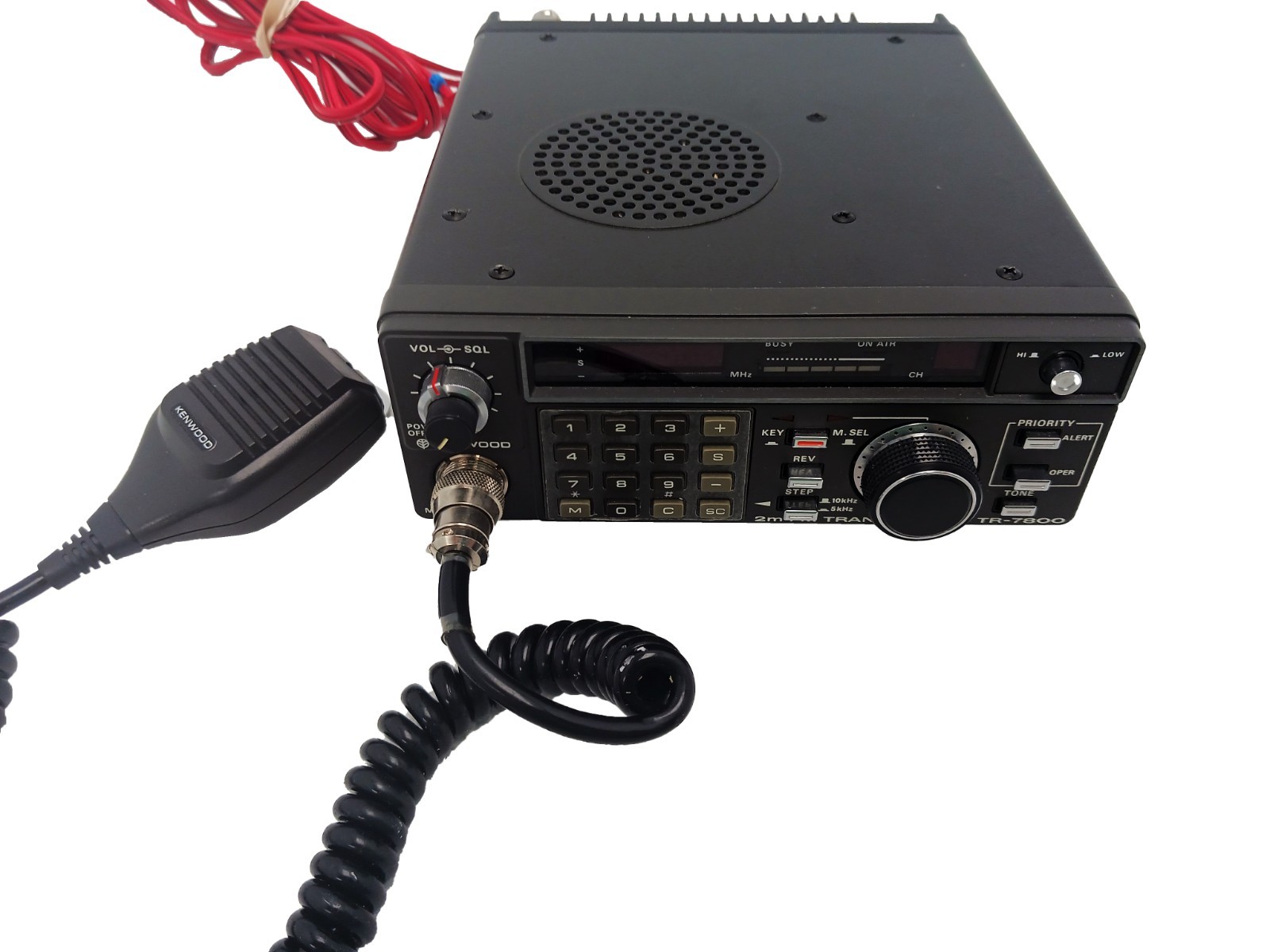 Kenwood TR-7800 2 meter FM Mobile Amateur Transceiver Ham Radio - WORKS$59.99View on eBay
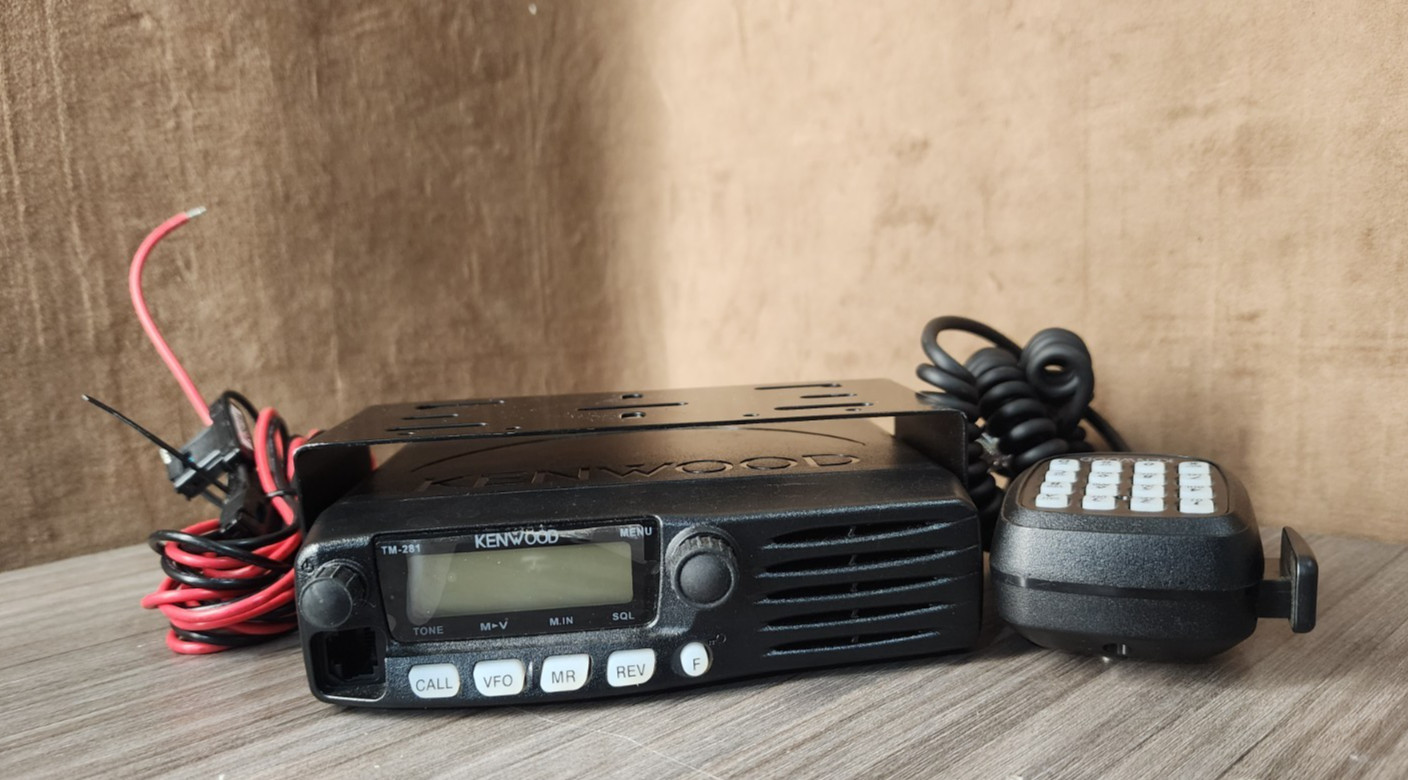 Kenwood TM-281A 144MHz FM Mobile Transceiver 65W 2M Ham Radio OPEN BOX$130.00View on eBay
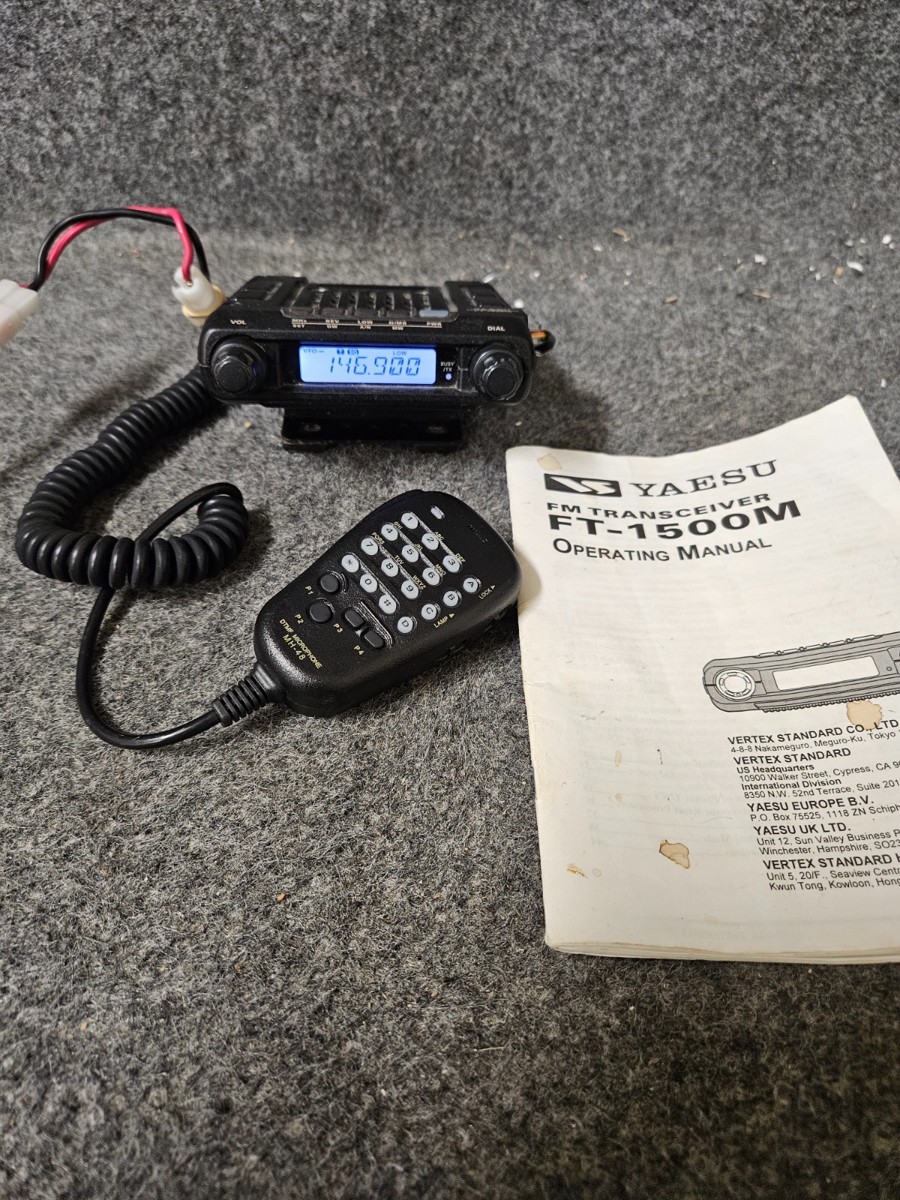 Yaesu FT-1500M FM Transceiver Ham Radio Black 2-Meter Mobile VHF Radio w/ mic$149.95View on eBay
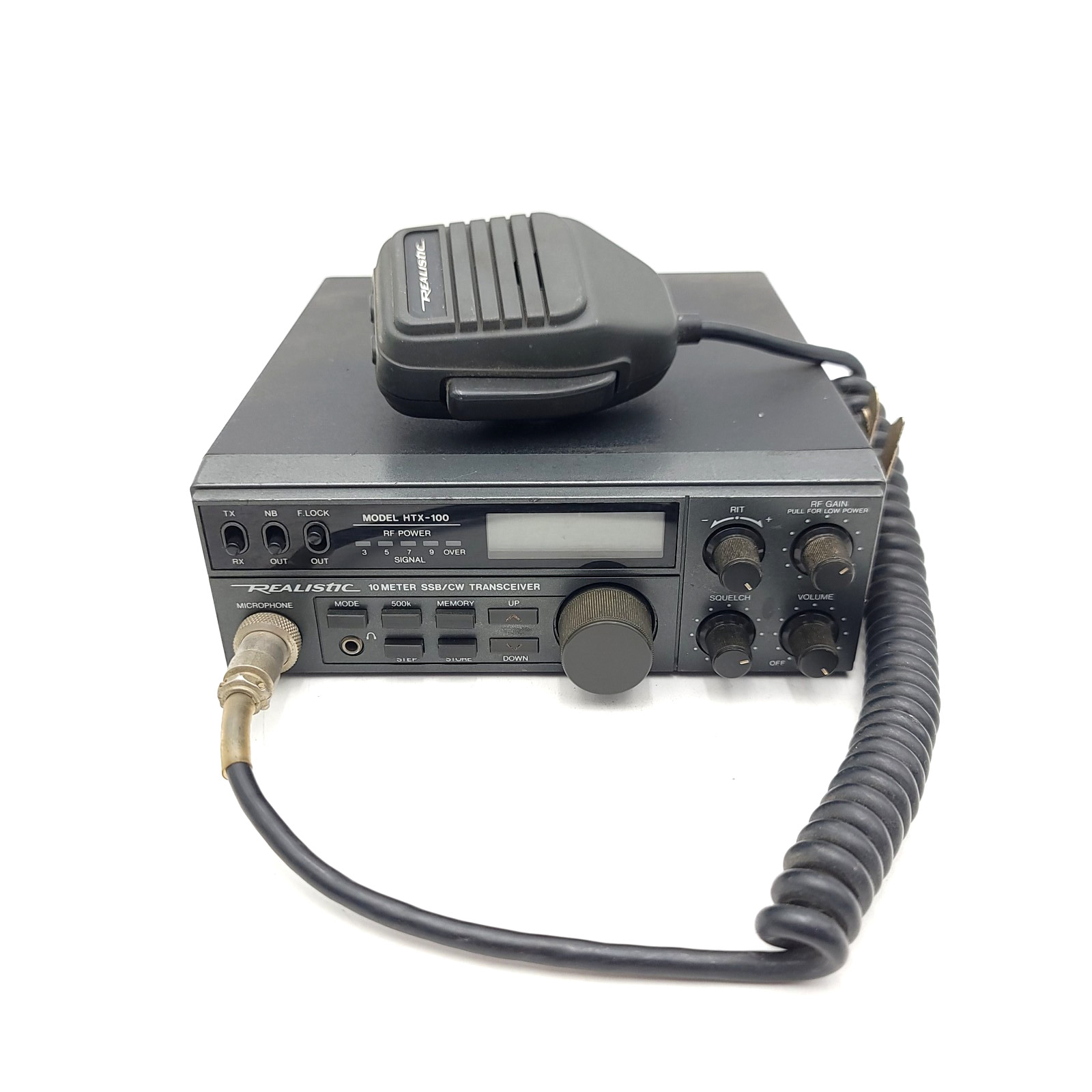 Realistic HTX-100 10 Meter SSB/CW Amateur Ham Mobile Radio Transceiver w/ Mic$162.80View on eBay
Highlights
- Power tiers: 2m/70cm FM mobiles output 50-75W on high power, versus 5-8W from a handheld—roughly 10 dB more, which doubles or triples usable range in hilly terrain.
- Single-band vs multi-band: a 144MHz-only rig like the Kenwood TM-281A is simpler and cheaper; dual-band 144/430MHz rigs (TM-G707A class) add repeater and simplex flexibility in one chassis.
- All-mode capability: the Realistic HTX-100 covers 10m SSB/CW with 25W—a different architecture from FM-only mobiles and suited to propagation-driven HF work, not local nets.
- Band-specific exotics exist: 220MHz (TM-321A class) and 1.2GHz (TM-541 class) mobiles serve niche regional repeater networks and require matching band antennas.
Best use cases
- Choose a 2m FM mobile (65-75W, single band) if your goal is reliable local repeater and simplex coverage—this is the right first mobile rig and pairs with a simple 1/4-wave or 5/8-wave whip.
- Choose a dual-band 144/430MHz FM mobile if you operate both VHF and UHF repeaters or want one radio for cross-band and emergency frequency coverage; skip single-band if you regularly use 70cm.
- Choose an HF/10m all-mode rig only if you want SSB/CW and understand antenna tuners and propagation; skip it if you need plug-and-play local FM comms.
- Skip 220MHz and 1.2GHz mobiles unless your regional repeater network actually uses those bands—otherwise you buy an expensive radio with no one to talk to.
Buying tips
- Budget for the whole system: radio, antenna, mount, and 12V wiring. A 50W+ mobile draws 10-13A on transmit, so use fused 12-14 AWG power cable direct to the battery.
- Match antenna gain to terrain: a 5/8-wave 2m whip (~3 dB gain) suits flat open areas, while a 1/4-wave (~2.15 dBi) gives a better high-angle pattern in mountains and dense cities.
- Prefer radios with standard SO-239 or N connectors and detachable front panels (remote-head kits) for tight vehicle installs; check that the mic and power connectors are included.
- On the used market, late-model FM mobiles (Kenwood TM-281A, Yaesu FT-1500M class) age well; vintage rigs may lack CTCSS/PL tones needed for modern repeater access—confirm tone capability.
Specs
| Band Coverage | 2m / 70cm / 10m / 220MHz / 1.2GHz |
|---|---|
| Output Power | 25-75W (FM mobile class) |
| Modes | FM only vs FM/SSB/CW all-mode |
| Power Input | 12V DC, 10-15A fused |
Related searches
What to check before buying
- Measure your mounting location: most mobile chassis are roughly 6-8 in wide and 2 in tall; a remote-head kit needs dash space plus a cable run to the main body.
- Confirm 12V DC negative-ground power and a fused circuit rated for at least 15A; do not run a 50W+ mobile from a cigarette-lighter plug.
- Check antenna mount options—mag mount, lip mount, or NMO hole mount—and ensure a ground plane (metal roof or trunk lid) is available.
- Verify repeater access requirements: CTCSS/PL or DCS tone support and the offset (+/-600 kHz on 2m, +/-5 MHz on 70cm) must be programmable in the radio.
FAQ
Data sources: eBay / Amazon listings and product attribute feeds. Updated Nov 24, 2026.
Some links on this page are affiliate links. If you buy after clicking one, we may earn a commission at no extra cost to you. This does not change which products appear here or their order. Affiliate disclosure.