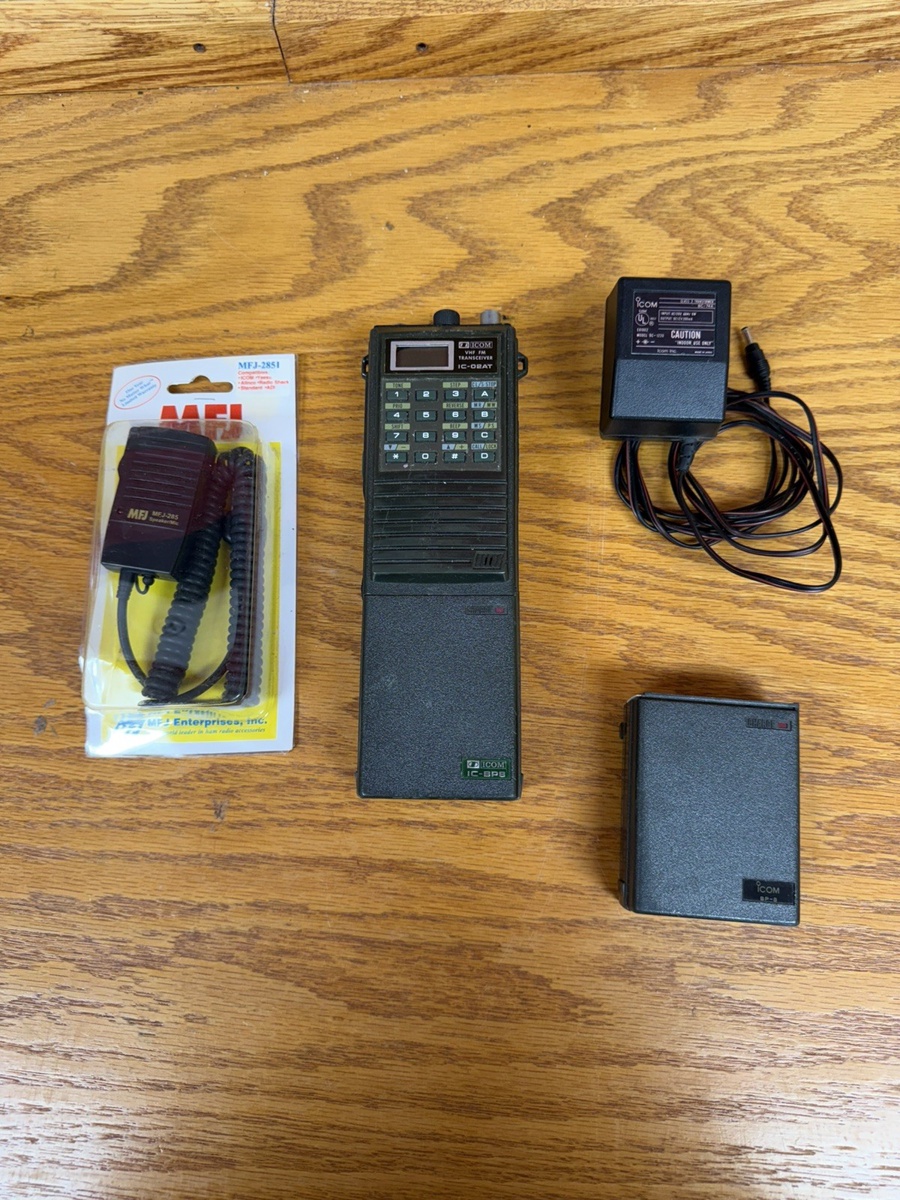

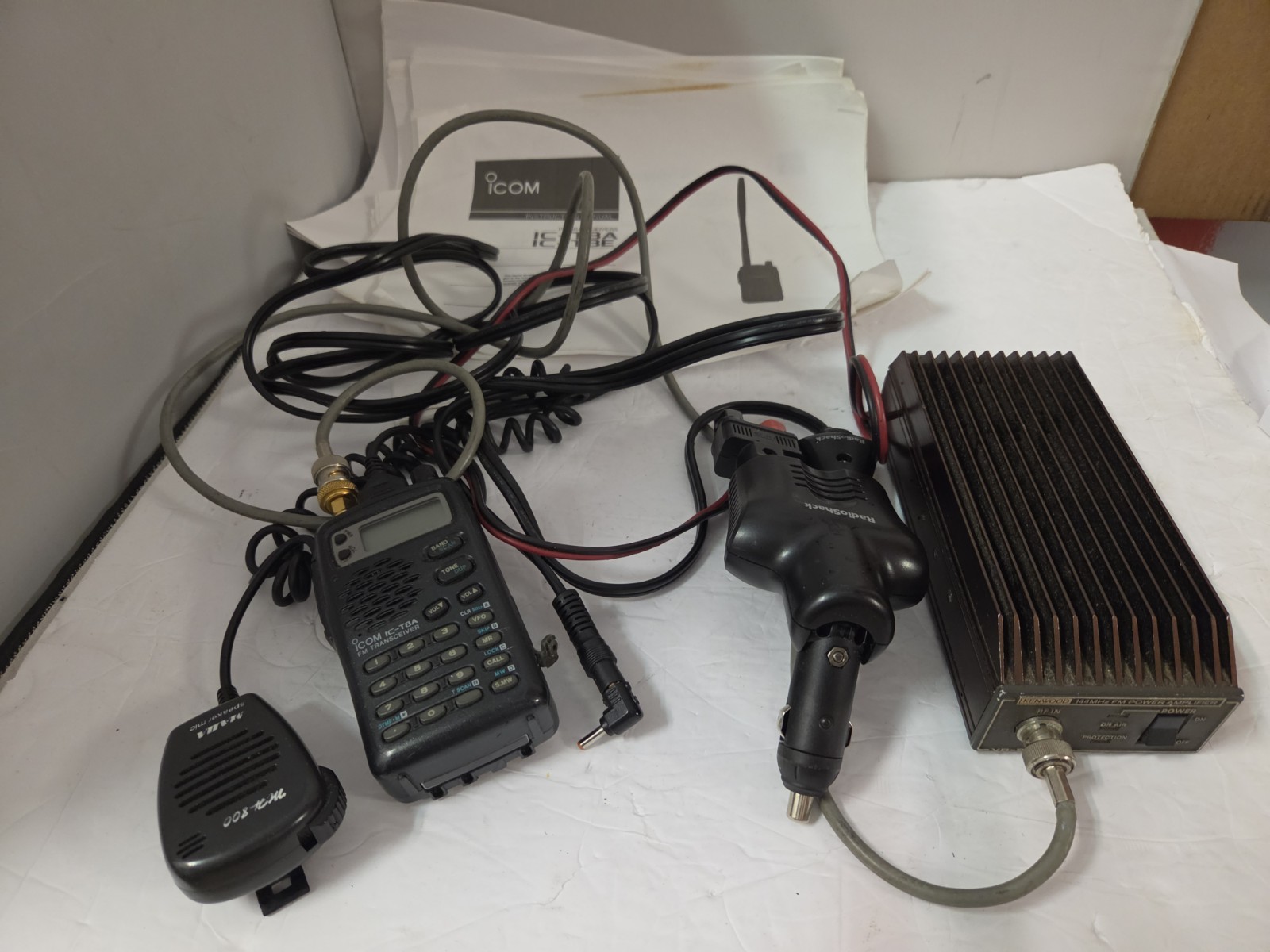
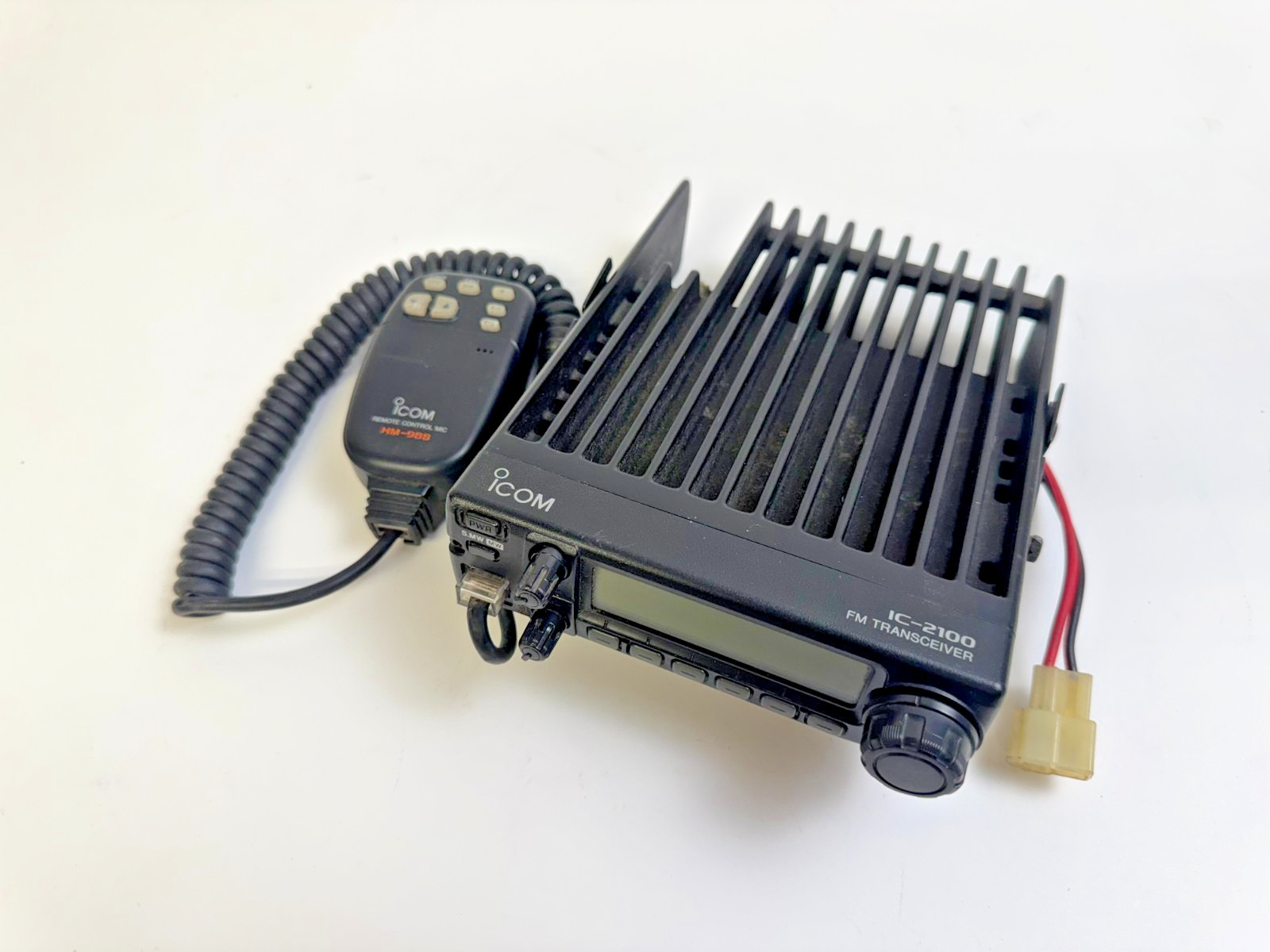
Photos from current listings. Actual item, color, and included accessories may vary.
Icom Ic 9700 Buying Guide
The Icom IC-9700 is a VHF/UHF/1.2 GHz all-mode base transceiver built around a direct-sampling SDR architecture, making it the reference-tier choice for weak-signal satellite, EME, and tropospheric work. The core trade-off is band-specific RF performance versus cost and complexity: it covers 144, 430, and 1240 MHz with true 100 W/75 W/10 W outputs, but requires a 13.8 V DC supply and offers no HF coverage. Buy the IC-9700 when VHF/UHF/1.2 GHz weak-signal capability is the priority; skip it and choose an HF+VHF all-mode rig if you need 160-6 m alongside local repeaters.
Median $99.95
Key takeaways
- Direct-sampling SDR receiver with a real 1.2 GHz band (1240-1300 MHz) at 10 W — a native third band most VHF/UHF rigs lack entirely.
- Power tiers are band-specific: 100 W on 144 MHz, 75 W on 430 MHz, 10 W on 1240 MHz, all at 13.8 V DC from an external supply.
- Full all-mode operation (SSB/CW/FM/AM/FT8-ready DATA) on all three bands plus a built-in high-stability TCXO and dedicated satellite tracking modes.
At a glance
- Category
- Ham Radio Transceivers
- Last updated
- Nov 24, 2026
Current offers
Highlights
- Direct-sampling SDR receiver with a real 1.2 GHz band (1240-1300 MHz) at 10 W — a native third band most VHF/UHF rigs lack entirely.
- Power tiers are band-specific: 100 W on 144 MHz, 75 W on 430 MHz, 10 W on 1240 MHz, all at 13.8 V DC from an external supply.
- Full all-mode operation (SSB/CW/FM/AM/FT8-ready DATA) on all three bands plus a built-in high-stability TCXO and dedicated satellite tracking modes.
- Dual receive with independent main/sub bands, a 4.3-inch touchscreen, and a USB audio/CI-V interface for single-cable digital-mode and logging control.
Best use cases
- Best fit: satellite operators running FM and linear transponder birds — dual VFO, Doppler tracking, and full-duplex cross-band operation are built in; pair with a circularly polarized dual-band Yagi.
- Best fit: 2 m/70 cm weak-signal DX and EME stations — 100 W on 144 MHz plus a low-noise direct-sampling front end feeds a mast-mounted LNA and high-gain array cleanly.
- Wrong fit: HF-centric operators who only occasionally use VHF — an HF+6 m+2 m/70 cm all-mode transceiver covers more ground for less; skip the IC-9700 unless 1.2 GHz is a genuine requirement.
- Wrong fit: portable/mobile-only users — the IC-9700 is a base station needing a 13.8 V DC supply, external antenna, and a stable operating position; choose a dedicated mobile VHF/UHF rig instead.
Buying tips
- Budget for a regulated 13.8 V DC supply rated at least 25-30 A continuous — the IC-9700 draws roughly 20-22 A at full 100 W transmit on 144 MHz.
- For 1.2 GHz work, verify antenna and feedline loss: 10 W ERP collapses quickly through thin coax, so use LMR-400-class or better and a dedicated 23 cm antenna.
- Choose a TCXO-equipped unit (standard on the IC-9700) if you plan FT8, EME, or satellite work — frequency stability under 0.5 ppm matters for digital and weak-signal modes.
- Plan the USB/CI-V control path up front: one USB cable handles audio and CAT for WSJT-X or satellite tracking software, avoiding a separate interface box.
Specs
| Bands Covered | 144 / 430 / 1240 MHz (no HF) |
|---|---|
| Max Power Output | 100 W / 75 W / 10 W by band |
| Architecture | Direct-sampling SDR receiver |
| Power Supply | 13.8 V DC, 25-30 A supply |
Related searches
What to check before buying
- Confirm a 13.8 V DC power supply with 25-30 A headroom and the correct fused DC cable before the radio arrives.
- Measure your antenna farm: separate 144, 430, and 1240 MHz feeds — or a tri-band/duplexer setup — are required; the IC-9700 has one antenna port per band.
- Verify your operating position has room for the ~240 x 94 x 238 mm chassis and clear line-of-sight for the touchscreen.
- Check that your logging/WSJT-X computer can use USB audio and CI-V over a single cable, and budget for a 23 cm antenna if 1.2 GHz is planned.
FAQ
Data sources: eBay / Amazon listings and product attribute feeds. Updated Nov 24, 2026.
Some links on this page are affiliate links. If you buy after clicking one, we may earn a commission at no extra cost to you. This does not change which products appear here or their order. Affiliate disclosure.