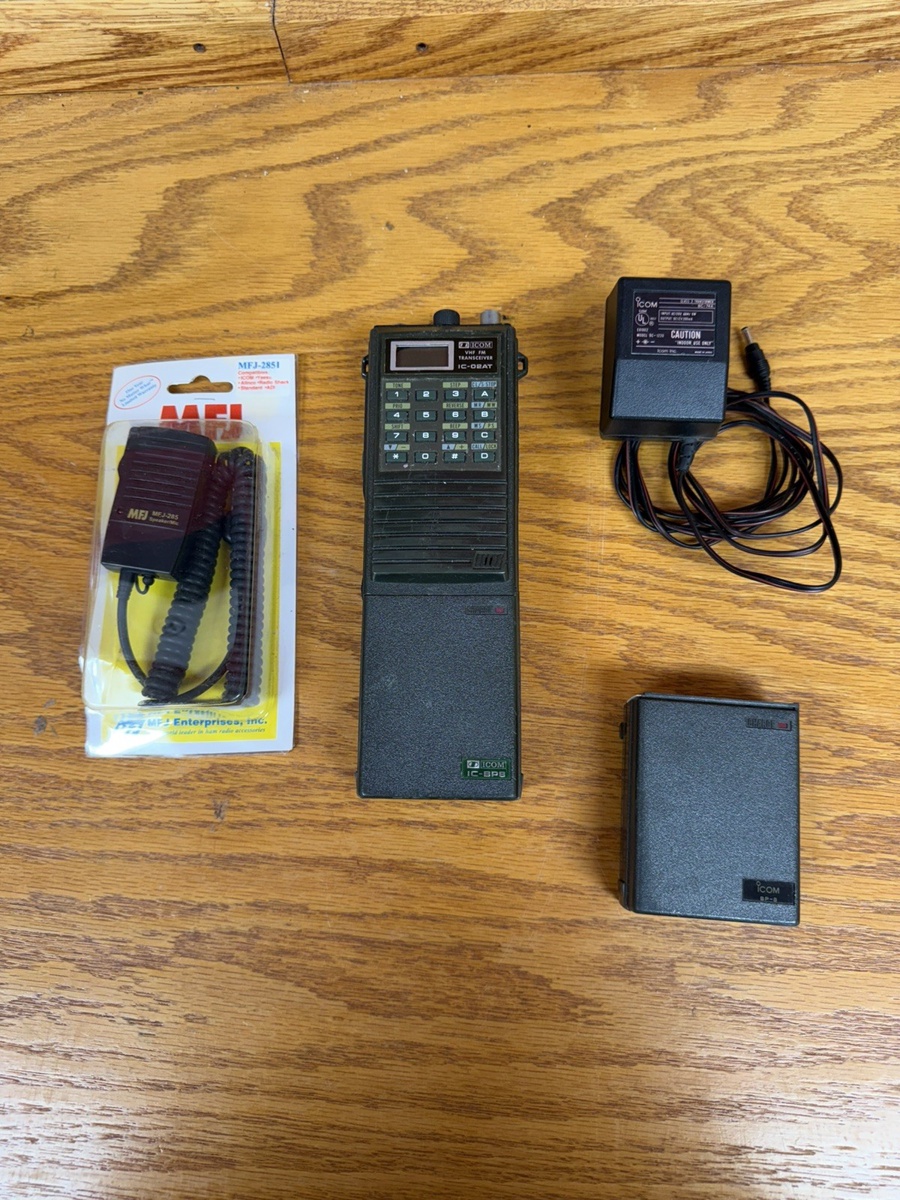

Photos from current listings. Actual item, color, and included accessories may vary.
Icom Hf Buying Guide
Shopping for an Icom HF transceiver means choosing between a base-station rig with a built-in ATU and a rugged portable that trades 100W output for battery-friendly QRP operation. Most buyers overpay for features they never use and overlook the antenna tuner range, IF DSP filtering, and band coverage that actually determine on-air performance. This guide separates the genuine Icom HF tiers so you buy the right chassis for your shack, field kit, or mobile setup.
Median $100.00
Key takeaways
- Icom HF rigs split into three architectures: 100W base/mobile (IC-7300, IC-7610), 10-15W portable (IC-705), and 100W SDR flagship (IC-7851) with distinct DSP and panadapter tiers.
- The IC-7300 uses a direct-sampling SDR receiver with a real-time spectrum scope; the IC-7610 adds dual receivers and a larger display for split-pileup work.
- Built-in automatic antenna tuners typically cover 3:1 to 10:1 SWR ranges—the IC-7300's internal ATU handles roughly 3:1, so a resonant or externally tuned antenna remains critical.
At a glance
- Category
- Ham Radio Transceivers
- Last updated
- Nov 28, 2026
Current offers
Highlights
- Icom HF rigs split into three architectures: 100W base/mobile (IC-7300, IC-7610), 10-15W portable (IC-705), and 100W SDR flagship (IC-7851) with distinct DSP and panadapter tiers.
- The IC-7300 uses a direct-sampling SDR receiver with a real-time spectrum scope; the IC-7610 adds dual receivers and a larger display for split-pileup work.
- Built-in automatic antenna tuners typically cover 3:1 to 10:1 SWR ranges—the IC-7300's internal ATU handles roughly 3:1, so a resonant or externally tuned antenna remains critical.
- The IC-705 covers HF/50/144/430 MHz at 10W but requires an external ATU and separate battery pack; it is not a plug-and-play 100W base rig.
Best use cases
- Choose the IC-7300 or IC-7610 if you operate a fixed shack with a resonant dipole or vertical and want 100W output, a real-time spectrum scope, and a built-in ATU.
- Pick the IC-705 only if you need a self-contained field-portable rig for SOTA/POTA where 10W and an external tuner/battery are acceptable trade-offs.
- Skip the flagship IC-7851 unless you are a serious DXer or contester who needs dual receivers, dual scopes, and a full SDR architecture—casual operators rarely use its extra capability.
Buying tips
- Confirm the internal ATU's matching range vs. your antenna's SWR curve; a 3:1 tuner won't rescue a high-impedance end-fed, so budget an external tuner or choose a resonant wire.
- Prioritize a rig with a direct-sampling SDR receiver and real-time spectrum scope if you chase weak signals—older superheterodyne Icoms without a scope cost less but lack visual band awareness.
- Choose 100W base/mobile output unless you specifically need QRP portability; the IC-705's 10W is a deliberate field compromise, not a beginner base-station substitute.
- Inspect band coverage and filter options: HF-only rigs excel at 160-10m, while models adding 50/144/430 MHz need separate antennas and feedline for VHF/UHF use.
Specs
| Max Output Power | 100W base/mobile; 10W portable |
|---|---|
| Receiver Architecture | Direct-sampling SDR vs superheterodyne |
| Internal ATU Range | ~3:1 SWR (base); none (portable) |
| Band Coverage | HF/6m; some add 144/430 MHz |
Related searches
What to check before buying
- Measure your shack desk or mobile mount for chassis depth and height—base rigs like the IC-7610 are significantly larger than the compact IC-7300.
- Verify your antenna's SWR across operating bands and compare it to the rig's internal tuner range; plan an external ATU if you operate multiband wires.
- Confirm DC power supply voltage and current: 100W HF rigs typically draw 20-22A at 13.8V DC, requiring a regulated supply with adequate headroom.
- Account for companion parts: a keyer paddle or straight key, headphones, and a logging interface; portable rigs also need a separate battery pack and charger.
FAQ
Data sources: eBay / Amazon listings and product attribute feeds. Updated Nov 28, 2026.
Some links on this page are affiliate links. If you buy after clicking one, we may earn a commission at no extra cost to you. This does not change which products appear here or their order. Affiliate disclosure.