
Photos from current listings. Actual item, color, and included accessories may vary.
Hf Transceiver Buying Guide
An HF transceiver is the core station radio covering 160–10 m SSB/CW (often 6 m and FM), and the primary trade-off is spectral purity and dynamic range versus power output and price tier. Durable, low-noise receivers with a real bandpass front end and 100 W finals separate serious options from compromise SDRs and parts-only vintage rigs. Decide by your license class, operating mode, and whether you need a 100 W base rig, a 20 W QRP field rig, or a repairable vintage unit.
Median $317.50
Key takeaways
- Receiver architecture is the real differentiator: direct-sampling SDRs like the Xiegu G106/G90 offer 0.5–30 MHz coverage with 20 W output, while superhet rigs such as the Kenwood TS-430S and Icom IC-756PRO provide 100 W and superior close-in dynamic range.
- Final amplifier class and heatsink mass set duty cycle: 100 W HF rigs use push-pull MOSFET or bipolar finals with large heatsinks for 100% SSB duty; 20 W QRP rigs like the G90 rely on smaller finals and must be derated for digital modes.
- Front-end filtering determines contest and strong-signal performance: better rigs include switchable 1.8–2.4 kHz SSB crystal or DSP filters and a 10 dB attenuator, while budget SDRs rely on software filtering that can overload near strong transmitters.
At a glance
- Category
- Ham Radio Transceivers
- Last updated
- Nov 28, 2026
Current offers
Highlights
- Receiver architecture is the real differentiator: direct-sampling SDRs like the Xiegu G106/G90 offer 0.5–30 MHz coverage with 20 W output, while superhet rigs such as the Kenwood TS-430S and Icom IC-756PRO provide 100 W and superior close-in dynamic range.
- Final amplifier class and heatsink mass set duty cycle: 100 W HF rigs use push-pull MOSFET or bipolar finals with large heatsinks for 100% SSB duty; 20 W QRP rigs like the G90 rely on smaller finals and must be derated for digital modes.
- Front-end filtering determines contest and strong-signal performance: better rigs include switchable 1.8–2.4 kHz SSB crystal or DSP filters and a 10 dB attenuator, while budget SDRs rely on software filtering that can overload near strong transmitters.
- Band coverage and generation matter for usability: modern SDRs cover 0.5–30 MHz continuous with 6 m, while vintage Kenwood TS-520/530 series are 160–10 m analog rigs requiring tune-up and often replacement of drifted capacitors.
Best use cases
- Choose a 100 W superhet base rig like the Icom IC-756PRO or Kenwood TS-430S if you operate SSB/CW from a home station with a tuned dipole or vertical and need reliable full-power contacts.
- Choose a 20 W SDR like the Xiegu G90 if you want portable field operation, digital modes, and waterfall display on a budget; skip it as a primary contest radio because 20 W limits reach and the receiver overloads near strong signals.
- Choose a vintage Kenwood TS-520/530 only if you can repair and align analog rigs; skip parts-only listings such as the TS-530S Parts only unit unless you need a donor chassis.
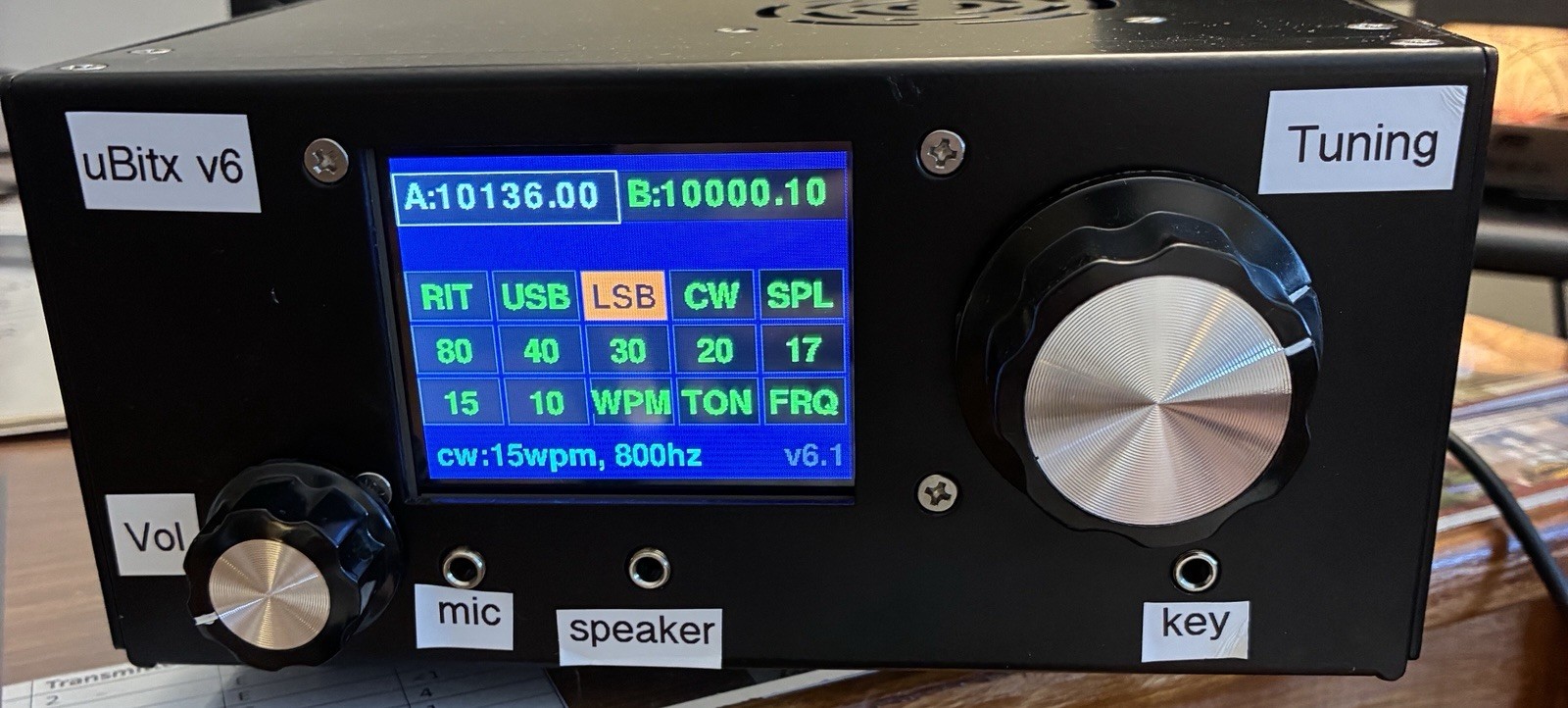
- Choose a uBitx V6 only as a kit-builder learning platform; skip it for daily operation because its 10 W output and simple front end are not competitive with a 100 W superhet.
Buying tips
- Match power tier to station wiring: 100 W rigs need a 12–14 V supply rated at 20–25 A continuous, while 20 W QRP rigs run on 3–6 A and suit portable LiFePO4 packs.
- Verify band coverage against your license: a 160–10 m rig covers all HF ham bands, but 60 m and 6 m require specific models like the IC-756PRO or Alinco DX-70.
- For vintage Kenwood TS-520/530/430, budget for capacitor replacement and alignment; a working TS-430S is a better daily driver than a non-working TS-530S.
- Confirm mode support: SSB and CW are standard, but AM/FM and digital modes need a rig with built-in sound card or accessory interface such as the G90's USB port.
Specs
| Output Power | 100 W base / 20 W QRP / 10 W kit |
|---|---|
| Receiver Type | Superhet vs direct-sampling SDR |
| Band Coverage | 160–10 m; 6 m on select models |
| Power Supply | 13.8 V / 20–25 A (100 W class) |
Related searches
What to check before buying
- Measure your operating desk and shelf depth: 100 W base rigs like the IC-756PRO are roughly 30–35 cm deep and need clearance for rear SO-239 and power cables.
- Confirm your DC supply voltage and current: 13.8 V at 20–25 A for 100 W rigs, 12 V at 5–6 A for 20 W QRP rigs, and verify plug polarity before first power-up.
- Check antenna connector type and tuner: most HF rigs use SO-239, and a 100 W rig needs an external ATU rated for 100 W if your antenna SWR exceeds 2:1.
- For vintage rigs, inspect for battery leakage, failed electrolytics, and missing knobs; parts-only listings are not returnable as working units.
FAQ
Data sources: eBay / Amazon listings and product attribute feeds. Updated Nov 28, 2026.
Some links on this page are affiliate links. If you buy after clicking one, we may earn a commission at no extra cost to you. This does not change which products appear here or their order. Affiliate disclosure.