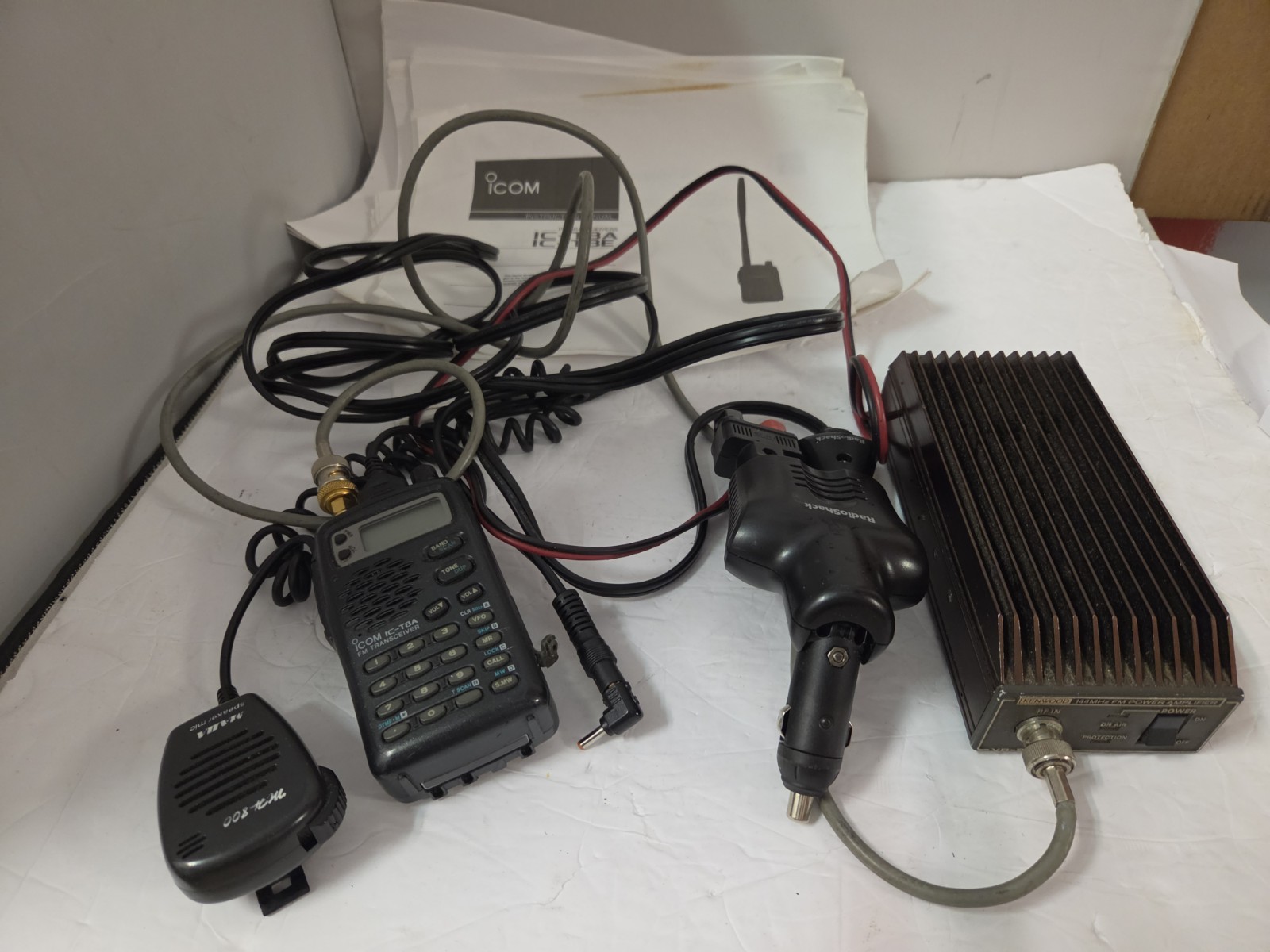

Photos from current listings. Actual item, color, and included accessories may vary.
2m Radio Buying Guide
A 2m radio is a VHF (144–148 MHz) amateur transceiver covering the most popular local FM band, available as handheld (HT), mobile, or base units. The core trade-off is RF output versus power source: HTs run 5–8 W on internal batteries, while mobiles deliver 50–75 W from 13.8 V DC for far greater range. Choose a mobile or base unit for simplex and repeater reach; choose an HT only when portability outweighs transmit power.
Median $114.98
Key takeaways
- Handheld 2m radios output 5–8 W with a rubber duck antenna (typically 0–2 dBi gain); mobile units output 50–75 W into an external antenna, roughly 10 dB stronger — about 3× the effective range.
- FM is the standard mode for 2m repeaters; CTCSS (PL) tones in 38 standard frequencies are required to open most repeater squelches, and the radio must support tone encode.
- Mobile radios require a 13.8 V DC supply at 12–15 A for 65 W output; HTs use 7.4 V Li-ion packs or 6×AA (9 V) and cannot transmit at full power from AA cells.
At a glance
- Category
- Ham Radio Transceivers
- Last updated
- Nov 28, 2026
Current offers
Highlights
- Handheld 2m radios output 5–8 W with a rubber duck antenna (typically 0–2 dBi gain); mobile units output 50–75 W into an external antenna, roughly 10 dB stronger — about 3× the effective range.
- FM is the standard mode for 2m repeaters; CTCSS (PL) tones in 38 standard frequencies are required to open most repeater squelches, and the radio must support tone encode.
- Mobile radios require a 13.8 V DC supply at 12–15 A for 65 W output; HTs use 7.4 V Li-ion packs or 6×AA (9 V) and cannot transmit at full power from AA cells.
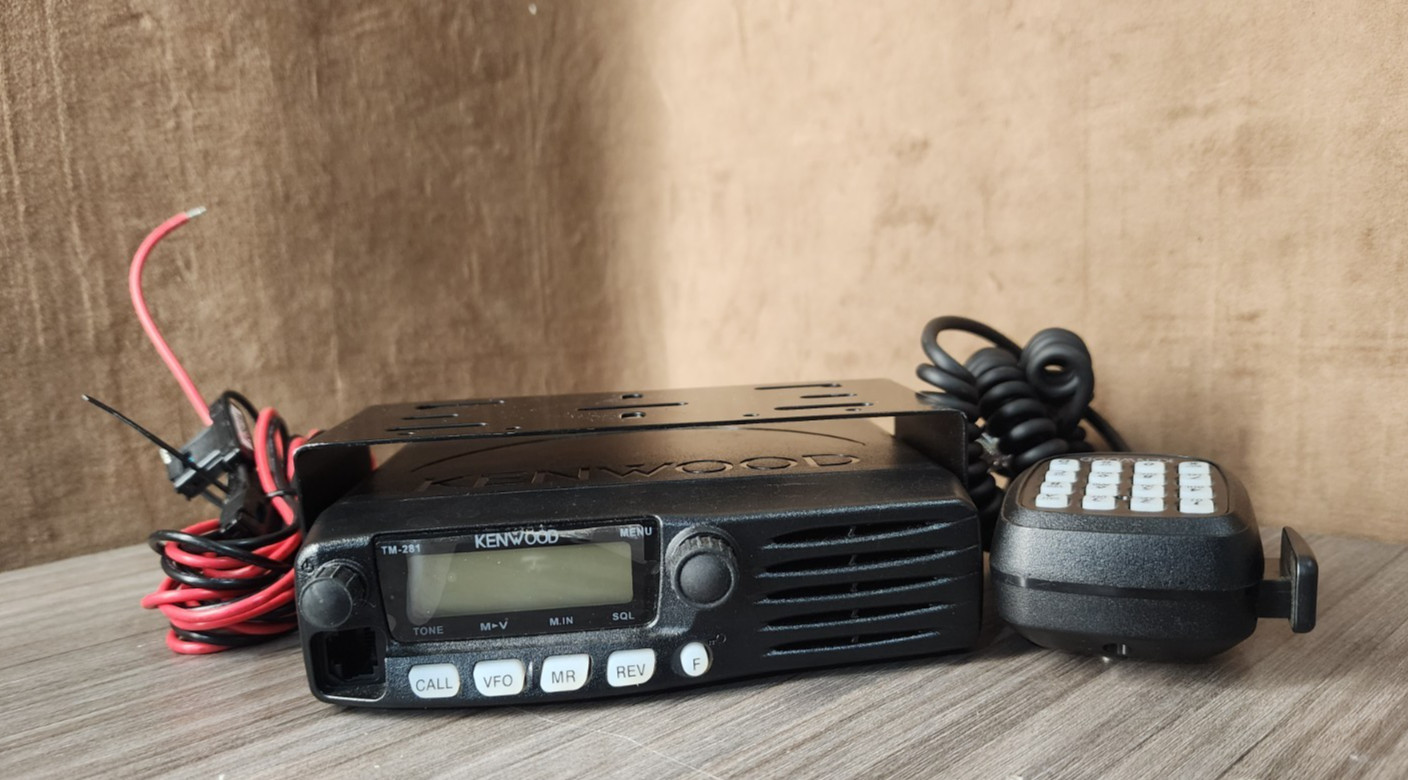
- Key tier differences: Icom IC-2100H and Kenwood TM-281A are 65 W mobile units with detachable front panels or remote-mount kits; the IC-T8A is a 5 W HT — a 10–12 dB power gap, not a feature tweak.
Best use cases
- Best fit: base or vehicle operation with a rooftop or mag-mount 1/4-wave or 5/8-wave antenna — pick a 50–75 W mobile like the TM-281A or IC-2100H for repeater and simplex reach.
- Best fit: hiking, events, or emergency go-bag where no vehicle power is available — pick a 5–8 W HT like the IC-T8A and carry a spare battery or AA pack.
- Wrong fit: expecting HT range comparable to a mobile — a 5 W HT with a rubber duck is roughly 10 dB down, so skip HTs for fixed-station or long-distance simplex use.
- Wrong fit: buying a 2m-only mobile if you need 70cm repeaters — choose a dual-band 2m/70cm transceiver instead of a single-band 144 MHz unit.
Buying tips
- Match power tier to antenna: 50 W into a 3 dBi gain antenna yields ~100 W ERP; a 5 W HT into a 0 dBi duck yields 5 W ERP — a huge real-world difference.
- Check repeater offsets: 2m standard shift is ±600 kHz; confirm the radio supports standard and odd splits plus CTCSS encode/decode for repeater access.
- Verify power supply headroom: a 65 W mobile draws ~12–13 A at 13.8 V; choose a supply rated at least 20–25 A continuous to avoid voltage sag on transmit.
- Prefer radios with standard antenna connectors (SO-239 or N-type on mobiles, SMA on HTs) and detachable microphones for easier mobile installation.
Specs
| Band | 2m VHF 144–148 MHz |
|---|---|
| Max Power | 5–8 W HT / 50–75 W mobile |
| Modes | FM (CTCSS encode/decode) |
| Power Source | 7.4 V Li-ion / 13.8 V DC |
Related searches
What to check before buying
- Measure your mounting space: mobile units are roughly 140–160 mm wide and 40–60 mm tall; confirm dash or shelf clearance before choosing a detachable-face model.
- Confirm antenna mount: mag-mount needs a metal roof; lip/trunk mounts need a flat edge — a 5/8-wave 2m whip is ~1.2 m tall and needs clearance.
- Check power source: vehicle 13.8 V DC or a dedicated supply with ≥20 A; for HTs, confirm charger voltage and spare battery availability.
- Verify license and band plan: 2m FM simplex calling is 146.520 MHz; ensure the radio covers 144–148 MHz transmit and supports the CTCSS tones your local repeaters use.
FAQ
Data sources: eBay / Amazon listings and product attribute feeds. Updated Nov 28, 2026.
Some links on this page are affiliate links. If you buy after clicking one, we may earn a commission at no extra cost to you. This does not change which products appear here or their order. Affiliate disclosure.