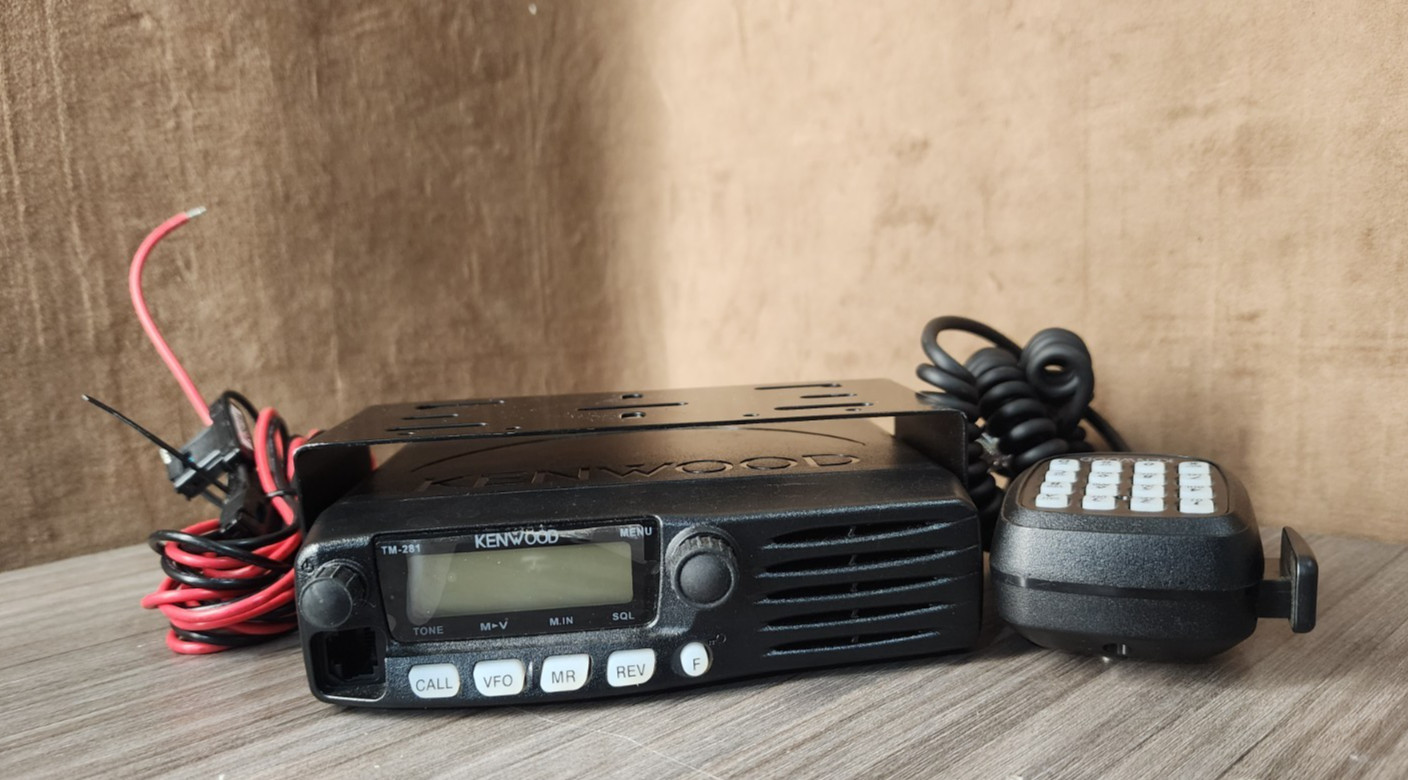

Photos from current listings. Actual item, color, and included accessories may vary.
2m Mobile Radio Buying Guide
A 2m mobile radio is a VHF (144–148 MHz) FM transceiver built for vehicle or base-station mounting, where the core trade-off is 50W-class output and heatsink/chassis quality versus 25W or lower-power compacts that may lack full-duty thermal design. Choose a 50–65W front-panel-mount unit with a proper die-cast heatsink and detachable faceplate if you need full repeater access; step down to 25W only for short-range simplex or space-constrained installs.
Key takeaways
- Power tiers: 65W/50W/25W models differ only in PA stage and heatsink mass; 50–65W gives ~3 dB over 25W, doubling effective simplex range.
- Front-panel vs detachable faceplate: remote-head models (e.g., TM-281A-style front-mount only) require full dash depth, while remote kits need a data cable and separate head bracket.
- Receiver and selectivity: 2m mobiles use 12.5/25 kHz channel spacing; narrowband-capable units are required for modern repeater coordination and interoperability.
At a glance
- Category
- Ham Radio Transceivers
- Last updated
- Nov 28, 2026
Current offers
Highlights
- Power tiers: 65W/50W/25W models differ only in PA stage and heatsink mass; 50–65W gives ~3 dB over 25W, doubling effective simplex range.
- Front-panel vs detachable faceplate: remote-head models (e.g., TM-281A-style front-mount only) require full dash depth, while remote kits need a data cable and separate head bracket.
- Receiver and selectivity: 2m mobiles use 12.5/25 kHz channel spacing; narrowband-capable units are required for modern repeater coordination and interoperability.
- Antenna connector: most 2m mobiles use SO-239 or N-type; a 1/4-wave or 5/8-wave mag-mount with proper ground plane is as performance-critical as the radio's wattage.
Best use cases
- Best fit: daily highway commute or rural travel with repeater coverage — pick a 50–65W front-panel 2m mobile with CTCSS/DCS and 12.5 kHz narrowband.
- Best fit: base station at home — pair a 50W mobile with a 13.8V DC switching supply and a dual-band or 2m vertical antenna; power output and heatsink matter more than faceplate features.
- Wrong fit: you only need local simplex within a few miles or a backup rig — a 25W compact or a handheld with external antenna saves dash space and wiring complexity.
- Skip for: multi-band 70cm operation or digital modes (DMR/YSF/D-STAR); a dedicated 2m/70cm dual-band or digital transceiver is required, not a 2m-only mobile.
Buying tips
- Match power to wiring: 50–65W draws 10–13A at 13.8V, so use 12 AWG fused direct-to-battery cabling; 25W units can run on 14–16 AWG accessory circuits.
- Verify narrowband: select a model supporting 12.5 kHz channel steps and CTCSS/DCS encode-decode; older wideband-only mobiles may be unusable on coordinated repeaters.
- Antenna first: budget a 5/8-wave 2m mag-mount or NMO whip with a solid ground plane; gain and mounting height outweigh a 15W power difference in real range.
- Heatsink and duty cycle: continuous 50W+ transmit requires a die-cast finned chassis; plastic-cased or fanless low-mass units should be limited to short QSOs.
Specs
| Band / Mode | 2m VHF FM (144–148 MHz) |
|---|---|
| RF Power Tier | 25W / 50W / 65W |
| Channel Spacing | 12.5 / 25 kHz narrowband |
| Mount / Faceplate | Front-panel vs detachable head |
Related searches
What to check before buying
- Measure dash or under-seat depth for the chassis; front-mount units need ~6–8 in clearance plus cable bend radius, while remote-head kits need a separate head location.
- Confirm 13.8V DC nominal supply and fuse rating; a 50–65W mobile needs a 15A circuit, and base use requires a regulated supply rated above peak draw.
- Check antenna mount and cable route: NMO or mag-mount needs a metal ground plane; glass-mount and lip-mount options may underperform without a counterpoise.
- Verify microphone connector and extension needs if remote-mounting the head; most mobiles use RJ-45 or 8-pin modular mics with proprietary pinouts.
FAQ
Data sources: eBay / Amazon listings and product attribute feeds. Updated Nov 28, 2026.
Some links on this page are affiliate links. If you buy after clicking one, we may earn a commission at no extra cost to you. This does not change which products appear here or their order. Affiliate disclosure.