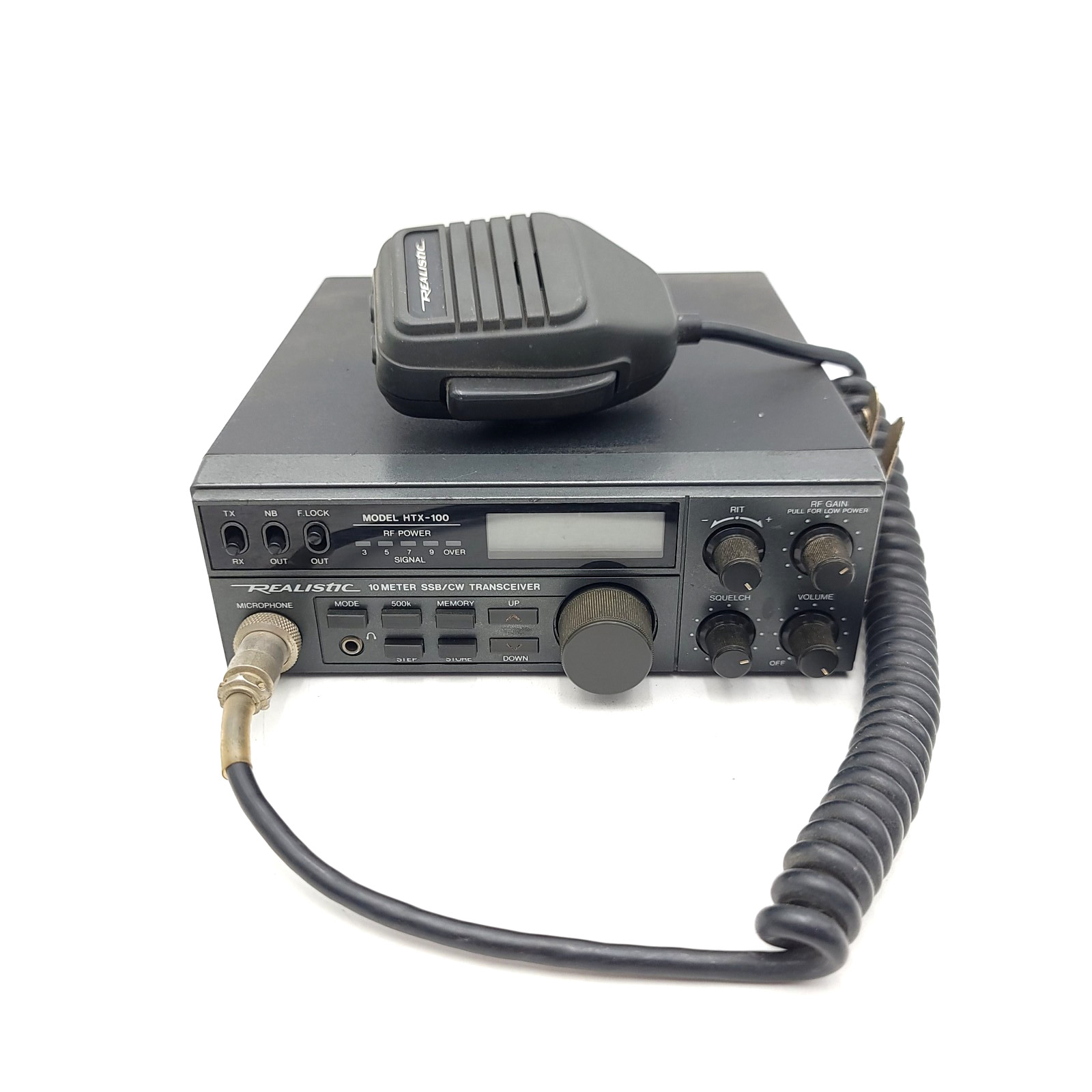

Photos from current listings. Actual item, color, and included accessories may vary.
2 Meter Ssb Radio Buying Guide
A 2 meter SSB radio is a VHF transceiver that supports single-sideband (USB/LSB) on the 144–148 MHz band, a mode that enables weak-signal work, long-range tropospheric ducting, and SSB/CW contesting beyond FM repeater use. The core trade-off is between a dedicated all-mode VHF base/mobile rig (superior receive filtering, higher power, better SSB ergonomics) and a multimode HF/VHF transceiver (wider coverage but often compromised VHF SSB performance). The decision rule: buy a dedicated 144 MHz all-mode radio if weak-signal VHF is your priority; choose an HF/VHF combo only if HF coverage is the primary need and VHF SSB is secondary.
Key takeaways
- All-mode VHF rigs typically output 50–100 W on SSB vs 25–50 W on FM-only mobile rigs, and include a dedicated SSB filter (2.4 kHz) plus optional 500 Hz CW filter for weak-signal work.
- Dedicated 2 m SSB radios like the Icom IC-9700, Yaesu FT-991A (VHF/UHF all-mode), and Kenwood TS-2000 use a 144 MHz band with USB on 2 m (not LSB, which is convention on HF).
- Combo HF/VHF transceivers (e.g., Yaesu FT-897/FT-991A, Icom IC-7100) often have lower VHF SSB dynamic range and less effective roofing filters than dedicated VHF all-mode base stations.
At a glance
- Category
- Ham Radio Transceivers
- Last updated
- Nov 28, 2026
Current offers
Highlights
- All-mode VHF rigs typically output 50–100 W on SSB vs 25–50 W on FM-only mobile rigs, and include a dedicated SSB filter (2.4 kHz) plus optional 500 Hz CW filter for weak-signal work.
- Dedicated 2 m SSB radios like the Icom IC-9700, Yaesu FT-991A (VHF/UHF all-mode), and Kenwood TS-2000 use a 144 MHz band with USB on 2 m (not LSB, which is convention on HF).
- Combo HF/VHF transceivers (e.g., Yaesu FT-897/FT-991A, Icom IC-7100) often have lower VHF SSB dynamic range and less effective roofing filters than dedicated VHF all-mode base stations.
- SSB on 2 m requires a horizontally polarized beam (or loop) for optimal weak-signal performance, while FM repeater work uses vertical polarization; the radio's antenna port and bias-tee support (for mast-mounted preamps) matter for SSB weak-signal setups.
Best use cases
- Best fit: Choose a dedicated 144 MHz all-mode base station (e.g., Icom IC-9700) if your primary activity is 2 m SSB/CW weak-signal, meteor scatter, or EME — its receiver architecture and filtering are optimized for this.
- Wrong fit: Skip a dedicated 2 m SSB rig if you only need FM repeater and simplex communication; an FM-only mobile/base radio costs less and delivers equal or better FM performance.
- Best fit: Select a combo HF/VHF all-mode transceiver (e.g., Yaesu FT-991A) if you want one radio covering HF SSB and 2 m SSB for occasional VHF weak-signal use — accept slightly lower VHF SSB performance.
- Wrong fit: Avoid handhelds and FM-only mobiles for SSB on 2 m — they lack SSB mode entirely; do not attempt SSB operation on an FM-only radio.
Buying tips
- Match SSB filter bandwidth: a 2.4 kHz SSB filter is standard for voice; add a 500 Hz CW filter if you plan CW weak-signal work — many radios have optional filter slots.
- Check the radio's 2 m SSB output power: 50 W is typical for mobile all-mode rigs, 100 W for base stations; higher power helps but antenna gain and low-loss coax (e.g., LMR-400) matter more.
- Confirm USB vs LSB on 2 m: convention is USB on 2 m and 70 cm, LSB on HF; radios that auto-select mode by band avoid operator error.
- Verify IF DSP and roofing filter specifications: a 2 m all-mode rig with a 15 kHz roofing filter and adjustable DSP noise reduction outperforms older designs with optional crystal filters.
Specs
| Band/Modes | 144–148 MHz, SSB/CW/FM |
|---|---|
| SSB Output Power | 50–100 W (typical) |
| SSB Filter | 2.4 kHz standard; 500 Hz CW opt. |
| Polarization | Horizontal for SSB; Vertical for FM |
Related searches
What to check before buying
- Antenna polarization: plan for a horizontally polarized beam (e.g., 10–13 element Yagi) for SSB weak-signal work; vertical antennas are for FM.
- Station power: confirm the radio's DC input voltage (13.8 V nominal) and current draw on SSB (typically 15–20 A at 100 W) against your power supply capacity.
- Coax and connectors: use low-loss 50-ohm coax (LMR-400 or better) with PL-259 or N connectors for 2 m SSB; avoid RG-58 for runs over 50 ft.
- Companion parts: a mast-mounted preamp with bias-tee support, a foot switch or desk mic with SSB-appropriate frequency response, and logging/contest software if needed.
FAQ
Data sources: eBay / Amazon listings and product attribute feeds. Updated Nov 28, 2026.
Some links on this page are affiliate links. If you buy after clicking one, we may earn a commission at no extra cost to you. This does not change which products appear here or their order. Affiliate disclosure.