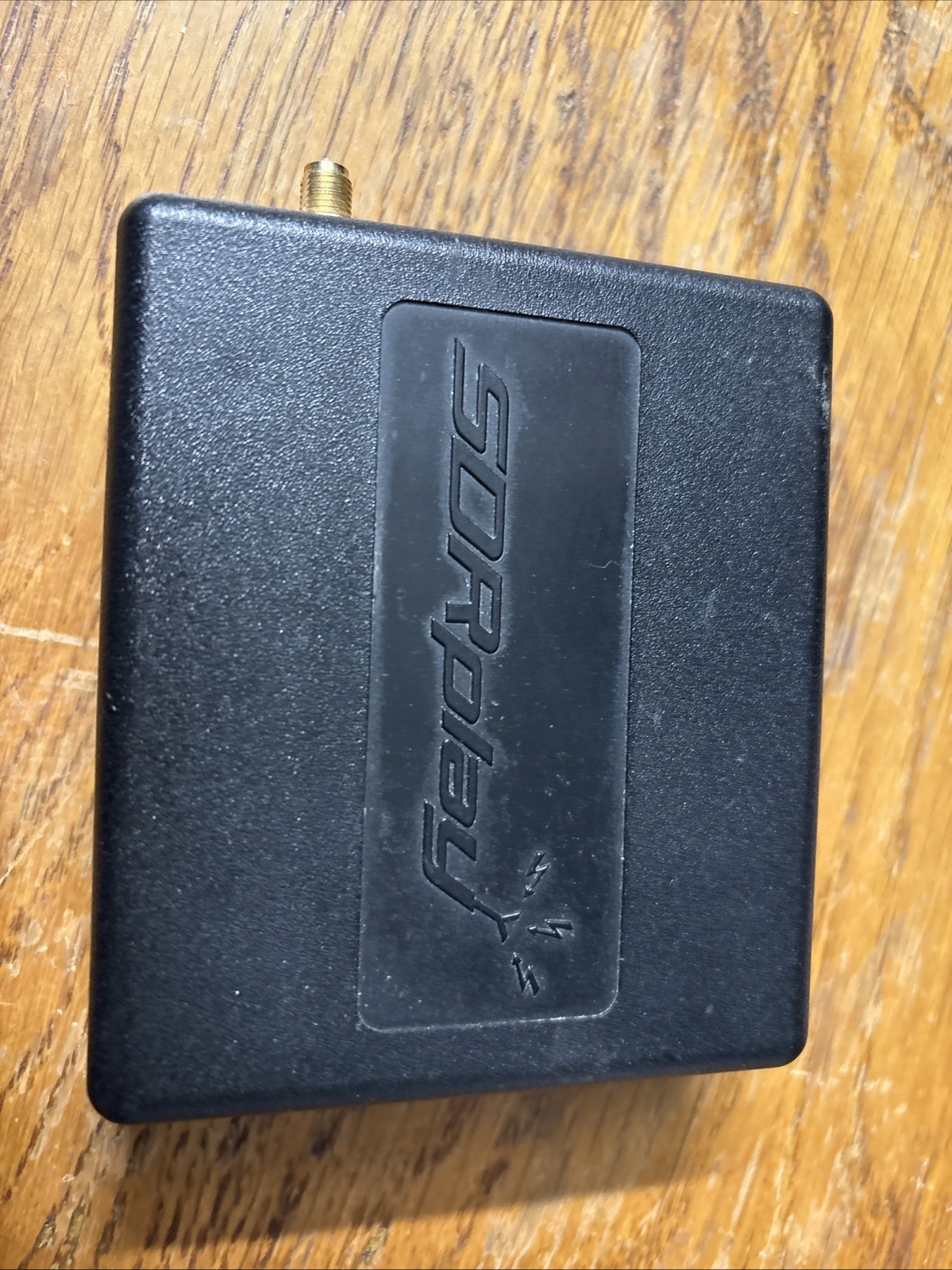

Photos from current listings. Actual item, color, and included accessories may vary.
Sdr Receiver Buying Guide
An SDR receiver turns a computer into a wideband scanning and listening platform, but spend and performance hinge on ADC resolution, tuning range, and host-interface bandwidth rather than brand name. Buyers commonly overpay for HF coverage they will never use or pick a dongle whose 8-bit ADC collapses in the presence of strong local FM broadcast signals. Decide first whether you need shortwave/HF down to 100 kHz, VHF/UHF scanning, or both, then match the ADC bit depth and front-end filtering to that job.
Key takeaways
- ADC bit depth sets dynamic range: 8-bit dongles (RTL-SDR class) overload near strong FM transmitters, while 12-14 bit SDRplay and Airspy units handle weak signals beside strong ones.
- Tuning coverage splits into HF-capable front ends (100 kHz-2 GHz with upconverter or direct sampling) versus VHF/UHF-only dongles that start near 24 MHz.
- Instantaneous bandwidth runs from 2.4 MHz on RTL-SDR to 10 MHz on SDRplay RSPdx and Airspy, limited in practice by USB 2.0 versus USB 3.0 bus throughput.
At a glance
- Category
- Ham Radio Equipment
- Last updated
- Nov 25, 2026
Current offers
Highlights
- ADC bit depth sets dynamic range: 8-bit dongles (RTL-SDR class) overload near strong FM transmitters, while 12-14 bit SDRplay and Airspy units handle weak signals beside strong ones.
- Tuning coverage splits into HF-capable front ends (100 kHz-2 GHz with upconverter or direct sampling) versus VHF/UHF-only dongles that start near 24 MHz.
- Instantaneous bandwidth runs from 2.4 MHz on RTL-SDR to 10 MHz on SDRplay RSPdx and Airspy, limited in practice by USB 2.0 versus USB 3.0 bus throughput.
- Front-end filtering and preselection (band-pass filters, notch for FM broadcast) determine overload immunity more than raw sample rate for urban listeners.
Best use cases
- Best fit for shortwave and HF utility monitoring: choose an SDRplay RSP1A or RSPdx with 14-bit ADC and direct HF sampling; skip 8-bit RTL-SDR dongles unless paired with an external upconverter.
- Best fit for VHF/UHF public-safety and aviation scanning on a budget: an RTL-SDR V3 with 24 MHz-1.7 GHz coverage and 2.4 MHz bandwidth is sufficient; skip premium 14-bit units if you never tune below 24 MHz.
- Best fit for wideband spectrum analysis and multi-signal decoding: pick a 10 MHz-bandwidth USB 3.0 unit such as Airspy or RSPdx; skip USB 2.0 dongles, which throttle sustained bandwidth.
Buying tips
- Prioritize 12-bit or 14-bit ADC when you live near broadcast towers or operate alongside strong transmitters; 8-bit dongles clip and generate phantom signals.
- Check that the tuning range covers your target bands directly, since HF reception below 24 MHz requires direct sampling or an upconverter on most dongles.
- Compare host interfaces: USB 3.0 units sustain 10 MHz instantaneous bandwidth, while USB 2.0 caps reliable streaming near 2.4-3.2 MHz.
- Choose a receiver with SMA or BNC antenna input and documented driver support for your OS; driver maturity matters more than case color or bundled accessories.
Specs
| ADC Resolution | 8-bit to 14-bit (dynamic range) |
|---|---|
| Tuning Range | 100 kHz-2 GHz (HF to UHF) |
| Instantaneous Bandwidth | 2.4 MHz (USB 2.0) to 10 MHz (USB 3.0) |
| Antenna Input | SMA female / BNC / F-type |
Related searches
What to check before buying
- Confirm your computer has a free USB 2.0 or 3.0 port with sufficient bus power; bus-powered dongles draw up to 500 mA and can brown out on unpowered hubs.
- Measure your antenna feedline run and connector type so the receiver input (SMA female, BNC) matches without adapters that add loss.
- Verify your operating system is supported by the receiver's driver stack (Windows, macOS, or Linux) before committing to a model.
- Check local RF environment: strong FM or cellular transmitters nearby may require a band-pass filter or a higher-bit ADC receiver to avoid overload.
FAQ
Data sources: eBay / Amazon listings and product attribute feeds. Updated Nov 25, 2026.
Some links on this page are affiliate links. If you buy after clicking one, we may earn a commission at no extra cost to you. This does not change which products appear here or their order. Affiliate disclosure.