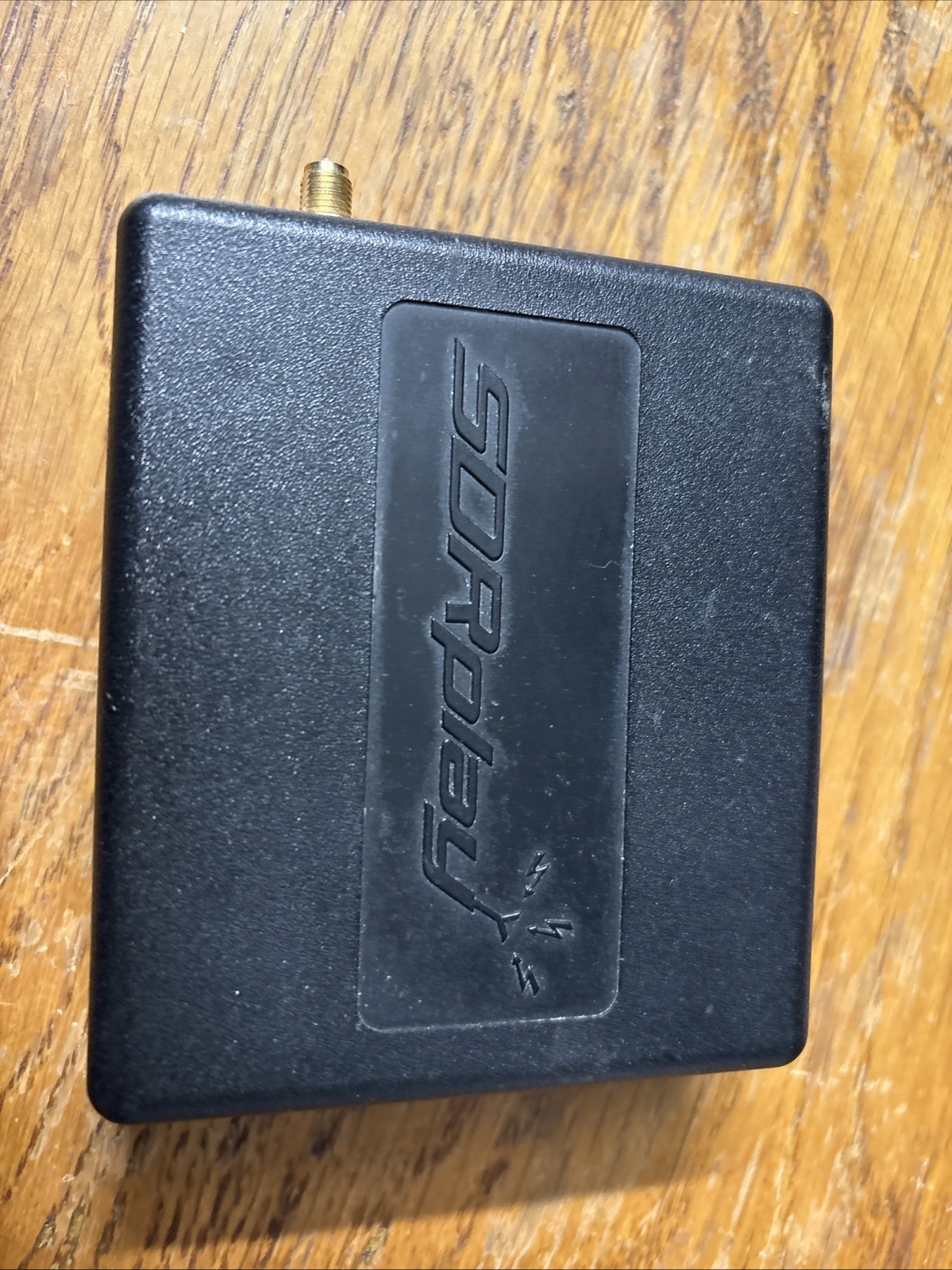

Photos from current listings. Actual item, color, and included accessories may vary.
Sdr Hardware Buying Guide
Software-defined radio turns a USB or Ethernet box into a tuner, demodulator, and spectrum analyzer whose limits are set by ADC resolution, sample rate, and front-end filtering. Buyers who overspend on gigahertz coverage but ignore dynamic range end up with a receiver that overloads near strong FM or cellular transmitters. Pick the architecture first — direct-sampling HF, 8-bit VHF/UHF dongle, or 12/14-bit wideband SDR — then match the antenna and software chain to it.
Key takeaways
- ADC bit depth sets dynamic range: 8-bit dongles like RTL-SDR handle strong-signal rejection poorly, while 12- and 14-bit SDRs (Airspy, SDRplay) resolve weak signals beside strong local stations.
- Instantaneous bandwidth is capped by USB or Ethernet throughput: USB 2.0 limits 8-bit dongles to ~2.4-3.2 MHz, USB 3.0 enables 10-20 MHz, and Gigabit Ethernet supports 50+ MHz on higher-end radios.
- HF reception below 30 MHz needs either a direct-sampling front end or an upconverter; most cheap RTL-SDR dongles tune only 24 MHz-1.7 GHz natively.
At a glance
- Category
- Ham Radio Equipment
- Last updated
- Nov 25, 2026
Current offers
Highlights
- ADC bit depth sets dynamic range: 8-bit dongles like RTL-SDR handle strong-signal rejection poorly, while 12- and 14-bit SDRs (Airspy, SDRplay) resolve weak signals beside strong local stations.
- Instantaneous bandwidth is capped by USB or Ethernet throughput: USB 2.0 limits 8-bit dongles to ~2.4-3.2 MHz, USB 3.0 enables 10-20 MHz, and Gigabit Ethernet supports 50+ MHz on higher-end radios.
- HF reception below 30 MHz needs either a direct-sampling front end or an upconverter; most cheap RTL-SDR dongles tune only 24 MHz-1.7 GHz natively.
- Front-end filtering and shielding separate tiers: TCXO frequency stability (±0.5 ppm vs ±50 ppm), bandpass filters, and metal enclosures determine drift and interference rejection.
Best use cases
- Best fit: scanning local public-safety, aviation, and weather channels at 118-470 MHz with an 8-bit RTL-SDR and a discone antenna; skip 14-bit SDRs unless you need weak-signal work.
- Best fit: HF shortwave and amateur band monitoring with a direct-sampling SDR (e.g., SDRplay RSP or Airspy HF+) and a long-wire or magnetic loop antenna; an upconverter plus RTL-SDR is the budget alternative.
- Best fit: wideband spectrum analysis, ADS-B tracking, and multi-channel decoding at 10+ MHz with a USB 3.0 12/14-bit SDR; avoid USB 2.0 dongles if you need more than 3.2 MHz of visible bandwidth.
- Wrong fit: transmitting or general-coverage transceive work — SDR hardware is receive-only unless paired with a separate transceiver or a dedicated SDR transceiver platform.
Buying tips
- Check ADC resolution and sample rate together — 8-bit at 3.2 MHz suits casual scanning; 12-bit at 10 MHz or 14-bit at 20 MHz is the threshold for weak-signal and wideband work.
- Confirm frequency coverage natively includes your target band; below 30 MHz requires direct sampling or an upconverter, and above 1.7 GHz requires a downconverter or a higher-tier SDR.
- Prioritize TCXO stability (±0.5 ppm or better) and a metal enclosure for drift-free tuning and interference rejection in dense RF environments.
Specs
| ADC Resolution | 8-bit / 12-bit / 14-bit |
|---|---|
| Frequency Range | HF direct-sample vs 24 MHz-1.7 GHz |
| Instant Bandwidth | 2.4-3.2 MHz USB 2.0 / 10-20 MHz USB 3.0 |
| Front End | Direct sampling / upconverter / filtered |
Related searches
What to check before buying
- Measure your antenna space and mounting options: outdoor discone or dipole for VHF/UHF, long wire or loop for HF; indoor reception is severely compromised by building attenuation.
- Verify host interface and power: USB 2.0 vs USB 3.0 ports, powered hubs for multiple SDRs, and Ethernet for networked wideband radios.
- Check software compatibility: SDR# for Windows, GQRX/SDR++ for Linux/macOS, SDRangel for wideband decoding; confirm driver support (Zadig for RTL-SDR on Windows).
- Plan for filtering: FM broadcast notch filters, bandpass filters, and LNAs prevent front-end overload in urban RF environments.
FAQ
Data sources: eBay / Amazon listings and product attribute feeds. Updated Nov 25, 2026.
Some links on this page are affiliate links. If you buy after clicking one, we may earn a commission at no extra cost to you. This does not change which products appear here or their order. Affiliate disclosure.