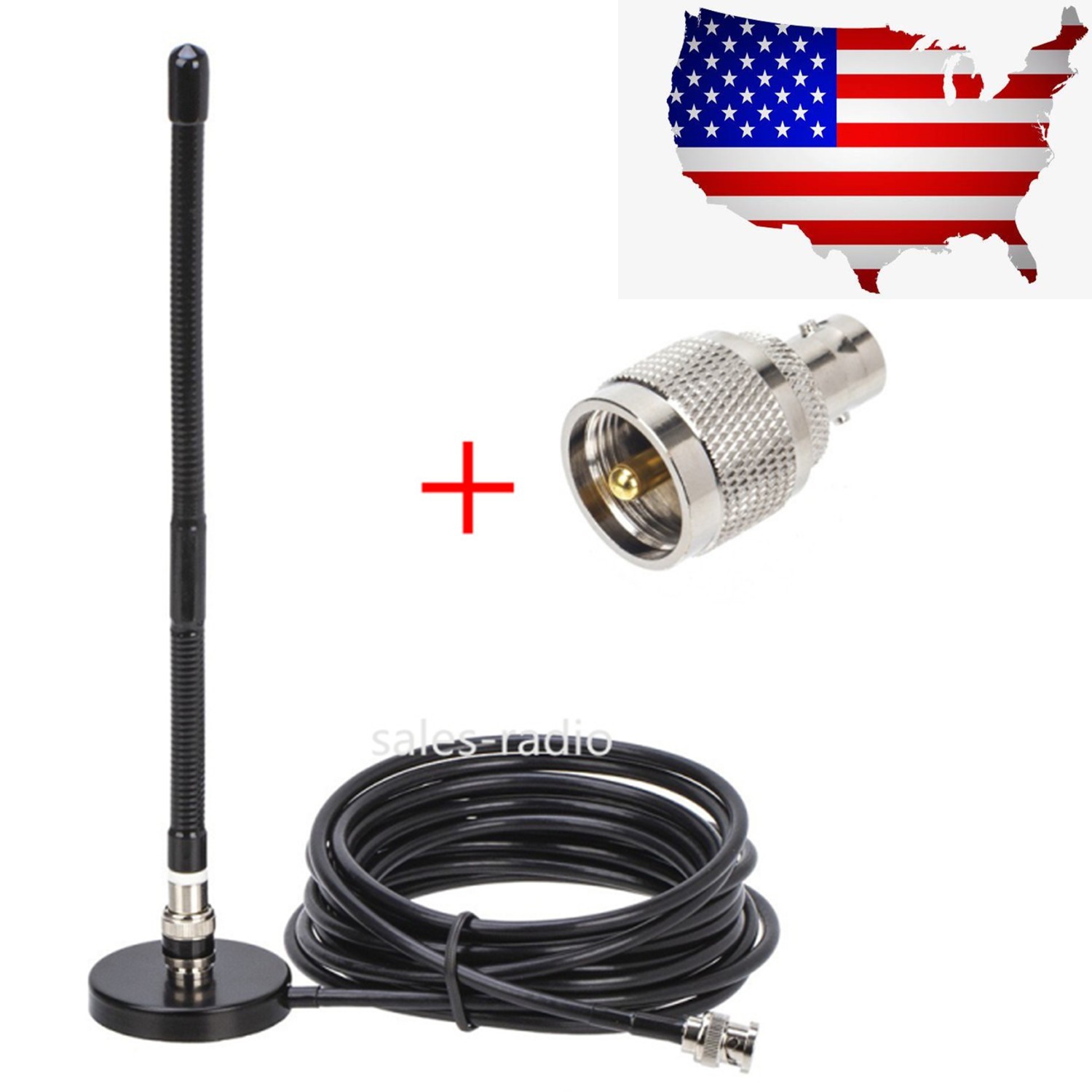

Photos from current listings. Actual item, color, and included accessories may vary.
Antenna Whip Buying Guide
An antenna whip is the flexible, often stainless-steel radiating element used for mobile and portable ham/CB radio communication. The primary trade-off is length versus durability: longer whips (48–102 inches) deliver lower takeoff angles and better ground-plane efficiency, while shorter loaded whips sacrifice some gain for parking-garage and daily-driving practicality. The clear decision rule: choose a full-length quarter-wave whip if you can tolerate height and route a solid ground, and only buy a short loaded whip when physical clearance forces it.
Median $30.24
Key takeaways
- Whip material grade separates durable from disposable: 17-7 PH stainless steel resists kinking and fatigue far better than 304 stainless or carbon-steel whips that bend permanently after one parking-garage strike.
- Base-load vs center-load vs top-load changes efficiency: a base-loaded 27 MHz whip (like the Procomm JBC1500) keeps the coil below the roof line for weather protection but loses some radiating length versus a center-loaded design.
- Connector standard dictates install: BNC male (as on 27 MHz magnetic-base sets) mates with BNC female radio ports, while UHF PL-259/SO-239 is the standard for most mobile ham transceivers — mismatches require adapters that add loss.
At a glance
- Category
- Ham Radio Antennas
- Last updated
- Nov 25, 2026
Current offers
Highlights
- Whip material grade separates durable from disposable: 17-7 PH stainless steel resists kinking and fatigue far better than 304 stainless or carbon-steel whips that bend permanently after one parking-garage strike.
- Base-load vs center-load vs top-load changes efficiency: a base-loaded 27 MHz whip (like the Procomm JBC1500) keeps the coil below the roof line for weather protection but loses some radiating length versus a center-loaded design.
- Connector standard dictates install: BNC male (as on 27 MHz magnetic-base sets) mates with BNC female radio ports, while UHF PL-259/SO-239 is the standard for most mobile ham transceivers — mismatches require adapters that add loss.
- Mount type is the real durability pivot: a magnetic base with a 3–5 inch magnet and rubber boot grips at highway speed, but a permanent NMO hole-mount with a reinforced whip is the only configuration rated for sustained 70+ mph and brush strikes.
Best use cases
- Best fit — daily truck/van driver: choose a 48–54 inch stainless whip with a heavy-duty magnetic or NMO mount matched to your radio's connector; skip 30-inch stubby whips that compromise 27 MHz efficiency.
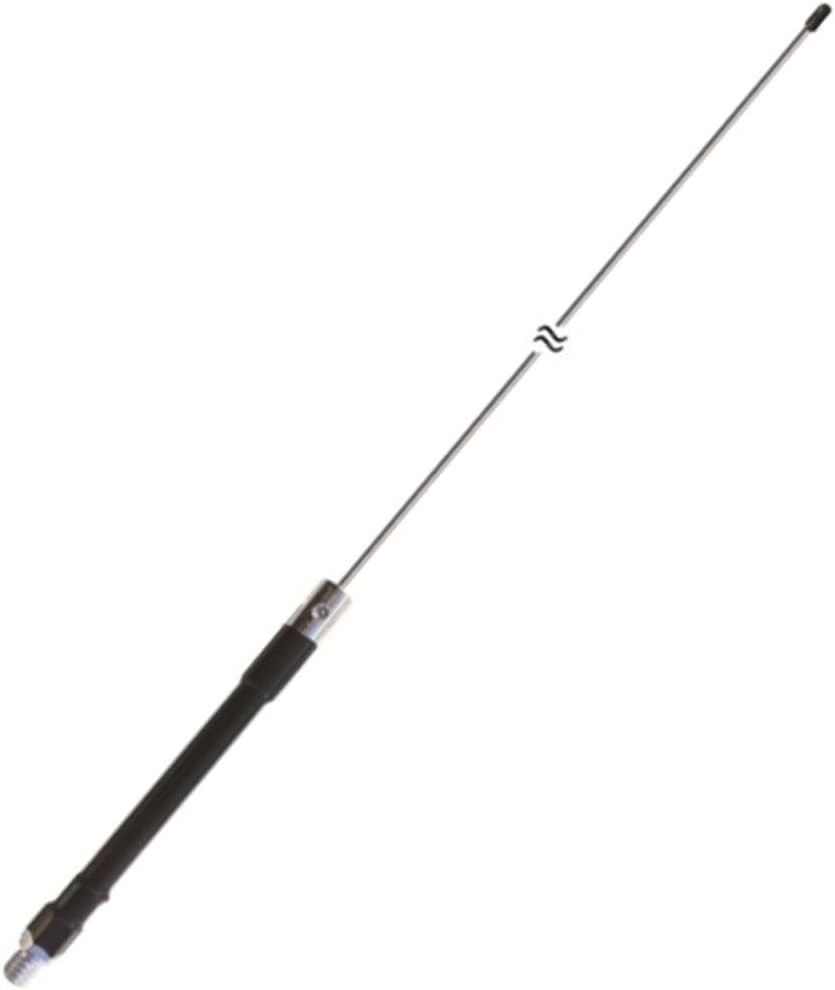
- Best fit — weekend off-roader: pick a 102-inch stainless steel whip on a spring mount for maximum ground-plane performance and branch deflection; skip base-loaded short whips if low-hanging trees are routine.
- Wrong fit — garage-kept sedan with 7-foot clearance: a full quarter-wave whip will strike every entry; a 27 MHz short loaded whip (18–36 inch) or a glass-mount is the only workable configuration, accepting reduced range.
- Wrong fit — handheld-only operator: a roof magnetic whip outperforms a rubber duck, but only if the handheld has a removable BNC/SMA antenna; skip whip purchases for radios with fixed antennas.
Buying tips
- Match whip length to band: 27 MHz CB whips run 48–102 inches for quarter-wave efficiency; 2 m/70 cm ham whips run 19–38 inches — buying a CB-length whip for VHF/UHF creates a poor SWR match.
- Verify connector gender and standard before ordering: BNC male whip to BNC female radio, or UHF PL-259 to SO-239; each adapter in the chain adds roughly 0.3–0.5 dB loss.
- Choose 17-7 PH stainless over 304 stainless for any whip that will hit branches or garage doors; the precipitation-hardened alloy holds shape where 304 takes a permanent set.
- For magnetic mounts, the magnet diameter and pull rating matter more than listed wattage: a 4.7-inch magnet with a rubber boot is the practical minimum for highway-speed stability with a 54-inch whip.
Specs
| Whip Material | 17-7 PH vs 304 stainless |
|---|---|
| Whip Length | 19–102 in (band-dependent) |
| Load Position | Base / center / top loaded |
| Mount Type | Magnetic / NMO / lip / glass |
Related searches
What to check before buying
- Measure your garage, carport, or drive-through clearance: a 54-inch whip on a roof mount adds roughly 55–60 inches to vehicle height — confirm you clear it before choosing a full-length option.
- Identify your radio's antenna connector (BNC, SMA, PL-259/SO-239) and whether the antenna jack is removable — fixed-antenna handhelds cannot accept a whip.
- Confirm a ground plane exists: magnetic and NMO mounts need a metal roof or trunk lid at least 12×12 inches; glass, aluminum body panels, and plastic beds require a no-ground-plane (NGP) whip.
- Check mount surface condition and cable route: a clean, flat steel roof holds a magnetic base at speed, while rust, curvature, or a sunroof forces an NMO hole-mount or lip mount instead.
FAQ
Data sources: eBay / Amazon listings and product attribute feeds. Updated Nov 25, 2026.
Some links on this page are affiliate links. If you buy after clicking one, we may earn a commission at no extra cost to you. This does not change which products appear here or their order. Affiliate disclosure.