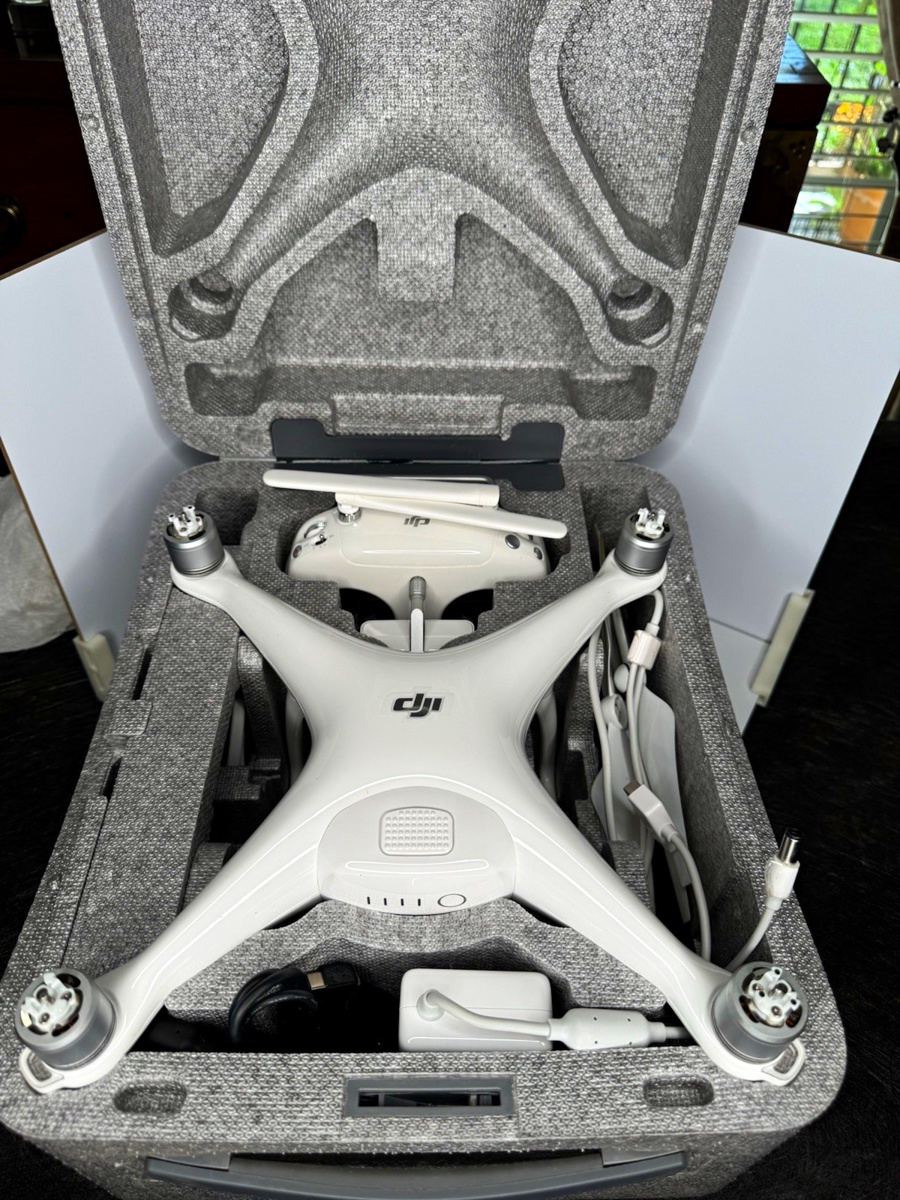

Photos from current listings. Actual item, color, and included accessories may vary.
Remote Control Drone Buying Guide
A remote control drone is a ready-to-fly quadcopter or hexacopter piloted by a dedicated handheld transmitter, ranging from toy-grade optical-flow models to GPS-stabilized camera drones. The core trade-off is control-link and sensor quality versus price: GPS/GLONASS positioning and brushless motors deliver stable, recoverable flight, while cheap models rely on optical flow and brushed motors that drift in wind. The decision rule: buy a GPS-equipped brushless drone with a documented flight time and real camera sensor for outdoor use, and skip any model that lists only '8K' marketing with no GPS or gimbal spec.
Key takeaways
- GPS/GLONASS positioning enables return-to-home and wind resistance; optical-flow-only drones drift and cannot hold position without visual texture.
- Brushless motors outlast brushed motors by roughly 5-10x, run cooler, and produce less vibration for cleaner video.
- True stabilized 4K requires a 3-axis mechanical gimbal; electronic image stabilization (EIS) on a fixed mount yields softer, jello-prone footage.
At a glance
- Category
- Drones & Consumer Robotics
- Last updated
- Nov 28, 2026
Current offers
Highlights
- GPS/GLONASS positioning enables return-to-home and wind resistance; optical-flow-only drones drift and cannot hold position without visual texture.
- Brushless motors outlast brushed motors by roughly 5-10x, run cooler, and produce less vibration for cleaner video.
- True stabilized 4K requires a 3-axis mechanical gimbal; electronic image stabilization (EIS) on a fixed mount yields softer, jello-prone footage.
- Sub-250g drones (like DJI Mini 2 at 249g) avoid many registration requirements, while larger models demand registration and line-of-sight rules.
Best use cases
- Best for outdoor wind and distance: a GPS brushless drone with return-to-home (e.g., DJI Mini 2 class) — skip optical-flow toys that drift beyond 50m.
- Best for beginner indoor practice: a sub-250g optical-flow drone with propeller guards — skip GPS models indoors where satellite lock fails.
- Best for serious aerial video: a 3-axis gimbal drone with 4K sensor and documented flight time — skip dual-camera '8K' claims without gimbal specs.
- Wrong fit: underwater exploration — that requires a tethered ROV like Chasing Dory, not a flying remote control drone.
Buying tips
- Check weight: under 250g avoids registration in most regions; above 250g requires registration and often a remote ID module.
- Verify flight time claims against battery capacity (mAh) and drone weight — 30+ minutes requires a 2000mAh+ battery on a sub-250g airframe.
- Insist on GPS + GLONASS (or Galileo) for outdoor use; optical flow alone is indoor-only and cannot return home.
- Confirm the transmitter includes a phone/tablet mount and that the app supports your OS version — older apps may not run on current phones.
Specs
| Positioning | GPS+GLONASS vs Optical Flow |
|---|---|
| Motor Type | Brushless vs Brushed |
| Camera Gimbal | 3-axis mechanical vs EIS fixed |
| Weight Class | Sub-250g vs 250g+ registered |
Related searches
What to check before buying
- Airspace: check local rules for altitude ceilings, no-fly zones, and whether registration is required for your drone's weight class.
- Phone compatibility: ensure the control app runs on your iOS/Android version and the transmitter clamp fits your phone size.
- Wind environment: if flying near coast or open fields, choose a GPS drone rated for 5+ m/s wind resistance; toy drones are calm-air only.
- Spare parts: confirm propellers and batteries are user-replaceable and available — proprietary batteries can age out the drone.
FAQ
Data sources: eBay / Amazon listings and product attribute feeds. Updated Nov 28, 2026.
Some links on this page are affiliate links. If you buy after clicking one, we may earn a commission at no extra cost to you. This does not change which products appear here or their order. Affiliate disclosure.