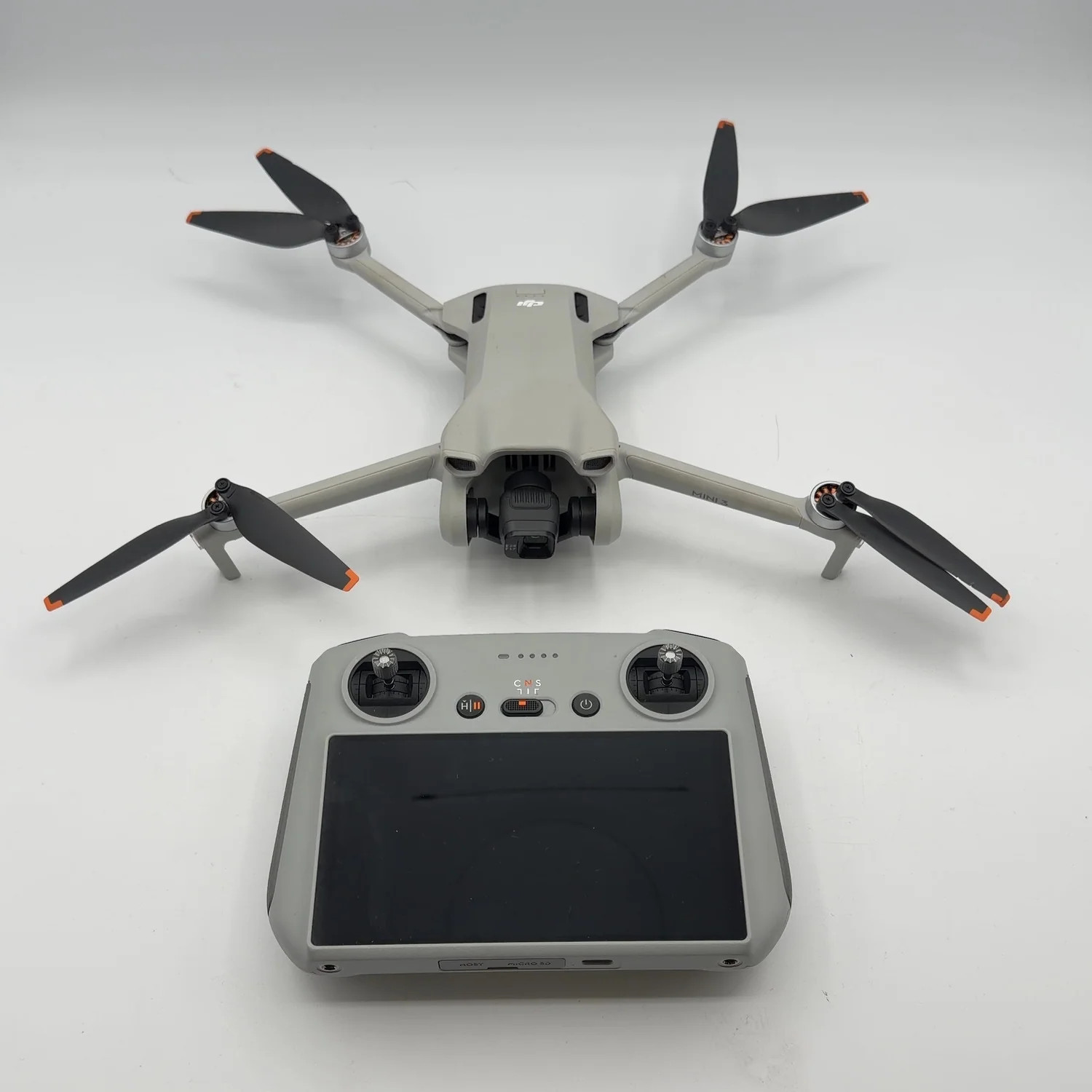

Photos from current listings. Actual item, color, and included accessories may vary.
DJI Mini 3 Propeller Buying Guide
Replacement propellers for the DJI Mini 3 series are low-mass, high-RPM polymer airfoils whose stiffness and hub fit determine flight stability, noise, and motor load. The decisive trade-off is OEM-grade glass-filled nylon with precision hub tolerances versus generic molded props that flex, vibrate, or seat loosely. Buy OEM-spec or proven third-party props matched to your exact model — Mini 3, Mini 3 Pro, or Mini 4 Pro — and skip unbranded sets with no stated material grade.
Key takeaways
- OEM props use glass-fiber-reinforced nylon for blade stiffness at high RPM; generic ABS/PP props flex and raise vibration and motor heat.
- Mini 3, Mini 3 Pro, and Mini 4 Pro share the same quick-release hub mount, but blade pitch and length differ slightly by model — match prop to airframe.
- Props are sold in pairs (CW + CCW) or full sets of four; a mismatched pair causes yaw trim and IMU drift warnings.
At a glance
- Category
- Drones & Consumer Robotics
- Last updated
- Nov 28, 2026
Current offers
Highlights
- OEM props use glass-fiber-reinforced nylon for blade stiffness at high RPM; generic ABS/PP props flex and raise vibration and motor heat.
- Mini 3, Mini 3 Pro, and Mini 4 Pro share the same quick-release hub mount, but blade pitch and length differ slightly by model — match prop to airframe.
- Props are sold in pairs (CW + CCW) or full sets of four; a mismatched pair causes yaw trim and IMU drift warnings.
- Low-noise design relies on precise blade sweep and hub balance; poorly molded aftermarket props increase acoustic signature and shorten motor life.
Best use cases
- Best fit: replacing a single chipped or bent prop after a mild tip-over — buy the correct CW/CCW pair for your exact Mini 3 variant, not a generic set.
- Best fit: keeping a spare full set of four in the fly-more kit for field swaps; OEM glass-filled nylon props hold balance after repeated mounting.
- Wrong fit: buying the cheapest unbranded multi-pack for a camera drone used for paid or precision work — vibration degrades gimbal footage and GPS hover stability.
- Skip: props listed only as 'Mini 3 compatible' with no CW/CCW marking or material spec — hub fit and blade stiffness are unverifiable.
Buying tips
- Count blades and check hub shape: Mini 3 series uses two-blade quick-release props with a specific keyed hub — do not force a prop that seats with resistance.
- Buy in CW/CCW pairs or full sets of four; single props are rarely sold and mixing rotation directions causes unstable yaw.
- Prefer props stating glass-fiber-reinforced nylon and model-specific fit (Mini 3 vs Mini 3 Pro vs Mini 4 Pro); generic 'Mini' props may have wrong pitch.
- After any prop strike, replace the affected pair and inspect motor shafts for bends — a bent shaft destroys new props quickly regardless of grade.
Specs
| Material Grade | Glass-filled nylon vs generic ABS/PP |
|---|---|
| Hub Mount | Quick-release keyed, model-specific |
| Set Configuration | CW/CCW pairs or full set of 4 |
| Airframe Fit | Mini 3 / Mini 3 Pro / Mini 4 Pro |
Related searches
What to check before buying
- Confirm your exact airframe: Mini 3, Mini 3 Pro, or Mini 4 Pro — props are model-specific even though hubs look similar.
- Check hub keying and blade count on your removed prop before ordering; match CW/CCW markings to motor positions.
- Verify the set includes both rotation directions (or order two pairs) so you can replace a full side after damage.
- Inspect motor shafts and prop mounts for play or grit before installing new props — debris causes vibration independent of prop quality.
FAQ
Data sources: eBay / Amazon listings and product attribute feeds. Updated Nov 28, 2026.
Some links on this page are affiliate links. If you buy after clicking one, we may earn a commission at no extra cost to you. This does not change which products appear here or their order. Affiliate disclosure.