
Photos from current listings. Actual item, color, and included accessories may vary.
Aerial Photography Drone Buying Guide
Aerial photography drones are camera-first quadcopters whose image quality and stability are set by sensor size, gimbal mechanics, and transmission link, not by marketing camera labels. The core trade-off is between sub-250g foldable convenience with small sensors and larger GPS/brushless platforms carrying 1-inch or Micro Four Thirds payloads. Buy a drone whose sensor, gimbal axes, and control link match your output format; skip toy-grade Wi-Fi models with optical-flow-only positioning for serious photo work.
Median $110.48
Key takeaways
- Sensor size governs image quality: 1/2.3-inch to 1-inch CMOS for consumer photo drones, Micro Four Thirds on prosumer models; '8K' labels on sub-250g drones usually mean interpolated or upscaled output, not native resolution.
- Gimbal axes determine stability: 3-axis mechanical gimbals deliver shake-free stills and smooth video; 2-axis or EIS-only stabilization crops the frame and fails in low light.
- Positioning architecture separates tiers: GPS + GLONASS with downward vision and obstacle sensing enables reliable hover and return-to-home; optical-flow-only models drift with wind and lack true GPS hold.
At a glance
- Category
- Drones & Consumer Robotics
- Last updated
- Nov 28, 2026
Current offers
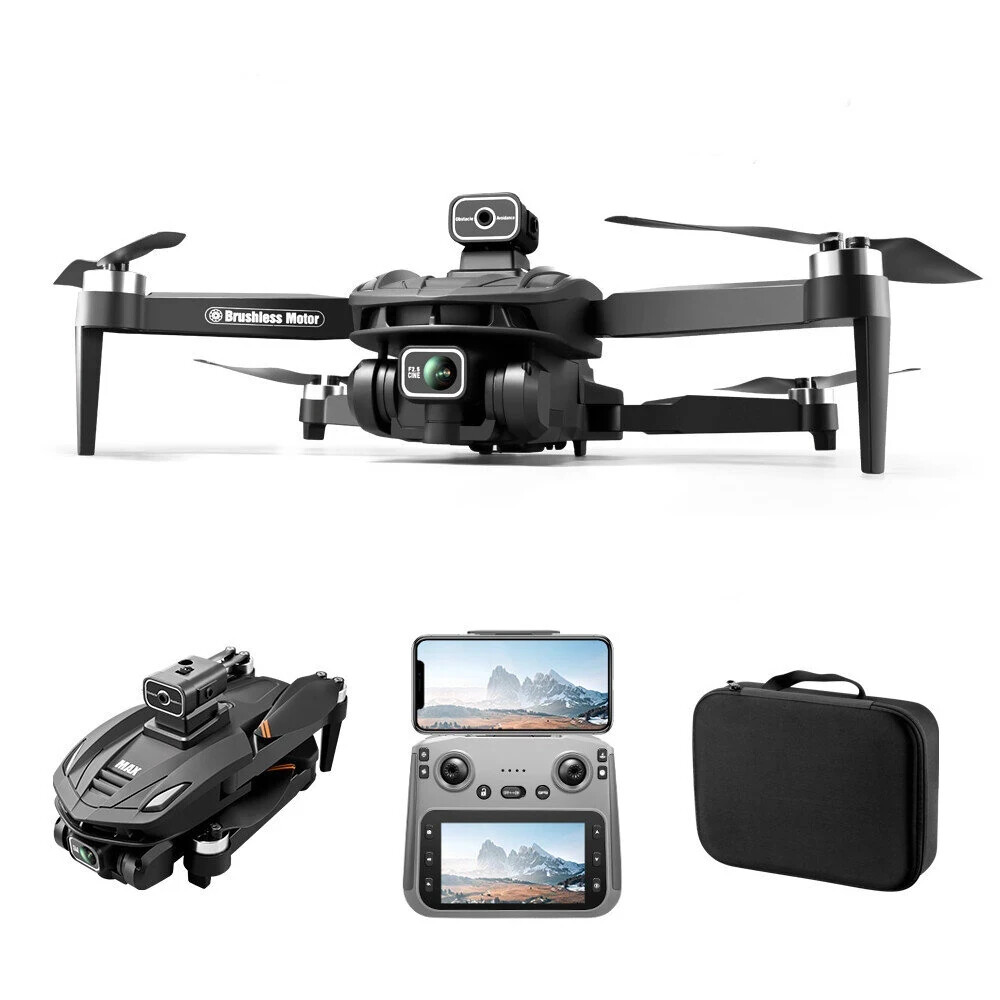 V168 Max Drone 8K 5G GPS Professional HD Aerial Photography Dual Camera Obstacle$139.98View on eBay
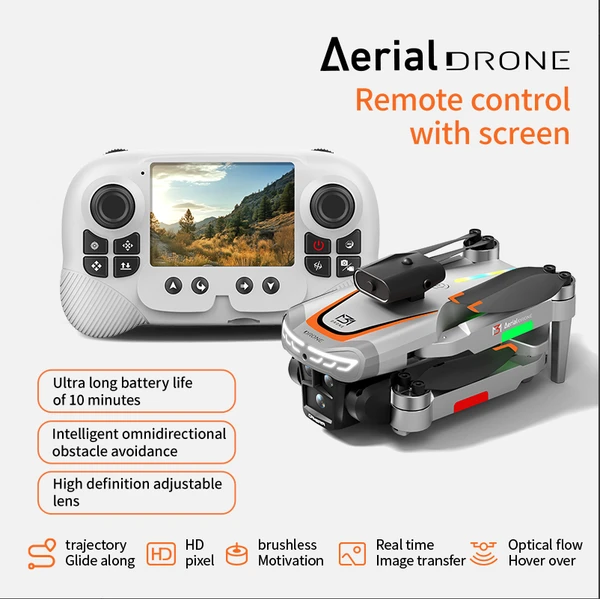 Smart Flight Aerial Photography X2 Drone | Dual Cameras, Brushless Motors, Stable Optical Flow Hovering, Dazzling Lights, Easy Operation, For Beginners, Perfect As A Holiday Gift$80.99View on Mallflare
Highlights
- Sensor size governs image quality: 1/2.3-inch to 1-inch CMOS for consumer photo drones, Micro Four Thirds on prosumer models; '8K' labels on sub-250g drones usually mean interpolated or upscaled output, not native resolution.
- Gimbal axes determine stability: 3-axis mechanical gimbals deliver shake-free stills and smooth video; 2-axis or EIS-only stabilization crops the frame and fails in low light.
- Positioning architecture separates tiers: GPS + GLONASS with downward vision and obstacle sensing enables reliable hover and return-to-home; optical-flow-only models drift with wind and lack true GPS hold.
- Transmission link caps range and latency: OcuSync-style digital links reach several kilometers with low latency; Wi-Fi links typically drop beyond a few hundred meters and suffer interference in urban areas.
Best use cases
- Best fit: travel and hiking photographers should pick a sub-250g foldable with a 1/2.3-inch or larger sensor and 3-axis gimbal to avoid registration in most regions and stay carry-on friendly.
- Best fit: real-estate and commercial stills need a 1-inch sensor model with GPS hold, obstacle sensing, and RAW capture for dynamic range and reliable repeatable flight paths.
- Wrong fit: cinematic low-light work demands a Micro Four Thirds or larger sensor; skip sub-250g drones whose small pixels and high ISO noise ruin twilight footage.
- Wrong fit: beginners should avoid GPS-free toy drones with optical-flow-only hovering; they drift in wind, lack return-to-home, and teach bad habits. Choose a brushless GPS model with beginner modes.
Buying tips
- Match sensor to output: 1/2.3-inch CMOS suits social media and 4K video; 1-inch CMOS gives cleaner stills and better dynamic range; Micro Four Thirds delivers professional RAW stills and 10-bit video.
- Check gimbal spec before camera labels: 3-axis mechanical gimbal is mandatory for sharp long-exposure stills and smooth pans; EIS-only systems crop edges and cannot stabilize stills.
- Verify positioning hardware: GPS + GLONASS plus downward vision and obstacle sensing for stable hover and return-to-home; optical-flow-only drones lack GPS hold and drift in open wind.
- Choose digital transmission over Wi-Fi for range and latency: OcuSync-class links hold HD video at multi-kilometer distances; Wi-Fi control typically fails beyond a few hundred meters in interference.
Specs
| Sensor Class | 1/2.3" to 1" CMOS / MFT |
|---|---|
| Gimbal Axes | 3-axis mechanical vs 2-axis/EIS |
| Positioning | GPS+vision vs optical-flow only |
| Control Link | Digital OcuSync-class vs Wi-Fi |
Related searches
What to check before buying
- Confirm registration threshold for your region: sub-250g drones often avoid registration, while 250g-and-up models require marking and remote ID in many jurisdictions.
- Verify your phone or tablet fits the controller mount and runs the required app; some digital-link systems require specific OS versions and cable types.
- Check battery capacity in watt-hours against airline carry-on limits (commonly 100Wh); spare batteries must travel in cabin baggage, not checked luggage.
- Confirm propeller and gimbal clearance for your landing area, and that the drone's compass is calibrated away from reinforced concrete and metal structures.
FAQ
Data sources: eBay / Amazon listings and product attribute feeds. Updated Nov 28, 2026.
Some links on this page are affiliate links. If you buy after clicking one, we may earn a commission at no extra cost to you. This does not change which products appear here or their order. Affiliate disclosure.