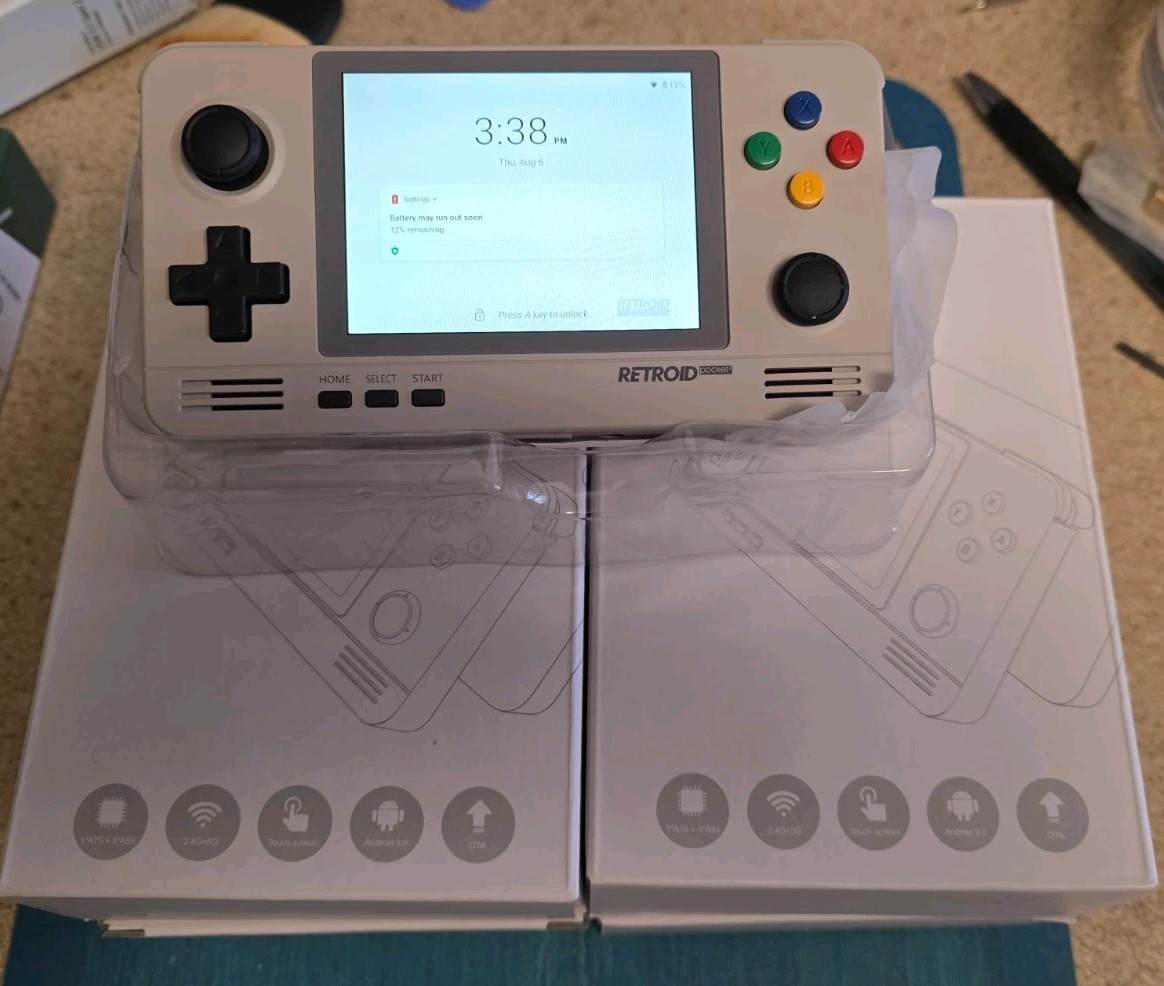

Photos from current listings. Actual item, color, and included accessories may vary.
Retroid Pocket 2 Buying Guide
The Retroid Pocket 2 is a compact Android-based handheld that emulates systems up to Dreamcast, PSP, and Nintendo 64, using a clamshell-style dual-stick layout. The critical trade-off is chipset generation: the original Pocket 2 uses a slower quad-core with weaker GPU and micro-USB, while the Pocket 2+ upgrades to a faster CPU/GPU, 2GB RAM, and USB-C. Buy the 2+ for reliable N64/PSP/Dreamcast performance; the base 2 only suits 8/16-bit and light 32-bit emulation.
Key takeaways
- Pocket 2+ uses a faster quad-core ARM CPU and upgraded GPU versus the original Pocket 2, raising N64 and PSP frame rates substantially.
- RAM tier separates models: 1GB in the base Pocket 2 versus 2GB in the Pocket 2+, which reduces stutter in Android and heavier emulators.
- Charging and data differ by generation: original Pocket 2 uses micro-USB, while the Pocket 2+ moves to USB-C for modern cables and faster charging.
At a glance
- Category
- Console & Handheld Hardware
- Status
- Listings available
- Last updated
- Nov 29, 2026
Current offers
Highlights
- Pocket 2+ uses a faster quad-core ARM CPU and upgraded GPU versus the original Pocket 2, raising N64 and PSP frame rates substantially.
- RAM tier separates models: 1GB in the base Pocket 2 versus 2GB in the Pocket 2+, which reduces stutter in Android and heavier emulators.
- Charging and data differ by generation: original Pocket 2 uses micro-USB, while the Pocket 2+ moves to USB-C for modern cables and faster charging.
- Dual analog sticks, a 3.5-inch 640x480 IPS display, and Android OS define both models; the 4:3 panel suits retro consoles but letterboxes 16:9 PSP content.
Best use cases
- Best fit: buy the Pocket 2+ (2GB) if you want Dreamcast, PSP, and N64 titles at playable speeds with USB-C charging.
- Right fit: buy the original Pocket 2 only for NES, SNES, Genesis, and Game Boy generations where its lower GPU and 1GB RAM are sufficient.
- Wrong fit: skip both if you expect smooth GameCube, Wii, PS2, or 3DS emulation—the chipset is far below that threshold.
- Wrong fit: skip the base Pocket 2 if you rely on USB-C cables or need 2GB RAM for Android multitasking and heavier frontends.
Buying tips
- Prioritize the 2+ variant: the 2GB RAM and upgraded GPU are the difference between stuttering and playable N64/PSP performance.
- Match emulator to panel: the 640x480 4:3 screen is ideal for retro consoles; PSP's 16:9 output will letterbox with black bars.
- Confirm the charging port before buying: micro-USB on the original Pocket 2 means carrying a legacy cable; the 2+ uses USB-C.
- Check the RAM badge on the listing: 1GB denotes the base Pocket 2, 2GB denotes the Pocket 2+; the RAM figure is the fastest model identifier.
Specs
| Model Tier | Pocket 2 (1GB) vs Pocket 2+ (2GB) |
|---|---|
| Charging Port | Micro-USB (2) / USB-C (2+) |
| Display | 3.5-inch 640x480 IPS, 4:3 |
| Emulation Ceiling | Up to Dreamcast/PSP/N64 (2+) |
Alternatives to compare
Related searches
What to check before buying
- Verify the listing states Pocket 2+ or 2GB RAM if you need the upgraded chipset and USB-C.
- Confirm the micro-USB versus USB-C port matches the cables and chargers you already own.
- Check that the 3.5-inch 640x480 screen size and 4:3 aspect ratio suit your target consoles and hands.
- Ensure you have a microSD card ready, since ROM storage and Android apps require expandable storage.
FAQ
Data sources: eBay / Amazon listings and product attribute feeds. Updated Nov 29, 2026.
Some links on this page are affiliate links. If you buy after clicking one, we may earn a commission at no extra cost to you. This does not change which products appear here or their order. Affiliate disclosure.