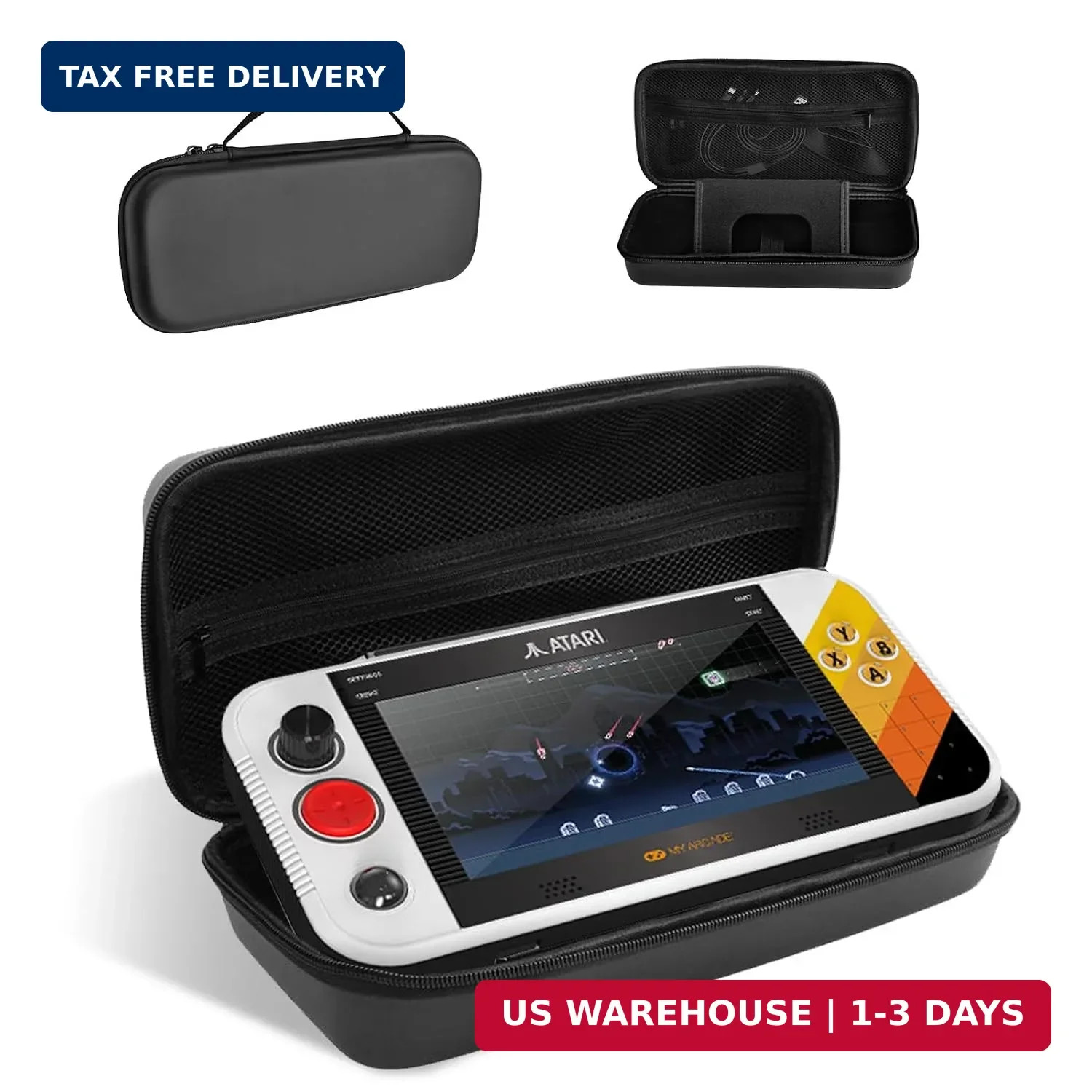

Photos from current listings. Actual item, color, and included accessories may vary.
Retro Arcade Console Buying Guide
A retro arcade console is only as good as the emulation chip inside and the display you actually look at. Shoppers routinely overpay for a game count while ignoring screen quality, button feel, and whether the unit supports save states or TV output. Focus on architecture and build, not marketing numbers.
Processor Tier:ARM Cortex-A7 / RK3326 / RK3566Display Type:IPS 640x480 vs TN 320x240Battery Capacity:1500-3000 mAh, 3-6 hr runtimeTV Output:HDMI / composite / none
Typical price range$38.99 – $85.00
Median $62.00
Key takeaways
- Handheld retro consoles split into two tiers: Allwinner/Ingenic ARM chips for 8- and 16-bit systems, and Rockchip RK3326/RK3566 for smoother 32-bit and arcade emulation.
- An IPS panel with at least 640x480 resolution is the practical floor; TN screens wash out at angles and blur fast arcade sprites.
- Game counts above a few thousand are almost always padded with duplicates, regional variants, and bootleg ROMs; the emulator cores matter more than the tally.
At a glance
- Category
- Console & Handheld Hardware
- Last updated
- Nov 29, 2026
Current offers
Highlights
- Handheld retro consoles split into two tiers: Allwinner/Ingenic ARM chips for 8- and 16-bit systems, and Rockchip RK3326/RK3566 for smoother 32-bit and arcade emulation.
- An IPS panel with at least 640x480 resolution is the practical floor; TN screens wash out at angles and blur fast arcade sprites.
- Game counts above a few thousand are almost always padded with duplicates, regional variants, and bootleg ROMs; the emulator cores matter more than the tally.
- Lithium-polymer batteries rated 1500-3000 mAh deliver roughly 3-6 hours depending on screen brightness and emulated system load.
Best use cases
- Best fit: a pocketable IPS handheld with 8/16-bit and arcade cores for commute or couch play — skip units with TN panels or no save-state support.
- Best fit: a TV-out console stick or dockable handheld for living-room multiplayer — choose a model with HDMI and two controller ports, not a screen-only handheld.
- Wrong fit: buying a high game-count handheld expecting flawless N64 or Dreamcast emulation — those systems demand RK3566-class chips and still stutter on many titles.
Buying tips
- Prioritize screen type and resolution over game count; an IPS 640x480 display outperforms a larger TN panel for sprite-based arcade titles.
- Check the emulator core list (FBA, MAME, Genesis Plus GX) rather than the advertised ROM total, which rarely reflects playable quality.
- Choose a chip tier by system: ARM Cortex-A7 for 8/16-bit, RK3326 for 32-bit and light arcade, RK3566 for Dreamcast and PSP-adjacent performance.
- Inspect battery capacity and charging standard; 1500 mAh is the minimum for a full evening, and USB-C charging is preferable to micro-USB for longevity.
Specs
| Processor Tier | ARM Cortex-A7 / RK3326 / RK3566 |
|---|---|
| Display Type | IPS 640x480 vs TN 320x240 |
| Battery Capacity | 1500-3000 mAh, 3-6 hr runtime |
| TV Output | HDMI / composite / none |
Related searches
What to check before buying
- Measure your hand span and pocket depth; handhelds range from credit-card size to 7-inch tablets, and a 5-inch screen is the practical ceiling for thumb reach.
- Confirm your TV has the matching output — HDMI for modern sets, composite AV only if you are using a CRT.
- Check the plug standard and voltage for your region; most handhelds ship with USB-C or micro-USB and need a 5V/1A charger.
- Verify whether a microSD card is included or required for adding ROMs, and check the maximum supported capacity (often 128GB or 256GB).
FAQ
Data sources: eBay / Amazon listings and product attribute feeds. Updated Nov 29, 2026.
Some links on this page are affiliate links. If you buy after clicking one, we may earn a commission at no extra cost to you. This does not change which products appear here or their order. Affiliate disclosure.