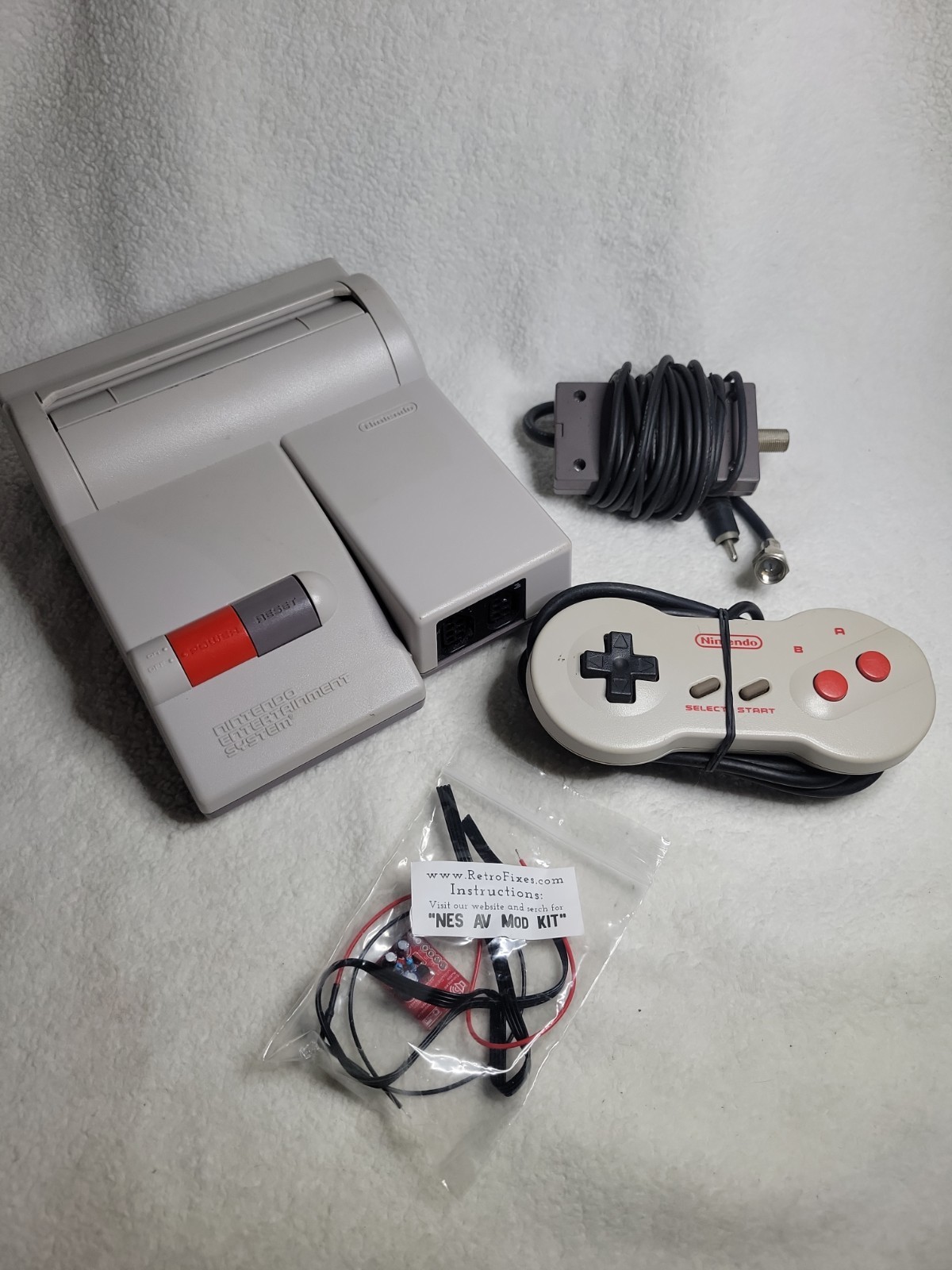

Photos from current listings. Actual item, color, and included accessories may vary.
Original Nintendo Buying Guide
The Original Nintendo segment covers the 8-bit NES home console and the Game Boy handheld, both defined by 1980s hardware with zero modern conveniences like HDMI or backlit screens. The core trade-off is buying a restored, connector-refurbished unit versus a tired original with a worn 72-pin connector or missing battery cover; a clean, tested unit with fresh pins or a rebuilt cartridge slot is the durable buy, while 'untested' or 'as-is' lots are parts donors.
Key takeaways
- NES front-loader uses a zero-insertion-force 72-pin cartridge connector that wears out and causes blinking-screen errors; top-loader uses a simpler slot and is more reliable.
- Game Boy (DMG-01) runs on 4x AA batteries with a non-backlit reflective STN LCD; no backlight or rechargeable battery exists in the original model.
- NES outputs composite AV (yellow/white RCA) via the multi-out port; RF-only hookup requires a manual channel-3/4 tuning and is the lowest-quality connection.
At a glance
- Category
- Console & Handheld Hardware
- Last updated
- Nov 29, 2026
Current offers
Highlights
- NES front-loader uses a zero-insertion-force 72-pin cartridge connector that wears out and causes blinking-screen errors; top-loader uses a simpler slot and is more reliable.
- Game Boy (DMG-01) runs on 4x AA batteries with a non-backlit reflective STN LCD; no backlight or rechargeable battery exists in the original model.
- NES outputs composite AV (yellow/white RCA) via the multi-out port; RF-only hookup requires a manual channel-3/4 tuning and is the lowest-quality connection.
- Top-loader models (NES-101) omit the front-loading mechanism and composite RCA jacks in favor of RF output only unless modified.
Best use cases
- Best fit: front-loader NES with a new 72-pin connector and OEM power supply for HDMI-less composite play on a CRT or upscaler; skip untested RF-only units.
- Best fit: Game Boy DMG-01 with clean battery contacts and a tested screen for cartridge-based portable play; skip lots with corrosion or missing battery covers.
- Best fit: top-loader NES for reliability-focused buyers who accept RF output or plan an AV mod; skip it if you need plug-and-play composite without modification.
- Wrong fit: buyers expecting HDMI, save states, or wireless controllers; original hardware requires an external upscaler or mod for modern TVs.
Buying tips
- Prioritize listings that state a replaced 72-pin connector or tested cartridge slot; the connector is the number-one failure point on front-loaders.
- Confirm the included power supply is the correct NES-002 AC adapter; generic 9V supplies with wrong polarity can damage the console.
- For Game Boy, verify the screen has no dead pixel lines or screen rot, and that the battery compartment is corrosion-free.
- Check that the console includes the original AV cable (or RF switch) and at least one OEM controller; missing hookups add real cost.
Specs
| Console Type | NES home console / Game Boy handheld |
|---|---|
| Video Output | Composite AV or RF (no HDMI) |
| Cartridge Connector | 72-pin ZIF (front) / slot (top) |
| Power Source | AC adapter (NES) / 4x AA (Game Boy) |
Related searches
What to check before buying
- Measure your TV inputs: composite RCA or RF only on original hardware; plan an AV-to-HDMI upscaler if using a modern display.
- Confirm cartridge region: NES and Game Boy are region-locked; NTSC-U cartridges require a North American console.
- Inspect battery compartment photos for Game Boy and controller battery contacts for corrosion before buying.
- Verify the listing specifies tested working status with a game cartridge, not just 'powers on'.
FAQ
Data sources: eBay / Amazon listings and product attribute feeds. Updated Nov 29, 2026.
Some links on this page are affiliate links. If you buy after clicking one, we may earn a commission at no extra cost to you. This does not change which products appear here or their order. Affiliate disclosure.