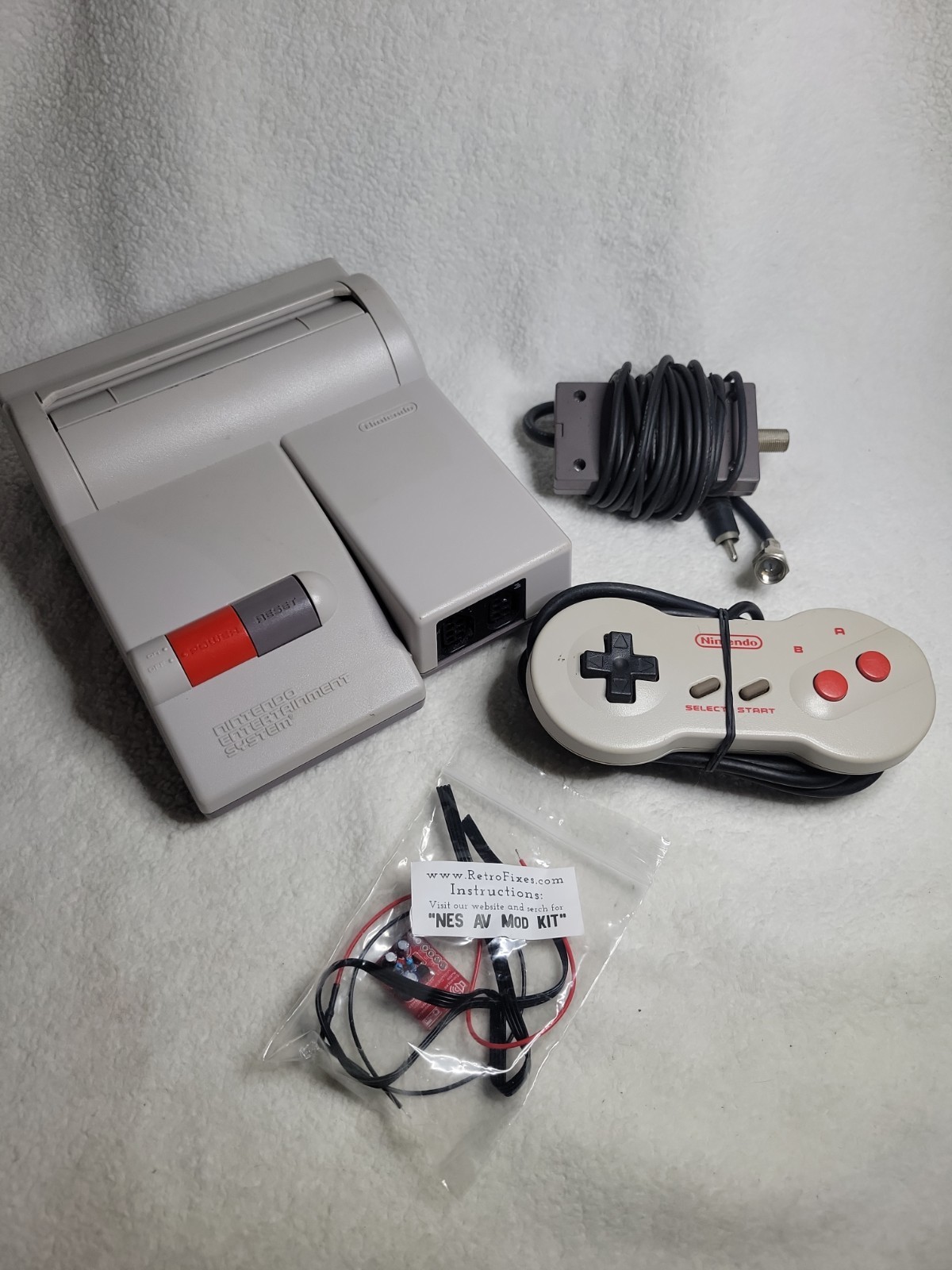

Photos from current listings. Actual item, color, and included accessories may vary.
Nes Loader Buying Guide
The NES loader category covers original front-loading NES consoles, top-loading NES-101 models, and modern plug-and-play mini consoles that play NES games. The core trade-off is between authentic hardware with aging 72-pin connectors and capacitors versus modern emulation with HDMI output and save states. Choose original hardware only if you accept refurbishment risk and composite video; choose a top-loader or mini for reliability and convenience.
Key takeaways
- Front-loader NES-001 uses a zero-insertion-force 72-pin connector that wears out and causes blinking screens; top-loader NES-101 uses a straight cart slot with far higher reliability.
- Top-loader NES-101 outputs only RF, not composite, so most units need an AV mod for clean video; front-loader has native composite RCA outputs.
- NES Classic Edition outputs HDMI at 720p with 30 built-in games, save states, and USB power; it does not accept original cartridges.
At a glance
- Category
- Console & Handheld Hardware
- Last updated
- Nov 29, 2026
Current offers
Highlights
- Front-loader NES-001 uses a zero-insertion-force 72-pin connector that wears out and causes blinking screens; top-loader NES-101 uses a straight cart slot with far higher reliability.
- Top-loader NES-101 outputs only RF, not composite, so most units need an AV mod for clean video; front-loader has native composite RCA outputs.
- NES Classic Edition outputs HDMI at 720p with 30 built-in games, save states, and USB power; it does not accept original cartridges.
- Original NES power supplies output 9V AC at 1.3A with a proprietary barrel; modern replacements must match AC output, not DC, to avoid damage.
Best use cases
- Best fit: buy a top-loader NES-101 with AV mod if you want original cartridge playback with minimal maintenance and composite output.
- Best fit: buy a NES Classic Edition if you want plug-and-play HDMI play, save states, and no cartridge or connector upkeep.
- Wrong fit: skip untested front-loader bundles with many games unless you can replace the 72-pin connector yourself; tested refurbished units are safer.
- Wrong fit: skip a stock top-loader without AV mod if your TV lacks RF input; you will need an RF demodulator or the mod.
Buying tips
- Budget for a new 72-pin connector on any front-loader NES-001; original connectors are 30+ years old and cause blinking or no-boot.
- Choose a top-loader NES-101 for cartridge reliability; its straight slot avoids the bending and wear of the front-loader mechanism.
- For NES Classic Edition, confirm it includes an HDMI cable and USB power adapter; the console only has an HDMI port and micro-USB power.
- Match the power supply to the console: NES-001 and NES-101 require 9V AC, not 9V DC, or the console will not power correctly.
Specs
| Console Type | Front-loader / Top-loader / Mini |
|---|---|
| Video Output | Composite / RF / HDMI |
| Cartridge Support | Original carts / Built-in only |
| Power Input | 9V AC (original) / 5V USB (mini) |
Related searches
What to check before buying
- Measure your TV inputs: front-loader needs composite RCA; stock top-loader needs RF coaxial; NES Classic needs HDMI.
- Check controller compatibility: original NES uses 7-pin proprietary ports; NES Classic uses Wii-style remote ports, so original controllers need adapters.
- Confirm the power outlet voltage: original NES uses a 120V AC adapter for North America; use a step-down converter in 220-240V regions.
- Verify cartridge region: original NES plays NTSC cartridges; NES Classic includes region-specific games and does not accept cartridges.
FAQ
Data sources: eBay / Amazon listings and product attribute feeds. Updated Nov 29, 2026.
Some links on this page are affiliate links. If you buy after clicking one, we may earn a commission at no extra cost to you. This does not change which products appear here or their order. Affiliate disclosure.