
Photos from current listings. Actual item, color, and included accessories may vary.
PC Case With Good Airflow Buying Guide
A PC case with good airflow uses a mesh front and optimized fan mounts to keep components cool under sustained load, unlike solid-panel cases that trap heat. The core trade-off is between unrestricted mesh airflow and noise or dust ingress; premium cases solve this with high-static-pressure fans and fine mesh filters. The decision rule: prioritize full mesh front and top with at least three included PWM fans, and skip any case with solid glass or plastic front panels regardless of styling.
Median $94.99
Key takeaways
- Mesh front panels with less than 30% open area restrict airflow; look for honeycomb or large-hole mesh covering over 50% of the front intake.
- Included fan quality matters more than count: PWM fans with static pressure above 2.0 mm-H2O push through filters and drive cages, while cheap DC fans stall.
- Mid-tower ATX cases with 2x140mm front intakes move more air at lower RPM than 3x120mm, reducing noise while maintaining high CFM.
At a glance
- Category
- PC Cases & Cooling
- Last updated
- Nov 23, 2026
Current offers
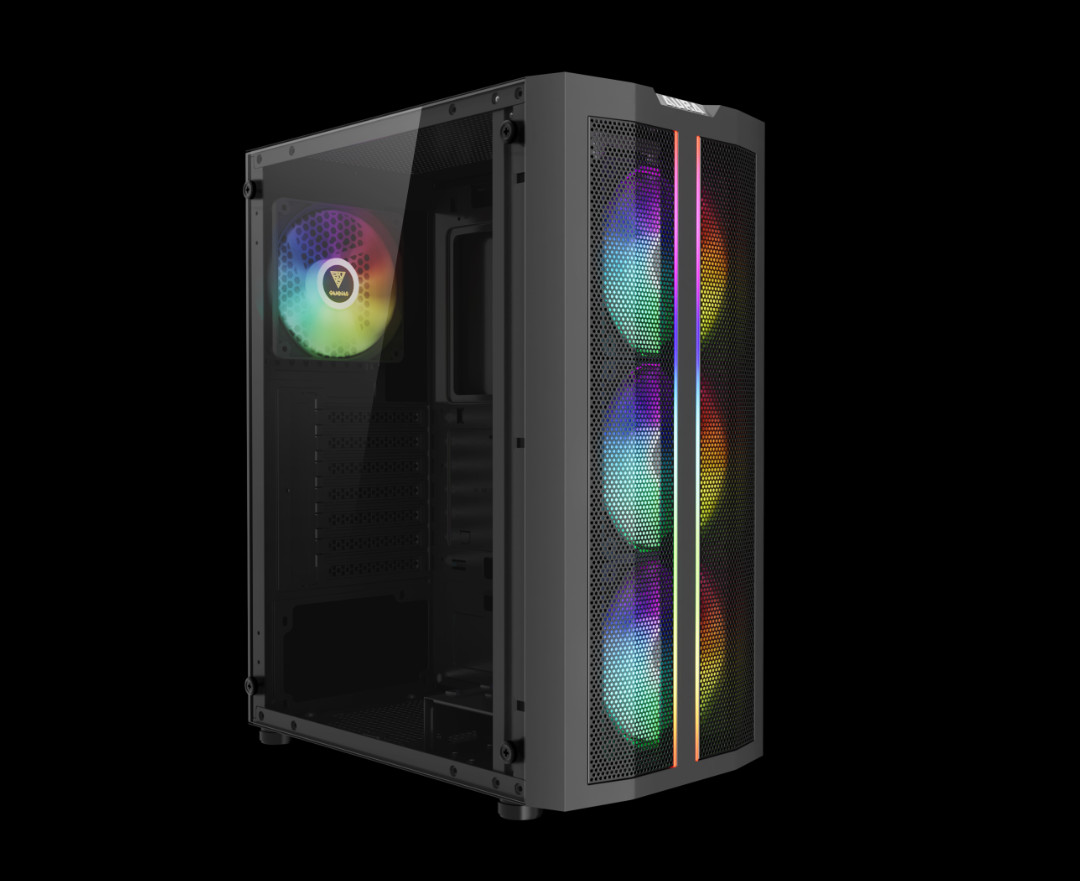 GAMDIAS ATX Mid Tower Gaming PC Case with Tempered Glass, ARGB Fans & Lighting$49.99View on eBay
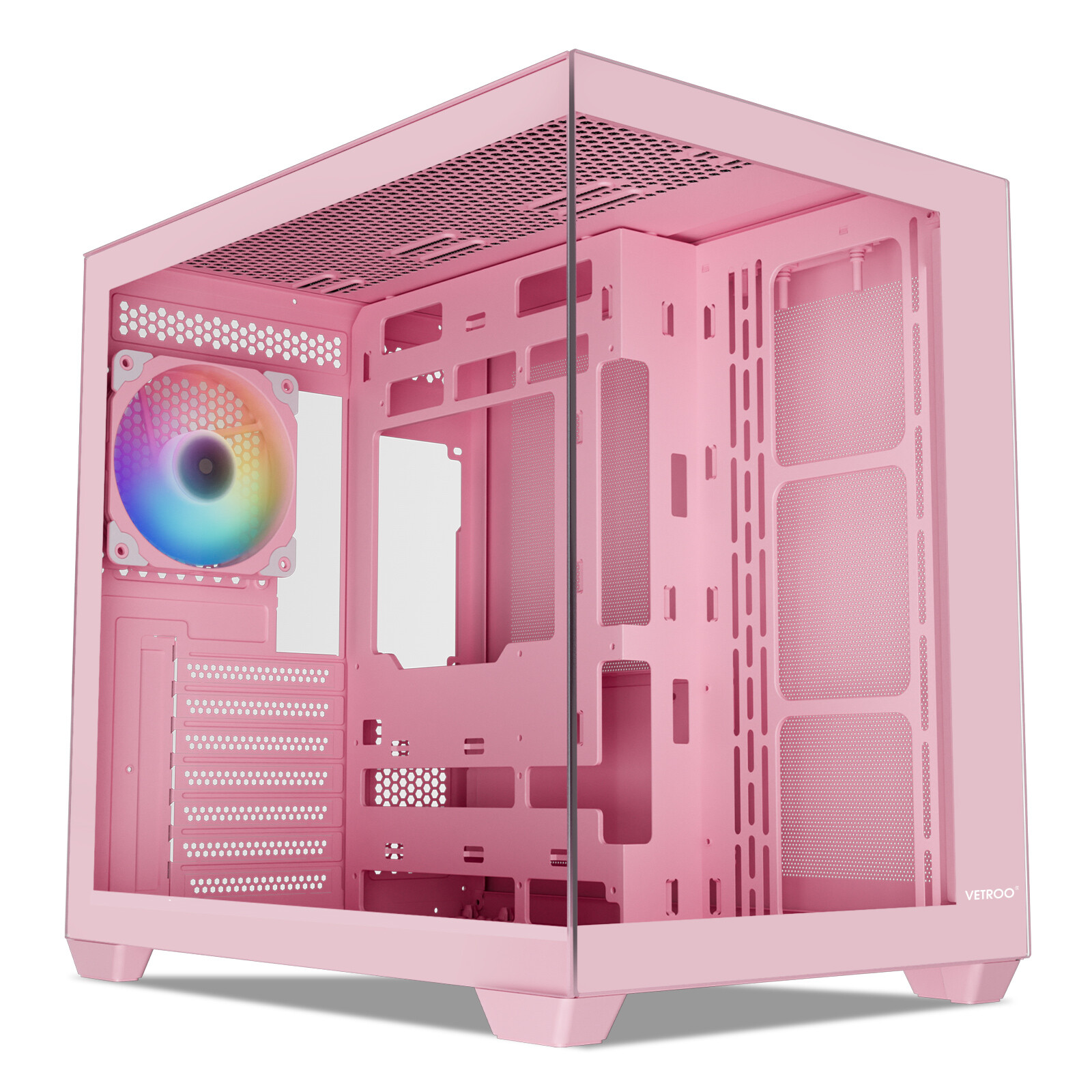 Vetroo AL900 Pink Computer hardware and computer peripherals ATX PC Case$94.99Last checked Nov 18, 2026View on eBay
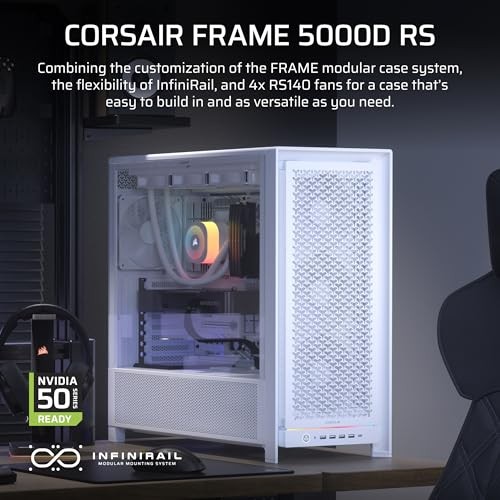 CORSAIR FRAME 5000D RS MODULAR HIGH AIRFLOW MID-TOWER PC CASE – 4X - WHITE$142.00View on eBay
Highlights
- Mesh front panels with less than 30% open area restrict airflow; look for honeycomb or large-hole mesh covering over 50% of the front intake.
- Included fan quality matters more than count: PWM fans with static pressure above 2.0 mm-H2O push through filters and drive cages, while cheap DC fans stall.
- Mid-tower ATX cases with 2x140mm front intakes move more air at lower RPM than 3x120mm, reducing noise while maintaining high CFM.
- Top-mounted 360mm radiator support requires at least 55mm clearance above the motherboard and a vented top panel to exhaust heat effectively.
Best use cases
- Best for high-wattage gaming builds (CPU 125W+, GPU 300W+): pick a mesh-front mid-tower with 3x120mm or 2x140mm front intakes and a vented top for AIO exhaust.
- Best for quiet office or studio builds: choose a mesh case with sound-dampened side panels and 140mm low-RPM fans, skipping RGB-heavy airflow cases with high minimum fan speeds.
- Wrong fit for small form factor or ITX builds: standard mid-tower airflow cases add unnecessary volume; instead pick a mesh ITX case with dedicated bottom intake.
- Best for E-ATX workstation builds: select a full-tower or large mid-tower with 420mm front radiator support and at least 7 PCIe slots for multi-GPU clearance.
Buying tips
- Measure your GPU length (often 320-360mm) and case GPU clearance; mesh front cases lose 25-30mm to front fans, so add that to your GPU length before choosing.
- For air CPU coolers, confirm case CPU cooler height clearance exceeds your cooler by 5mm; mesh cases typically allow 160-175mm, but top fan mounts can reduce this.
- Match fan header count: a case with 6 fans needs a motherboard with at least 3 chassis fan headers or a included PWM hub; otherwise budget for a fan controller.
- Check radiator support thickness: a 360mm AIO with 30mm fans needs 55-60mm total top clearance; slim radiators (27mm) fit more cases but cool less effectively.
Specs
| Front Panel Type | Mesh vs Solid vs Glass |
|---|---|
| Included Fans | 2-4x 120mm or 140mm PWM |
| Radiator Support | Up to 360mm top / 280mm front |
| Max GPU Clearance | 320-420mm with front fans |
Related searches
What to check before buying
- Measure your motherboard form factor (ATX, micro-ATX, E-ATX) and confirm the case lists matching support; E-ATX boards need 280mm+ width cases.
- Verify GPU clearance with front fans installed: subtract 25mm for standard 25mm-thick fans from the published max GPU length.
- Confirm PSU length clearance: mesh cases often route cables behind the motherboard tray, requiring at least 20mm depth; long PSUs (180mm+) may block drive cages.
- Check dust filter accessibility: front and bottom filters should slide out without removing side panels for monthly cleaning in dusty environments.
FAQ
Data sources: eBay / Amazon listings and product attribute feeds. Updated Nov 23, 2026.
Some links on this page are affiliate links. If you buy after clicking one, we may earn a commission at no extra cost to you. This does not change which products appear here or their order. Affiliate disclosure.