
Photos from current listings. Actual item, color, and included accessories may vary.
Compact Atx Case Buying Guide
A compact ATX case is a chassis designed to fit a standard ATX motherboard while minimizing exterior volume, typically through tighter internal clearances and alternative PSU placement. The core trade-off is component compatibility versus footprint: smaller cases force shorter GPU limits, lower CPU cooler heights, and specific PSU form factors, so buyers must prioritize internal dimension budgets over brand or aesthetics. The decision rule is simple: pick a case whose published maximum GPU length, cooler height, and PSU depth each exceed your planned parts by at least 10–15 mm; if any dimension is tight, step up to a mid-tower rather than compromise airflow or fit.
Median $49.99
Key takeaways
- Compact ATX cases commonly support GPU lengths of 320–360 mm and CPU cooler heights of 155–170 mm; anything below 155 mm cooler clearance rules out most 120 mm tower coolers.
- PSU support is the most common compact-case pitfall: many compact ATX models accept only SFX or SFX-L power supplies, while others fit full ATX PSUs up to 160–180 mm depth.
- Motherboard fit is not universal: some compact ATX cases officially support ATX but block the bottom PCIe slot or require low-profile RAM with top-mounted AIO radiators.
At a glance
- Category
- PC Cases & Cooling
- Last updated
- Nov 23, 2026
Current offers
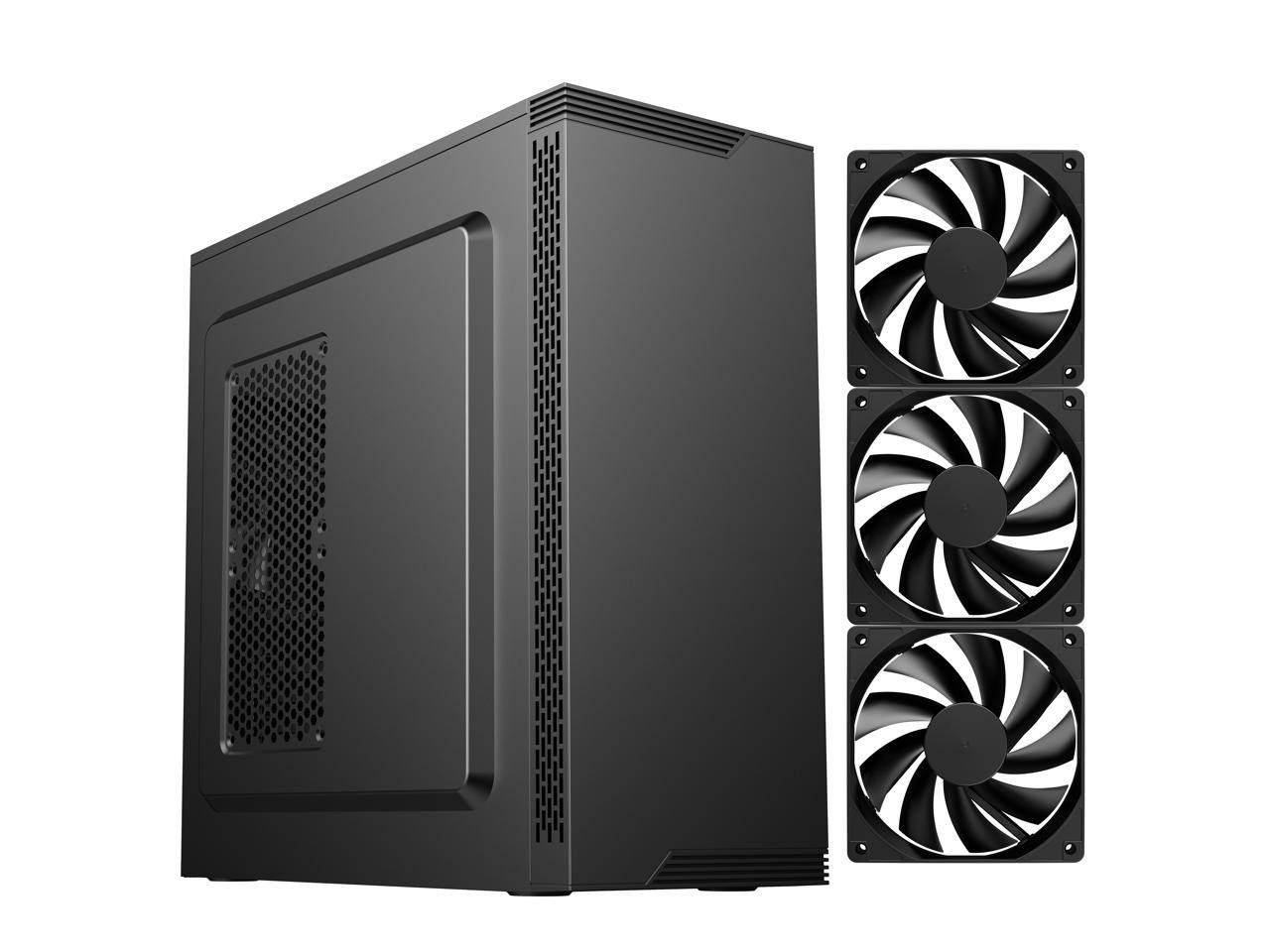 DIYPC DIY-S05-BK Black USB3.0 Steel ATX Mid Tower Computer Case, 3 x120mm Blac$37.49View on eBay
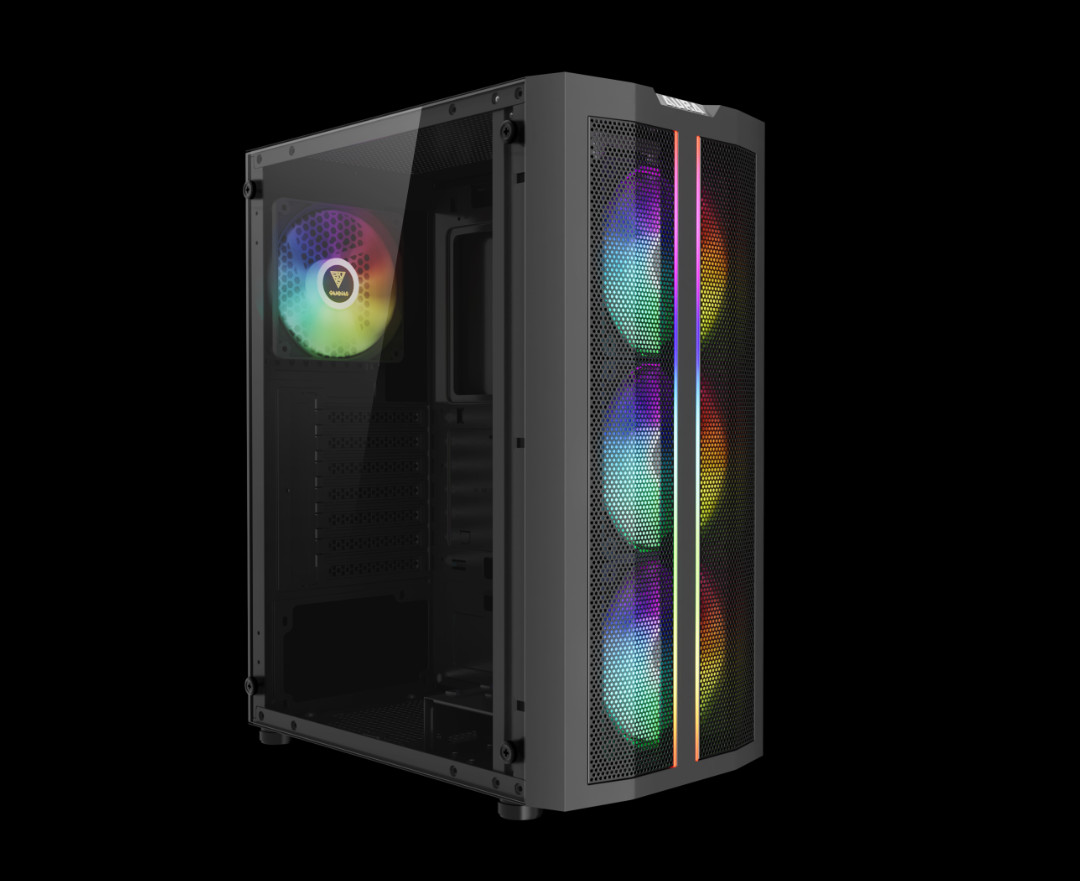 GAMDIAS ATX Mid Tower Gaming PC Case with Tempered Glass, ARGB Fans & Lighting$49.99View on eBay
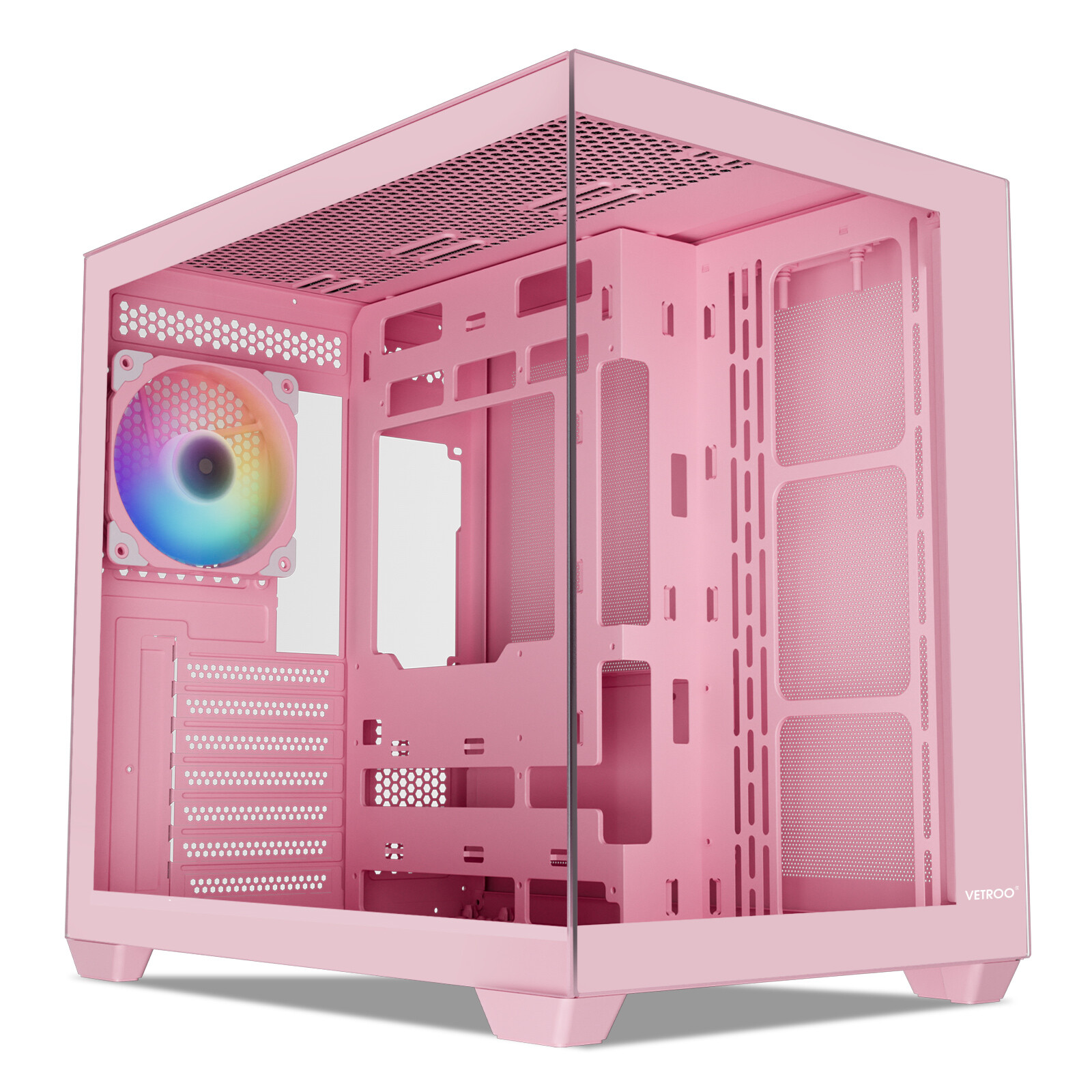 Vetroo AL900 Pink Computer hardware and computer peripherals ATX PC Case$94.99Last checked Nov 18, 2026View on eBay
Highlights
- Compact ATX cases commonly support GPU lengths of 320–360 mm and CPU cooler heights of 155–170 mm; anything below 155 mm cooler clearance rules out most 120 mm tower coolers.
- PSU support is the most common compact-case pitfall: many compact ATX models accept only SFX or SFX-L power supplies, while others fit full ATX PSUs up to 160–180 mm depth.
- Motherboard fit is not universal: some compact ATX cases officially support ATX but block the bottom PCIe slot or require low-profile RAM with top-mounted AIO radiators.
- Airflow architecture matters more than volume: mesh front panels and at least two 120/140 mm intake mounts outperform solid-front compact cases that rely on negative pressure and small side vents.
Best use cases
- Best fit: a builder with a 2-fan GPU (≤300 mm) and a 240 mm AIO who wants a smaller desk footprint—choose a compact ATX case with mesh front and explicit 240 mm top or front radiator support.
- Wrong fit: a user planning a 3-fan 350 mm GPU plus a 360 mm AIO should skip compact ATX and choose a mid-tower; compact cases rarely support both simultaneously without removing drive cages or front fans.
- Best fit: an office or living-room PC with a standard ATX board and a low-profile air cooler—pick a compact ATX case with SFX PSU support and sound-dampened panels for quiet operation.
- Wrong fit: a buyer with a full ATX PSU longer than 160 mm and a tall 170 mm air cooler should avoid compact ATX unless the case explicitly lists both clearances; otherwise choose a mesh mid-tower.
Buying tips
- Add 15 mm to your GPU length and compare to the case's published GPU clearance; also subtract 25 mm if front fans are installed, since many specs list clearance without fans.
- For CPU coolers, measure from motherboard surface to side panel: compact ATX cases typically allow 155–170 mm, so a 160 mm tower cooler leaves little margin for side-panel cables or filters.
- Check PSU form factor first: SFX/SFX-L saves space but costs more and limits wattage; full ATX PSUs fit only if the case lists a maximum depth (often 160–180 mm) and may block long GPUs.
- Prefer cases with at least two 120 mm intake mounts and a mesh front; compact solid-front cases often rely on a single 92 mm rear exhaust and run hotter under sustained loads.
Specs
| Motherboard Fit | ATX / Micro-ATX / Mini-ITX |
|---|---|
| PSU Form Factor | SFX / SFX-L / ATX (depth-limited) |
| Max GPU Length | 320-360 mm typical |
| Max Cooler Height | 155-170 mm typical |
Related searches
What to check before buying
- Measure your GPU length, CPU cooler height, and PSU depth, then compare each to the case's published maximums with 10–15 mm margin.
- Confirm motherboard form factor support: ATX, Micro-ATX, and Mini-ITX are common, but some compact ATX cases block the bottom PCIe slot or require low-profile RAM.
- Check radiator support by position: 240 mm front or top is common; 280/360 mm support is rare and often conflicts with GPU or PSU clearance.
- Verify desk or shelf space: compact ATX cases typically run 35–45 L in volume and 350–400 mm in height, so measure your available footprint including rear cable clearance.
FAQ
Data sources: eBay / Amazon listings and product attribute feeds. Updated Nov 23, 2026.
Some links on this page are affiliate links. If you buy after clicking one, we may earn a commission at no extra cost to you. This does not change which products appear here or their order. Affiliate disclosure.