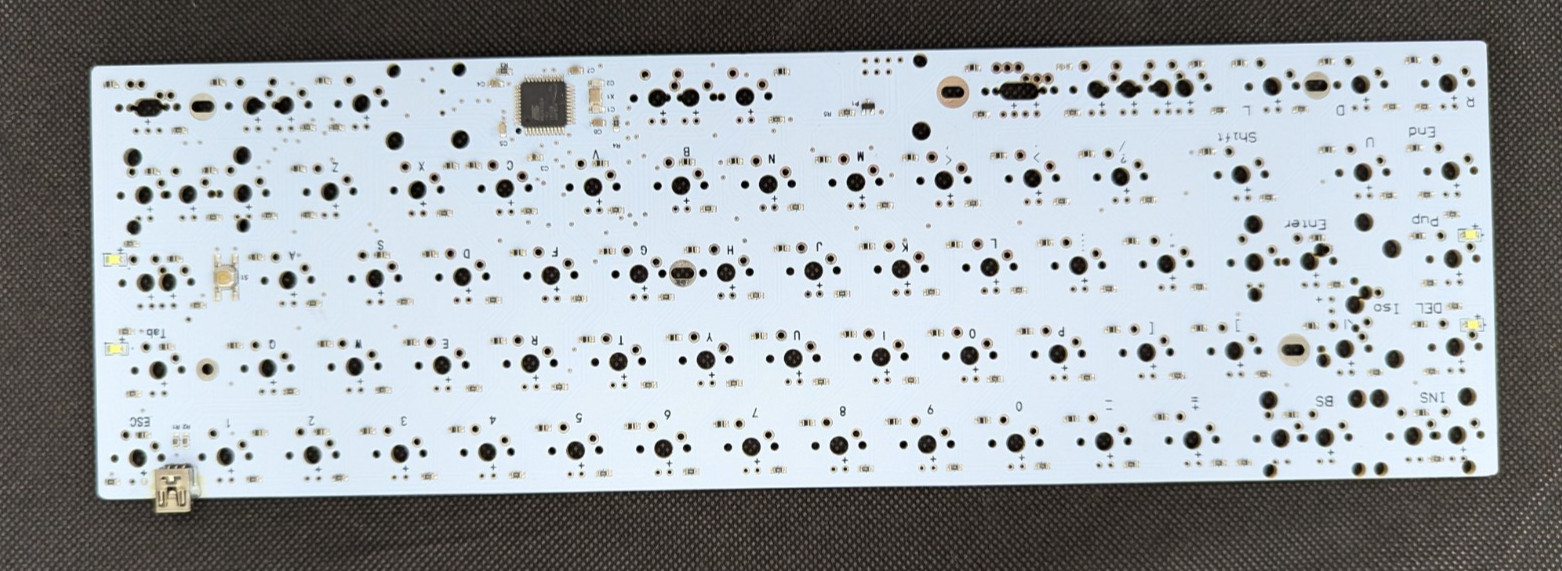
Choosing parts for a custom keyboard usually comes down to one question: do you want a programmable foundation that fits your preferred layout, or a more complete build component that needs less hands-on work? The DROP × TADA68 Mechanical Keyboard PCB targets builders who want a compact 65% board with arrow keys and QMK support, but it is strictly a PCB-only purchase.
Quick verdict
At USD 14.99, the DROP × TADA68 PCB is a focused starting point for a DIY keyboard build. Its main appeal is the combination of a 68-key 65% layout, open-source QMK programmability, and support for Cherry MX-style switches and clones. The trade-off is equally clear: soldering is required, and the package does not include a case, plate, switches, keycaps, or stabilizers.
DROP × TADA68 Mechanical Keyboard PCB
The strongest reason to choose the TADA68 board is its layout. With 68 keys, it keeps the arrow keys and top-right cluster while remaining more compact than a full-size keyboard. That makes the layout relevant for builders who want navigation keys without moving to a larger format.
QMK compatibility is another practical advantage for customization. The firmware is fully programmable through open-source QMK, so the board is suited to a build where remapping keys is part of the plan rather than an afterthought. It connects through a USB Mini-B port and supports Cherry MX switches along with compatible Gateron, Kailh, and Zealios-style options.
The listed limitation is the assembly work. This is a solder-required PCB, and it is not hot-swappable unless modified. If you want to install switches without soldering, the TADA68 will not match that workflow as listed. The PCB also needs the rest of the build around it: a compatible case and plate, plus switches, keycaps, and stabilizers.
Who it suits
This board makes the most sense for a keyboard hobbyist assembling a 65% layout from individual parts. The QMK support fits users who want programmable layers or custom key assignments, while the MX mount supports a broad family of compatible mechanical switches. Its new, never-soldered condition also suits a builder starting with a fresh board rather than replacing an already assembled component.
For a first project, the solder requirement is the key consideration. The board is more appropriate for someone prepared to solder and source the remaining parts separately than for someone seeking a ready-to-use keyboard or a hot-swap foundation.
Meaningful trade-offs
The TADA68 gives you a clearly defined 68-key layout and firmware flexibility at a listed USD 14.99, but its narrow scope keeps the purchase focused. USB Mini-B is the stated connection, and the board is intended for standard plate support rather than functioning as a complete keyboard assembly. The package's PCB-only format means the final build will depend on selecting compatible surrounding components.
Bottom line
Choose the DROP × TADA68 PCB if a programmable 65% layout, MX-style switch support, and hands-on soldering fit your custom keyboard plan. Pass on it if you need hot-swap installation or want a case-and-plate bundle instead of a standalone PCB.