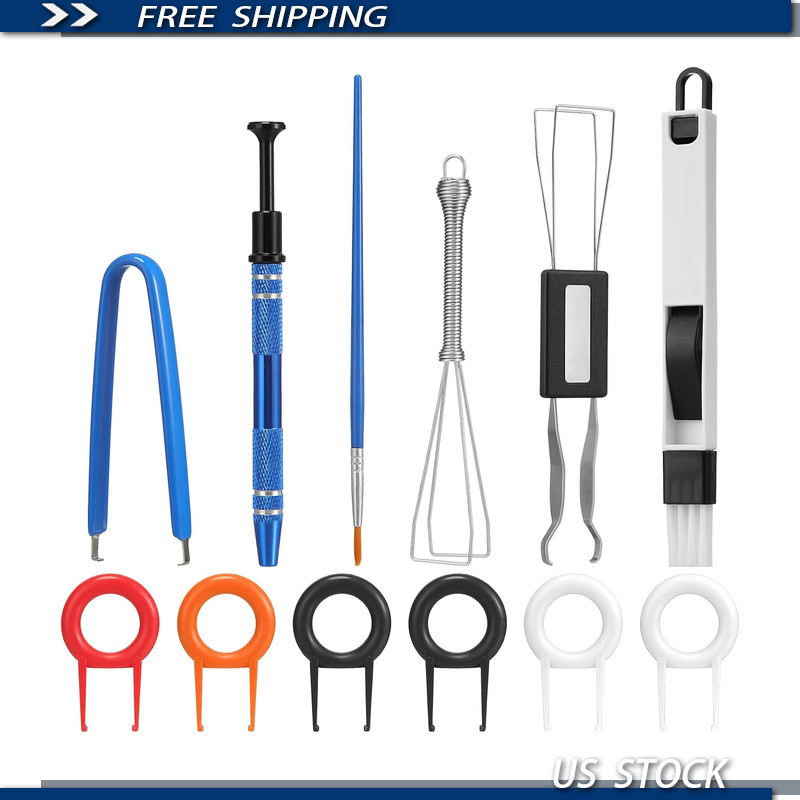

Photos from current listings. Actual item, color, and included accessories may vary.
Keyboard Key Remover Buying Guide
Keyboard key removers are specialized extraction tools that pull keycaps and sometimes switches without scratching stems or bending wire stabilizers. The core trade-off is between flimsy plastic prying claws that mar ABS caps and rigid wire-loop or reinforced POM pullers that safely clear tight Cherry-profile caps. Buy a wire-loop or dual-prong metal puller for daily hot-swap work; skip single-piece plastic levers unless you only pull one cap a month.
Median $11.99
Key takeaways
- Wire-loop pullers grip both sides of a keycap evenly; plastic claw pullers concentrate force on one stem and often crack thin-walled PBT caps.
- Switch-puller arms must be thin enough (under 1.2 mm) to slide between plate cutouts and release 3-pin or 5-pin MX-style switches without bending pins.
- Reinforced POM or nylon puller jaws resist flex better than cheap ABS; flexing jaws slip off and scratch keycap sides on tight-tolerance sets.
At a glance
- Category
- Stabilizers, Lubricants & Build Tools
- Last updated
- Nov 23, 2026
Current offers
Highlights
- Wire-loop pullers grip both sides of a keycap evenly; plastic claw pullers concentrate force on one stem and often crack thin-walled PBT caps.
- Switch-puller arms must be thin enough (under 1.2 mm) to slide between plate cutouts and release 3-pin or 5-pin MX-style switches without bending pins.
- Reinforced POM or nylon puller jaws resist flex better than cheap ABS; flexing jaws slip off and scratch keycap sides on tight-tolerance sets.
- Keycap puller wire spacing should span at least 18 mm to clear standard 1u to 2.25u caps; wider 6.25u spacebars need a dedicated long-reach or stabilizer-friendly puller.
Best use cases
- Pick a wire-loop puller plus separate switch puller for hot-swap boards and cap-swapping enthusiasts; skip the all-in-one plastic claw if you pull caps weekly.
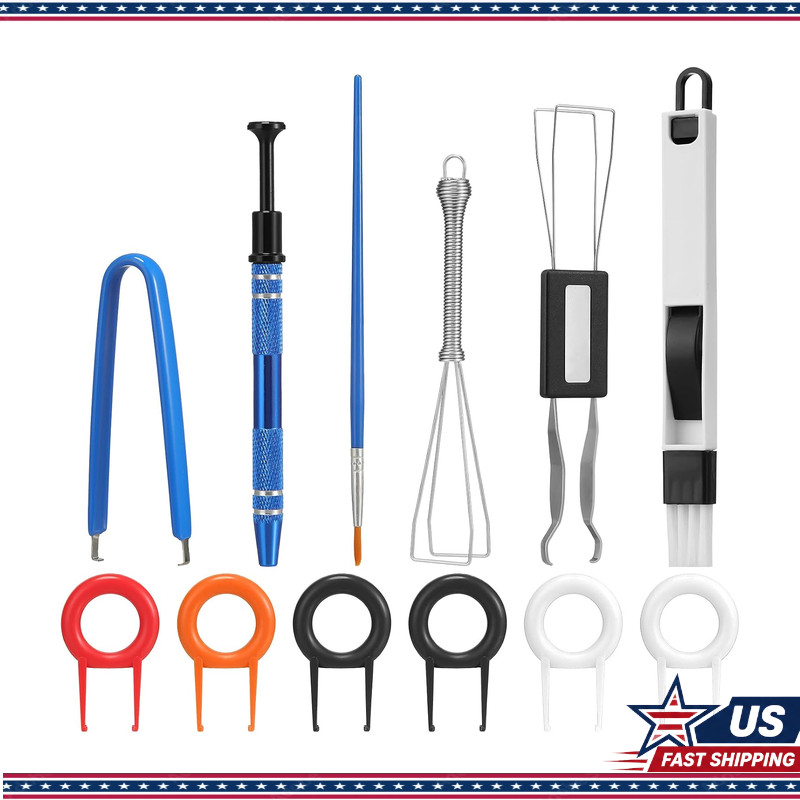
- Best fit: a 12-piece kit with wire puller, switch puller, and stem holders for builders who lube switches and need to open housings repeatedly.
- Wrong fit: a plastic ring-style remover for expensive GMK or doubleshot PBT sets—its uneven leverage can crack tight stem fitments; use a metal wire puller instead.
- Best fit for spacebars and stabilized keys: a puller with wide 100 mm+ wire or a dedicated stabilizer puller; standard 1u wire pullers slip off 6.25u bars.
Buying tips
- Match puller wire gauge: 1.0–1.2 mm stainless wire holds shape; thinner 0.8 mm wire bends and loses even tension after a few dozen pulls.
- For hot-swap boards, confirm the switch puller has two hooked prongs spaced 6–8 mm apart to straddle the switch housing and release plate clips.
- If you own low-profile or Kailh Choc switches, standard MX pullers won't fit—buy a low-profile-specific puller with narrower prongs and shorter wire span.
- A kit with a switch opener (for 3-pin/5-pin MX housings) saves buying a separate opener; check it accepts both Cherry and Kailh/Gateron housing tabs.
Specs
| Puller Type | Wire-loop vs plastic claw vs switch-prong |
|---|---|
| Wire Gauge | 1.0–1.2 mm stainless steel |
| Switch Compatibility | MX-style / Choc low-profile / Alps |
| Kit Contents | Keycap puller + switch puller + opener |
Related searches
What to check before buying
- Measure your keycap stem fit: tight-tolerance PBT sets need a wire puller with rigid, non-flexing jaws; loose ABS caps work with basic plastic pullers.
- Confirm your board is hot-swap or solder—switch pullers only help on hot-swap sockets or desoldering jobs; soldered boards need a desoldering pump first.
- Check switch type: MX-style pullers fit Cherry, Gateron, Kailh, and clones; low-profile Choc, Alps, and Topre need dedicated pullers.
- Verify spacebar stabilizer type (Cherry vs Costar) before pulling—Costar bars pop out with the cap and require re-seating; Cherry stabilizers stay on the PCB.
FAQ
Data sources: eBay / Amazon listings and product attribute feeds. Updated Nov 23, 2026.
Some links on this page are affiliate links. If you buy after clicking one, we may earn a commission at no extra cost to you. This does not change which products appear here or their order. Affiliate disclosure.