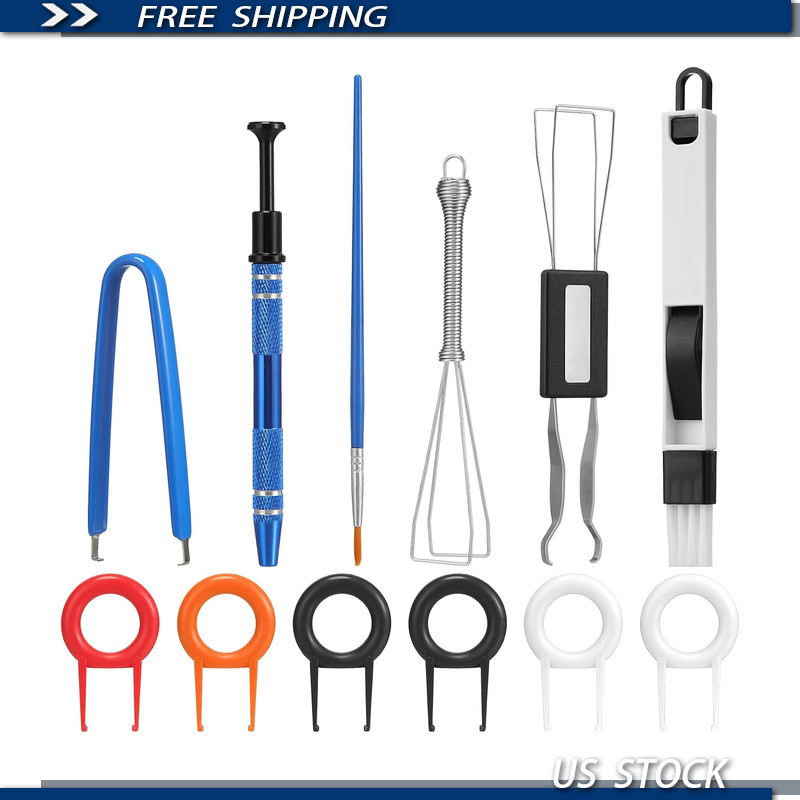

Photos from current listings. Actual item, color, and included accessories may vary.
Key Puller Buying Guide
A key puller is a hand tool that safely extracts keycaps and, in some kits, mechanical switches from a keyboard without bending stems or scratching housings. The core trade-off is wire-gauge stiffness and jaw geometry versus soft-plastic flex: rigid stainless wire gives clean vertical pull, while cheap stamped wire twists and gouges keycaps. Buy a wire-loop puller at minimum for keycaps, and a dedicated switch puller with proper prongs if you plan to swap switches.
Median $11.99
Key takeaways
- Wire-loop pullers use 1.0-1.2 mm stainless steel; below 0.8 mm the loop deforms and loads stems unevenly, causing cracked keycap skirts.
- Switch pullers need two thin flat prongs spaced for the standard 14 x 14 mm MX-style plate cutout; plier-type jaws with deep teeth mar switch housings.
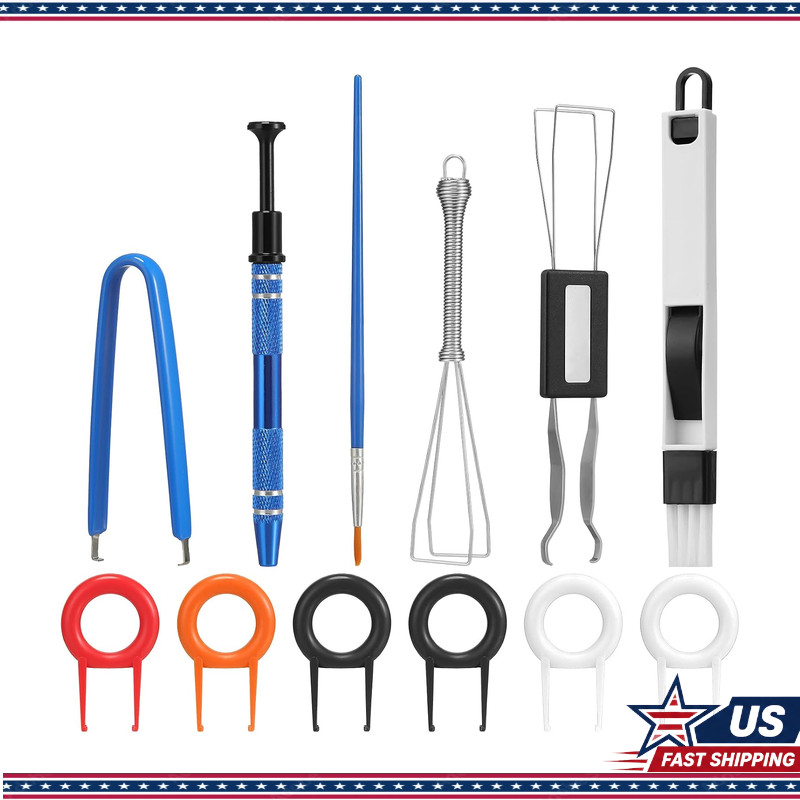
- Multi-piece kits pair a keycap puller with a switch puller and plastic pry tools; metal-only kits risk scratching aluminum cases during keycap removal.
At a glance
- Category
- Stabilizers, Lubricants & Build Tools
- Last updated
- Nov 23, 2026
Current offers
Highlights
- Wire-loop pullers use 1.0-1.2 mm stainless steel; below 0.8 mm the loop deforms and loads stems unevenly, causing cracked keycap skirts.
- Switch pullers need two thin flat prongs spaced for the standard 14 x 14 mm MX-style plate cutout; plier-type jaws with deep teeth mar switch housings.
- Multi-piece kits pair a keycap puller with a switch puller and plastic pry tools; metal-only kits risk scratching aluminum cases during keycap removal.
- Plastic ring pullers work on low-profile and scissor switches but cannot grip tall cylindrical keycaps; wire pullers handle both cylindrical and spherical profiles.
Best use cases
- Best fit: buy a wire-loop keycap puller if you only clean or swap keycaps; skip switch pullers unless the board has hot-swap sockets or you plan desoldering.
- Best fit: choose a kit with both keycap and switch pullers for hot-swap boards, group buys, or frequent keycap rotation; a single stamped wire tool alone is a false economy.
- Wrong fit: avoid plier-style switch pullers on thin ABS keycaps and painted cases; the jaws concentrate force and chip edges. Use a wire puller for caps and prong puller for switches.
Buying tips
- Check wire diameter: 1.0-1.2 mm stainless steel is the durability floor; thinner loops permanently bend and misalign with stem walls.
- Match the switch puller to plate thickness: prongs must reach through 1.5 mm plates and engage the 14 x 14 mm cutout tabs without bending.
- Prefer dual-injection or coated wire ends over bare stamped steel if you frequently pull tight-tolerance keycaps on anodized cases.
- For low-profile boards, verify the puller jaws close to under 3 mm; standard wire loops bottom out on the plate before gripping low-profile caps.
Specs
| Puller Type | Wire loop / prong / plier / ring |
|---|---|
| Wire Gauge | 1.0-1.2 mm stainless steel |
| Switch Compatibility | MX-style plate-mount / hot-swap |
| Kit Contents | Keycap + switch puller + pry tools |
Related searches
What to check before buying
- Measure your keyboard layout: wire pullers need clearance around each keycap; on 60% and 65% boards, adjacent caps limit loop travel, so a compact loop helps.
- Confirm switch type: MX-style plate-mount switches use standard prong pullers; optical and scissor switches need model-specific tools that grip the housing, not the stem.
- Check case material: anodized aluminum and painted plastic scratch easily, so add a plastic pry tool or use coated wire for keycap removal.
- Verify hot-swap socket type if buying a switch puller: Kailh and Gateron sockets accept standard prong tools, but some low-profile sockets need a narrower jaw.
FAQ
Data sources: eBay / Amazon listings and product attribute feeds. Updated Nov 23, 2026.
Some links on this page are affiliate links. If you buy after clicking one, we may earn a commission at no extra cost to you. This does not change which products appear here or their order. Affiliate disclosure.