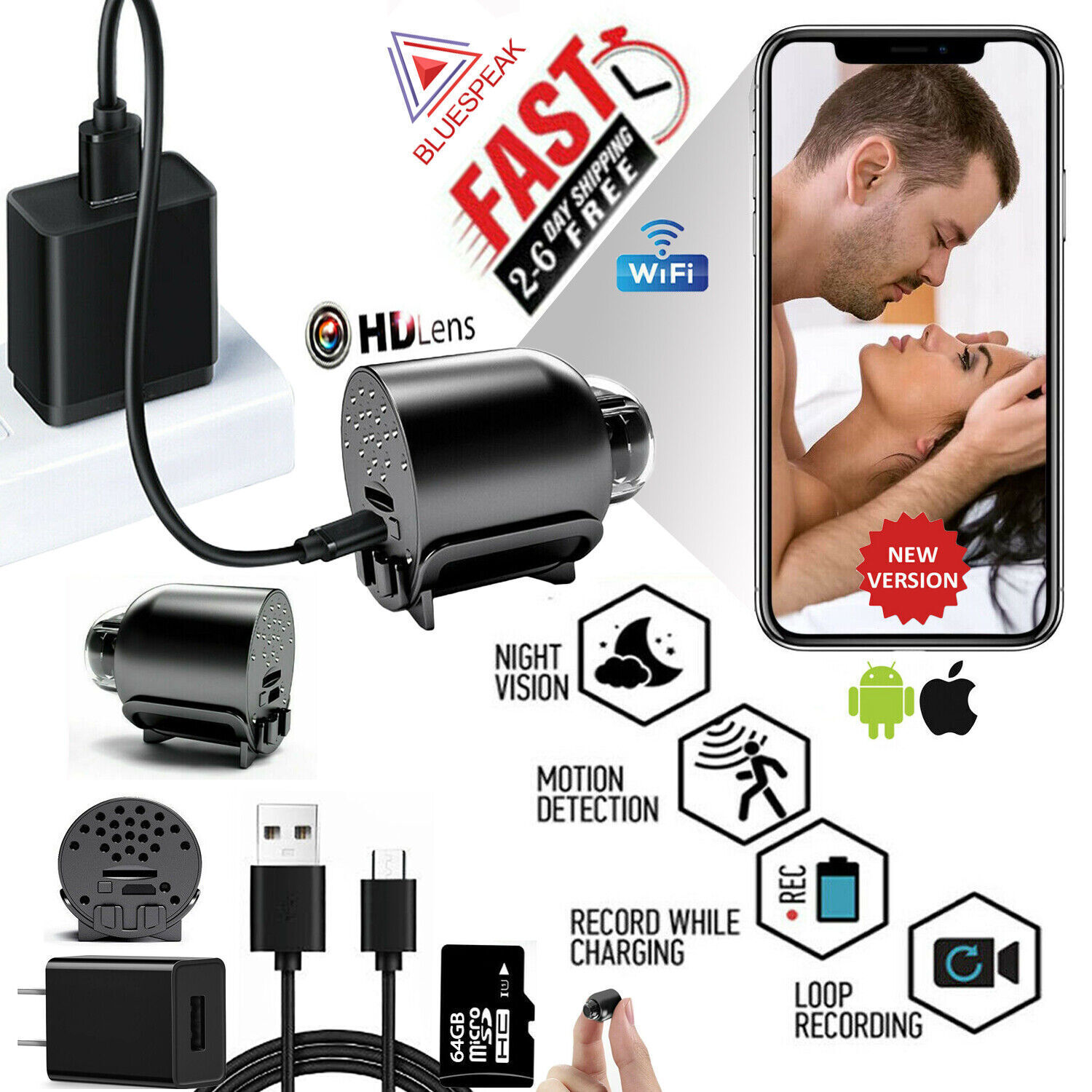

Photos from current listings. Actual item, color, and included accessories may vary.
Wireless Spy Camera Buying Guide
A wireless spy camera is a compact, battery- or Wi-Fi-powered covert camera that records video without visible wiring, where antenna design and battery chemistry determine real-world range and uptime. The core trade-off is wireless convenience versus continuous recording endurance: true wireless models use lithium cells and PIR-triggered capture, while plug-in 'wireless' units stream 24/7 but need an outlet. Buy a lithium-battery PIR-triggered model with local microSD storage for untethered placement; choose a plug-in Wi-Fi model only where continuous mains power exists.
Key takeaways
- Battery chemistry decides endurance: 18650 lithium cells (3.7V, 2000–3500mAh) deliver days of PIR-triggered standby, while small 500–1000mAh pouch cells die within hours under continuous streaming.
- Wi-Fi band matters: 2.4GHz-only modules penetrate walls and reach 30–50m outdoors, whereas 5GHz models offer cleaner video but halve usable range and fail through masonry.
- PIR detection range is typically 5–10m at 90–120°, and dual-PIR arrays cut false triggers from sunlight and HVAC vents better than single-sensor units.
At a glance
- Category
- Smart Home Electronics
- Last updated
- Nov 28, 2026
Current offers
Highlights
- Battery chemistry decides endurance: 18650 lithium cells (3.7V, 2000–3500mAh) deliver days of PIR-triggered standby, while small 500–1000mAh pouch cells die within hours under continuous streaming.
- Wi-Fi band matters: 2.4GHz-only modules penetrate walls and reach 30–50m outdoors, whereas 5GHz models offer cleaner video but halve usable range and fail through masonry.
- PIR detection range is typically 5–10m at 90–120°, and dual-PIR arrays cut false triggers from sunlight and HVAC vents better than single-sensor units.
- Local microSD recording (class 10, 32–128GB) keeps footage private and works during Wi-Fi outages; cloud-only models stop recording when the router drops.
Best use cases
- Home nanny or pet monitoring: pick a 1080p Wi-Fi model with 2.4GHz radio, 18650 battery, and microSD slot; skip 5GHz-only units because range through interior walls collapses.
- Outdoor shed or driveway: choose an IP65-rated battery camera with PIR-triggered recording and 940nm IR; skip bare plastic indoor units that fog and fail below freezing.
- Continuous front-door observation: use a plug-in Wi-Fi camera with 24/7 recording; skip battery spy cams because PIR-triggered clips miss the seconds before motion and need weekly recharging.
- Covert office or rental monitoring: select a pinhole-lens model with local storage and no cloud subscription; skip cloud-only designs that require an account and upload footage off-site.
Buying tips
- Calculate runtime: a 3000mAh 18650 cell drawing 200mA during 1080p streaming lasts ~15 hours continuous, or 2–4 weeks at 20–40 PIR events per day.
- Match lens to distance: a 2.8mm lens gives ~90° coverage for rooms, while a 3.6–6mm lens narrows to 50–60° for identifying faces at 8–15m.
- Insist on H.264 or H.265 compression: H.265 halves microSD card usage versus MJPEG, doubling retention on the same 64GB card.
- Check Wi-Fi module generation: 2.4GHz 802.11n is standard and adequate; 5GHz 802.11ac only helps if the camera sits in the same room as the router.
Specs
| Power Source | 18650 battery vs plug-in USB |
|---|---|
| Wi-Fi Band | 2.4GHz (long range) vs 5GHz |
| Night Vision | 940nm covert vs 850nm visible IR |
| Storage | microSD 32–128GB vs cloud-only |
Related searches
What to check before buying
- Measure the mounting surface and sightline: confirm the camera's 5–10m PIR cone covers the door or crib without pointing through glass, which blocks IR and triggers false alarms.
- Verify outlet or battery plan: count outlets within 2m for plug-in models, or budget weekly 18650 recharges for battery units in high-traffic zones.
- Confirm Wi-Fi coverage at the mounting spot: a 2.4GHz signal of at least -70dBm is needed for stable 1080p streaming; brick or metal walls may require a repeater.
- Check storage and companion parts: a class 10 microSD card (32–128GB) and the correct 5V/1A USB adapter are required; PoE models need an injector or PoE switch.
FAQ
Data sources: eBay / Amazon listings and product attribute feeds. Updated Nov 28, 2026.
Some links on this page are affiliate links. If you buy after clicking one, we may earn a commission at no extra cost to you. This does not change which products appear here or their order. Affiliate disclosure.