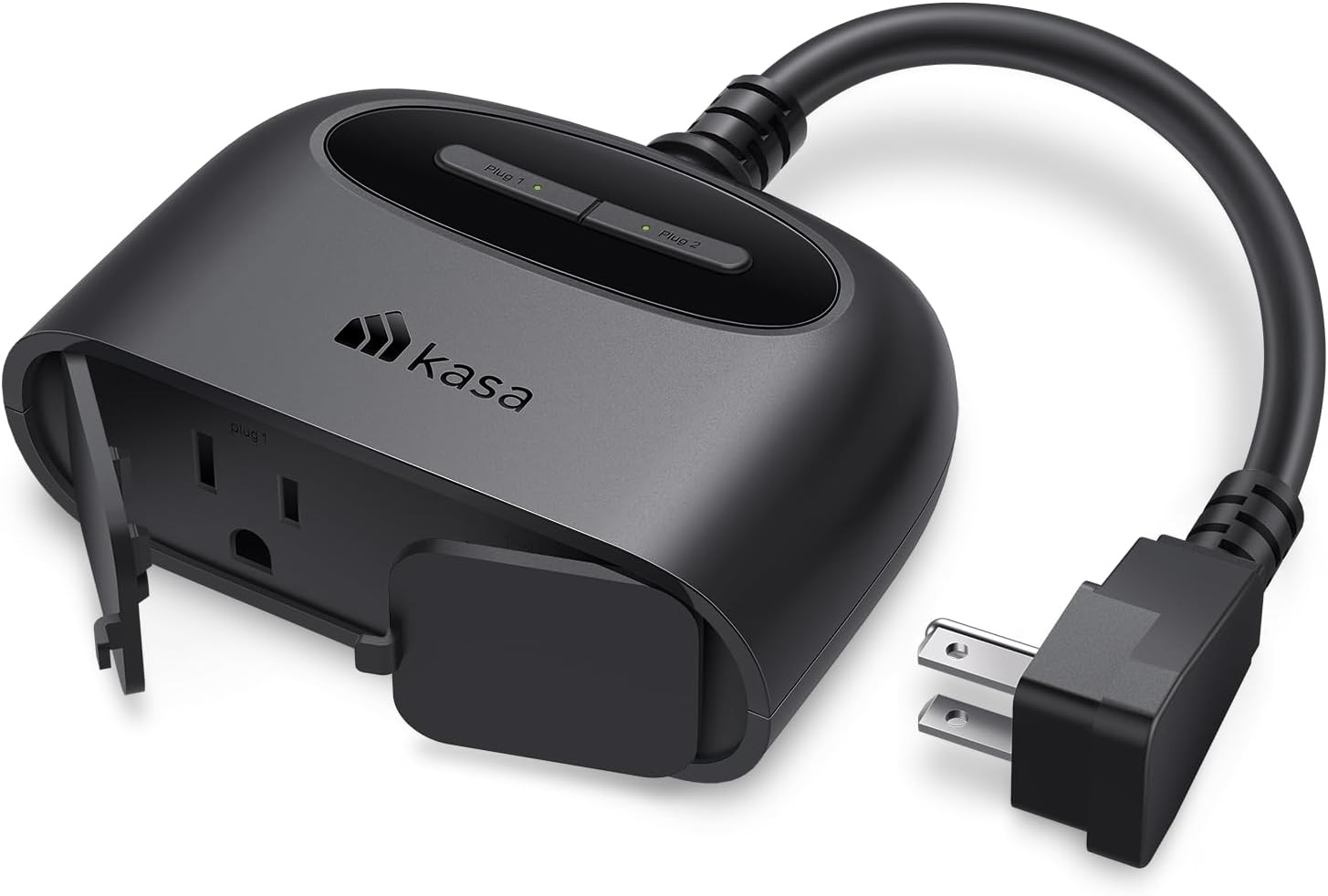

Photos from current listings. Actual item, color, and included accessories may vary.
Kasa Smart Plug Buying Guide
Kasa smart plugs are Wi-Fi-enabled outlets that add app, voice, and scheduling control to lamps, fans, and small appliances without a hub. The key trade-off is indoor mini plugs with energy monitoring versus weatherized outdoor units with dual independent sockets and higher IP ratings. Buy indoor models for compact wall-hugging fit and power tracking; buy outdoor models only when the enclosure is explicitly rated IP64 or better and supports two separately controlled loads.
Key takeaways
- Indoor Kasa Mini plugs use a compact single-socket body that preserves the second wall outlet; outdoor KP400/EP40 models use a dual-socket housing with independent app control per socket.
- Outdoor Kasa models carry an IP64 enclosure rating, meaning dust-tight and protected against splashing water; indoor minis have no meaningful water ingress rating and must not be used outdoors.
- Energy-monitoring Kasa Minis report real-time watts, volts, amps, and historical kWh in the Kasa app, enabling scheduling and cost tracking that non-monitoring plugs cannot provide.
At a glance
- Category
- Smart Home Electronics
- Last updated
- Nov 28, 2026
Current offers
Highlights
- Indoor Kasa Mini plugs use a compact single-socket body that preserves the second wall outlet; outdoor KP400/EP40 models use a dual-socket housing with independent app control per socket.
- Outdoor Kasa models carry an IP64 enclosure rating, meaning dust-tight and protected against splashing water; indoor minis have no meaningful water ingress rating and must not be used outdoors.
- Energy-monitoring Kasa Minis report real-time watts, volts, amps, and historical kWh in the Kasa app, enabling scheduling and cost tracking that non-monitoring plugs cannot provide.
- Kasa plugs connect directly to 2.4 GHz Wi-Fi and work with Alexa and Google Home; no proprietary hub is required, but 5 GHz-only networks will not complete setup.
Best use cases
- Best fit: indoor lamps, fans, holiday lights, and small appliances on a 2.4 GHz network — choose the Mini with energy monitoring if you want kWh tracking, or the plain Mini to save space and cost.
- Best fit: patios, porches, and yard lighting — choose the KP400 or EP40 dual-socket outdoor plug and use each socket independently for seasonal timers.
- Wrong fit: plugging a space heater or high-draw power tool into a Mini above its 15A/1800W resistive rating — step up to a heavy-duty rated plug or a different product class.
- Wrong fit: mounting an indoor Mini in rain or sprinkler exposure — only IP64-rated outdoor Kasa housings survive splashing; indoor units will fail at the enclosure.
Buying tips
- Match the plug to the load: Kasa indoor minis are rated 15A/1800W resistive; do not exceed that with continuous heaters, and derate for motor loads with high inrush current.
- Require IP64 or better for any outdoor installation, and mount the outdoor plug under an eave or cover where possible to extend gasket and seal life.
- Confirm your router broadcasts a 2.4 GHz SSID during setup; Kasa uses 2.4 GHz Wi-Fi only, and a 5 GHz-only network will stall pairing.
- Choose energy monitoring only where you will act on the data — it adds cost and app clutter, but pays off for tracking always-on loads like TVs and fans.
Specs
| Indoor vs Outdoor | Mini indoor / IP64 outdoor |
|---|---|
| Outlet Count | 1 (Mini) / 2 independent (KP400, EP40) |
| Electrical Rating | 15A / 1800W resistive |
| Wi-Fi Band | 2.4 GHz only, no hub |
Related searches
What to check before buying
- Measure your wall box and nearby furniture: the Mini body is designed not to block the second receptacle, but deep outlet covers and tight side walls can still interfere.
- Verify your Wi-Fi: a 2.4 GHz band must be available at the outlet location, and Wi-Fi signal should reach the outdoor plug through exterior walls.
- For outdoor use, confirm the outlet has a weatherproof in-use cover and that the plug's IP64 housing will not sit in standing water.
- Check load nameplate amps/watts against the plug's 15A/1800W rating, and confirm the plug type matches your region's receptacle standard.
FAQ
Data sources: eBay / Amazon listings and product attribute feeds. Updated Nov 28, 2026.
Some links on this page are affiliate links. If you buy after clicking one, we may earn a commission at no extra cost to you. This does not change which products appear here or their order. Affiliate disclosure.