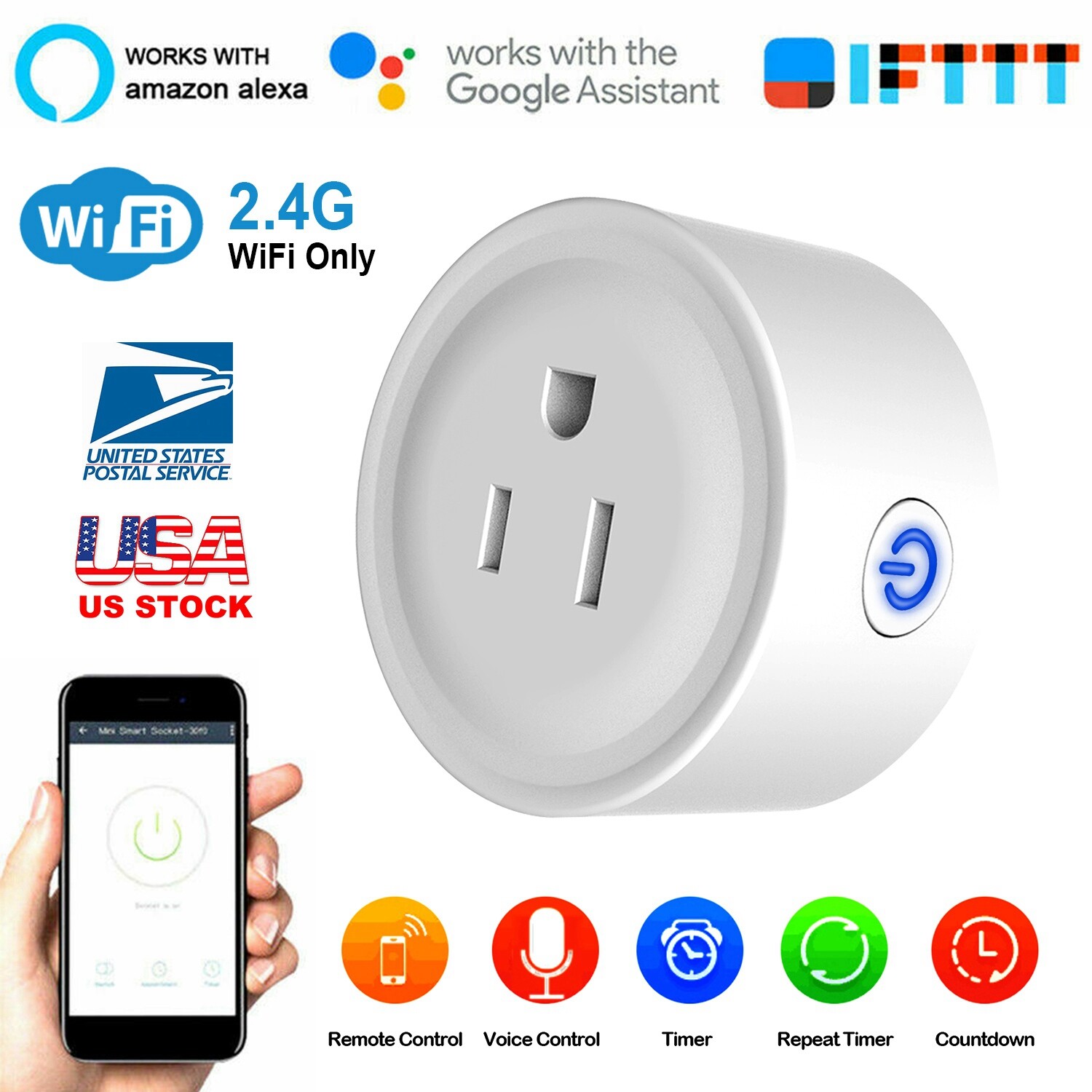

Photos from current listings. Actual item, color, and included accessories may vary.
WiFi Smart Socket Buying Guide
A WiFi smart socket is a compact relay module that adds app and voice control to any standard outlet, letting you schedule, timer, and remotely toggle dumb appliances. The core trade-off is between miniaturized always-on radios with marginal current ratings versus bulkier units with higher amperage, energy monitoring, and better thermal headroom. The decision rule: buy a unit rated for the actual continuous load you will switch, on a plug standard that matches your wall, with a radio generation your router still supports.
Key takeaways
- Current rating is the hard limit: 10A/120V units handle lamps, fans, and small electronics, but resistive heaters and motors need 15A-or-better ratings and derating.
- WiFi generation matters: 2.4GHz-only 802.11n radios are the norm; units advertising 5GHz support use dual-band chipsets and cost more but survive congested 2.4GHz homes.
- Mini form factor (roughly 2.1x2.1x1.1 in) often blocks the second wall socket; pass-through or side-outlet designs preserve adjacent receptacle access.
At a glance
- Category
- Smart Home Electronics
- Last updated
- Nov 28, 2026
Current offers
Highlights
- Current rating is the hard limit: 10A/120V units handle lamps, fans, and small electronics, but resistive heaters and motors need 15A-or-better ratings and derating.
- WiFi generation matters: 2.4GHz-only 802.11n radios are the norm; units advertising 5GHz support use dual-band chipsets and cost more but survive congested 2.4GHz homes.
- Mini form factor (roughly 2.1x2.1x1.1 in) often blocks the second wall socket; pass-through or side-outlet designs preserve adjacent receptacle access.
- Plastic housings vary in flame rating; V-0 grade ABS/PC shells resist ignition better than commodity plastic, which matters for always-on relay heat.
Best use cases
- Best fit: table lamps, holiday lighting, and small fans on a 10A plug with 2.4GHz WiFi and Alexa/Google support — pick the mini form factor for tight outlet strips.
- Best fit: space heaters, kettles, or window AC on a 15A-rated smart plug with energy monitoring — skip mini 10A pucks, which overheat under sustained resistive load.
- Wrong fit: outdoor or damp locations — standard indoor smart sockets lack IP-rated enclosures and GFCI-safe sealing; buy a weatherproof outdoor-rated plug instead.
- Wrong fit: 5GHz-only mesh networks — 2.4GHz-only sockets will not join until you enable a legacy 2.4GHz SSID or band-split the router.
Buying tips
- Match amperage to load: total watts divided by 120V gives amps; keep continuous draw under 80% of the plug rating (10A plug → ~960W continuous max).
- Count outlet clearance: mini plugs 1.1 in deep often cover the second receptacle in a standard duplex; choose a side-exit or pass-through style for two-device walls.
- Confirm radio: 802.11b/g/n 2.4GHz is universal; only pay for 5GHz or Matter/Thread if your router or hub already supports it.
- Prefer units with visible energy monitoring and overload protection if switching HVAC or kitchen appliances; basic timer-only pucks lack current sensing.
Specs
| Socket Amperage | 10A vs 15A continuous rating |
|---|---|
| WiFi Band | 2.4GHz 802.11n vs dual-band |
| Form Factor | Mini 1.1 in vs pass-through |
| Smart Protocol | WiFi standalone vs Matter/Thread hub |
Related searches
What to check before buying
- Measure the wall plate and adjacent plug: a 2.1x2.1x1.1 in body needs roughly 1.5 in of side clearance to avoid blocking the neighboring socket.
- Verify wall voltage and plug type: 120V NEMA 5-15 for North America; 220-240V Type F/G sockets require region-specific hardware, not plug adapters.
- Check router band: confirm a 2.4GHz SSID is broadcast (or can be enabled) before buying 2.4GHz-only units.
- Appoint a hub only if needed: WiFi sockets work standalone via app; Matter/Thread or Zigbee models require a compatible border router or hub.
FAQ
Data sources: eBay / Amazon listings and product attribute feeds. Updated Nov 28, 2026.
Some links on this page are affiliate links. If you buy after clicking one, we may earn a commission at no extra cost to you. This does not change which products appear here or their order. Affiliate disclosure.